Showing posts with label Sex. Show all posts

Friday, April 10, 2020

Marching Towards a Million

[T]he feelings of knowing, correctness, conviction, and certainty aren’t deliberate conclusions and conscious choices. They are mental sensations that happen to us.
—Robert Burton. On Being Certain
Update, 4/12: The curve is continuing to flatten a bit more than the model is able to extrapolate from having its six parameters fitted to the data as it stands each day. (I certainly have no objection to things coming in on the low side, even if it reveals some room for further possible improvement in the model, or just some random-walk stochastic behavior that simply can’t be chased via curve fitting and extrapolation, even with more model parameters.) There’s not been enough of a difference to go through this post and do a bunch of edits, so I’ve just added a few footnotes and this link to the latest version of the Nightmare Plot. Don’t get complacent now, OK?

For just over a week now, I’ve been running and re-running the “logistic growth with growth-regime transition” model I’ve developed for reported cases of Covid-19, evolving populations of individuals whose digital DNA consist of six parameters for that model:

xd(t, x) = r*x*(1-x/L) * flatten(t) + b
flatten(t) = 0.5*rf*(1-tanh(1.1*(t-t0)/th))-rf+1

Two of the parameters, L and r, are for the conventional logistic growth component of the model. L is the maximum number of possible cases, which at worst case is limited by the country’s population. The other parameter r is the initial exponential growth rate, before any curve-flattening becomes apparent.

The “growth-regime transition” component of the model, implemented by flatten(t), has three parameters of its own: There is a fractional reduction rf in growth rate at the conclusion of a lower-growth (flattened curve) regime. My modification to the conventional logistic-growth model uses the tanh function to smoothly transition from the original growth rate r to a lower “flattened” growth rate r*rf over a time interval th (in days). The transition interval is defined as the middle half of the full transition between growth rates, i.e., from still 75% of old vs new down to 25%. The midpoint of the transition is defined by the third parameter t0, in days after 1/22/​20.

Finally, a very small constant number of new cases per day is included as a sixth parameter b. This does manage to “earn its keep” in the model by more flexibly allowing the mean of the residuals to be zeroed out.

Here is what the model is saying today, with Johns Hopkins data from this evening (4/10, click here for the latest one with 4/12 data).

April 10, 2020: Reported U.S. Covid-19 cases vs days since 1/22

Extrapolating forward (admittedly a perilous enterprise, as I’ve said before with endlessly repeated disclaimers and caveats, applicable yet again here), the model is projecting three quarters of a million cases1 one week from today, and over a million the week after that.2 The model’s projection–both now and as it stood on 4/5–is that there will be around a million and a half Americans–one in every two hundred–reporting infection with Covid-19 in early May, with the number still climbing faster every day.3

The curve is bending downward a bit, yes, but things still look pretty grim.

Past Performance

You’ve probably heard the phrase “past performance does not indicate future results,” and that’s true if something happens (as it often does) that’s not accounted for by the model. Life is messy and complicated, and that includes pandemics. But shitty performance does tell you not to bother looking any further. And that’s definitely not what’s been happening with my little model.

With parameters evolved to yesterday’s Johns Hopkins data (4/9), it had projected today’s increase in the number of cumulative cases to be 32,920 instead of the 35,098 new cases that actually got reported today. That was off by about 6%. (I calculate the error from the projected vs actual increase from the most recent known value, because the model is anchored to that point and can only be given credit or blame for what it projects from that last known point.)

With data from the day before yesterday (4/8), it projected yesterday’s number of new cases at 32,385. There were 32,305 new cases yesterday, an error of 0.2%.

And with data from 4/7, the model evolved to parameters that had it projecting 30,849 new cases the next day. There were 30,849 new cases on 4/8, a 6% error.

On 4/5, the model projected 32,346 vs the 32,133 that there were on 4/6, an error of just 0.7%.

The model of course does a little worse when it looks further ahead. You’d expect that of any naive model (i.e., not theoretically informed, beyond “the growth rate is going down”) of data from six empirically-optimized parameters being extrapolated with exponential growth. And it’s certainly not anything I’m ashamed of.

On 4/3, the projection was for there to be just over 600,000 cases today, compared to the 496,535 we have had reported at this point in the U.S. Quite a bit off, but remember, that was looking forward a full week.

On 4/5, it was for there to be 510,425 cases today, a total error of less than 8%, again with the error measured from the projected vs actual increase, not the absolute number.4 On 4/7, the model projected there would be 486,367 cases as of today, and that was off (in the increase) by 10%.5

Evolution in Action

(In more ways than one, unfortunately.)

I’ve been wanting to write a little about the whole process of computer evolution that I use to fit the model’s six parameters to the time-series data. It begins with a population of 240 simulated organisms (not a virus!), digital “individuals” whose randomly chosen6 DNA consists of the values of those six parameters, within predefined bounds.

After working on this model for over a week, I’ve refined each of those bounds to a reasonable range of possible values. Updating those ranges as the model makes sometimes failed attempts to find a convincing best fit is my sole remaining human-engineering activity, now that the model is designed and the code implementing it is working.

Each of those 240 individuals is given a chance to show how fit its DNA is by running a backwards integration of the model from the last known data point. The model, you may recall from reading my previous blog post is for the number of new cases each day, not the cumulative number of total cases ever.

The model is a differential equation; xd(t,x), not x(t). So, to have it project the cumulative number of cases x(t), I integrate the differential equation forward or backward from a fixed point represented by the most recent known number of cases, a point to which it is anchored.7

The modeled number of reported cases is compared to the actual number that were reported, for each day going back what is now a full five weeks’ worth of data.8

The fitness of each individual is measured as the sum of the squared errors (SSE) between each day’s modeled number of reported cases (the value that the model would expect, being integrated backwards) vs. the number of cases there actually were as of that date. The two figures are compared only after they have had a square-root transform applied to them. This limits how much more recent, larger numbers of new daily cases weigh in the fitness calculation vs earlier ones.

Then evolution gets underway, with each population member getting challenged by an individual, which gets spawned from combinations of not two but four population members. These mutant offspring have the model run with their parameters through the integration and SSE calculation. If they are better (lower SSE) than whichever population member is being challenged in its turn, they replace it. When all members of the population have received their challenge, possibly having been replaced, evolution proceeds to the next generation.

The whole spawning process is worth a moment of technical discussion. Differential evolution uses an interesting9 sort of mathematical equivalent to some kind of alien four-way sex to create challengers. The trial individual is formed from “crossover” between the a “target” (a rough DE equivalent of a mother) and a “donor” individual (closest thing it has to a father). The donor is formed from the vector sum of a base individual and a scaled vector difference between two randomly chosen other individuals that are distinct from each other and both the target and base individuals.

That is hard to follow in print, but this equation might help. The many-tentacled alien infant we want from this tangled act is ic, the individual challenging:

id = ib + F*(i0 - i1)
ic = crossover(it, id)

The crossover consists of giving each parameter of the donor individual a chance (usually a very good chance) to appear in the challenger, as opposed to using the target’s parameter. Basically, think of a higher number as being more for paternal rather than maternal inheritance. The default value used by my program (apologies for what is becoming an awkward analogy) is 0.7.

I refine the parameter bounds as needed and sit back while my ade Python package (of which this whole Covid-19 modeling is a single example file covid19.py) had 75 generations of these simulated individuals spawn and fight it out on a virtual Darwinian savanna. The software dispatches SSE-calculating jobs asynchronously to worker Python interpeters across the timeslots of my six-core CPU. It takes about two minutes. The software produces a plot with the model’s curves in red and what actually happened in blue. It’s what I’ve been calling the Nightmare Plot.

Singing in the Apocalypse

The Nightmare Plot really is horrifying when you think about what those numbers represent. Their relentless upward march–slowing but by no means stopping–is making everyone’s life suck including my own. The novelty of this whole apocalyptic survival thing is starting to wear off just a bit, even for me.

Maybe I’m a terrible person, but dammit I can’t help experiencing a bit of pride, too. This “little model that could” is proving to be the no-pay, no-fame, no-acceptance academic-mathematical equivalent of, say, some college undergraduate inventing an optimal radio receiver frequency arrangement, now in use by the circuitry of your smartphone, as part of an independent senior project he decided to work on weekend after weekend a quarter century ago. (This hypothetical individual never was much for working in groups.)

So, take it or leave it, folks, you’ve got yourself a six-parameter mathematical model for the number of reported cases of Covid-19. It was never “published” in some elite-accepted overpriced package of specialty information. It wasn’t part of any network of peer reviewers. (Like the aforementioned loner radio geek, I’ve never been one for playing in groups.)

But it does appear to work.

———

A friend of mine told me today that he is selfishly rather enjoying this whole situation. He now has lots of time to learn things on his own that he’s been wanting to work on, time for “driving out to pretty places to take pictures and go for walks in the woods.”

He’d rather be back doing what he does in person. But, he admits, there are upsides.

I assured him that it’s 100% OK to enjoy those upsides, even as I admitted my own feeling of finding it a little weird to derive satisfaction from successfully modeling these awful numbers. But I had the benefit of receiving yesterday some reassurance in this area, as I was talking about this very topic with a friend of mine whose life’s work revolves around how people think and feel about things.

He told me he can’t be as helpful to others in his profession if he isn’t taking care of himself, and that means enjoying life in spite of or even at times because of what is otherwise a horrible situation. Of course he’d rather not be in it, nor would I or you, dear reader with a delicate pair of lungs of your own. But he is, and you are, and I am, and so let’s take what good there is to be had.

Smile and sing and laugh, and take pride in the work that you now have. Even through the Apocalypse.

Notes


  1. With data updated as of 4/12, the projection is now 700,000 by 4/17. A bit lower, and the curve is continuing to flatten, but not by much.

    The careful reader may notice that I always refer to “reported U.S. cases” or some alternate variation and wording. I will repeat yet again that I have no expertise in biology, medicine, or the spread of infectious disease, and so I try not to speculate on how many of our fellow citizens have actually gotten infected with this thing without it ever being reported. Again, I’m just a retired engineer who has spent years constructing nonlinear models of mostly electronic things and believes this one is a pretty well grounded for doing the following, and only the following: predicting what will happen if the data continues as it has recently, especially as it has in the past two weeks

  2. With data updated as of 4/12, the projection is now for a bit less than 900,000 cases by 4/24. One redditor cleverly observed that my modeling’s million-case projections have been like those for fusion energy. (The saying is that fusion is 30 years away and always will be.) I won’t dispute that observation at this point; each day’s new data for the past week or so has pushed that projection outward a bit, though never making it look any more implausible to reach eventually. 

  3. Let’s call it mid-May now, given the recent additional curve flattening (4/12 data). 

  4. Although the difference between computing the error is less with such a large increase from the 4/5 last-known number of 337,072. In case you really want to know, the absolute error from the model projecting forward five days was 2.8%. 

  5. The actual number of cases as of 4/12 from Johns Hopkins’ daily data was 555,313, an increase of 58,778. On 4/10, the model was projecting 567,306 cases, or a projected increase of 70,771. The error in the increase was 20% over the two-day interval, or 10% per day. Not as good as previous days’ next-day predictive performance, but not terrible, either. And since there will always be an error when extrapolating from a curve fit to data having a random component, I’m happy the data is lower than projected and not higher, because I have my own delicate pair of lungs that I’ve grown fond of, too. 

  6. Actually, they’re not quite chosen with uniform randomness: The default is to set up the initial population using a Latin hypercube. That way you get initialize pseudorandom parameter values, but with minimal clustering. You want the six-dimensional search space to be explored as fully as possible. 

  7. This is known as an “initial value problem,” the initial value here being the last known number of cases. You can go either direction in time from the initial value. For fitting the model parameters, my algorithm goes backwards from the most recent data. To extrapolate forward and make projections, it goes forward from the same “initial value.” 

  8. Reported cases numbers before March 5 are omitted from both the curve fitting and plots. The modeled (red) curve deviates from the historical data when you go earlier, and I’m not sure a good fit that far back in the history of this thing is relevant to what’s happening now. 

  9. You claim you wouldn’t find alien four-way procreative sex interesting? Well, I don’t believe you. 

Tuesday, September 22, 2015

The Forgiver

For we, like children frightened of the dark

Are sometimes frightened in the light–of things

No more to be feared than fears that in the dark

Distress a child, thinking they may come true.

—Lucretius, On the Nature of Things, c. 50 BC, tr. Ronald Melville.
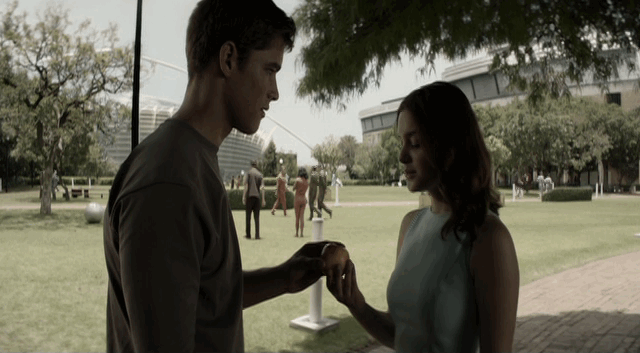
Forbidden fruit: The new Receiver tries to do some giving.
Review: The Giver by Lois Lowry. Houghton Mifflin (1993). Movie adaptation produced by The Weinstein Co. (2014).

The other week, I watched The Giver on DVD with my wife and a few of my kids. It’s a 2014 film adaptation of Lois Lowry’s 1993 book about a future collectivist society that does away with all but a bland, utilitarian remnant of human emotion and ambition. “The community” has even eliminated history from the minds of its people, with one significant exception.

A single chosen individual, the “Receiver of Memory,” is designated to take care of recalling past civilizations and events. This exalted and burdened person is set apart with an exclusive collection of books and memories, which he keeps to himself except to cryptically advise the Elders in their decision-making.

Eventually, the Receiver takes on an apprentice, to whom he passes all that knowledge and memory. The selection of a new Receiver “is very, very rare,” as the community’s Chief Elder tells her community at the Ceremony of Twelve,1 where young people are being assigned their occupations with much fanfare, and without any say in the matter. “Our community has only one Receiver. It is he who trains his successor.”2

The story’s hero, Jonas, is named as that successor. “I thought you were The Receiver,” Jonas tells him during their first teaching session, “but you say that now I’m The Receiver. So I don’t know what to call you.” Call me The Giver, the old man says.3 And from him Jonas goes on to learn some amazing and troubling things. His life will never be the same again.

———

Around the end of 2010, one of my daughters had been assigned the book in school, and I wound up reading it myself. At the time, I was in the early stages of researching the doctrine and history of my old church. The things I was starting to learn would turn my own life upside-down and result in my first book, An Examination of the Pearl, about a year later.4

I was stunned by the parallels between Lowry’s sheltered, intellectually stunted community and the “Kingdom of God” in which I’d been struggling. After a lifetime as one of “God’s children,” I’d finally started to look at my odd little church in a clear-headed way. What I was seeing disturbed me a great deal, and so I put together a listing of church writings with footnotes stating some of my concerns. I had it printed and bound into a dozen softcover copies that I shared with a few friends in the church. Oops.

In September 2010, I was hauled before the church board of trustees and preachers for a stressful, coercive, and emotional meeting about my little copy-shop book. “Are you really believing?” I was asked. Beyond some concern about how I could dispute what “God’s Word” teaches regarding Adam and Eve and Noah’s Ark, there wasn’t much substantive discussion of what the book actually had to say. It was mostly about me for having said it.

Repent or Else

They told me the book was an expression of my doubts, which would have been best kept to myself or private conversations. It could be dangerous if it fell into the wrong hands, they said. It would leave the impression among outsiders that there are dif­ferences of opinion in “God’s Kingdom.” And it is certainly not something that believers should be reading. After over two hours of this, the meeting concluded with the understanding that I was to retrieve copies of the book.5

Just a few months after that experience, here I was reading about a closed community of myriad rules and “appropriate remorse” and public apologies, where uncomfortable history was extinguished from memory, where intractable rule-breakers were released to “Elsewhere.” And I was seeing a frightful near-future version of myself in Jonas, not some lofty hero but simply a wide-eyed seeker of truth–unable to tolerate cen­sorship and propelled by an irresist­ible call to look at reality, at long last, come what may.

Comparing Lowry’s all-controlling community with Christian funda­mentalism doesn’t seem to be a unive­rsal or even a com­mon interpretation of her book,6 but she would be happy to let me keep it as my own. “A book, to me, is almost sacrosanct: such an individual and private thing. The reader brings his or her own history and beliefs and concerns, and reads in solitude, creating each scene from his own imagination as he does.” And I was certainly interested to see her recall a “man who had, as an adult, fled the cult in which he had been raised” telling her “that his psychiatrist had recommended The Giver to him.”7

———

The first thing that jumped out at me was the rigid structure of rules that govern life both in Lowry’s dystopia and for the “believers” in the Laestadian Lutheran Church. Community members are careful to maintain “precision of language,”8 while believers do not swear, tell dirty jokes, or speak light-heartedly about faith matters. Each family unit of the community receives two children–no more–while believing parents are to accept as many children as they are “given”–no less. Community girls are instructed to keep their hair ribbons “neatly tied at all times”9 while believing girls are instructed not to wear earrings, make-up, or spaghetti straps.

Even a minor rule like the one against bragging (there is “never any comfortable way to mention or discuss one’s successes without breaking the rule against bragging, even if one didn’t mean to”) is best followed by steering clear of occasions where breaking it would be too easy.10 Thus believers have restrained themselves from playing violins in orchestras where they might get “puffed up” in their talents, even if they would just be one of many players helping to produce one of the few types of music to which they can listen in good conscience. Thus many an athletic Laestadian boy has walked home while his unbelieving sort-of friends go off to football practice. God’s glory must not be given to another, and the world cannot become too close.

And then there are those Stirrings, which begin for young Jonas with a dream about a girl his age. He describes it to his parents during a “sharing-of-feelings” rap session they are expected to do over dinner each day. (“Be free,” the board members would tell us during the many congregational meetings of my youth.) In the dream, he and the girl were in front of a tub in the House of the Old, where the elderly get cared for in their final days.11

“I wanted her to take off her clothes and get into the tub,” he explained quickly. “I wanted to bathe her. I had the sponge in my hand. But she wouldn’t. She kept laughing and saying no.”

His father asks Jonas about the strongest feeling he experienced during the dream.

“The wanting,” he said. “I knew that she wouldn’t. And I think I knew that she shouldn’t. But I wanted it so terribly. I could feel the wanting all through me.”12

His parents look at each other and Jonas is then told about the Stirrings.

He had heard the word before. He remembered that there was a reference to the Stirrings in the Book of Rules, though he didn’t remember what it said. And now and then the Speaker mentioned it. ATTENTION. A REMINDER THAT STIRRINGS MUST BE REPORTED IN ORDER FOR TREATMENT TO TAKE PLACE.13

In the dystopia of The Giver, the treatment is medication, taken every day to deaden a person’s natural sex drive until it finally disappears in old age. In Laestadianism, the treatment is the forgiveness of sins–dispensed in a sermon every Sunday and, if parents are following recommended procedure, in the words of absolution being preached to their children at bedtime every night.

Believe all sins forgiven in Jesus’ name and precious blood, the young innocents are told, night after night by parents or siblings. That proclamation offers redemptive relief for all sins, and does the job in most cases, certainly from sinful thoughts of providing erotic bathing assistance to the cute girl or boy next door. If one’s Stirrings have moved beyond mere fantasy to masturbation or–heaven forbid–to a little kissing and heavy petting behind the garage where the yard light don’t shine, guilt pangs may persist despite the generic assurance of forgiveness. The preachers recommend confession in such cases.

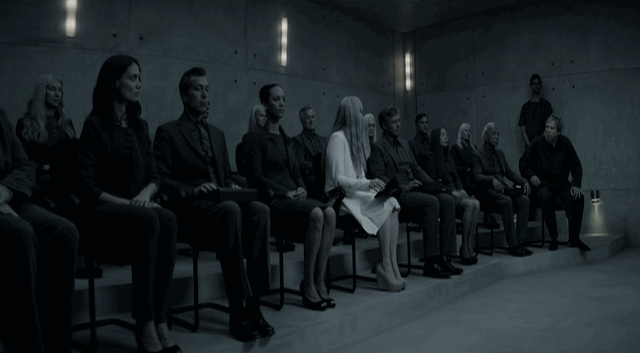
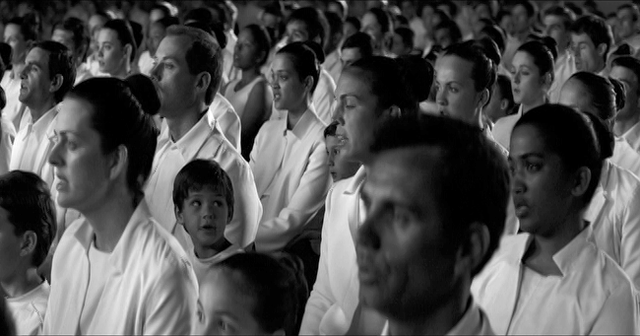
The assembled community: Looks a lot like church to me.

Confession was a big deal in Laestadianism during my childhood. Most sins beyond mere impure thoughts, doubts, etc. were considered to remain on the conscience until one had spoken of them “by name.” It was not an absolute requirement to confess, but was widely expected, at least for those infractions falling into a non-biblical category of “name sins,” a category that was often referred to but never very specifically defined.14 A 1978 article from the church newsletter pretty well encapsulates how things were back then:

It is never an easy matter to repent of sins for the flesh fights against the Spirit. But sin has a name, and those named sins will not go away without our speaking of them to a dear brother or sister. We are assured that we can freely go to a dear one and open our heart. But those sins that have affected the congregation of God are to be re­pented of before the con­gregation; otherwise we will not receive freedom.15

That last part about repentance before the congregation offers a hint of the public confessions that people often made after the Sunday morning service when I was a kid. In my congregation and at least some others in North America, members would head up to the front of the church after the ser­mon and ask the en­tire con­gregation for forgiveness of various sins.

During the congregational “caretaking” meetings that were a regular Saturday night event, where some issue or person(s) of concern would be discussed with much emotion, such repentances would go on and on.16 I’ll always remember one of them in particular, from a young father who dutifully walked up to the microphone and asked forgiveness of the congregation for “reading filthy literature.” Poor guy. It was probably just a paperback novel with a vague sex scene or two.

With all those memories in my head, you can see why I saw some Laestadian parallels in Jonas’s recollection of his friend Asher showing up late to class:

“When the class took their seats at the conclusion of the patriotic hymn, Asher remained standing to make his public apology as was required.”

“I apologize for inconveniencing my learning community.” Asher ran through the standard apology phrase rapidly, still catching his breath. The Instructor and class wait­ed patient­ly for his ex­planation. The students had all been grinning, because they had listened to Asher’s explanations so many times before.

“I left home at the correct time but when I was riding along near the hatchery, the crew was separating some salmon. I guess I just got distraught, watching them.

“I apologize to my classmates,” Asher concluded. He smoothed his rumpled tunic and sat down.

“We accept your apology, Asher.” The class recited the standard response in unison.17

“I’d like to ask forgiveness for, er, reading filthy literature,” the Laestadian Asher stammered, looking down at the floor. Believe all your sins forgiven in Jesus’ name and blood, replied the congregation with their standard response, in unison.

———

Back in those bad old days, there was another chilling parallel to The Giver. It was release from the community, the Laestadian form of which we called “binding.” Believers would be bound in their sins, and any requests they made to be forgiven would be denied unless it was decided that they were being specific and penitent enough about the issue at hand. Usually, there was some “false spirit” at the heart of the matter, which needed to be exorcised by being named in the confession.

This was a sad outcome of many “care­taking meet­ings” that were common­ly held to discuss the spiritual state of individual congregation members. Such a meeting was considered the third step in Jesus’ instructions regarding the rebuke of a brother who has caused offense (Matt. 18:15-16). Offense was taken not so much for individual actions against another member but as a result of the wayward one’s observed sins (e.g., acquiring a television) or erroneous doctrinal views.

In a 1971 newpaper article, the Finnish counterpart to my North American Laestadian church had set forth the binding procedure in no uncertain terms: “If the ones spoken to do not humble themselves to repentance, consider them pagans and publicans and refuse them membership in the association. The disobedient are not to be greeted with the greeting of God’s children.” My old church took “precisely the same stand in America” three years later.18

“For a contributing citizen to be released from the community was a final decision, a terrible punishment, an overwhelming statement of failure.”19 In The Giver, release was just to “Elsewhere.” Nobody but the Planning Committee knew exactly where the released person went.20 We readers, along with a wiser and sadder Jonas, come to realize that release actually involves death, not mere departure.

The horror and injustice of the community killing off its members–not just for disobedience, but for perceived unfitness at birth or just running out the clock on one’s old age–is what propels Jonas to take drastic action as the apprentice Receiver. Obviously, it would be a stretch to draw much of a parallel there, but it’s worth mentioning what a sad impact the Laestadian practice of binding did have on people.

Beyond the gate: Actually a good place to be. [Flickr page]

I personally witnessed it several times as a youth. It is quite unforgettable to see people ask the congregation for forgiveness at a meeting held concerning their spiritual affairs and receive only cold silence as a response. Sometimes they would sit gamely at their table at the front of the church while the meeting continued to the bitter end, often late into the night. And sometimes they would reach their breaking point and storm out of the building, ending the meeting of their own accord. I saw it go either way. Both outcomes were heartbreaking to the subjects as well as the congregation members who sincerely believed that the soul of their brother or sister hung in the balance that night.

There could be a good deal of secret resentment even when one had jumped through the hoops set before him. Grumbling behind the back of the church elders was the only possible relief. To approach them with concerns about their activities carried the very real danger of seeming unrepentant and becoming subject to yet another meeting. Instead, for a couple of years to come, the public face remained one of compliance and thankfulness for the opportunity of correction. In many cases the corrected one was probably so beaten down by the experience as to feel a Stockholm-syndrome sense of gratitude.21

The last case of binding I’ve heard of happened ten years ago, and that’s quite a late anomaly. The Finnish counterpart to my old church issued an apology of sorts in 2011 for “errors [that] were able to expand almost everywhere in our Christianity,” though it puts the blame on individuals rather than the supposed­ly inerrant community, er, Mother con­gregation.22 But the trauma and col­lective memory of it still lurks behind the rebukes taking place in every private board meeting with a wayward believer. There is usually no alternative but to accept what you are told and repent of your supposed sin if you want to continue being considered “heaven acceptable.”

———

One “morning, for the first time, Jonas did not take his pill. Something within him, something that had grown there through the memories, told him to throw the pill away.”23 He has gotten some of the forbidden knowledge into his head, and a bit of color has started seeping into his black-and-white world.

It hasn’t been an altogether pleasant transformation:

He found that he was often angry, now: irrationally angry at his groupmates, that they were satisfied with their lives which had none of the vibrance his own was taking on. And he was angry at himself, that he could not change that for them.

He tried. Without asking permission from The Giver, be­cause he feared–or knew–that it would be denied, he tried to give his new awareness to his friends.24

The reactions are mixed. Asher gets uneasy when Jonas tells him to look at some flowers very carefully, wondering if something is wrong. In the film adaptation, Fiona (the girl of Jonas’s bathtub dream) takes more readily to this scary new Jonas and his crazy ideas. “There is something wrong. Everything’s wrong. I quit,” Jonas tells her in response to the same question Asher had asked.25 He persuades her to quit taking her own stirring-stopper medication, too, and some difficult consequences ensue.

Ultimately, the Receiver of Memory cannot remain in the community. He knows too much. He feels too much. The community insists on keeping itself ignorant of what he has learned. It will not raise up its eyes from the safe grey sameness of doctrinal familiarity to look–really look–at the world he now sees all around.

“Listen to me, Jonas,” the old Giver tells a sobbing Jonas. “They can’t help it. They know nothing.”26 And then Jonas leaves the community of his birth and up­bring­ing, to a new and scary but joy­ous place–outside for the first time, inside never again, and the better for it.

———
The film (IMDb page) hasn’t been highly rated by critics or viewers. But I loved it, and not just because of the connection I felt with the story. The book is a Newberry Medal winner and has sold more than 10 million copies.
The three screenshots are from The Giver film, reproduced under “fair use” for purposes of review and commentary. The photo is Copyright © 2013 Edwin A. Suominen. Click to enlarge, or check out my Flickr photostream. You may freely use it for non-commercial purposes, with attribution, under the Creative Commons Attribution-NonCommercial 3.0 Unported License.

Notes


  1. “Ceremony of Advancement” in the film adaptation, since it has the kids being 16 years old, not 12, at the time their assignments are given (DVD playback at 06:50). 

  2. The Giver, p. 61. 

  3. p. 87. 

  4. Self-published January 2012, for Amazon Kindle, in print, and available for free reading at examinationofthepearl.org

  5. Adapted from An Examination of the Pearl, Section 1.2, “Disputation.” 

  6. Daniel D’Addario, “Lois Lowry: The dystopian fiction trend is ending,” Salon (July 10, 2014). salon.com/​2014/07/10/​lois_lowry_the_dystopian_fiction_trend_is_ending. Lowry: “People who are very conservative and feel they represent family values find that in this book. And ultraliberal people the same thing will hold true at the other end of spectrum. It happens also with theology, they’ll find it. I’ve had very conservative Baptist churches use the book as part of religious cur­riculum. Also ultra­conservative religious groups want it banned. It’s something that speaks to whomever wants to hear it. I have no control over that. I did not plan any specific political or theological interpretation, but people seem to find it.” 

  7. Lois Lowry, “Reflecting on 20 Years of The Giver,” Huffington Post (June 24, 2014). huffingtonpost.com/​lois-lowry/​the-giver-movie_b_5527063.html

  8. Once, before the midday meal at school, Jonas had said, “I’m starving.” Oops, that was a no-no. “Immediately he had been taken aside for a brief private lesson in language precision. He was not starving, it was pointed out. He was hungry. No one in the community was starving, had ever been starving, would ever be starving. To say ‘starving’ was to speak a lie. An unintentioned lie, of course. But the reason for precision of language was to ensure that un­intent­ional lies were never uttered. Did he understand that? they asked him. And he had” (pp. 70-71). 

  9. p. 23 

  10. p. 27. 

  11. Until being killed off, that is, in a nice little “release” ceremony that nobody seems to really recognize for what it is. 

  12. p. 36. 

  13. p. 37. 

  14. The following excerpt from An Examination of the Pearl, at the end of Section 4.6.3, provides some context about the Laestadian concept of “name sins”: It “is probably based on the ‘mortal sins’ that in Catholic theology must be confessed by name: ‘All mortal sins of which penitents after a diligent self-examination are conscious must be recounted by them in confession, even if they are most secret . . .’ (Catechism of the Catholic Church, para. 1456). But Luther downplayed and criticized the distinction between mortal and venial sins, criticizing theologians who ‘strive zealously and perniciously to drag the consciences of men, by teaching that venial sins are to be distinguished from mortal sins, and that according to their own fashion’ (Discussion of Confession, 89-90). Not all sins of either type ‘are to be confessed, but it should be known that after a man has used all diligence in confessing, he has yet confessed only the smaller part of his sins.’ Furthermore, he wrote, ‘we are so far from being able to know or confess all the mortal sins that even our good works are damnable and mortal, if God were to judge with strictness, and not receive them with forgiving mercy. If, therefore, all mortal sins are to be confessed, it can be done in a brief word, by saying at once, “Behold all that I am, my life, all that I do and say, is such that it is mortal and damnable”’” (p. 89). 

  15. Voice of Zion, October 1978. 

  16. These two paragraphs are adapted, with the quotation, from An Examination of the Pearl, Section 4.6.3, “Confession.” The psychological health of the current generation of Laestadians owes much to a greatly reduced emphasis on confession, and public confessions are now pretty much unheard of. 

  17. The Giver, pp. 3-4. 

  18. Päivämies No. 29, 1971, and then Voice of Zion, October 1974. These two paragraphs are adapted, with quotations, from An Examination of the Pearl, Section 4.6.4, “Rebuke.” 

  19. The Giver, p. 2. 

  20. p. 32. 

  21. These two paragraphs are also adapted from An Examination of the Pearl, Section 4.6.4. 

  22. See An Examination of the Pearl, Section 4.10.2 (“Rethinking the 1970s”). 

  23. The Giver, p. 129. 

  24. p. 99. 

  25. Film, DVD playback at 52:19. 

  26. p. 153. 


Saturday, July 4, 2015

The Word of Life

[T]he fundamental unit of selection, and therefore of self-interest, is not the species, nor the group, nor even, strictly, the individual. It is the gene, the unit of heredity.
—Richard Dawkins, The Selfish Gene
Bearberry [Flickr page]

I am a hidden and ancient thing conveyed by multitudes.1 Tiny copies of my elegantly mutated essence are coiled up everywhere inside you. I formed them for you, I suppose, but really you for them. You are just temporary housing and transportation for encoded messengers of my being.

These coiled minions sit inside blobby packages that accumulate water and carbon compounds, following the directions I give via chemical codes that I set up eons ago. Proteins form and fold, and then clump into organelles and membranes, separating this compound from that, letting some things in while keeping others out, burning chemical fuel one molecule at a time to power movement and signaling and growth.

Of all those, growth is my highest direct priority. Replication and propagation are what I am and what I do, and my subordinates are rarely content to sit in a single package for long. As soon as things get settled, they unfurl their strings of evolved wisdom into matching halves that pull apart, making two packages where there’d been just a single one.

Oregon Grape Ring [Flickr page]

It’s quite a trick, probably my best one ever. Copies of my chemical code make full copies of themselves that include instructions they need for further copying. A continuous chain of copies has been doing this for nearly as long as our ball of rock has been circling the sun. Try wrapping your feeble little brains around this: I had these little things duplicating my juju, automatically, billions of years before you guys finally figured out how to squeeze inky blocks of letters onto paper and print copies of books without writing them out by hand.

Is the copying perfect? No, and that’s what actually gets the magic done. These things usually make a perfect copy of themselves–but not always. The occasional mutants get a shot at continuing their own branches of the chain. The originals and mutants do their best at further copying, banging away side by side, conducting trillions of experiments in what works for them. Some of the so-called mistakes wind up working better than the original, and so copies with their new code is what takes over in that little corner of the world.

The whole thing just hums along on its own, branching and trying and dying. It’s been happening for longer than you can possibly comprehend, even if you try to accept the idea of billions of years–imagine thousands of ages each containing hundreds of thousands of lifetimes. You really can’t, though, can you? Not with those primate brains of yours that last less than a hundred years.

My first day on earth was about 3,600,000,000 years ago, when a molecule that had been banged together from reaction after reaction finally wound up in some chemistry that nudged it into making a copy of itself.2 This was a first: self-replication, life itself. Some molecules accumulated stuff and formed little packages, and those ones copied themselves better, and I found myself in cells. It took another billion years for some of those cells to clump together and form bodies, which worked well enough to reproduce into their own populations, though most of me does just fine in one cell even now.

Then, 360 million years ago, multicellular critters finally crawled out of the water. It took another 150 million years or so for any of them to evolve a system of letting their body-copies develop inside themselves instead of plopping out eggs and waiting for them to hatch. And then, “only” a few million years ago, some of your ancestors got what it takes–mentally and physically–to move around on two feet.

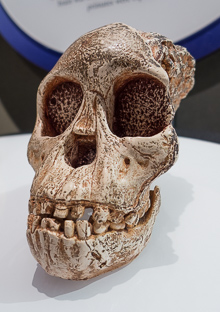
Cast of Taung Child fossil, 2.5M years old

And now you exist, hairless primates sitting in front of your computers and phones reading this, with your own types of bodies that form and grow and maintain their being, all built from single packages splitting into pairs, with a copied version of me in each.3 It takes trillions of them to run a single one of you.

But I have to remind you of something: All these bodies, your own included, are here to spread my essence. That’s it. I hope it does not disappoint you to learn this.

Everything that you do–all your learning, your dreams, your loves, your reading of some weird life-as-narrator essay on a blog–is part of a large and messy process of living that is directed towards my goal of survival beyond your body. With any luck, a copy of me provided by your body and merged with a copy from someone else’s will be replicating and plumping up other bodies long after yours is rotting in the grave. You will have served your purpose.

Now, I have to say, your particular type of body has taken on an insane degree of complexity to get the job done. You are all feet and fingers and endless silly distractions for your huge unwieldy brains. But seven billion of you now swarm the face of the planet with your uniquely evolved copies of me, so the system is working in you, however absurd it might seem.

I do worry, though, about how many of you there are now. The web of food and fiber I’ve so patiently woven, with so many species connected this way and that, propagating versions of me in all their mind-blowing varieties, is fraying under your billions of non-prehensile feet. And I’ve seen how little you regard my other types of replication vehicles. Mammoths and giant sloths and Moa birds were really magnificent in their times, and then along you came. Now some of you are taking out the last elephants and rhinos–and for what? The pointy things on their heads. Because some of you think it will help you get laid? Idiots.

Kalalau Valley [Flickr page]

Speaking of sex, do you really need all those fancy preliminaries before the chromosome-mixing part? Despite my concerns about keeping my portfolio diversified, I get impatient with all your beating around the bush, so to speak. Flowers and candy and dinners out. All this talk about long walks on the beach. If you’re going to give me more human-type copies (and again, I’m not too sure I really need them at this point), then get to it already!

And I might also offer an observation about all the endless dead-ends I’m seeing even as you navigate the maze of hearts and flowers. Most of you guys and, yes, gals, know what I’m talking about here.4 Working that bicyle pump with no inner tube around. Billions of fine copies of genetic brilliance, all those refinements I worked so hard to earn from eons of struggle and selection, just kablooey–gone. And over on the female side of things (where you young men so desperately want to wind up) are my carefully encapsulated copies that sit in warm wet darkness, waiting for a match that never, er, comes. I go to all that trouble every month for years on end, flooding the ladies’ bodies with a big hormonal unnnggghhh that gets addressed not by Mr. Right but by Ms. Right Hand. It breaks my heart, though it just seems to speed up yours for a while.

But at least that sort of thing is a practice run for the actual event. Keep the pipes cleaned out, look at the cool new gadget online while you wait for the package to arrive, that sort of thing. OK, fine. You young ones knock yourselves out. Just keep your eyes on the prize.

What really amuses me about you on the other end of the age range is that you don’t know when to bow out once you’ve finally got the job done. By all means get the new bodies up and running, maybe exert a little pressure on the offspring to pair up so you know the process will continue. What the hell–if the offspring wind up having offspring while you’re still here, way past your sell-by date, go ahead and stick around to see that they get moving in the right direction, too. But enough is enough. I see no reason at all for hip replacements and hearing aids.5

And then there is this new Viagra stuff you’ve cooked up. Look, I appreciate the gesture, really, I do. Half of you getting your gene-juice into the other half is the climax–pardon another pun–of your service to me. Replication, baby, replication: It’s the whole point of your existence, as you seldom ever realize in the heat of the moment but sometimes do in terrified and regretful hours afterwards. But at this point, dear old worn-out retirees, you do know there aren’t going to be any babies coming back out of that particular place anymore, don’t you? It’s like catch-and-release fishing, I guess, entertaining and harmless even if I don’t see the point. The lot of you have certainly come up with plenty of worse delusions to occupy yourselves over the past few thousand years.

Bird of Paradise [Flickr page]

There’s no arguing with the long-evolved base urges of biology that have gotten you propagating me so effectively. My messengers only have two escape routes from your bodies, after all, a loaded penis and a bidirectional vagina. Everything else is technical support. So, given the limits of my three-billion letter code and your slowly evolving brains (God, they seem slow sometimes! Eating ground-up horns to get laid? Seriously?), I suppose I can’t expect you not to be obsessed with the act, pretty much until you finally drop dead. Especially you codgers with your withered wangs, which can theoretically export copies of me for a long time, if the mechanics and opportunities are still there.

You guys like the long odds, I guess. It doesn’t cost you that much to keep playing.

Just, do me a favor, all of you: Try to persuade all those kids and grandkids you scored to do a better job with the planet than you did, OK? Over the past few billion years, there’s been a lot of crowd-sourced effort put into making this thin film of me that coats this one living planet. (Yes, in case you haven’t figured it out yet, I am life itself speaking to you, lunkhead.) So don’t be so full of yourselves. Your species is not my only shot at keeping my copies going (the microbes are still doing pretty well), though you’ve been acting like it since your furry forebears sharpened sticks into wooden spears half a million years ago. Maybe seven billion of you might be enough.

———
Click on individual images to enlarge, or check out my Flickr photostream. All are Copyright © 2014-15 Edwin A. Suominen. You may freely use them for non-commercial purposes, with attribution, under the Creative Commons Attribution-NonCommercial 3.0 Unported License.

Notes


  1. “I am large, I contain multitudes,” is Walt Whitman’s immortal phrase in A Song of Myself

  2. Recommended reading: Emergence of Life on Earth: A Historical and Scientific Overview by Iris Fry. Her two-sentence summary of evolution is one of the most concise and illuminating I’ve seen: “Those individuals that survive longer and leave more offspring in a given environment transmit their properties to the next generation to a greater extent than those that are less successful. This brings about gradual changes in the character of the population, which accumulate during long historical periods and produce entirely different organisms and eventually new species.” 

  3. A wonderful phrase from Acts 17:28 (“For in him we live, and move, and have our being; as certain also of your own poets have said, For we are also his offspring”), which is more connected to secular philosophy than what “Paul” acknowledged. Lucretius in c. BC wrote of the mind, “Everything has its place, certain and fixed, / Where it must live and grow and have its being. / So mind cannot arise without the body / Alone, nor exist apart from blood and sinews” (Book III, trans. Ronald Melville). It was a very sensible and materialist statement that has nothing to do with God. 

  4. Kinsey Institute, kinseyinstitute.org/​resources/FAQ.html. “More than half of women ages 18 to 49 reported masturbating during the previous 90 days.” Unsurprisingly, the numbers were higher for men, and the statistics for both sexes exclude those who lie on surveys. 

  5. The real author of this piece will, of course, get all the hip replacements and hearing aids he needs and can afford, if and when the time comes. We self-preserving organisms are funny like that. 


Monday, June 23, 2014

Lucretius on Love

A bundle of myrrh is my well-beloved unto me; he shall lie all night betwixt my breasts.
—Song of Songs
Photo credit: Rosie English

It has been at least 2200 years since the Song of Songs celebrated the raw sensuous beauty and passion of sex. That book probably holds the record as the one least referenced in Lutheran church services. Just try to imagine the preacher wearing his Sunday suit and sitting stiffly behind his pulpit, reading, “Awake, O north wind; and come, thou south; blow upon my garden, that the spices thereof may flow out. Let my beloved come into his garden, and eat his pleasant fruits” (4:16). Or this (7:6):

How fair and how pleasant art thou, O love, for delights!

This thy stature is like to a palm tree,

and thy breasts to clusters of grapes.

I said, I will go up to the palm tree,

I will take hold of the boughs thereof:

Now also thy breasts shall be as clusters of the vine,

and the smell of thy nose like apples;

and the roof of thy mouth like the best wine for my beloved,

that goeth down sweetly,

causing the lips of those that are asleep to speak.

Given how much Christianity has wielded the Bible (the same one in which the Song of Songs appears, oddly, like a bikini on an Amish grandmother) to supress human sexuality, it is worthwhile to stop and reconsider what a normal and natural part of life sex really is. We are all of us the warm wet products of some sexual union decades ago, between two participants who each were the products of an earlier one. It goes all the way back to the grunted cave couplings of prehistoric hominids on furs by firelight, and beyond.

Bud Burst  [Flickr page]

Over its centuries of dominance, the church has sown in our society a minefield of hair-trigger offense that separate us from acceptance and expression of the very act that formed us. In the outermost reaches of fundamentalism, it is sinful for a young person to even linger on thoughts about how this primal drive might at last be satisfied. The explosions of offense get louder if the poor sinner traverses further into the minefield: sex without children in mind, masturbation, sex before marriage, sex with someone of your own gender.

To that we can add a further boundary, sex outside marriage. It is one that most of society, myself included, still considers a valid taboo. Frankly, cheating is just a deceptive act of selfishness. But even extramarital sex has been a nuanced topic: What if, for example, all parties are consenting? I personally can’t imagine such an arrangement, but who am I to judge? In the early 1500s, someone more radical than myself about the idea suggested this course of discussion for a sexually dissatisfied wife:

Look, my dear husband, you are unable to fulfill your conjugal duty toward me; you have cheated me out of my maidenhood and even imperiled my honor and my soul’s salvation; in the sight of God there is no real marriage between us. Grant me the privilege of contracting a secret marriage with your brother or closest relative, and you retain the title of husband so that your property will not fall to strangers. Consent to being betrayed voluntarily by me, as you have betrayed me without my consent.

The writer was Martin Luther.

Any proper Lutherans shocked by this or the Song of Songs, those who consider gay marriage to be a sure sign that the End of Times is upon us at last, may not be aware of just how much sex has been going on throughout human existence, and how varied it has been. I could mention the exploits of Enkidu in The Epic of Gilgamesh some four thousand years ago, or the incest and prostitution in Genesis, or the misogynist pornography of Ezekiel 23. Perhaps in future essays I will. But for this one, I want to turn to one writer from antiquity with a remarkably free mind: Lucretius.

He came from a time and place where it was “taken for granted that male sexual desire may be for either a younger male or a female.” So says Ronald Melville in a footnote to this passage Lucretius wrote sometime in the first century B.C., in the secular masterpiece On the Nature of Things:

Thus, therefore, he, who feels the fiery dart

Of strong desire transfix his amorous heart,

Whether some beauteous boy’s alluring face,

Or lovelier maid, with unresisting grace,

From her each part the winged arrow sends,

From whence he first was struck he thither tends;

Restless he roams, impatient to be freed,

And eager to inject the sprightly seed;

For fierce desire does all his mind employ,

And ardent love assures approaching joy.

Pretty candid stuff, for both the ancient philosopher poet as well as the bold translator of these lines and the ones that follow, John Dryden [1631-1700]. I am awed and inspired by what I’ve been discovering in Lucretius, and am happy to finally be thinking for myself about issues where the proper opinions were once prepackaged for me. But I’m certainly glad we’ve moved past some of the things he and his culture accepted, like “Beautious boy,” or, considering the difference in age and power that he likely had in mind, “lovelier maid.” Yuck.

Book IV of On the Nature of Things has a lot more sordid stuff in it, and we’ll see a bit more of that in a minute. It was so scandalous to the prim eyes of Oxford University Press in 1913 that their edition of The Poems of John Dryden omitted his translation of the entire fourth book, offering only the curt footnote, “It is impossible to reprint this piece.”1

Come Hither  [Flickr page]

After acknowledging nature’s raw power, Lucretius advises his (presumably male) readers to find sexual outlets that don’t lead to infatuation and commitment.

But strive those pleasing phantoms to remove,

And shun the aërial images of love,

That feed the flame: when one molests thy mind,

Discharge thy loins on all the leaky kind;2

For that’s a wiser way, than to restrain

Within thy swelling nerves that hoard of pain.

Sex without love, how convenient—for the man. As Melville translates him, “by avoiding love you need not miss / The fruits that Venus offers, but instead / You may take the goods without the penalty.” Women readers may be forgiven for dismissing Lucretius immediately as just another jerk of a man. Some things never change.

But they might wish to hear him out just a bit longer. Lucretius goes on to describe, in graphic detail that will make even modern readers blush a bit, the grasping passion of lovesick sex. He means it as a warning to his fellow commitment-phobic, privileged freemen of ancient Rome. But to me it’s the good part, ironically a fine tribute to the best moments we can hope to attain from a dedicated love match, something two life partners can look back on with smiles even when the candle burns lower.

So I leave you, now, to read some steamy stuff from antiquity. As you do so (and admit it, you will), keep in mind just how remarkable it is: Penned a hundred years before Christ, a thousand years before the long shadow of the Dark Ages, 1800 years before prim and starched Victorian England! And during most of the intervening centuries between when Lucretius scratched his Latin onto some scroll now disintegrated into the atoms he taught of, these sensuous lines were preserved, copy by painstaking copy at the hand of monks whose cloistered lives were as far from this experience as one might imagine. Officially and publicly, at least.

When love its utmost vigour does employ,

Even then ‘tis but a restless wandering joy;

Nor knows the lover in that wild excess,

With hands or eyes,

what first he would possess;

But strains at all, and,

fastening where he strains,

Too closely presses with his frantic pains;

With biting kisses hurts the twining fair,

Which shows his joys imperfect, insincere:

For, stung with inward rage,

he flings around,

And strives to avenge the smart

on that which gave the wound.

But love those eager bitings does restrain,

And mingling pleasure mollifies the pain.

For ardent hope still flatters anxious grief,

And sends him to his foe to seek relief:

Which yet the nature of the thing denies;

For love, and love alone of all our joys,

By full possession does but fan the fire;

The more we still enjoy,

the more we still desire.

Rose  [Flickr page]

Nature for meat and drink provides a space,

And, when received,

they fill their certain place;

Hence thirst and hunger may be satisfied,

But this repletion is to love denied:

Form, feature, colour, whatsoe’er delight

Provokes the lover’s endless appetite,

These fill no space,

nor can we thence remove

With lips, or hands,

or all our instruments of love:

In our deluded grasp we nothing find,

But thin aërial shapes,

that fleet before the mind.

As he, who in a dream with drought is cursed,

And finds no real drink to quench his thirst,

Runs to imagined lakes his heat to steep,

And vainly swills and labours in his sleep;

So love with phantoms cheats our longing eyes,

Which hourly seeing never satisfies:

Our hands pull nothing

from the parts they strain,

But wander o’er the lovely limbs in vain.

Nor when the youthful pair more closely join,

When hands in hands they lock,

and thighs in thighs they twine,

Just in the raging foam of full desire,

When both press on, both murmur,

both expire,

They gripe, they squeeze,

their humid tongues they dart,

As each would force their way

to the other’s heart:

In vain; they only cruise about the coast;

For bodies cannot pierce,

nor be in bodies lost,

As sure they strive to be,

when both engage

In that tumultuous momentary rage;

So tangled in the nets of love they lie,

Till man dissolves in that excess of joy.

Then, when the gathered bag has burst its way,

And ebbing tides the slackened nerves betray,

A pause ensues; and nature nods awhile,

Till with recruited rage new spirits boil;

And then the same vain violence returns,

With flames renewed the erected furnace burns…3

———
Thanks to Rosie English for permission to use her outstanding photograph, “Evening Swimmerettes” of two beachgoers. The other photos are my own: Click on individual ones to enlarge, or check out my most “interesting” photos on Flickr. All are Copyright © 2013-14 Edwin A. Suominen. You may freely use them (not Rosie’s, at least not without her permission) for non-commercial purposes, with attribution, under the Creative Commons Attribution-NonCommercial 3.0 Unported License.

Notes


  1. See bartleby.com/204/187.html 

  2. Dryden’s phrase “leaky kind” Ronald Melville translates as “other bodies,” i.e., those of the promiscuous: “Reject, and turn the mind away, and throw / The pent-up fluid into other bodies, / And let it go, not with one single love / Straitjacketed, not storing in your heart / The certainty of endless cares and pain.” 

  3. John Dryden, trans., “The Latter Part of the Fourth Book of Lucretius Concerning the Nature of Love.” In John Dryden: The Complete Poetical Works (Annotated), N. John McArthur, ed. 


Friday, May 9, 2014

The Memes Shall Inherit the Earth

I think that a new kind of replicator has recently emerged on this very planet. It is staring us in the face. It is still in its infancy, still drifting clumsily about in its primeval soup, but already it is achieving evolutionary change at a rate that leaves the old gene panting far behind.
The new soup is the soup of human culture. We need a name for the new replicator, a noun that conveys the idea of a unit of cultural transmission, or a unit of imitation. ‘Mimeme’ comes from a suitable Greek root, but I want a monosyllable that sounds a bit like ‘gene’. I hope my classicist friends will forgive me if I abbreviate mimeme to meme.
—Richard Dawkins, The Selfish Gene
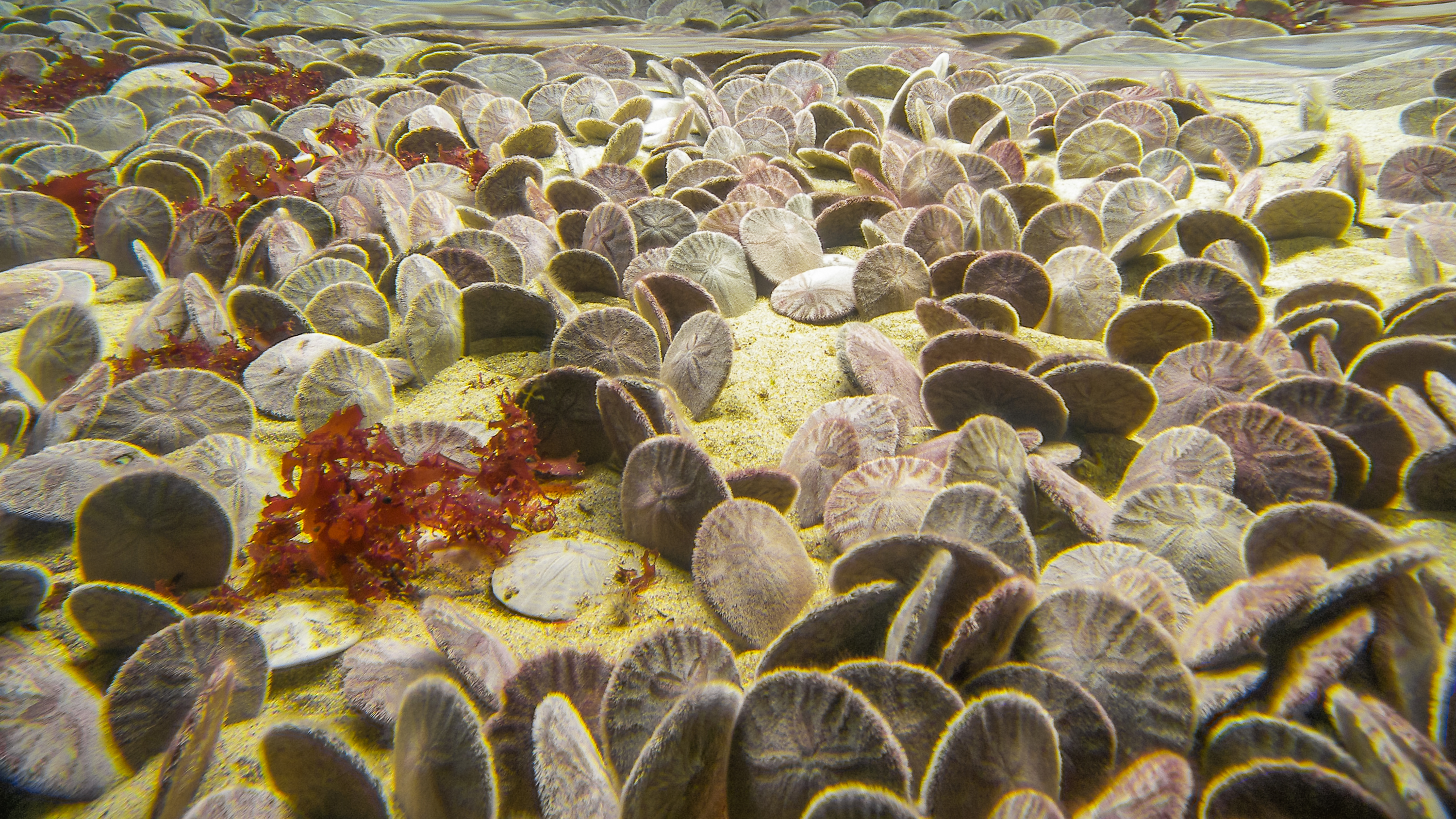
Replicators galore, these ones biological rather than cultural  [Flickr page]

We are all familiar with the deep-seated biological drive to replicate our DNA into new packages, to form a next generation of couriers who will carry this ancient genetic blueprint when our short-lived bodies no longer can. We may not understand or even accept the evolutionary basis for this procreative imperative, but few of us have been aloof to its power.

Every one of us is the product of it, after all. Somewhere, decades ago, two people messily mingled their chromosomes in the most intimate of acts and, nine months later, bestowed you unto the world. And another pair did the same to produce me, my proud father being older than I am now when he cradled his late-in-life newborn son. Each of those parents of ours was in turn the results of earlier sexual encounters from a sepia-toned age. There’s been a lot of that going on, a grey-haired old attorney once said to me with a smile as we ate our workday lunch in dress shirts and ties next to a table where a young couple groped and kissed. Thou shalt be a father of many nations, Abraham was promised.

Offspring  [Flickr page]

Even when we don’t have the end (a baby) in mind, or actively take steps to prevent its fulfillment, the means certainly preoccupies us to no end. A laughable amount of our attention and effort is devoted to pursuing an act whose fleeting peak moments will add up to mere days over a lifetime. For most of us, this long project begins in earnest before we’ve yet spent twenty years on the planet. But that was already middle age for those prehistoric forebears whose liaisons by the fire ultimately gave rise, a few thousand generations later, to the kids now pretending not to notice each other in high schools, malls, churches, and on Facebook.

The project never quite ends, either, at least not mentally. Long after the boiler quits producing enough steam to move the engine of actual reproduction, the whistle still blows. Whatever our age or sex, we still admire the curves or square shoulders, fair faces or rugged jawlines, of the beautiful people we encounter, both on the sidewalk and in the staged scenes playing out on our video screens. We continue to preen and posture, adorn ourselves with cosmetics and ornaments, and demonstrate our genetic fitness by preaching rousing sermons, writing books and blogs, taking selfies.

This behavior is signaling for sexual selection, which is an important mechanism behind biological evolution. It’s not just about the “survival of the fittest,” as the misleading but common phrase goes, but the replication of the fittest. What is “fit” is determined not just by how well organisms survive until they can reproduce, but how successful they are at the business of reproduction. And that, at least in sexually reproducing animals where both parties have a say in the matter, usually begins with a choosy female—faced with the investment of bearing and raising offspring—selecting the male whose feathers, fanny, or financial status are pleasing to her.

Once our species developed some cognitive abilities, demonstrations of brainpower became an important part of this signaling. Look at me, I’ve drawn some cave paintings! Invented a religion of which I, coincidentally, am shaman and seer! Written a poem! (The process can get carried away with itself, with runaway selection occuring for features that really have no importance for actual fitness or even signaling of fitness.) But all this strutting about was accompanied by—perhaps even led to—another realm of mutation and selection entirely apart from biology: cultural evolution.

Gaining a Foothold  [Flickr page]

Cultural evolution is a big topic, as witnessed by the size of Paul Ehrlich’s fine book on it. But one aspect I find particularly compelling (that enthusiasm not shared by Ehrlich, I might add) is the idea that units of culture propagate themselves for their own sakes, using the brains and information-conveying apparatus of humans as their hosts. “These proposed evolutionary units are memes rather than genes, propagating themselves through the minds of human beings instead of the gonads.”

So says our chapter “The Memes Shall Inherit the Earth” in Evolving out of Eden. (Look, ladies, I co-authored a book!) I’m very proud of that chapter. Memetics pioneer Susan Blackmore praised it as “one of the best descriptions” she’s seen “of how the memes of religion work.” So now I will take the liberty of using a few paragraphs excerpted here and there from it.

These memes compel me to reproduce them.

———

We are now well acquainted with the foundational idea of biological evolution: The genes in the DNA recipe for the best-adapted organisms are the ones that wind up replicating the most. Today’s evolutionary survivors among the genes are being propagated in beetles and basketball players rather than dodo birds and dinosaurs. Memetics posits memes as cultural equivalents to the biological replicators: Those memes that have replicated the best—via books, videos, blog postings, sermons, gossip, etc.—are the ones that now occupy the most cognitive territory in our brains.

Certainly, the success of the ideas we cherish and spread isn’t an accident. It is these ideas that won the struggle for our attention, having the right attributes to survive in our brains and replicate from one brain to the next. They are cultural equivalents to the genetic winners who are now alive rather than vanished from the earth with only fossils as their legacy.

Seed Pod  [Flickr page]

Kate Distin, an independent scholar of cultural evolution, views attention as the meme’s limited resource, analogous to the limited ecological resources for which genes compete. “There is a struggle for existence because a vast array of memes is competing for the limited resource of human attention, and therefore the fitness of any given meme will be influenced chiefly by its ability to gain and retain attention.”1

Brains constitute “a world full of hosts for memes,” and there are “far more memes than can possibly find homes,” says Blackmore.2 So they must be selfish and competitive, like genes; “their success depends on the advantages they confer on themselves. In the struggle for brains’ attention they must in some way be ‘better’ than their rivals.” This doesn’t necessarily have anything to do with the effects the memes “have on the genetic success of their possessors.”3 Contraception usage is an example of an idea that has flourished despite the direct and drastic effect it has on the genetic propagation of individuals adopting it.

Often, however, there is indeed a symbiosis between a meme and the person bearing it. Luther’s revolutionary theological ideas put his life in danger, but they also greatly impressed the Elector Frederick of Saxony. Spared Rome’s wrath by the interventions of this powerful friend, Der Reformator had a full lifetime to refine and spread these ideas, and also to procreate his genes: He had six children. There are genetic descendents of Luther walking around today, as well as countless Protestant churches with doctrines that incorporate Lutheran memes of sola scriptura and justification by faith alone.

The organisms, religions, and political parties produced by genes and memes don’t need to be appealing or useful in the grand scheme of things. Neither “gene nor meme theory has anything to say about the intrinsic value (i.e., ‘goodness’) of the information that its replicators carry.”4 They just need to be good at replicating, and they are happy to use you as a host.

———

It is a bit unsettling to step back and view yourself as a mere carrier of genes and memes. My entire life, it seems, is devoted to the propagation of information. The payload is not just the hard-won result of a billion years of evolutionary experiment that are encoded in my body’s cells and half of the encoding in my kids, but also the raw ideas that I convey with every word I speak and write. The memes want me to spread them around, for the same reason that mindless genes “want” to replicate: Those that do so (because their ancestors did) are the ones that now exist. And they are using me to achieve that goal.

We are helpless to resist the pull of the memes that have colonized us. My own urge to share ideas and, on some primal level, hope that others will adopt them (despite my conscious protests about the necessity of individual thinking) is as strong, in its way, as the sweet and tingling drives that led to these eleven kids of mine. And thus I sit here and type out yet another essay on this blog, fussing about the placement of pictures and the rhythm of my prose. Thus I bared my soul last week about a religion lost and science found, in an interview that will have been heard a hundred thousand times next month.

Now those memes packaged in the book my co-author and I spoke about in that interview, some of which just got themselves propagated again here, give Bob and me little food-pellets of satisfaction at seeing more copies sold, hard work appreciated, carefully written words read. Good humans. Keep on writing.

We are products of our genes, and now servants to our memes. We might as well revel in the absurd complexity of what we have become: walking primates who spend our days siphoning information from place to place and pretending that a little of it is our own.

———
Click on individual images to enlarge, or check out their photo pages in my Flickr photostream. All are Copyright © 2013-14 Edwin A. Suominen. You may freely use them for non-commercial purposes, with attribution, under the Creative Commons Attribution-NonCommercial 3.0 Unported License.

Notes


  1. Kate Distin, The selfish meme: A critical reassessment. New York: Cambridge University Press (2005), pp. 14, 57. 

  2. Susan Blackmore, The meme machine. Oxford University Press (1999), p. 37. 

  3. Distin at p. 11. 

  4. Distin at p. 75.