Showing posts with label Local Color. Show all posts

Friday, September 9, 2016

Defense

When [in 1957] an armed Klan motorcade came after [his friend Dr. Albert E.] Perry in his neighborhood, intending to terrorize him into submission, [Robert F.] Williams, a US Marine veteran of World War II, had his NAACP chapter meet the Klan with “disciplined, withering volleys” of rifle fire. The Klansmen fled, and the very next day, the Monroe city council banned KKK parades.
—Roy Scranton,
Learning to Die in the Anthropocene: Reflections on the End of a Civilization
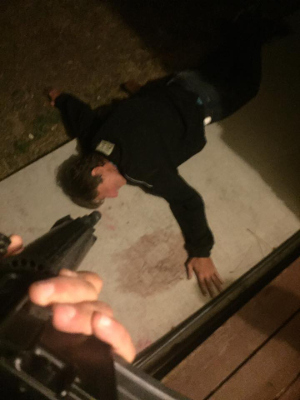
Whoops, picked the wrong house.1

The other weekend a man named Ian, one of my fellow citizens in the rural northeast corner of Washington State, heard his dog barking and went to check out what was going on. What he found was an intruder he says was “definitely whacked out on something,” dressed in black. Way out in the back woods where Ian lives, the front yard is not a place where you just wind up by accident late at night. But this intruder had picked the wrong house to try breaking into.

Ian, you see, is very prepared for this sort of thing because of his service in the Marine Corps and a career as a correctional officer. He’s one of those guys who sits with his back to the wall in a restaurant and reflexively does 180-degree eyeball scans of the scene. It’s not something he enjoys; he has PTSD from his time spent in very rough places. But the other night, that vigilance served him well.

He retrieved his AR-15 with its 30-round magazine. That rifle, he says, “while not guaranteeing my safety, allowed me to have a fighting chance against a possible threat” in those first dark moments confronted with an unknown intruder, when Ian “had no idea of how well armed he was or if he had friends, waiting in the shadows of my expansive property to try and help victimize myself and my family.”2

The guy was messing with the door handle. Ian “swung the door open” and his unwelcome guest “went from the porch to the concrete quickly with some assistance. Supposedly he’s got some broken bones.” That, Ian added, can happen when you’re falling. Especially with some assistance from a well-placed foot appearing out of nowhere. He proceeded carefully but firmly:

My wife retrieved her weapon and covered me while I did a cursory search of him and I found a 7 or so inch knife.

I held him at gunpoint while waiting for the cops. He started to bend his arms as if he might get up so I reminded him to stay down and then he cried a bit about his ribs.

After 40 long minutes–not an unusual amount of time for our far-flung rural area–the “cops came and cuffed him up and I told him if he ever came back, he dies.”
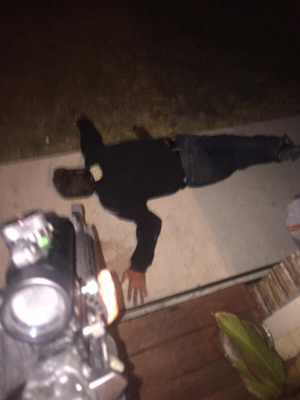
Hold that pose, please.

Note Ian’s use of non-lethal force to drop the guy, even as he held one of those big bad “assault” rifles at the ready.3 The intruder had no shots fired at him, though Ian was ready to “press his head out the second I saw him and the whole time I had him down. I was totally prepared to. I told him, as serious as I could that I would and please don’t make me do it. By that time he was crying about his ribs anyway.”

But he’s glad he didn’t need to, because he didn’t want his “kids to see a body if they don’t have to.” For those of you that think it’s an easy thing to do, Ian says, “you’ve never done it.”

He didn’t feel good afterward. This wasn’t going to make the PTSD any easier. Though he was glad to know that he still has what it takes to protect his family, he said the incident took him “back to a place I don’t miss.”

But let it be known, he added, “This guy fell like a sack of potatoes and had he not, he would have died. I’m no tough guy but I will end your life to protect my family.”4

I don’t have his training or experience, and I never would’ve had what it takes to be a Marine. But a traumatic experience years ago showed me just how long it takes for a response to a 911 call out here. (That it took 40 minutes for the police to finally arrive at Ian’s place didn’t surprise me a bit.) The defense of my home and family is up to me, and for me, the Second Amendment is not about being able to go hunt with a bolt-action rifle.

Hell, I don’t even hunt. Never have. But I do have some guns, ones I’ve shot plenty at old appliances and other worthy practice targets and at least know how to aim. The firearms are all safely locked away; I have no patience with parents who leave deadly weapons laying around for curious kids to check out. But, note to scumbags: “Locked away” definitely does not mean “inacessible if needed quickly.”

Notes


  1. This and the other image are actual photos Ian took while waiting for the police to arrive, reproduced here with permisison. 

  2. From an open letter Ian posted online addressed to Washington’s Attorney General regarding a proposed “assault weapons” ban. 

  3. An armed homeowner without Ian’s training and experience could easily have made a tragic mistake at this moment. There are stories of fathers accidentally shooting their sons returning home late at night, or coming horrifyingly close to doing so. 

  4. Thanks to Ian for permission to quote these remarks in the fourth paragraph and thereafter from a summary he sent to some friends and acquaintances after the incident. 


Monday, October 13, 2014

Neighbor Encounters

Which now of these three, thinkest thou, was neighbour unto him that fell among the thieves? And [the lawyer] said, He that shewed mercy on him. Then said Jesus unto him, Go, and do thou likewise.
The Gospel of Luke
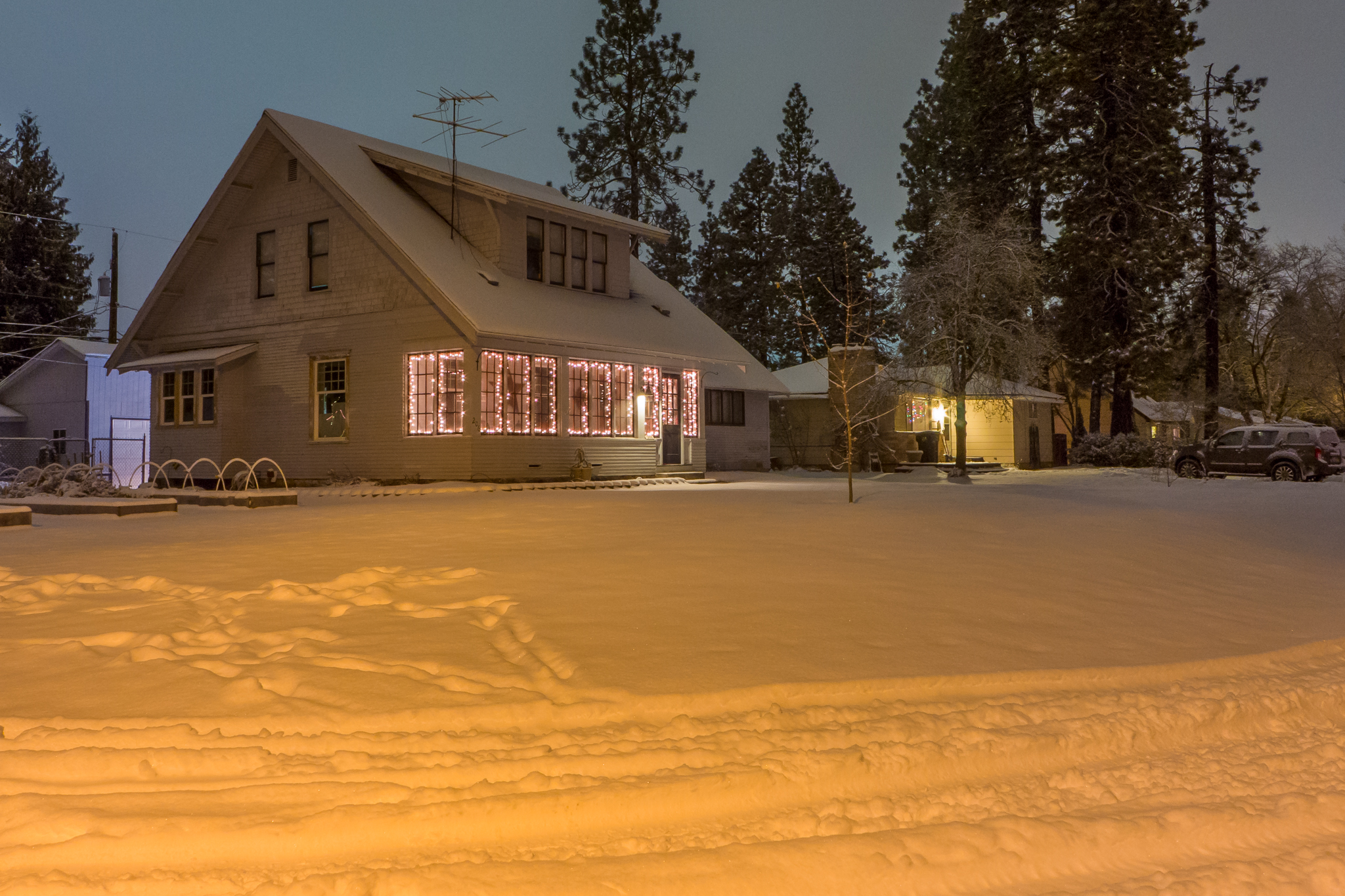
Finally got a print of this to the homeowner  [Flickr page]

My first stop on this evening’s brief walk was to a house I’ve gone past many times since taking a picture of it last winter. It’s a beautiful old place. Christmas lights lining the edges of its front porch windows put a nice sharp border on them. A sodium-vapor street lamp suffused the fresh snow with an amber glow. Blue-gray clouds hung low in the night sky behind it all, lit up by stadium lights at the school nearby.

I’d been wanting to give whoever lives there a print of that picture, and tonight I did. The homeowner was quite happy to get it, thanking me several times and saying how nice it looked. I thought so too, I said, and we wished each other a good night. Then I continued my walk, toward another house in the neighborhood.

This was the home of a good Samaritan who had found something of ours with enough identification on it to give us a call. I rang the doorbell and a woman about my age answered, holding a baby. He was a cute little guy, at that perfect age where they are light and round and eager to smile about nothing. After identifying myself, I surprised the woman and me both by asking if I could hold him for a minute.

“It’s been a while since I’ve held one this small,” I said. She thought about it for a second and then handed him over. I stood there for a while, bouncing a stranger’s baby in my arms, looking in at the warmth of her home and hearing the racket of little voices in the background. I said, “Would you like to guess how many I have?”

There were other young faces appearing now, along with her husband who had called me about my missing stuff. Somebody guessed, “Seven?”

“Nope,” I said. “Go higher.” I handed the baby back.

The woman was surprised and pleased at this development. She had thirteen, she said, and it was nice to meet somebody who had a big family, too. Finally, after a couple more guesses, edging upward and then overshooting the mark, my own statistic was revealed: eleven kids.

We talked for a while, the bunch of us standing at their threshold with the pleasant air of an Indian summer evening leaving everybody indifferent about the door hanging open. There was a blur of little bodies whizzing back and forth pushing toy trucks on the wood floor. Smiling faces everywhere. It’s a beautiful family, I told them, and meant it. We compared notes, touching on highlights of experiences that the other would understand.

I told them about when I’d seen a red-headed guy with his line of red-headed offspring following behind in the aisle of a Wal-Mart. A bunch of stuff was stacked on pallets in between us, so he didn’t notice me and my own crew of little followers as he made his way toward the auto parts and sporting goods. I looked over and said, in that loud rude voice I’d heard many times myself, “Look at all those kids! And they’re all so young!” He turned to glare at me, and then saw me smiling with all my kids standing right there, and he laughed.

These neighbors of mine did, too, and then they shared a story of their own, as Jesus looked at us all from a painting hanging on the wall behind them. I gave them my phone number—again, as they hadn’t kept it once they got hold of me—along with my address down the street, and invited them to call.

I think they just might. Who knows; perhaps we will get together sometime and enact one of those chaotic Sunday afternoon scenes that were so familiar in my life. Two big piles of kids merge at the front door in a cloud of chaos and then pairs of them go off to play or swap stories in the barracks downstairs. Meanwhile, the four parents try to sit and talk.

Our home doesn’t have any crosses or religious pictures on the walls. No Bibles sit on our shelves anymore, stuffed with Sunday School homework papers that will remain untouched until the drive to church next week. I hope that absence wouldn’t trouble them, any more than their Jesus portrait bothered me. Whether they believe like I did for many years or like I do now, people are valued here just the same.

Welcome, neighbor.

Friday, July 25, 2014

Pacific Beach Boardwalk

Anyone’s close world of family and friends comprises a group smaller than almost all sampling errors, smaller than almost all rounding errors, an invisible group at whose loss the world will not blink.
—Annie Dillard, For the Time Being
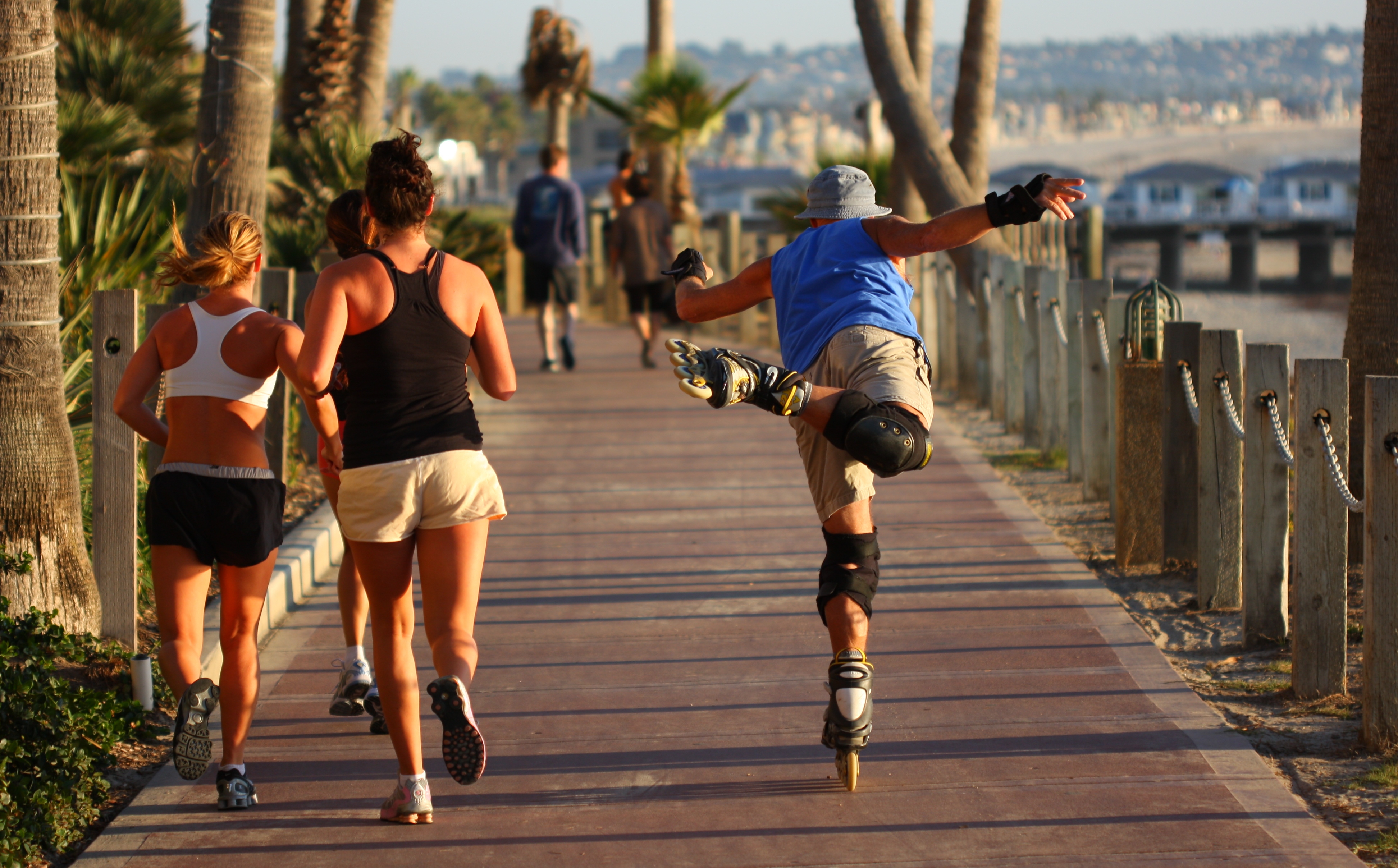
Gliding down the boardwalk  [Flickr page]
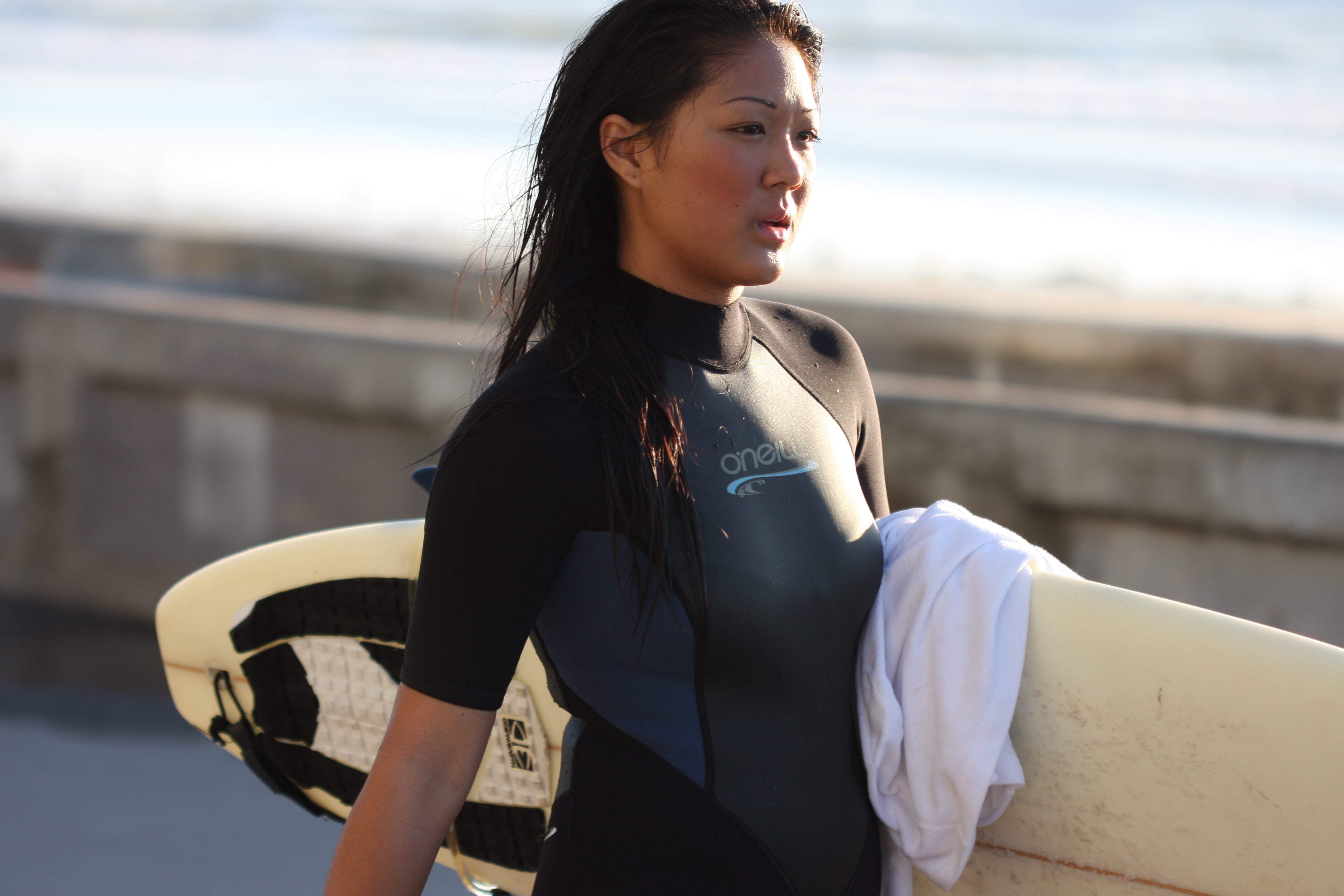
Photos are courtesy of Nathan Rupert, Flickr’s “San Diego Shooter” with over 30,000 shots uploaded. CC-NC-ND licensed.

I am riding a beat-up but functional beach cruiser down the two-lane paved walkway that fronts the sand at San Diego’s Pacific Beach. The bike was provided for those renting the stuffy little box I’ve momentarily escaped while my kids sit inside, slumped glassy-eyed and inert over their glowing screens. Late in the day, there is finally a welcome little breeze coming in off the ocean. It’s been hot.

Taking a break  [Flickr page]

The beach and water beyond are pretty enough under colorful evening skies, but the sights that really catch my eyes this evening are all the people joining me on this so-called boardwalk with no boards. The young and beautiful, as my wife put it, though there are a good number of us older and average ones as well.

Bikinis are everywhere, the little tops and bottoms with their mismatched bright colors proudly proclaiming the curves of the girls who wear them here, away from the water. We are meant to watch, of course, and I do.

A young woman runs past, perfect body in bold black lycra, a blonde ponytail bobbing with her long and confident stride. Steel blue eyes above high cheekbones gaze imperiously down the path. She is a statue in motion, and she knows it.

There is a lot to see. What a riotous assortment of humanity I am dodging and passing on this crowded path! It’s fun to be part of it and take it all in.

Couple on the boardwalk  [Flickr page]

A chisel-faced guy struts with the casual stride of an alpha dog, muscled arms swinging from his flat broad chest. He has arrived on center stage of his life, costumed in board shorts and flip-flops, ready to star in the show. Don’t get in his way.

Relatives speaking non-English languages veer and wander along the walkway, paying as much attention to each other as the sights around us all. The match in color of their skin and hair, their flowing dresses and sandals, and their plain collared shirts form them into little clumps of self-consistency that move through the varied throng. All here is a bit foreign to everything else, including these passport-carrying tourists. But they carry the familiarity of family with them, for each other, as their children dart back and forth to the edges of their groupings.

So do the people sitting around a speaker that plays loud rap—for them and for the rest of us passing by. They have an identity that flourishes along with all the others here, and they are proudly asserting it. I listen and feel the thump of the beat as I ride on, appreciating rather than judging as I once did. Standing with them and elsewhere are women with gorgeous chocolate skin and hair left kinky and unsullied by anglo-imitating straightener chemicals. Some of it billows out into full Afros. They are stunning.

Check this out  [Flickr page]

People sit on the low wall between the walkway and the beach, seeing and being seen without bothering to move with the swarm of humanity along the path. The rest of us are on foot and varied arrangements of wheels. There are older guys on rollerblades, younger ones on longboards, and couples on rental bikes. A few wheelchairs zoom down the path, too. Dogs are walked on leashes, and little kids pushed in strollers.

Someone rides past me with a portable speaker strapped to the back of his bike, proclaiming his taste in music. It doesn’t sound bad. Neither does the talented saxophone player who has gathered an appreciative crowd around him, collecting money and compliments. Up on a balcony, a woman sings into a portable PA system. We all want to be heard in our own way.

Coldplay sounds its recorded drumbeat from the recesses of a bar, one of dozens. Under the outdoor umbrellas of another one, a middle-aged couple sit with their drinks, the glowing clouds mirrored in their sunglasses. Further on, a guy about my age reclines behind the little glass wall of his pricey condo, smiling about something.

Surfer Girl on the boardwalk  [Flickr page]

In his hand and everywhere else, there are the smartphones, always the smartphones. I watch their owners’ faces peering over them, illuminated with the sun’s last glow and the screen backlights. They must all check their Facebooks during the very climax of the sunset. Here and back in the rental where my kids tap their touchscreens—and, to be honest, in my own life as well—the virtual intrudes constantly on the real.

I will go back to the electronic world in a while, too, after the sky darkens. But nothing that I see on my iPad’s little screen will stay in my memory like this simple trip on a creaky bike down a couple of miles of crowded pavement.

———
Credit for all the photography in this posting (and the captions for each image) goes to Nathan Rupert. The photos of people on the Pacific Beach boardwalk I’ve included here are a fraction of the thousands of shots he takes in San Diego and posts to Flickr. Used under a Creative Commons non-commercial, no-derivs license. Click on the links provided next to each image to go to its Flickr page.

Thursday, June 19, 2014

Plagues from Denial

What wonder is it then, if the mind misses everything except what it is itself intent on? So from small signs we draw great inferences and lead ourselves into error and delusion.
—Lucretius, On the Nature of Things [c. 50 BC]
We still can’t help looking upward. [CC-NC photo credit: Xin Li]

Living near a university campus provides me with an opportunity to hang out with intelligent and interesting college students from time to time. I’ve made new friends and had enjoyable visits with members of the Secular Student Alliance at Eastern Washington University, formerly the Eastern Atheists club. Most of its members are college students about half my age, but they have been very welcoming toward the old fart from the neighborhood who attends meetings and shows up at some of their parties.

One of the club’s recent activities was a debate with a very decent Christian named Daniel Kim about science and theism. I volunteered to participate because I knew Daniel would be an engaging and honest debate partner, and because I enjoy spending time with the people in the club. Daniel wanted to record the debate for posting on YouTube, so if you want to see why I have not taken up a career in acting or modeling, here it is:

I do get a bit exasperated with the stock creationist arguments that bubble forth even in an environment of reasonable discourse, like foam materializing from seawater that splashes against the rocks. Whether they are repeated with nods and smiles from a thoughtful person like Daniel or spewed forth on the Internet by agenda-driven organizations like the Discovery Institute, all creationist arguments are ultimately descendants of a single common ancestor: personal incredulity.1 We humans are all too eager to believe in some invisible creator over scientific explanations that we are either unwilling (due to faith or social commitments) or unable (due to limits on time, education, or imagination) to personally understand.

From Did God Really Say?, LLC “Timely Topics” presentation, 2012.

Despite my occasional impatience, I certainly know how much a person’s thinking, how the boundaries of one’s willingness to learn, can be constrained by the need to think only dogmatically correct thoughts. My entire childhood religion was founded on the premise that a first human pair had been duped by a talking reptile thousands of years ago, infecting us all with Original Sin and necessitating the sacrifice of a perfect God-man to set things right.

For an abundance of reasons, there is no way to reconcile that story with the reality that science shows us, despite valiant attempts by earnest writers who want to have their disproven Pauline theology and evolution, too. Ironically, it is this very myth that is now being recited in my old church as reason to turn away from the unsettling questions being whispered among the troubled faithful. The (mythical) serpent asked, “Did God really say…?”, and we know how that worked out, so don’t you go asking, either!

I gave Daniel a copy of Evolving out of Eden, which I wrote in cooperation with Dr. Robert M. Price, and he graciously accepted it with thanks. I hope he gets something out of it. Perhaps with a bit more time, the vision that Ingersoll had over a hundred years ago will finally be realized in this country: “Science, freed from the chains of pious custom and evangelical prejudice, will, within her sphere, be supreme. The mind will investigate without reverence and publish its conclusions without fear.”2

Ma, most of them still don’t think we’re cousins. [CC-NC photo credit: Xin Li]

With some slight reformatting for web publication, here is an excerpt of the book that speaks candidly to what, unfortunately, remains as a pig-headed persistence of a thoroughly disproven viewpoint. For my own part in this co-authored writing, I speak with the zeal of the converted, knowing what an iron grip that mindset had on me, too, for such a long time.

———

Plagues from Denial

We [Price and Suominen], along with many of the theistic evolutionists whose writings we criticize, find it infuriating how creationists deny the reality—and wonder—of evolutionary theory. Its explanatory power is stunning; all the scientific puzzle pieces fit into place, from anthropology to zoology. It is difficult to emphasize enough just how strong the evidence is, yet most Americans doggedly persist in remaining ignorant of it. Worse, the most devout among them view it as almost a holy calling to enforce that same ignorance on their children and churches.

For those not blinkered by an outdated dogma, there is no longer any debate about the truth of evolution. The debate has been over for a hundred years. The evidence has continued to pile up, in new fields like molecular genetics that Darwin couldn’t have dreamed of. We have long since reached the point where evolution—micro, macro, human—is no more productive a topic for argument than computing epicycles in case that “theory” of Copernicus turns out to be wrong, after all.

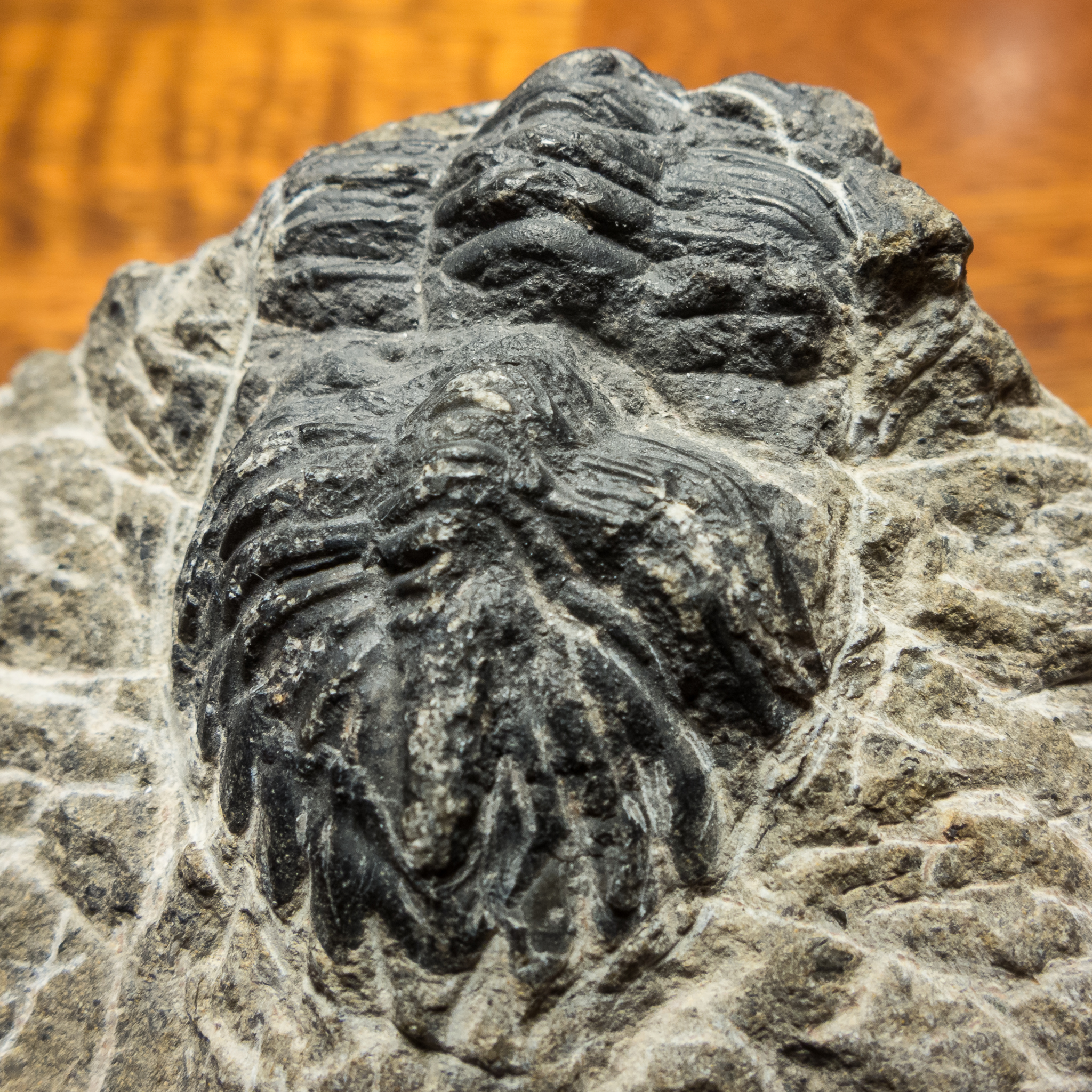
My very own Trilobite fossil, tangible evidence of life that’s been extinct for at least 250 million years.  [Flickr page]

Two of our pious scientists put it frankly to their Christian brethren: “When there is a near-universal consensus among scientists that something is true, we have to take that seriously, even if we don’t like the conclusion” (Giberson and Collins 2011, 29).3 Sure, there are some crackpots who reject what is squarely in front of their faces, even a few educated ones who ought to know better. But the “percentage of scientists who reject evolution is very small—so small that in most large gatherings of scientists you would not find even one person who rejects the theory of evolution” (p. 30).

The fact is that creationists are just parasites, living off the intellectual metabolism generated by the hard work of real thinkers while contributing nothing but the fever of the camp revival. They crave respectability for their faith, but they show nothing but contempt for the careful research of the scientists who find the hard data that they persistently ignore and deny. “There are no transitional forms!”, they whine, despite a wealth of fossils showing various types of intermediates (Prothero 2007).4

Meanwhile Neil Shubin goes to Greenland year after year to dig for a fossil evidencing the transition from water to land. And he finds it, too: Tiktaalik roseae.5 Did the creationists gather at the Field Museum to examine this extraordinary find that plugs the evidenciary hole they had been complaining about? Of course not. They just go on talking, about smaller holes.

———
Two images in this post are from a Flickr user who has made them available (as of this writing) under the Creative Commons-Noncommercial license, as I have for my Trilobite fossil photograph. Note that my legal usage of these materials, under the CC license terms extended as of this posting, does not imply any endorsement or agreement with this blog posting by the photographer.
Evolving out of Eden is Copyright © 2013 by Robert M. Price and Edwin A. Suominen, All Rights Reserved: Excerpted here by permission of Tellectual Press.

Notes


  1. “Intelligent Design,” as Leonard Krishtalka has memorably said, is just creationism dressed up in a cheap tuxedo. See this fine 2002 article by Adrian L. Melott in Physics Today. Melot aptly sums up the situation: “The position of an ID creationist can be summarized as: ‘I can’t understand how this complex outcome could have arisen, so it must be a miracle.’” 

  2. Robert G. Ingersoll, Lecture on Gods 

  3. Giberson, Karl W., and Francis S. Collins. 2011. The language of science and faith. Downers Grove, IL: InterVarsity Press. 

  4. Prothero, Donald R. 2007. Evolution: What the fossils say and why it matters. New York: Columbia University Press. 

  5. See, e.g., tiktaalik.uchicago.edu (accessed January 2013). “Tiktaalik roseae, better known as the ‘fishapod,’ is a 375 million year old fossil fish which was discovered in the Canadian Arctic in 2004. Its discovery sheds light on a pivotal point in the history of life on Earth: when the very first fish ventured out onto land.” 

Sunday, October 20, 2013

Vintage Valley

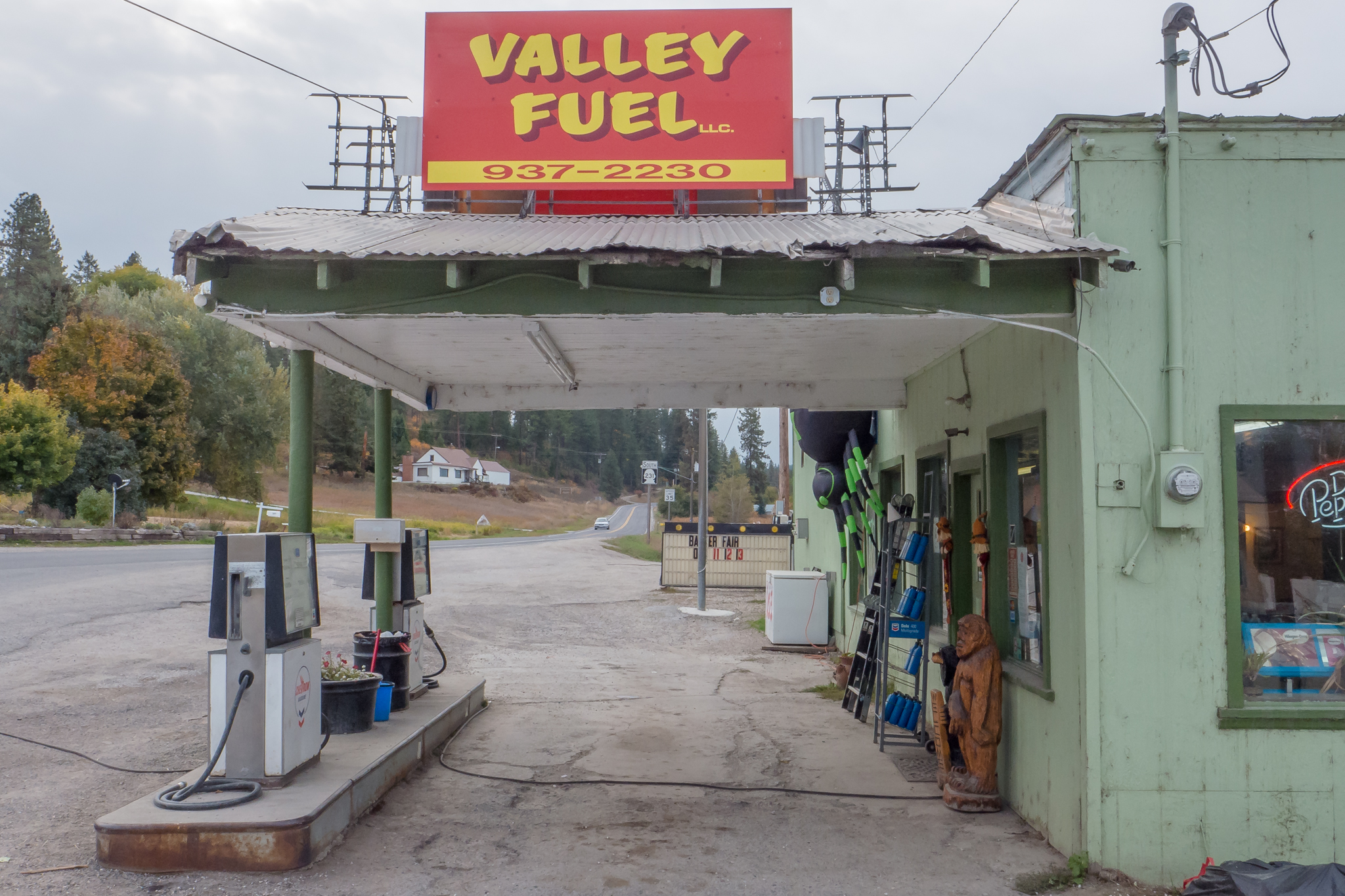
The little town of Valley, Washington was established in 1882 and doesn’t seem to have changed much since then. According to Wikipedia, the town was named by Daniel C. Corbin based on its location “at the entrance to the Colville Valley. The Spokane Falls and Northern Railroad was connected to Valley in 1889,” and “Corbin set up a small building for a depot.” The railroad crossing is the main intersection in the town today.

Established 1882  [Flickr page]

Downtown consists of a post office, general store, bar, part-time restaurant, mini-storage, railroad crossing, and a gas station. The store was originally built in 1889, burned down, and was rebuilt in 1908, still standing and in use. Some civic-minded property owner has established a private park around a retired railroad car, with a little ramada and picnic tables where Mennonite women occasionally sell delicious cinnamon buns and bread.

There is a Catholic church, plus some sort of non-denominational one that has been under construction for quite a while. Residents of the graveyard at the edge of town enjoy a stunning view of the surrounding hills. Perhaps forty squarish old houses cluster around Highway 231 and the couple of cross streets, tucked in behind leafy mature trees. The elementary school serves Kindergarten through eighth grade, a bright and clean new building full of dedicated teachers and staff.

Valley Fuel: “We’ve got gas.”  [Flickr page]

The town has a dignified if impoverished vintage to it. I suspect much of the modest funds being spent there arrive at the post office via U.S. government checks, despite the stolid political conservatism of this part of Washington State. The only industry seems to be a silica processing plant that grinds away by its railroad depot night and day, plus the loggers and farmers living in the surrounding lightly populated acreage of Stevens County.

Everyday Needs  [Flickr page]

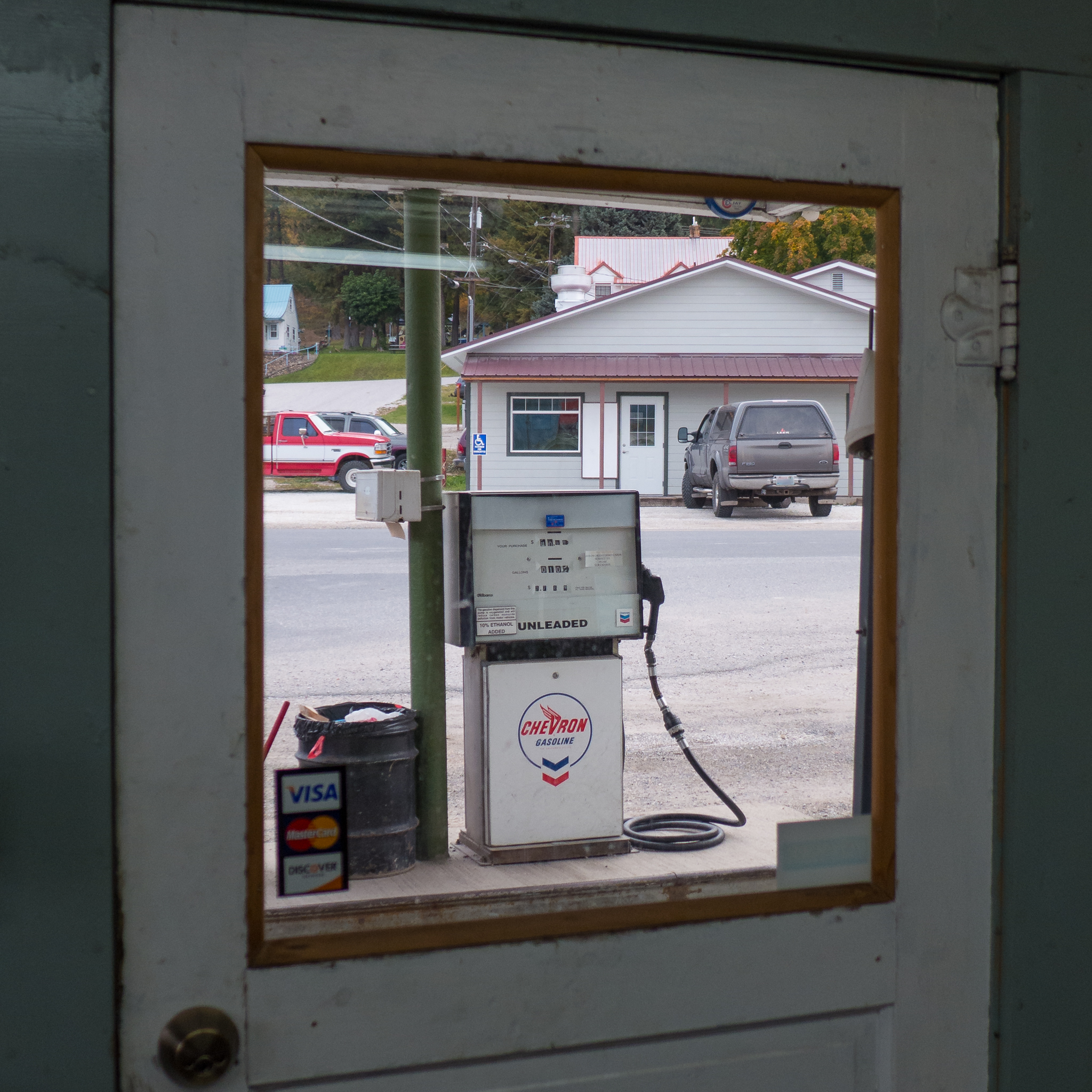
The gas station, Valley Fuel L.L.C., brings petroleum to those farmers and sells it from 23 year-old pumps to people driving through town. You drive over the air hose and hear the ding-ding of the bell alerting one of the owners of the place to your arrival. The previous owner would sit behind his long counter stocked with candy bars and gas treatment while you pumped and then dutifully walked in to report the amount, but now it’s full service only.

Old pump through an old door.  [Flickr page]

Either John or Rita Morris—owners for the past five years—will emerge from behind the counter, greet you, and fill your tank. The all-too-modern concern about drive-offs (and perhaps just a desire to connect with customers) has resulted in a return to old times, to a memory I have from early childhood.

I’d be sitting next to my dad on a long bench seat, probably unbelted, as the attendant leaned into the window, greasy rag in hand, and dad said, “Fill ’er up, regular.” When John is on duty, you’re more likely to see a driver standing outside his truck chatting with John as the pump clicks away.

There are no card readers on these delightful old machines, no obtrusive video screens blaring advertising at you, no automated inquiries about car washes and zip codes. Just a long metal lever that starts things off with a resounding thunk and mechanical dials that spin up, fast on the right, slower as you go left, as the gas rushes into your tank. Squeezing off the last drop as the digits approach an even twenty dollar bill is still an art form here.

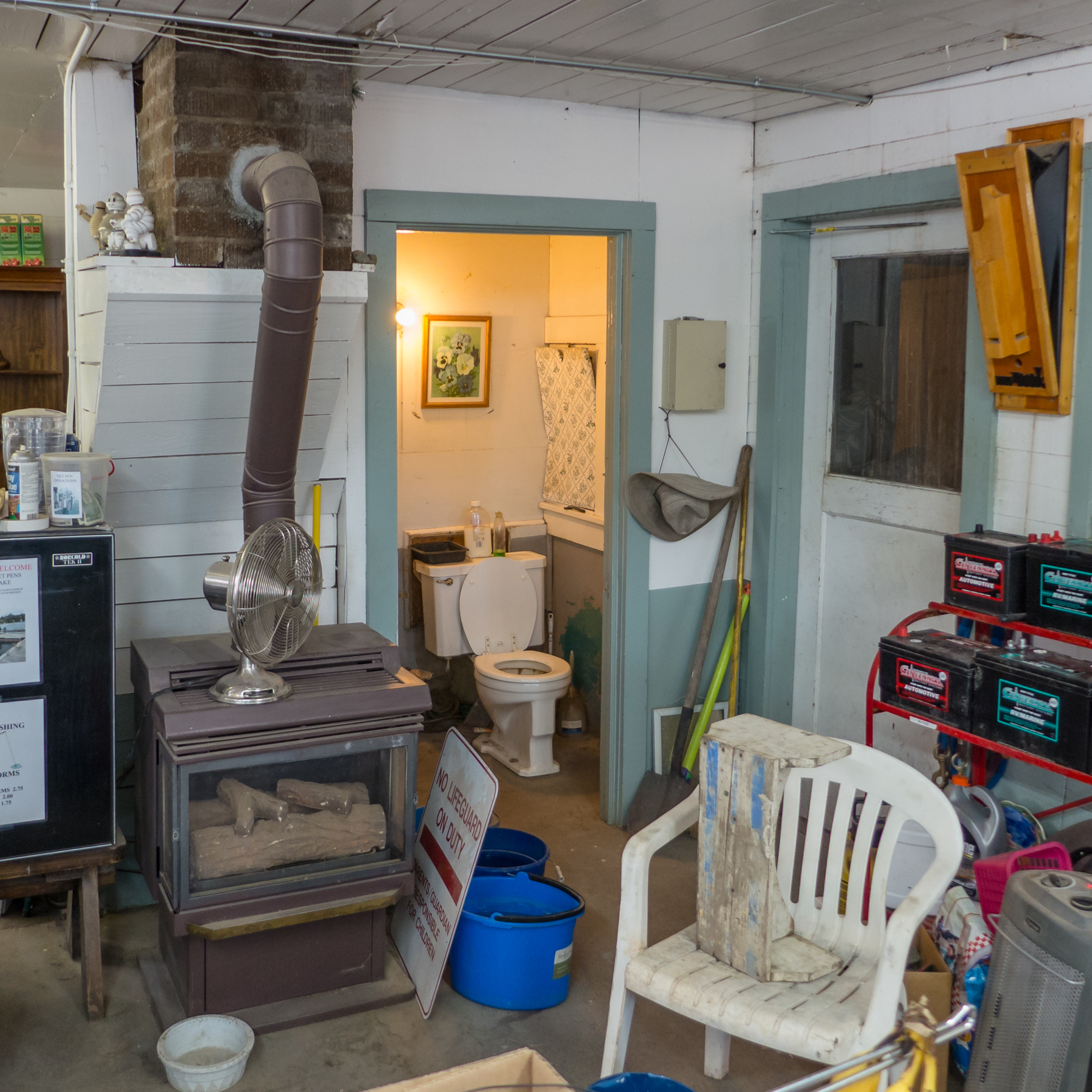
The Facilities  [Flickr page]

The profit margin from selling a gas at the pump isn’t that great. A pretty small fraction of the total you pay goes to the station owner, as a CNN story from 2008 explains: “The reality is that profit margins at the gas pump stay at around 23 cents a gallon, regardless of the price per gallon.” John cited a somewhat lower figure and said the percentage is pretty much what it was years ago when prices were much lower.

Rita said much of their revenue comes from fuel deliveries and tire sales, and pointed out that there is stiff competition from the Indian reservation a few miles up Highway 231. Exemption from taxes means lower pump prices. Maybe so, but I’ll take the Morris’s charming old equipment and their personal touch over the gaudy video-in-your-face pumps on the reservation any day.

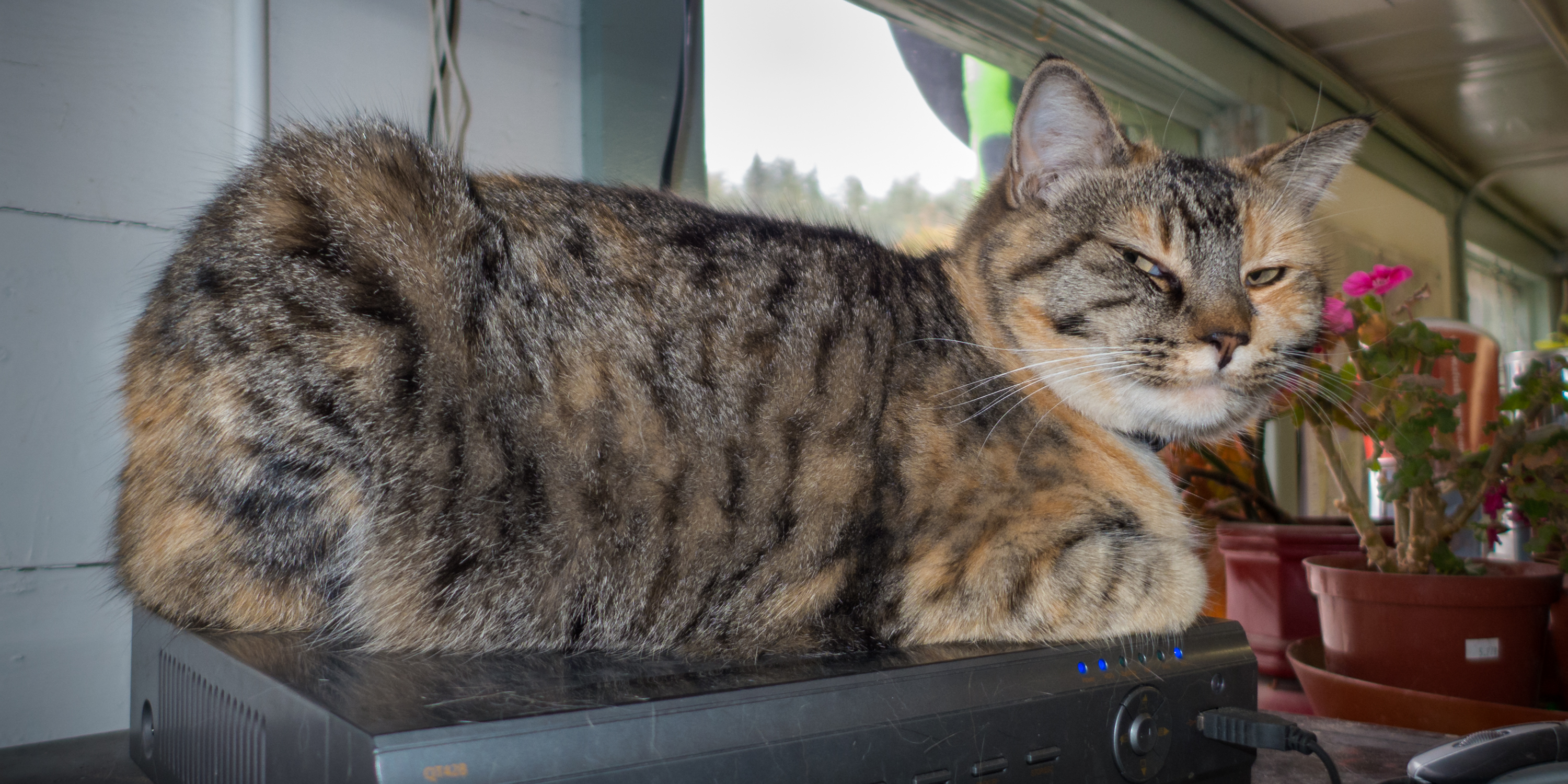
Molly the Mouser  [Flickr page]

Valley Fuel (slogan on their business card: “We’ve got gas”) occupies a building that is not much newer than the town itself, built in the 1930s. John said they try to preserve the old look of the place, and it really surrounds you when you walk in. It’s not dirty, just timeworn and a bit haphazard. For example, when they needed a new fan, they picked out one that looked old-fashioned and would fit in better. You won’t slice off any fingers with it like the old ones, though.

Molly the Mouser  [Flickr page]

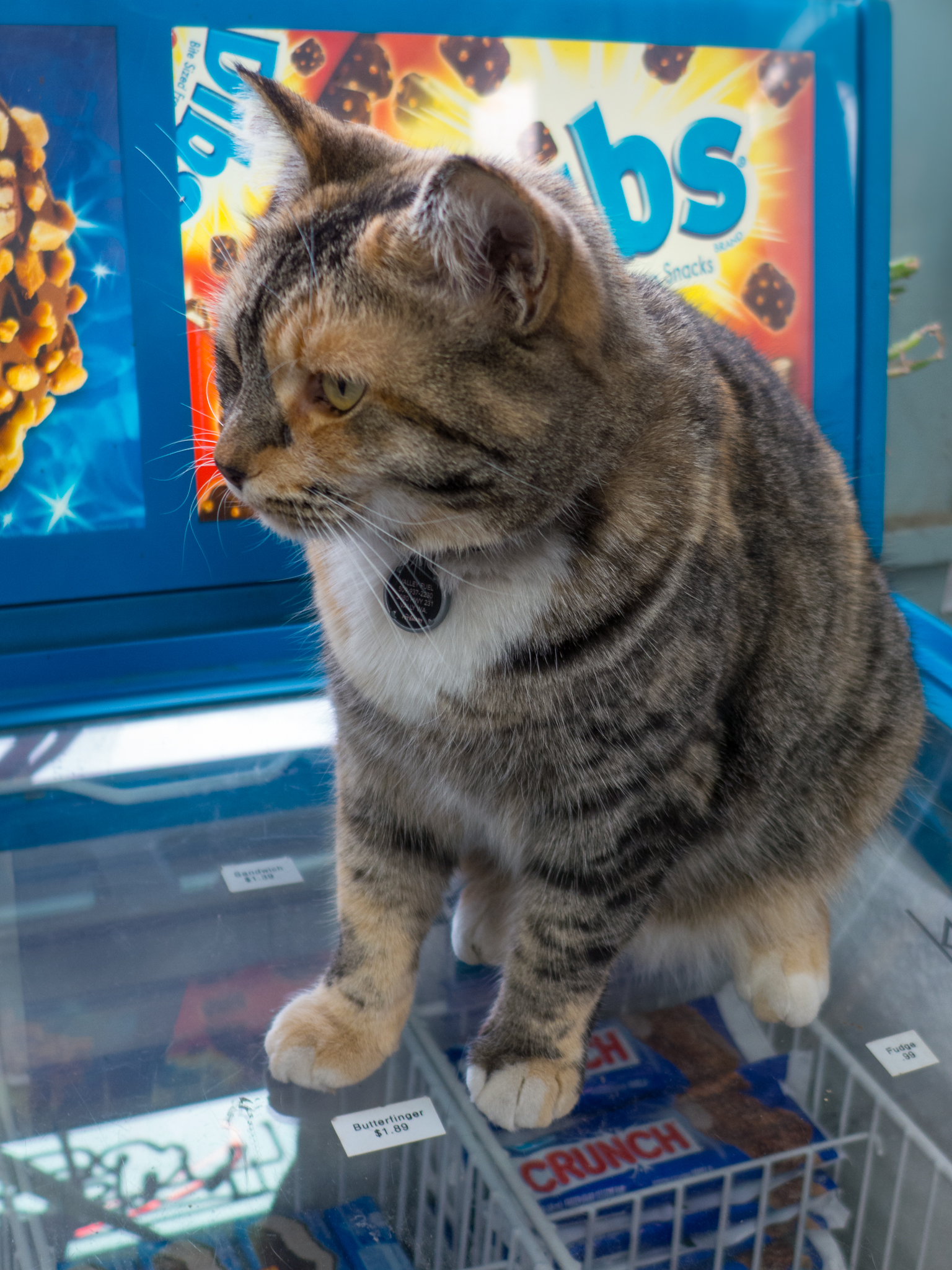
The place is presided over by Molly the Mouser. She’s an agreeable cat, and seems very confident about her position. After I paid an inordinate amount of attention to her (I love cats), she started play-fighting with my hand. The Morris’s asked me to cool it, as they want Molly to stay docile so she can be around the kids that come in. Makes sense to me, especially when kids are likely to spot the cooler full of frozen treats that is one of Molly’s perches. I wonder if her paws get cold.

These kinds of places are what America used to be all about, at least on the retail level. (Of course, Standard Oil was not exactly a little Mom & Pop operation content with modest aspirations.) Before soulless mega-corporations metastasized our towns into monotonous patterns of mass-produced plastic signage and halogen lighting, there were real owners, entrepeneurs, and unique ideas behind the storefronts.

John and Rita don’t answer to some francise licensing authority. They don’t go through the robotic motions of posting factory-produced signs to promote the brand of some distant corporation that couldn’t care less about them or their little town. And they don’t try to sell you car washes or sign you up for a “loyalty” card. They sell gas, and tires, and candy bars, and you’ll probably get a nice little conversation about the weather in the process.

———
Click on individual images to enlarge, or check out the entire set (and others about Valley, WA) on Flickr. All are Copyright © 2013 Edwin A. Suominen. You may freely use them for non-commercial purposes, with attribution, under the Creative Commons Attribution-NonCommercial 3.0 Unported License. Thanks to John and Rita for their permission to photograph their wonderful old establishment, and for preserving a part of local history.

Friday, August 2, 2013

Hawaii

Adjoining one side of the Square was the great Morai, where there stood a kind of steeple ‘anu’u that ran up to the height of 60 or 70 feet, it was in square form, narrowing gradually towards the top where it was square and flat; it is built of very slight twigs & laths, placed horizontally and closely, and each lath hung with narrow pieces of white Cloth…. next to this was a House occupied by the Priests, where they performed their religious ceremonies and the whole was enclosed by a high railing on which in many parts were stuck Sculls [sic.] of those people, who had fallen victims to the Wrath of their Deity.
—George Vancouver, Ship’s Journal, c. 1793
Hikiau Heiau at Kealakekua Bay  [Flickr page]

There is a dark side to the past of almost every human culture, and that of Hawaii is no exception. Today I looked at the remains of a heiau, a temple where humans were sacrificed to appease the gods. The influence of the new haole religion finally put a stop to all that; one sacrifice some 1800 years earlier was enough to get the job done.

All’s quiet on the sacrificial temple now, centuries later.  [Flickr page]

A much more pleasant to contemplate, if modest, Hawaiian cultural encounter was one I had with a gentleman named Sam just a few miles north of the Hikiau Heiau site. He showed up with his ukulele at the Keahou Beach park south of Kailua-Kona, Hawaii.

Sam the Singer  [Flickr page]

Sam played and sang away under the pavilion at the park with no tip jar, hat, or open instrument case in sight. Sure, he probably accepts the donations that surely come his way from tourists, and that may even be a motivation for him to be there. But he really did seem to be doing this for the pure pleasure of it, too. When he saw that I was filming him, there was a noticeable extra bit of enthusiasm in his voice. He happily gave permission for this video to be posted, and told me the song is Wahine ’Ilikea by Dennis Kamehama.

When we left, Sam was sitting on one of the picnic tables under the pavilion so that the little Asian boy next to him could watch him play and get in the picture being taken by his parents.

Maybe it’s tourist kitsch, a diluted echo of Hawaiian culture infused with California surfer and pandering to the Hollywood view of the Islands. But I’d say it beats human sacrifice any day.

———
Click on individual images to enlarge, or check out their photo pages in my Flickr photostream. All are Copyright © 2013-14 Edwin A. Suominen. You may freely use them for non-commercial purposes, with attribution, under the Creative Commons Attribution-NonCommercial 3.0 Unported License.