Showing posts with label Earth. Show all posts

Sunday, January 9, 2022

Long Covid Lament

Now if real daylight such as I remember having seen in this world would only come again, but it is always twilight or just before morning, a promise of day that is never kept. What has become of the sun? That was the longest and loneliest night and yet it will not end and let the day come. Shall I ever see light again?
Pale Horse, Pale Rider (1938) by Katherine Anne Porter, survivor, 1918 influenza.

An open letter to Michael Osterholm, epidemiologist. His weekly podcast The Osterholm Update is an excellent source of current Covid-19 information.

Dear Dr. Osterholm,

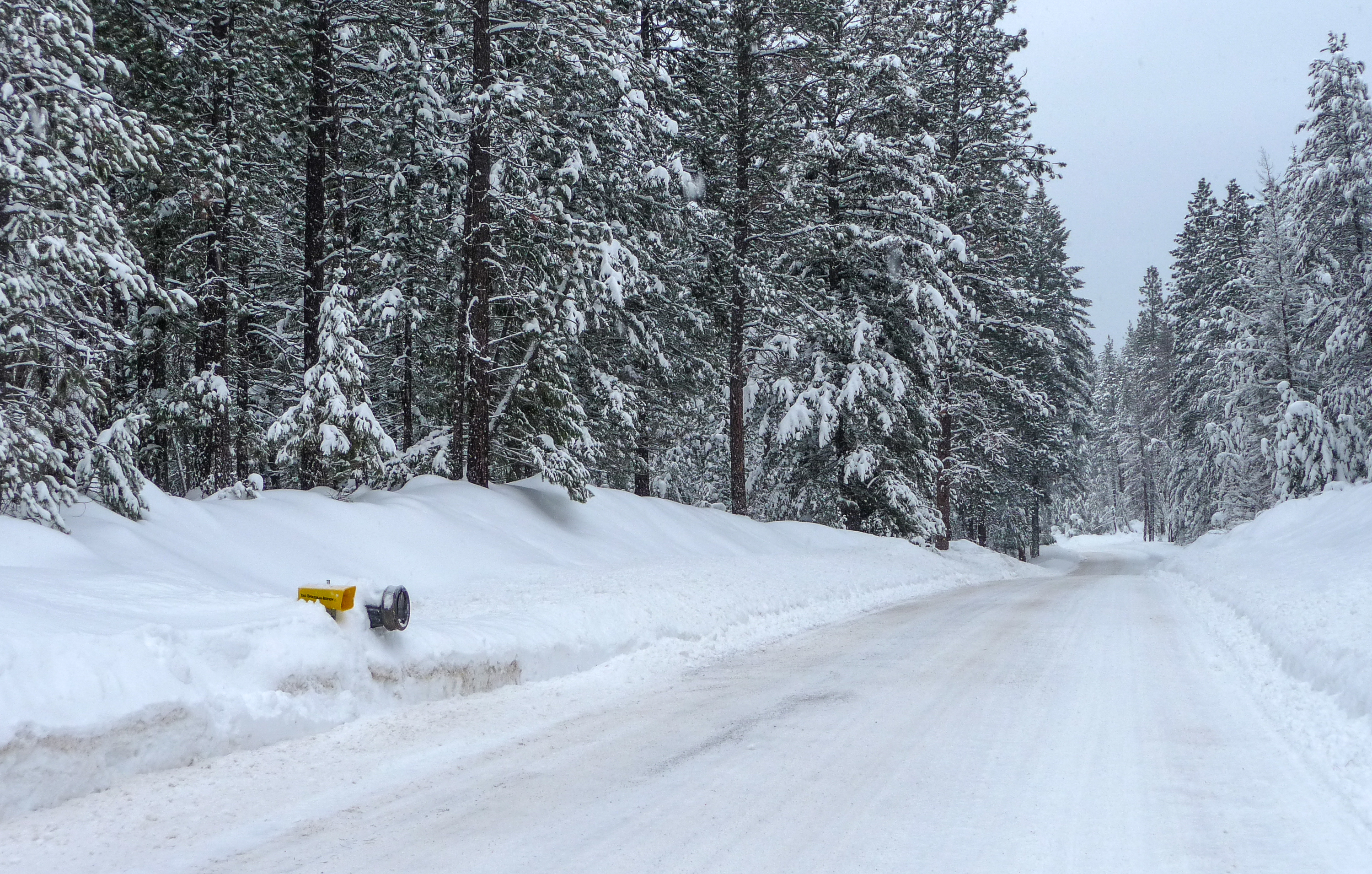
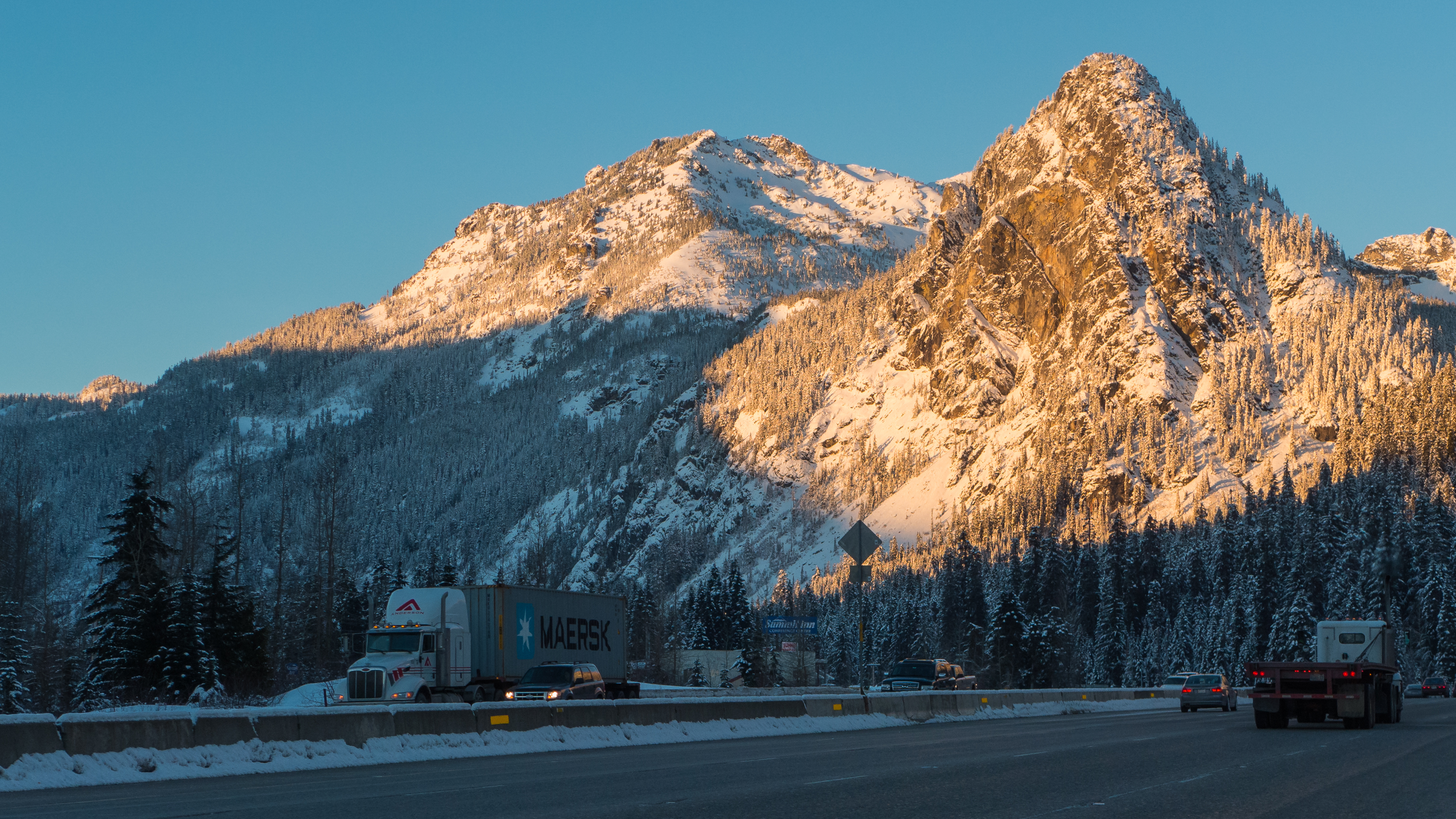
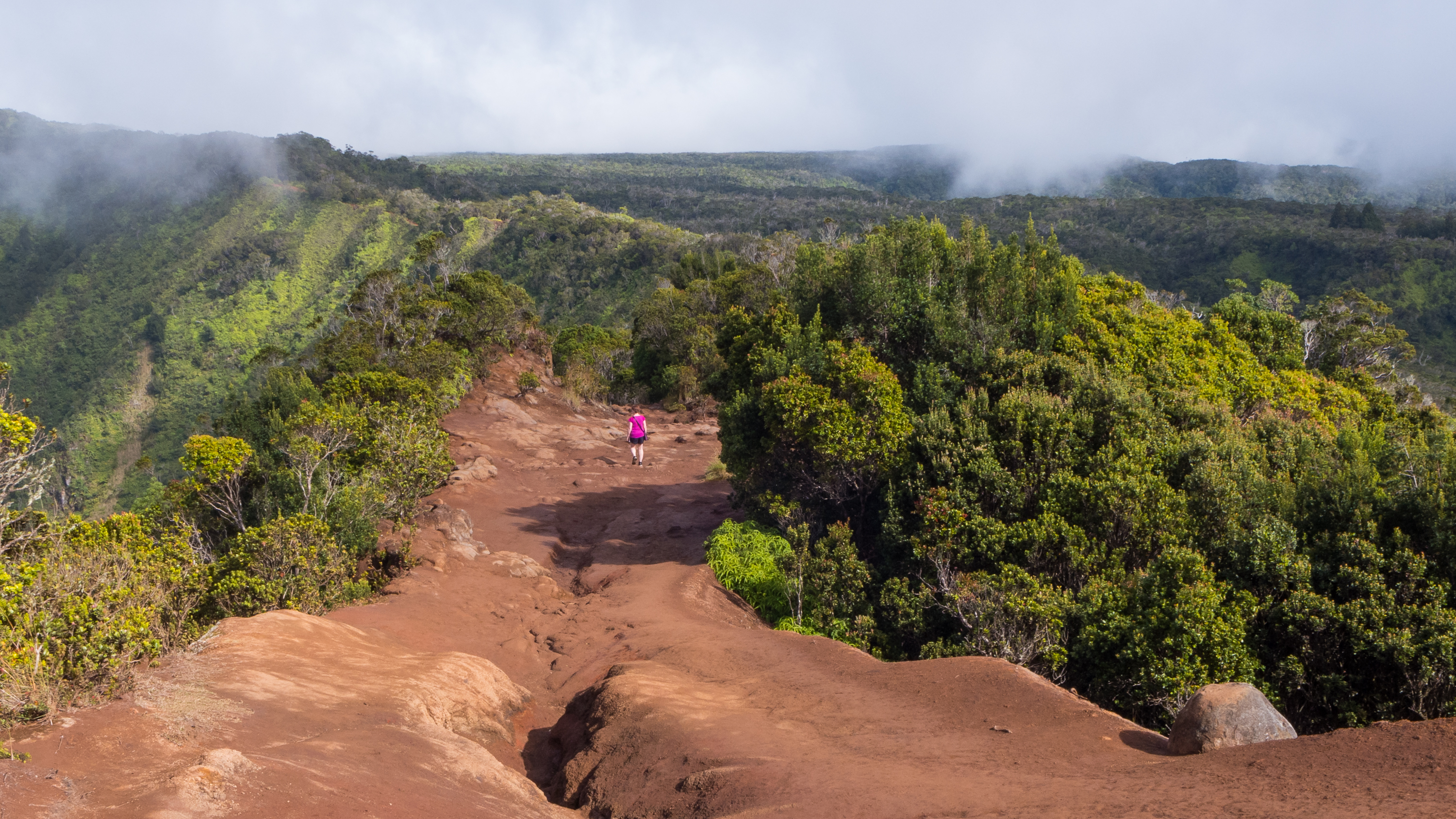
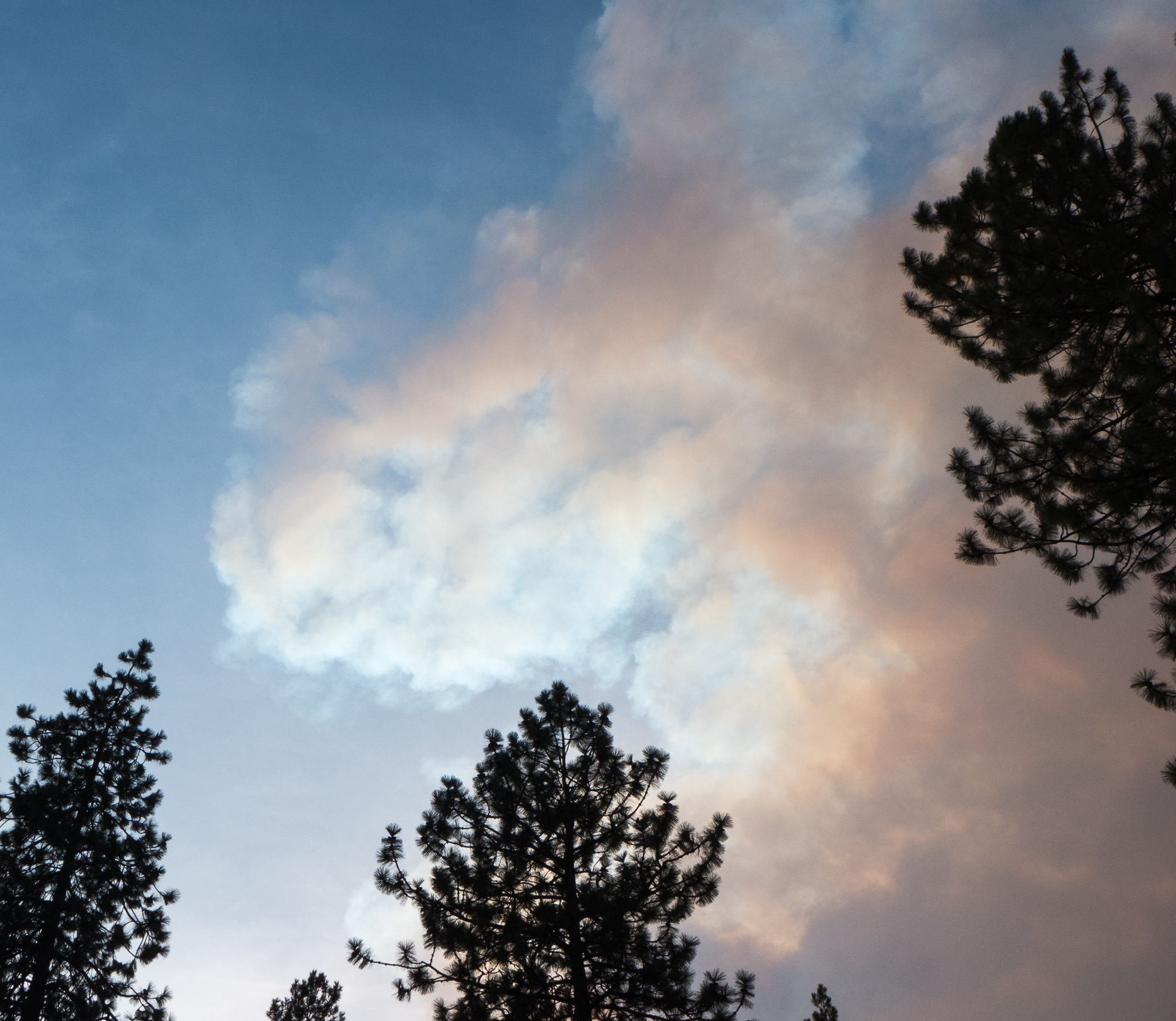
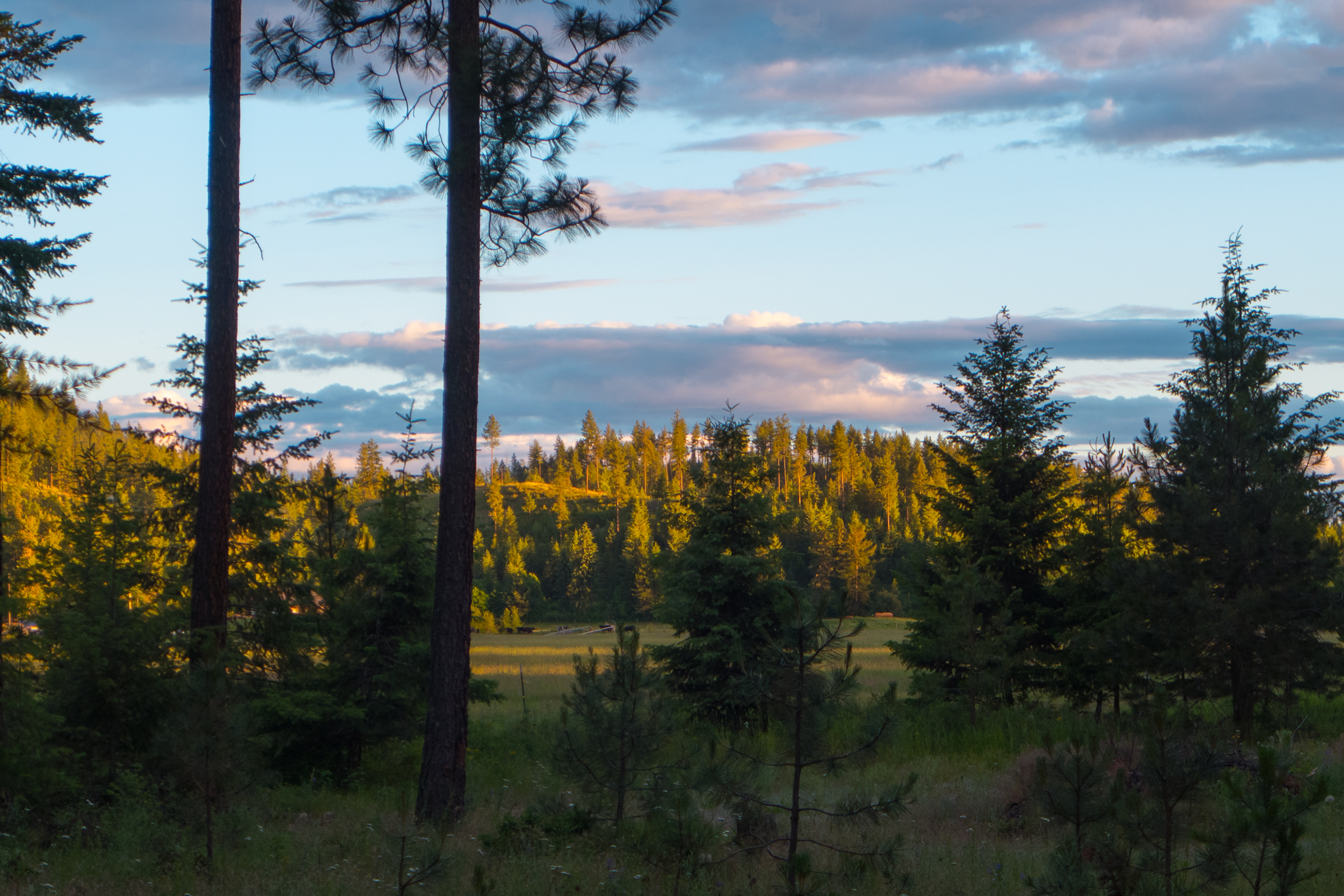
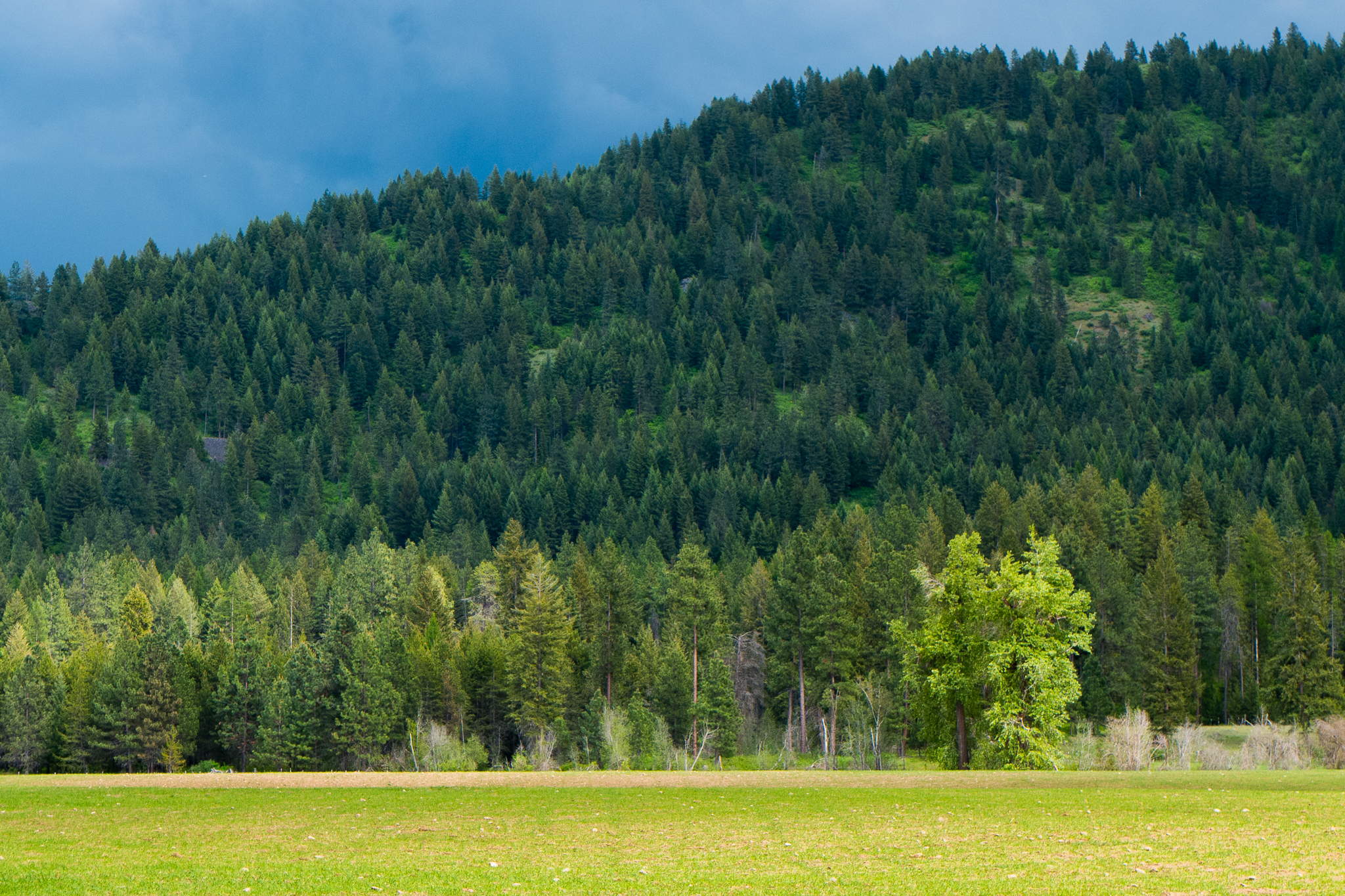
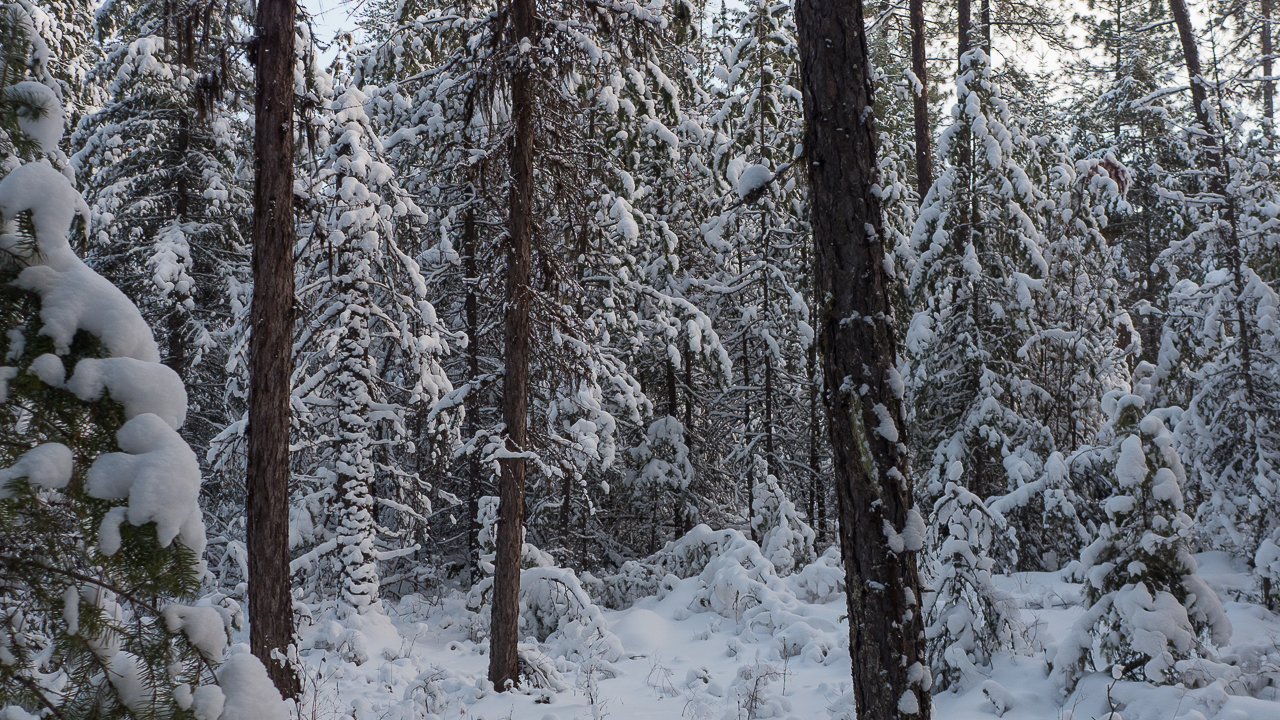
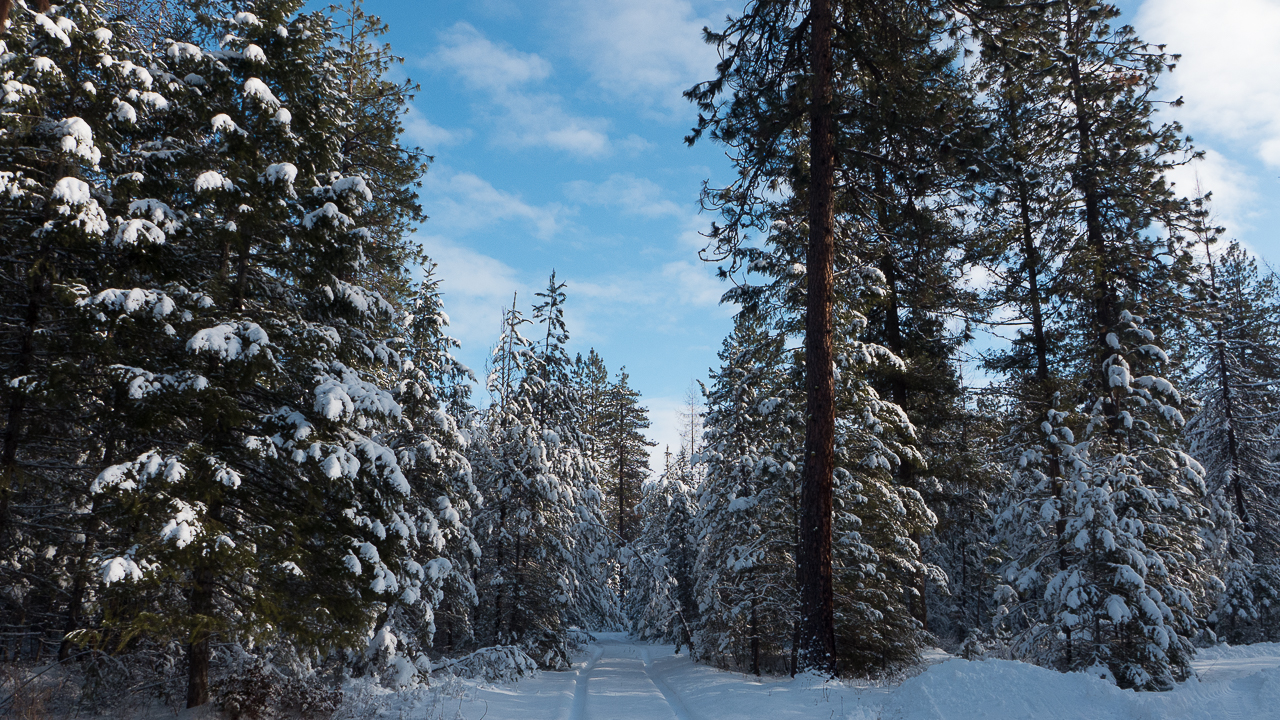
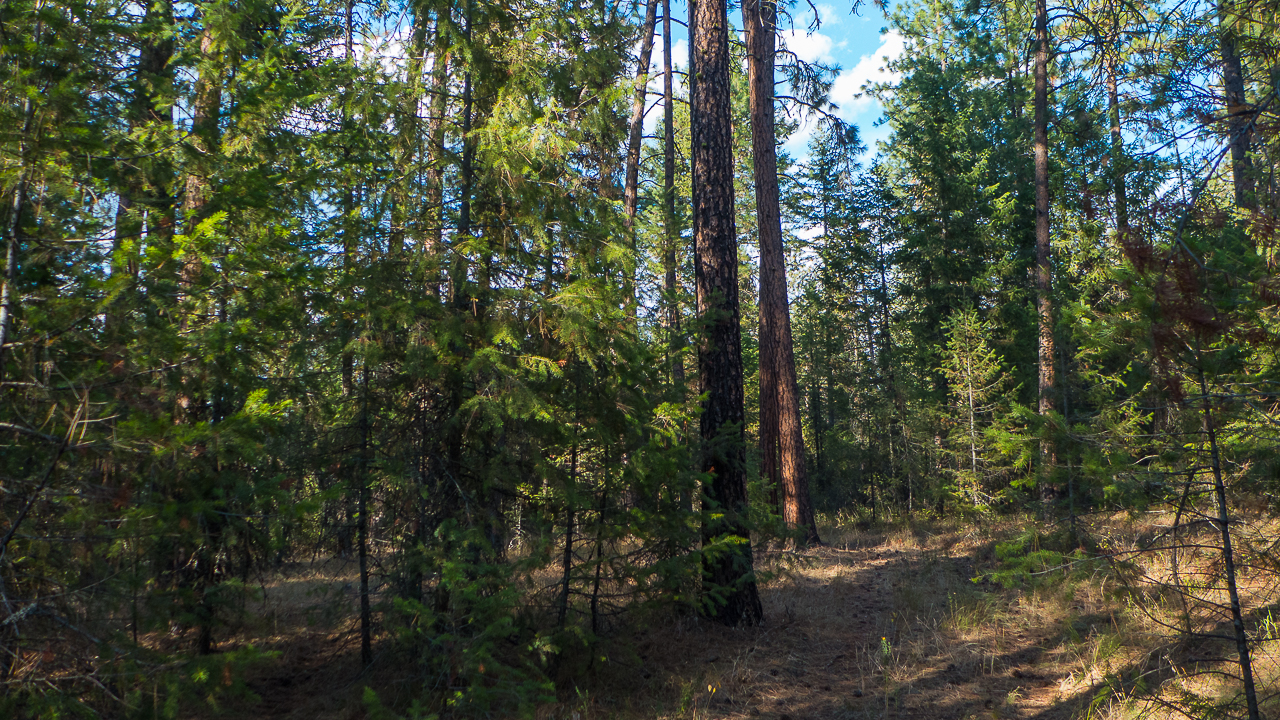
Having listened to your thoughtful and informative podcasts ever since they began, I’ve wanted to share my own beautiful place with you in the eight pictures below.1 These acres of conifer forest surrounding my home here in the inland Pacific Northwest have long been a sanctuary for the bear and cougar and all the other wildlife whose tracks I see in the winter snow and the soft earth of spring. For the bald eagles and owls and hawks who soar high overhead.
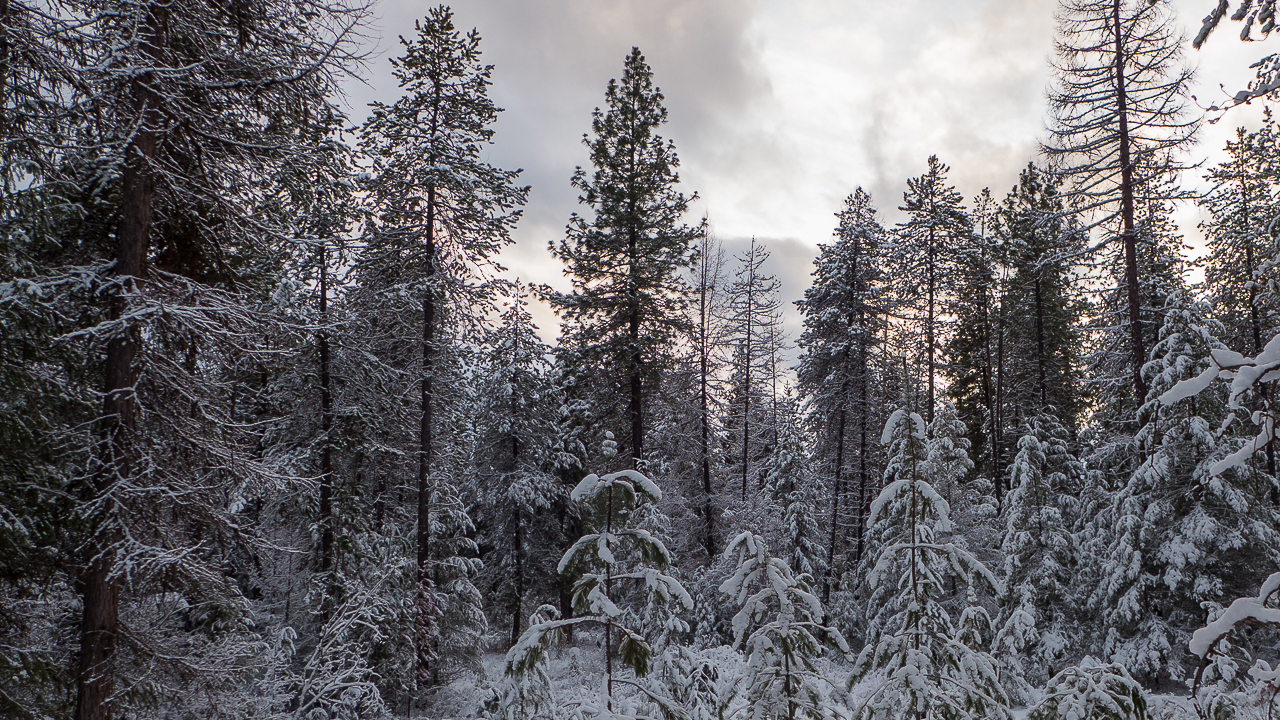
Winter pictures taken last week.

The challenges of our time still intrude here, with more wildfires each summer and a local population that remains mostly unvaccinated, even now. But these woods have been my sanctuary, too, as I’ve walked and worked and meditated beneath big pines, fir, and larch that were just saplings during the influenza pandemic of 1918. They were here long before me, and I’m doing what I can to give them a chance at still standing after I’m gone.
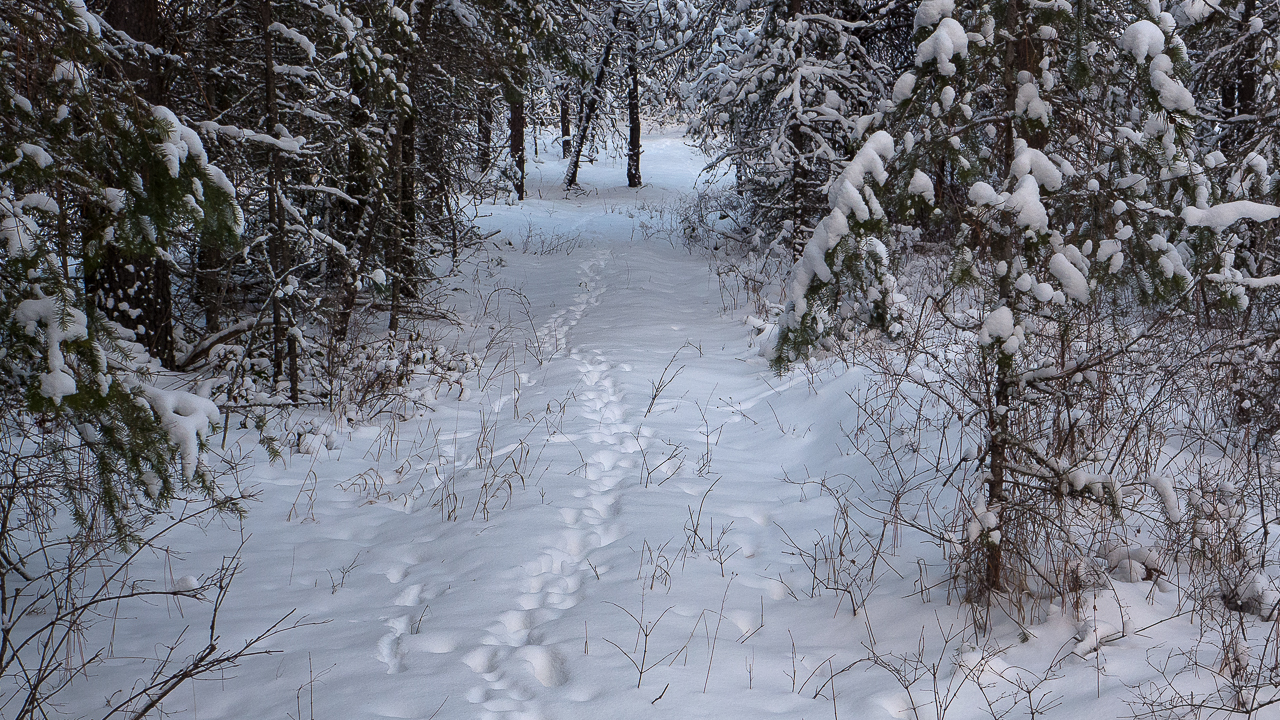
None of these tracks was made by a human.

After hearing you talk about your work on tallgrass prairie restoration and continuing to ask for listeners to share their beautiful places, I figured you’d appreciate seeing these photos of mine. For many hours, I’ve listened to your voice in my earbuds while controlling noxious weeds, harvesting deadfall for firewood, and thinning the smaller trees that are too close together to thrive. Yours has been a comforting but also honest voice, keeping me informed without sugarcoating the bad news about each wave of new cases, without ego, without false promises. Thank you for the work you do.

———

I would like to be equally honest and continue with some words that are not intended for you to read on your podcast but for you to take into your heart as you inform the public each week about the dangers of the SARS-CoV-2 virus.

It’s about the devastating persistent symptoms that so many people are now enduring after their often mild acute infections. They gave it a name, Long Covid, to describe month after month of terrifying mental and physical limitations, of a fatigue that often goes far beyond just a sense of being tired all the time. Many of them experience this so-called fatigue as a relentless profound exhaustion that leaves them utterly spent after basic household tasks, or even getting out of bed to go to the bathroom. Their brains are fogged, their ears are ringing, their noses don’t work, their bodies have become prisons of pain and loss and disability.

This open letter is for them, to give voice to what they know all too well. And in hopes that our public health experts will finally start to talk about what has happened to them, and is happening right now to so many more.

For the people like PJ Morrison, who has been dealing with the aftermath of her Covid-19 infection for 22 months now. In the early stages, she felt “like her veins were on fire–pulsating and raised.” That has mostly quietened down, apart from those in her hands and ankles. “My feet and hands don’t work well now,” she says, and she can no longer dance or run or even put on a coat without help. She’s looking for the small wins where she can, like last month when she celebrated managing to get in and out of the bath unaided and six weeks earlier when she was finally able to walk without pain.2
Byn Always (that’s her real name, under which she’s written a couple of books) knows all too well about the limitations imposed by Long Covid. A doctor visit just sent her to bed to sleep for 33 of the 36 hours afterwards, “unable to even sit up for more than ten minutes while awake.” If she goes beyond her strict energy budget, she winds up with vocal tremors so severe that she can barely talk. The limitations extend beyond the physical realm; she used to love to read but now her brain fog gets in the way of that.

As with most long haulers I’ve corresponded with, it’s not just what Byn can’t do anymore, but also the many unwelcome sensations that impose themselves on her. She gets an “internal buzzing” and tinnitus that comes and goes, and her eyes sometimes hurt, feeling “like someone tried to jab them from my eye sockets all night.” She’s in her early 50s, a mother of five.3

Of course all this is affecting their ability to work, and that adds another level of emotional as well as economic pain. Marjorie Roberts says she and her fellow longhaulers “are being punished for contracting this awful virus which has changed our lives forever.” She’s been fighting for an unemployment hearing since April 2021, after contracting Covid in March 2020, “at my place of employment but was denied benefits.” She was told–undoubtedly by somebody who either does not know or care about the need for rest to avoid post-exertional malaise–that contracting Covid-19 was not a valid reason for her to resign. She now lives with disabling daily fatigue, as well as spots in her liver, nodules and sarcoidosis in her lungs, and the loss of seven teeth. She feels ignored and discarded.4

I could go on with quite a few more of these stories, just from people I’ve interacted with personally online, like Daria Oller, a physical therapist and athletic trainer who got sick on March 15, 2020 and went through a period when her post-exertional crashes left her unable to lift up her head, sometimes even to speak. She’s doing better, though “nothing like who I use to be” and now dealing with a significant setback from a recent reinfection. She’s 37.5
Like Denise Martin, 54, who was infected in April 2020 and then again in November of 2021–after being vaccinated. She’s retired after a 28-year nursing career and was already living with chronic illness before Covid came along. Never hospitalized, hers would have been classified as one of those “mild” cases, but she’s traumatized from the experience of struggling to breathe, and now struggles to even get out of bed.6

I’ve read firsthand accounts by hundreds of others.

Dr. Osterholm, you surely must know that this is not a rare thing. According to a meta-analysis of dozens of studies that was just released ahead of publication in Brain Behavior and Immunity, about a third of people are experiencing that symptom so innocuously labeled as “fatigue” three months after their Covid-19 diagnosis. Just over a fifth of them are exhibiting cognitive impairment at that point.7

These figures are disturbingly high, but they match what was already revealed by another multi-study review published in JAMA Network Open: Infectious Diseases back in October. There, the median prevalence for “fatigue or muscle weakness” was found to be around 38%, and around 17% for cognitive impairment. The authors determined the median prevalence of overall Post-Acute Sequelae of Covid-19 to be around 50%, a figure that changed little when looking at short, intermediate, and long-term time periods.8

The commonly accepted conservative estimate is that 10% of people with Covid-19 will go on to develop Long Covid.9 With 60 million reported cases in the U.S., even that much lower figure equates to several million of our fellow citizens now facing long-term consequences of having been infected. These are terrifying numbers. And as you often say when speaking about Covid-19 death statistics, they represent much more. They are loved ones and friends and actual human beings.
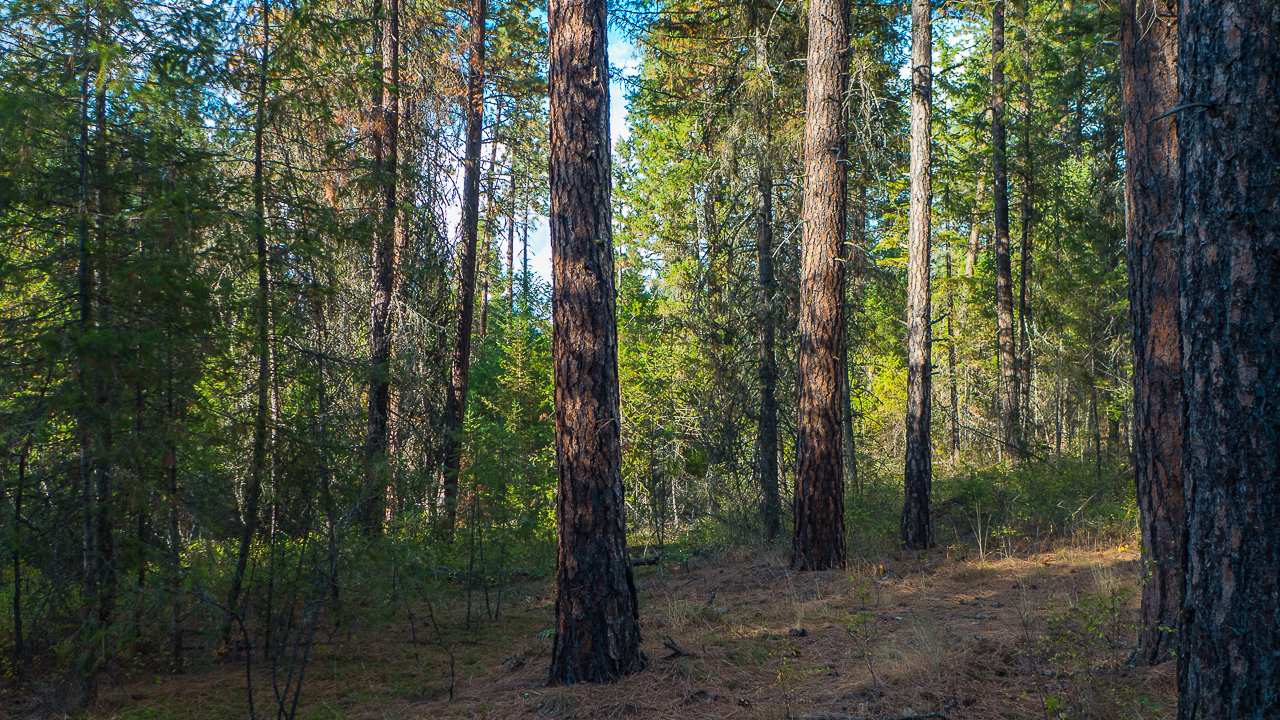
Before the snow, September 2021.

How can any epidemiologist not talk about this?10 Just from the aftermath of the Delta variant, we are very likely facing a national and global wave of largely hidden adversity and disability not seen in any of our lifetimes. And we just don’t know yet whether Omicron will result in less Long Covid, do we? Hopefully so, but as you like to say, hope is not a strategy.

———

Well, OK, but we have the vaccines, now, right? Still providing some decent protection against “severe disease” and death. Unfortunately, the studies are showing that Long Covid remains a significant risk even for infections that occur after vaccination.

You’ve acknowledged that these so-called “breakthrough” cases are not rare and have been warning for months about the danger of variants evading our vaccines. Well, Omicron has shown that your crystal ball isn’t quite as mud-covered as you modestly protest. It appears that those of us with all three shots of an mRNA vaccine still wind up about half as likely to be infected by this highly transmissible new variant as people who never got vaccinated.11 That means a lot of breakthrough cases heading our way.

With those odds of being infected by the variant that is exploding across the country now, it seems that we really ought to be paying attention to how much risk of long-term sequelae a post-vaccination infection entails.

Let’s get one important thing out of the way: There are definitely fewer firsthand accounts on Twitter and Reddit from people who developed Long Covid from a post-vaccination infection. I’ve seen just a handful rather than hundreds. Two of them responded to an inquiry I posted on Twitter.12

One had her sense of smell and taste disturbed for three months, with the common “rotting flesh” scent and almost everything tasting and smelling awful. Things appear to be improving now.13 Another correspondent, a fit middle-aged man in Texas who’d gotten all three shots before he was infected, was “fatigued, fogged, no appetite, ear ringing and worried this won’t get better” for two weeks. He has started feeling better now in his third week, though the fatigue still hits him as the day progresses.14

I want to be respectful with the stories of these two people who have reached out to me. You don’t want to be infected by this nasty little pathogen if you can possibly help it, vaccinated or not, but these are not the kind of traumatic and disabling outcomes that Daria and Byn and Marjorie are living with. For them, vaccine protection is a cruel fiction, a life preserver that never made it into the water before some part of them drowned.
Unfortunately, the studies are leaving us with little room for complacency even when it comes to breakthrough cases. One published in The Lancet showed that the risk of symptoms lasting more than four weeks is approximately halved for those who were infected after a second vaccine dose.15 We are talking about long-term consequences of an infection, and I view that glass as half empty, not half full. The work being done by Dr. Maxime Taquet and his colleagues at the University of Oxford suggest that it’s mostly empty, with no statistically significant reduction in risk for developing many Long Covid symptoms six months after a breakthrough vs unvaccinated infection, and little reduction for almost all symptoms.16

Some studies have shown a modest protective effect, such as one posted just a few days ago by researchers at Bar-Ilan University in Israel, where both testing and vaccination rates are high.17 They found the usual disturbingly high occurence of people reporting a less than full recovery, about a third, with those “fully vaccinated . . . 36-73% less likely to report eight of the ten most commonly reported symptoms.” As with The Lancet study, the observed risk reduction was, in aggregate, about half.18 Doesn’t seem all that reassuring.

The individual symptoms are what stand out to me, though. Remember that little word “fatigue” that is plaguing and limiting the lives of people like Daria or even my Texan correspondent three weeks after his triple-vaxxed breakthrough case, both of them with more than half their lives ahead? It showed up at basically the same rate, vaccinated or not, for those in their age bracket, and around 40% as much overall. Same for the “loss of concentration” that’s keeping Byn from reading like she used to. Same for the “persistent muscle pain” that PJ understands all too well.19

Another study (still in pre-print, as with most of the research happening in this fast-changing area) of breakthrough cases recorded in the VA health system showed a similarly discouraging lack of risk reduction. It was not even statistically significant for symptom clusters labeled “Neurologic,” “Musculoskeletal,” “Mental Health,” “Kidney,” and “Gastrointestinal,” and barely so for our old friend “Fatigue.”20
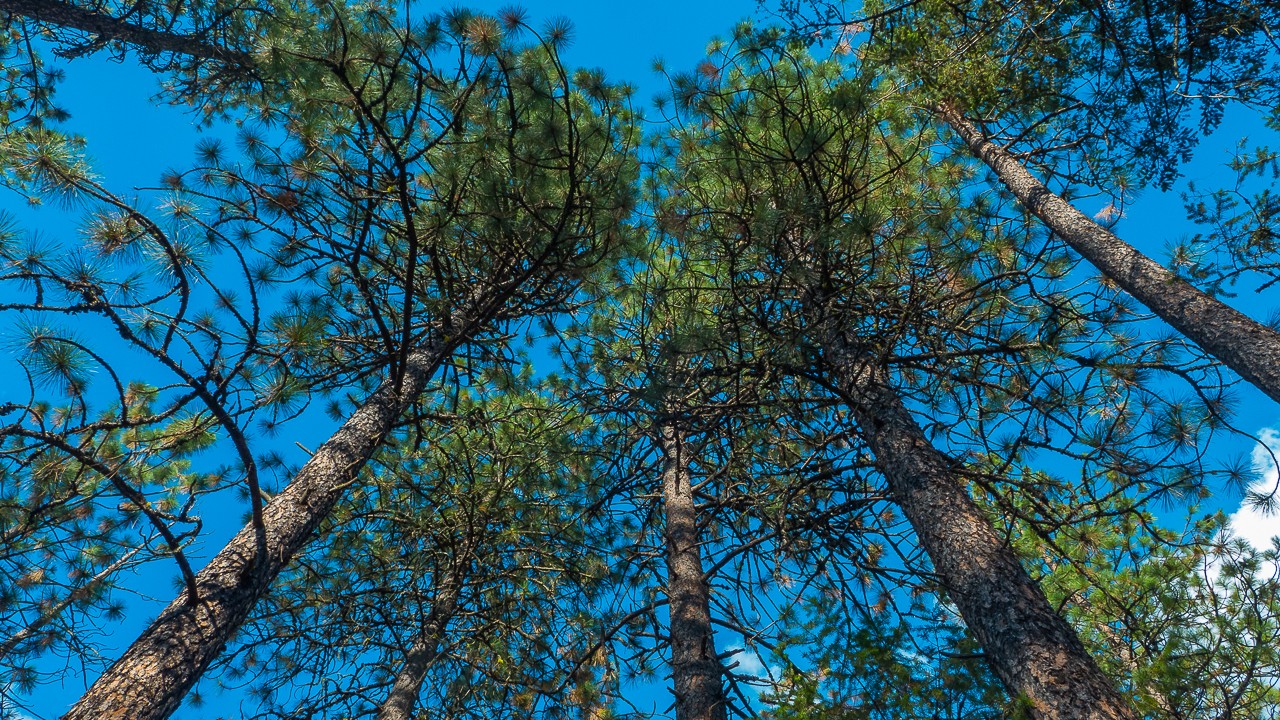
Do Look Up!

Why do your listeners never hear about any of this? It’s a question that honestly puzzles me. A person who has gotten their Covid-19 information exclusively from your podcast for the past year would be well served in many ways, but would not even know that Long Covid exists, much less what a significant threat it poses, even with the vaccines.

Dr. Osterholm, one of your strengths as a public health expert is your use of clear everyday analogies to describe difficult situations. As someone who has delighted at seeing big deep hoof tracks in these woods, I particularly liked how you told us a few weeks ago about the value of a good set of tires and brakes while driving down a country road where moose were likely to be crossing. It was a memorable way for you to warn us to be prepared for what’s coming with Omicron.

I’d like to suggest one more important piece of equipment: a pair of headlights. We can’t stop in time to avoid hitting something that we never see. A lot of people depend on you to let them know what is ahead. Considering the extreme risk we all face of being infected by this vaccine-evading variant, it seems we ought to be lighting the road ahead as brightly as possible.

With respect and appreciation,
Edwin A. Suominen
Triple-vaccinated, still uninfected, and worried

Notes


  1. As with my other nature photography, I am releasing these photos under the Creative Commons Attribution-NonCommercial license. 

  2. PJ Morrison, Cork, Ireland. “Writer-Comedian-Poet–in a body that doesn’t work so well–needing humour & strength to escape those telling me “ah sure it’ll be grand,” https://twitter.com/​wastelessme

  3. Byn’s Weird Brain, Midwestern USA. “Longcovid knocked me on my ass (early 2020 & counting) I don’t even know who I am anymore,” https://twitter.com/​BynThereDoneTht

  4. Dr. Marjorie Roberts, Georgia, USA. “Mom, wife, veteran, covid-19 survivor, advocate,” https://twitter.com/​DrMarjorieRobe1

  5. Daria Oller, PT, DPT, ATC, New Jersey. “Physical Therapist, Athletic Trainer, Tap Dancer, Runner, Burlesque Performer, Education Co-Director Long COVID Physio,” https://twitter.com/​OnTapPhysio

  6. Denise Martin, Bristol, England. “Mental health campaigner. Retired mental health nurse. Ginger cat lover,” https://twitter.com/​whatsdeedoing

  7. Ceban F, Ling S, Lui, LMW, et al. “Fatigue and Cognitive Impairment in Post-COVID-19 Syndrome: A Systematic Review and Meta-Analysis,” Brain, Behavior, and Immunity (2021 Dec 29), https://doi.org/​10.1016/j.bbi.2021.12.020

  8. Groff D, Sun A, Ssentongo A, et al. “Short-term and Long-term Rates of Postacute Sequelae of SARS-CoV-2 Infection A Systematic Review,” JAMA Network Open: Infectious Diseases (2021 Oct 13), https://jamanetwork.com/​journals/jamanetworkopen/​fullarticle/2784918

  9. See, e.g., Dr. Nisreen Alwan’s Tweet of January 7 about the situation in the UK: “A reasonable conservative prevalence of LC (>3m) is 1 in 10 out of all those infected. This is based on updated ONS estimates in Sep 2021,” https://twitter.com/​Dr2NisreenAlwan/status/​1479566880197206022

  10. It’s been over a year since Episode 24 (“Long Haulers”), and it just doesn’t seem to get mentioned on the podcast anymore. 

  11. For Moderna, see Hung Fu Tseng, Bradley Ackerson, Yi Luo, et al. “Effectiveness of mRNA-1273 against SARS-CoV-2 omicron and delta variants” (2022 Jan 8), https://www.medrxiv.org/​content/10.1101/​2022.01.07.22268919v1. The two doses most “fully vaccinated” people have has a VEI of around 30% at best (i.e., they have about 70% the risk of infection as someone unvaccinated), dropping to zero after six months. The third shot starts out above 60% VEI, dropping to 49% for those who received it on or before October 21, 2021.

    These results are if anything optimistic compared to the findings of the UK Health Security Agency’s 31 December 2021 briefing, which shows a third shot of the Moderna (mRNA-1273) vaccine having an initial efficacy of around 60-75% against symptomatic infection. The efficacy (again, against symptomatic infection) with two shots of Pfizer (BNT162b2) drops to essentially zero after 20 weeks. With a third shot, it starts out at around 65% and drops to around 50% by the tenth week.

    These are of course both pre-prints; Omicron appeared just six weeks ago. 

  12. My inquiry Tweet (with a thread of follow-up Tweets) was seen almost 25,000 times, yet resulted in just two reports of lingering symptoms after breakthrough infections that I was able to follow up on. This runs counter to my overall narrative, but must be discussed candidly. https://twitter.com/​edsuom/status/​1478058813873799169

  13. Lisa Joseph, https://twitter.com/​LisaJos21457910

  14. https://twitter.com/​WallStCrime

  15. Antonelli M, Penfold R, Merino J, et al. “Risk factors and disease profile of post-vaccination SARS-CoV-2 infection in UK users of the COVID Symptom Study app: a prospective, community-based, nested, case-control study,” The Lancet: Infectious Diseases (2021 Sept 1), https://doi.org/​10.1016/S1473-3099(21)00460-6. See esp. Figure 3. 

  16. Taquet M, Dercon Q, Harrison P, “Six-month sequelae of post-vaccination SARS-CoV-2 infection: a retrospective cohort study of 10,024 breakthrough infections” (2021 Nov 8), https://doi.org/​10.1101/2021.10.26.21265508

  17. Kuodi P, Gorelick Y, Zayyad H, et al. “Association between vaccination status and reported incidence of post-acute COVID-19 symptoms in Israel: a cross-sectional study of patients infected between March 2020 and November 2021” (2022 Jan 6), https://doi.org/​10.1101/2022.01.05.22268800

  18. As with all of these observational studies, the picture is a bit clouded by complicating factors. Participants were self-selected with a low survey response rate, few had ever been hospitalized, some of them had a third shot or were infected before vaccination, and no children were included. And the paper leaves the nature of their “adjusted regression model” so unclear that I am choosing to ignore the adjusted results.

    “We adjusted for the difference in follow-up time and proportion of asymptomatic patients at the time of diagnosis between the groups. In addition, to take the anticipated age differences into account, the analysis was age-stratified and differences in the length of time from the beginning of symptoms to responding to the survey were adjusted for in the model.” Meaning what, exactly? 

  19. Table 3: “Crude and adjusted risk ratios for the most frequent post COVID symptoms among partially and fully vaccinated participants compared with unvaccinated ones.” 

  20. Ziyad Al-Aly, Benjamin Bowe, Yan Xie, “Long Covid after Breakthrough COVID-19: the post-acute sequelae of breakthrough COVID-19” (2021 Nov 15), https://doi.org/​10.21203/rs.3.rs-1062160/v1

Saturday, October 31, 2015

Let it Snow

When the glaciers are gone, they are gone. What does a place like Lima do? Or, in northwest China, there are 300 million people relying on snowmelt for water supply. There’s no way to replace it until the next ice age.
—Tim Barnett, climate scientist1
Genesee residents during the winter of 1912-132

Autumn came late this year, and climate change was very much on my mind as the skies remained warm and dry throughout much of October. With our house windows left open long after dark to cool the place down, I lingered over the pictures and stories of deep snows in the book I’ve just finished editing and publishing for my fellow Eastern Washington resident Gerald Hickman. Good Times in Old Genesee: A Tale of Two Families (Tellectual Press, 2015) is about a tiny dot of a pioneer town a couple hours’ drive south of here where Gerald and his parents were born and raised.

When he was growing up, it snowed there. A lot, if the “walked through miles of snow to school, uphill both ways” memories of an elder citizen can be relied upon:

My brother and sister and I would walk down the steep hill on our ranch road about a half mile through the snow drifts to catch a ride to school on the bus. We had to buck the drifts about ten months of each year. Finally, when summer came, we were mostly snow-free, and free of classes as well.3

He recalls snowball fights and sled riding down a hill on the drive to his childhood home. “The best part: We were really close to home for hot chocolate from Mom’s warm and loving kitchen.”4

Detail: Snowball

In the early 1900s, he says (here drawing on historical research rather than memory), “there was often so much snow that they had to tunnel under the snow to cross Main Street.”

His great-uncle John Platt, who arrived in Genesee as a child with his family in the late 1800s, “said that the snow did not seem so deep around Genesee in the later years of his life,” and Gerald agrees. “With the exceptional year or two, winters seem to have become less severe in my later years as well.”5

Just in the 15 years or so we’ve been in the Inland Northwest, we’ve seen a decrease in snowfall. I love the feeling of huddling inside our house with the woodstove burning wood I grew, logged, hauled, bucked, split, and stacked myself, from my own property, as the snow fills the skies and piles up outside. I love stomping through it and seeing the cold clean whiteness of it all, the graceful curves of it piled on trees and roofs, softening every sharp angle. One memorable winter, I spent 26 days skiing down it on a mountain that is less than 40 minutes from my driveway.

Now, thanks in part to automobile trips as long as the ones I made back and forth to that ski hill, undertaken every day by millions of commuters across the country and beyond, those snowfalls are faltering. Climate change, driven by greenhouse gas emissions from my tailpipe and everyone else’s, has thinned the clouds in our Pacific Northwest skies. When they do offer us the winter moisture that has carpeted this region with evergreens, it often comes down as rain rather than snow.

———

According to a Nepalese study cited in Bill McKibben’s book Eaarth: Making a Life on a Tough New Planet, there has been an annual temperature rise of 0.1°F in the Himalayas. That, McKibben observes, works out to “a degree every decade in a world where the mercury barely budged for ten millennia.”

Detail: Eye contact with the past

In 2008, a 57-year old Nepalese man looking at a glacier that’s retreated more than a mile since he played on it as a child said, “I feel that the sun is getting stronger, and in the past there used to be a lot more snow in winter. We used to get up to two metres in the winter, and it would stay for weeks. Last winter we only had two centimetres.”6

The drastic warmth in Nepal “is spurring melt with almost unimaginable consequences,” says McKibben.

Indian researchers recently predicted that glaciers could disappear from the central and eastern Himalayas as early as 2035, including the giant Gangotri Glacier that supplies 70 percent of the dry-season water to the Ganges River. That would leave 407 million people looking for a new source of drinking and irrigation water.7

On the other side of India lies Pakistan, “a country that is essentially a desert with a big river flowing through it.”8 That river is the Indus, which is fed by glaciers in “the Himalayas, the Hindu Kush and the Karakoram, forming the largest reservoir of ice outside the poles.” This is a country that is already getting hit by climate change, with “catastrophic floods which displaced millions, and a deadly heatwave this summer that killed 1,200 people.”9

But the suffering is only going to get worse, because those glaciers are retreating fast. By 2050, the Intergovernmental Panel on Climate Change “predicts a decrease in the freshwater supply of South Asia, particularly in large river basins such as the Indus.” Karachi, which draws almost all of its water from the Indus “will somehow have to manage its growing population with even less water–a population with a significant poverty rate that will also struggle should food prices rise.”10

This is not just a problem for some distant people we never see except occasionally on the news, because India and Pakistan both have nuclear weapons, about a hundred between them as of 2010. They glare at each other across a hostile border, possibly “the most worrisome adversaries capable of a regional nuclear conflict today.”11 What happens when one of them–thoroughly infected with religious fanaticism and filled with millions of desperate, starving citizens–finally decides to lash out at its hated rival?

Consider, as Gwynne Dyer does in his scary look forward to a planet at war over climate pressures, that five

of the six rivers that eventually feed into the Indus system rise in Indian-controlled territory. In undivided, British-ruled India, the water flowed unhindered into the intricately linked irrigation canals that covered much of the provinces of Punjab and Sind, but Partition in 1947 left most of the headwaters in Indian hands, while well over four-fifths of the farmers who depended on the water lived in the new state of Pakistan.12

Nations do not “go gentle into that good night” when dwindling resources make bare survival look impossible. Backed against the wall, with military options at hand–frightfully so in Pakistan and India to say nothing of China, another thirsty nation with dicey water prospects–they follow Dylan Thomas’s poetic admonition to “rage, rage, against the dying of the light.”13 The consequences are horrific for their neighbors, sometimes the entire world.

This is what Lebensraum was all about, as historian Tim Snyder soberly explained on a recent episode of Tom Ashbrook’s On Point NPR program. Climate change could well return us to a tribalistic world convulsed by resource wars. We are already seeing the beginning of sorrows in the mass exodus from Syria.

“Organized societies can endure a lot of hardship and still carry on, but when populations go hungry all bets are off for cultural cohesion and political stability,” observes James Howard Kunstler in his masterpiece Too Much Magic.

If world events follow their usual perverse course, food shortages and other resource scarcities will express themselves indirectly in quarrels that may seem to have little to do with the pertinent issues: conflicts over abstractions such as interest rates and currencies, trade wars, revolutions, fights over boundaries and islands, nationalist chest-beating displays, and religious warfare of the jihad and crusade variety. There may be little public acknowledgment or even consciousness of the reasons behind one outburst of trouble or another.14

And we certainly can’t expect that an abused planet already under stress would respond well to even a “local” outbreak of mushroom clouds in the Subcontinent:

A nuclear war could trigger declines in yield nearly everywhere at once, and a worldwide panic could bring the global agricultural trading system to a halt, with severe shortages in many places. Around one billion people worldwide who now live on marginal food supplies would be directly threatened with starvation by a nuclear war between India and Pakistan or between other regional nuclear powers.15

Snowy street in early Genesee, Idaho

It’s a grim picture, and there has been no shortage of what doomsday ecologist Guy McPherson memorably calls “hopium” to assuage a public that’s becoming increasingly concerned, despite campaigns of denial financed by fossil fuel interests. The pharmacopoeia of hopium includes grandiose techno-fixes such as implausible carbon capture schemes and seeding the stratosphere with sulfates to reflect solar radiation. Bill McKibben is critical of such fantasies, though with some sympathy for “the daydreams of the developing world” like the suggestion made at a meeting of Asian journalists that “Bangladesh could be relocated to Siberia and Iceland.” Melting snows would, it was claimed, “turn them into ‘bread-baskets.’” How, he asks, does one tell these front-line casualties of our war against nature “that the tundra is turning into a methane-leaking swamp?”16

Besides, there is the small issue of what the Russians and Icelanders might think about an invasion of 150 million Bangladeshis. Even an enlightened new generation of Germans ever mindful of their grandparents’ Holocaust is getting twitchy about all the Syrian refugees mobbing their borders.

January 2009: Our last really good snow in Eastern WA [Flickr page]

“Have you entered the storehouses of the snow, or have you seen the storehouses of the hail,” the Book of Job has God sniff at us mere mortals, storm-stuff that he has “reserved for the time of distress, for the day of war and battle?”17 Those storehouses are not hidden somewhere above clouds in God’s heaven, but on snow-capped mountains right here on earth. Their stock is running low, not just in the Himalayas, but around the world in this time of distress we have made for ourselves.

The last of Bolivia’s 18,000 year-old Chacaltaya Glacier melted away in 2009.18 Andean glaciers like that one are “the main source of water across South America, from Colombia to Ecuador, Peru, Bolivia and Chile,” and their disappearance is going to cause major problems. One climate change advisor for Latin America at a humanitarian organization says that conflicts over water “will become explosive over the coming decades because the glaciers will dry out.”19

An increasingly rare treat [Flickr page]

Agriculture “is practically at an end in California’s Central Valley,” says Dyer, “due to the failure of the rivers that used to be fed in the summer by the melting snowpack on the Sierra Nevada and Rocky Mountains.”20 This is not a trivial situation: The Central Valley “accounts for one-quarter of the food grown for human consumption in the United States.” But its rivers will likely become seasonal in world that is 2°C warmer, flowing only in the winter with precipitation that falls on the mountains mostly as rain instead of snow.21

The Sierra Nevada mountain range is, or was, “a giant water faucet in the sky, a 400-mile-long, 60-mile-wide reservoir held in cold storage that supplies California with more than 60 percent of its water.” Now the snow is coming later and melting earlier.22

Rainwater, alas, runs off immediately instead of adding to a storehouse of moisture that melts and feeds rivers late into the spring and summer.23 Farmers and ranchers in the American West need that slowly melting snow to keep water flowing throughout the dry summer. Otherwise, a lot of the water is gone by the time their crops need it.24

And there are a lot of us eating food produced from those crops. Don’t kid yourself about agricultural abundance from the Midwest, either. About 30% of the groundwater used for irrigation in the U.S. comes from the Ogallala Aquifer, the saturated volume of which has gone down by about 9% since 1950, according to Wikipedia. “Depletion is accelerating, with 2% lost between 2001 and 2009 alone. Once depleted, the aquifer will take over 6,000 years to replenish naturally through rainfall.”25 In the crucial Kansas section of the Ogallala, 30% has already been pumped out and farming there will likely peak by around 2040 due to water depletion.26

Brown Christmas, 2014 [Flickr page]

Meanwhile, back in Latah County where Gerald Hickman’s little town of Genesee still sits among the monoculture, petroleum-fertilized grain fields of Big Ag, a local club in the Idaho State Snowmobile Association (“Snodrifters of Latah County”) canceled its February 15, 2015 “Raffle Run” due to lack of snow. “Look for us to be back next year,” they plead on their website.27

For reasons that go far beyond a little winter recreation, we can only hope they will be.

———
The pictures with Flickr links are my own, and you can click on them to enlarge and download for your own non-commercial use, as usual.
The Genesee snow pics are digital restorations I’ve done of photos from the Latah County Historical society. If you’re interested in some plain-spoken personal and local history interspersed with old photos, check out Jerry’s book page at tellectual.com.

Notes


  1. Quoted in “Retreat of Once-Mighty Glacier Signals Water Crisis, Mirroring Worldwide Trend” by Doug Struck (Washington Post, July 29, 2006), dougstruck.com/​journalism/on-the-roof-of-peru-omens-in-the-ice

  2. Dated according to Julie R. Monroe in her book Latah County (p. 41). 

  3. Gerald Hickman and Tea Joe Hickman, Good Times in Old Genesee: A Tale of Two Families (Tellectual Press, 2015), loc. 333. 

  4. Hickman at loc. 511. 

  5. Hickman at loc. 522. 

  6. “Himalayan villagers on global warming frontline,” phayul.com/​news/article.aspx?id=23518

  7. Bill McKibben, Eaarth: Making a Life on a Tough New Planet (Henry Holt and Co., 2010), p. 7. 

  8. Gwynne Dyer, Climate Wars: The Fight for Survival as the World Overheats (Oneworld Publications, 2010), loc. 1758. 

  9. “Climate Change Bomb Ticking in Pakistan”, Khaleej Times (Oct. 21, 2015). 

  10. Khaleej Times

  11. Alan Robock and Owen Brian Toon, “Local Nuclear War, Global Suffering,” Scientific American (Jan. 2010), pp. 74-81. 

  12. Dyer at loc. 1761. 

  13. poets.org/​poetsorg/poem/do-not-go-gentle-good-night 

  14. James Howard Kunstler, Too Much Magic: Wishful Thinking, Technology, and the Fate of the Nation (Grove/​Atlantic, 2012), loc. 3477. 

  15. Robock and Toon. Ironically, one result of a nuclear war (even a regional one) would be a drastic cooling of the planet into a “nuclear winter” situation. Some consolation! 

  16. McKibben at p. 100. 

  17. Job 32:22-23, New American Standard Bible

  18. McKibben at p. 7. 

  19. Eva Mahnke, “Water conflicts come to the Andes as glaciers melt” (Deutsche Welle, Nov. 13, 2012), dw.com/p/16iC6

  20. Gwynne Dyer, Climate Wars: The Fight for Survival as the World Overheats (Oneworld Publications, 2010), loc. 387. 

  21. Dyer at loc. 997. 

  22. Tom Knudson, “Sierra Warming: Later snow, earlier melt: High anxiety” (The Sacramento Bee, Dec. 28, 2008, online version here). 

  23. Dyer at loc. 997. 

  24. McKibben at p. 44. 

  25. en.wikipedia.org/​wiki/Ogallala_Aquifer 

  26. Brad Plumer, “How long before the Great Plains runs out of water?” (Washington Post Wonkblog, Sept. 12, 2013). 

  27. idahosnow.org/​latah 


Thursday, October 8, 2015

Grieving over Growth

If we were accustomed to thinking of a human being not just as a naked ape or a fallen angel but as a man-tool system, we would have recognized that progress could become a disease. The more colossal man’s tool kit became, the larger man became, and the more destructive of his own future.
—William R. Catton, Overshoot: The Ecological Basis of Revolutionary Change (1980)
I’ve never had a guest post on this blog before. But as soon as I read this comment by Gary Gripp on Facebook, I wanted to share it here, with just a touch of editing here and there. Many thanks to Gary for permission to reprint this eloquent and thoughtful mea culpa from his generation to billions of as-yet unborn people, who will look around and ask why they were left so crowded on such a devastated planet.
Gary Gripp, guest blogger extraordinaire

BY GARY GRIPP, to a future generation:

Everything central to our way of life is in the growth mode: the banks, the corporations, all our extractive and service industries, and, not least of all, our population. More people means: more willing buyers of homes, cars, electronic gadgets, and all the trappings of modern life. More jobs, more prosperity, more everything.

More, more, more. It is in the interest of banks and corporations, as well as businesses large and small, that the market for products continues to grow. More, more, more. Grow, grow, grow.

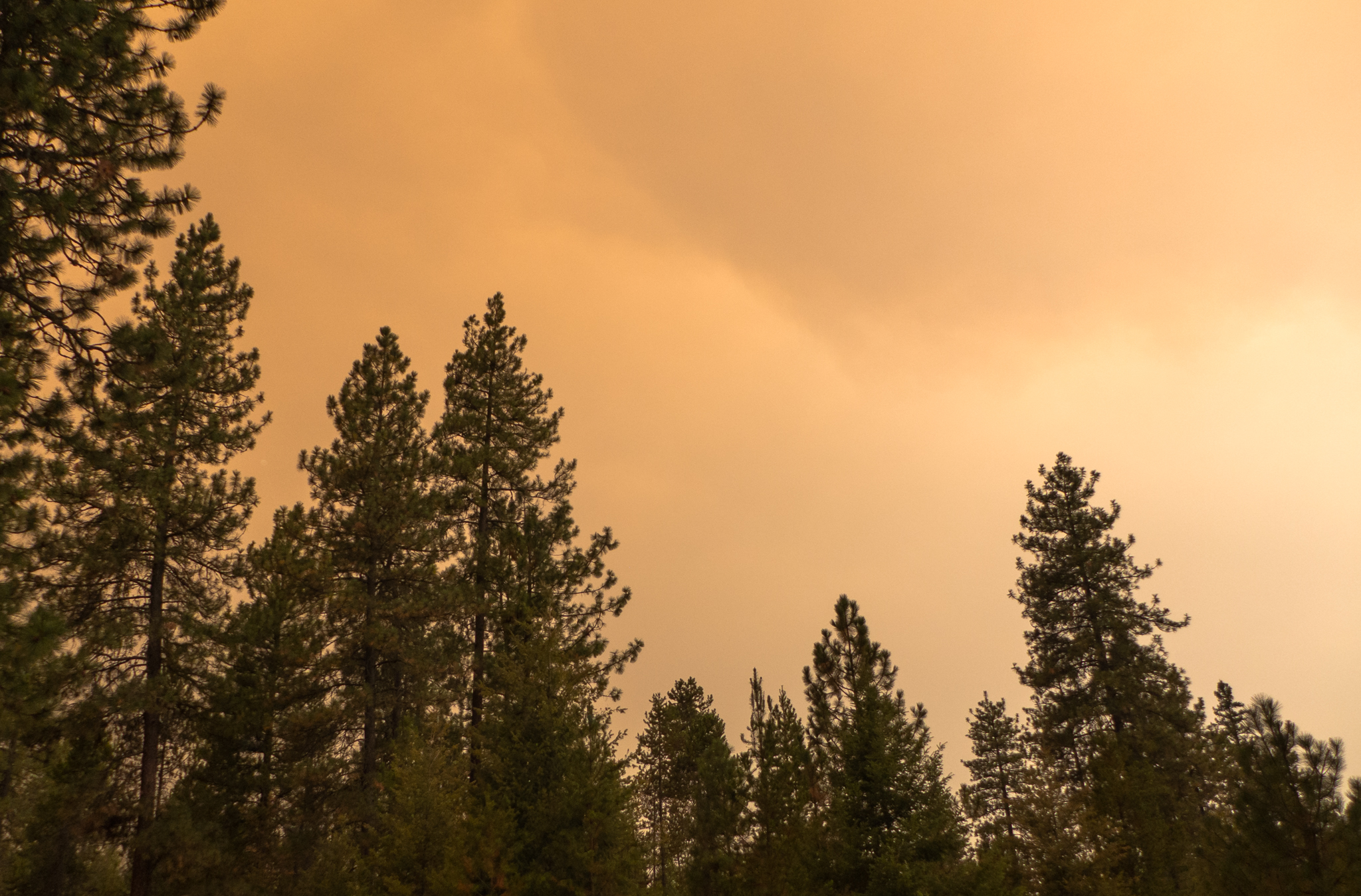
Smoky skies from wildfires this summer [Flickr page]

On a finite planet with degraded natural systems and diminishing natural resources, this growth imperative, built-in to our systems and into our lives, is an irresistible force coming up against an immovable object. It is us hitting a wall, and doing so at speed. More and more people in my time now see this crash coming.

Of course, there is also plenty of willful and studied stupidity on this subject. But here again, consider the incentives. As we spend down the last of what is left, there are still fortunes to be made.

And it is not only the power elite who gain by the liquidation of natural systems as we turn the Earth inside-out and upside-down in our frenzy to mine everything that can be mined. We are all implicated, all more-or-less willing accomplices in this final dismantling, because we are dependent on all these systems. Not only for our improvident lifestyle, but perhaps even for our very lives.

It would seem to make perfect sense, given our trajectory toward doom, that we should reverse our course as quickly and completely as we can. One way to do this would be to de-grow our population. Another would be to make far fewer demands upon this ailing and injured planet. Doing both at the same time would be better yet. But there are a few problems with this obvious fix, not the least of which is our agricultural system which–(get this now)–takes ten calories of energy (by way of cheap oil) to produce one calorie of food energy to power people.1

The industrial agricultural system has been in place for less than three quarters of a century, but it’s responsible for more than tripling our population in that short time. Without the high-grade energy of cheap oil, there could never have been more than seven billion of us. But the fact is: There are more than seven billion living human beings.

Sunset on nature, with endless commerce rolling by [Flickr page]

And what individual, or group, is going to take the responsibility for whittling this untenable number down to size? Even if all seven billion of us could agree that our numbers must be reduced, which we emphatically do not, how would we go about implementing this concerted will that we do not have?

Or let’s say that we could all agree that we wanted to live under a no-growth steady-state economic system (for which, again, there is, emphatically, no agreement). What would happen to all these interlocking systems–in which we are invested and enmeshed–that only work under conditions of growth, and falter under contraction? We really don’t know exactly what would happen, because non-linear complexity is involved. But it is a good guess that it would look quite a bit like dominoes falling, and they’d be falling on us.

I want you to understand why it is, when there were at least a few of us who could see what was coming, that we did nothing, or next to nothing, to slow this juggernaut down. I can see where you might be harboring bitter resentments against those who left you a world so broken in so many ways.

I don’t know if you yourself hold the value of intergenerational justice, but if you do, you will likely feel that you have been thoroughly betrayed. And you have, but not out of malicious­ness; not even out of in­dif­ference–at least not com­plete in­dif­ference. I per­sonally know individuals who feel strongly that we are doing you a terrible injustice, and we are.

But I want you to realize that we really didn’t have a choice in the matter. Whatever little any of us might have been able to do on your behalf wasn’t going to be nearly enough, because this growth catastrophe is systemic.

Rough road ahead [Flickr page]

We are all invested in these systems, one way or another, and have grown utterly dependent upon them for whatever there is left to value in human life. The thing is, almost none of us can see how we could possibly live without them–and truly almost none of us could.

The bind we are in is this: It is suicidal to go on as we are, and it would be suicidal to stop, and collapse all these systems that support our lives. Most of us live day to day, putting one foot in front of the other, more or less on automatic pilot, taking whatever satisfaction we can from our life in bondage to these systems. Even if we realize that something vital to our being has been taken from us, and that our lives are hollow, this is still all we have: a life of sorts. Your life, on the other hand, is mere conjecture, a phantom in the mists of a future that may never arrive. And so we go with what we know, in the here and now.

Would you, in our place, behave any differently?

———
Gary’s comment was in response to this Facebook post by Erica Velis, which linked to a sobering photo essay about overpopulation in The Guardian, April 1, 2015. I am “welcome to reprint this fragment,” he said, “which is part of a book I am writing, and is addressed to some future generation, because few living today are ready to hear what I have to say.”
The pictures with Flickr links are my own, and you can click on them to enlarge, as usual.

Notes


  1. See Michael Pollan, “How to Feed the World,” Newsweek (May 19, 2008), reprinted at michaelpollan.com/​articles-archive/​how-to-feed-the-world


Thursday, August 27, 2015

Apocalypse Now

Everything was as it should be, except that it wasn’t. We were living in two worlds. The old one, which never seemed more beautiful, had not yet vanished; and the new one, about which we knew little except to fear it, had not yet arrived.
—Carol Blue, widow of Christopher Hitchens, on his cancer diagnosis. In Hitchens, Mortality (2012).
A dry and smoke-filled sky [Flickr page]

This essay has sat lurking in my head for weeks now, threatening to force me into verbally confronting a reality that has borne silent witness in the hot forest and the burning skies. Instead of writing, I chopped wood and stacked it and then retreated into the stale artificial coolness of my air-conditioned house. When it was cool enough outside, I carried my folding chair to shaded places between the trees and read my books.

As the summer wore on, the ground went dusty and the birds grew quiet. The rich smells of my living forest faded into the dessicated air.

Then the wildfires began. Plumes of smoke drifted in, for days and then weeks. I stayed inside, obsessively checking fire update pages on Facebook. I drew the shades and watched movies in the dark.

For the first time, I took to watering the century-old trees within reach of my well. It may save them, for this year at least, from the bark beetles whose white larvae wriggled around the scarred surface of firelogs I’d cut from their dead neighbors. Several times per day for weeks now, I’ve pounded holes into parched earth near trunks six feet around, shoving the end of a long hose down to dribble fifteen gallons per hour into the dirt around their stressed roots. I have borrowed nearly twenty thousand gallons from the acquifer beneath me to pay the balance due to old ponderosa pines that expect more than what the skies have given them this year.

Getting worse by degrees1

Except for two tenths of an inch that fell one glorious day in July, it has not rained here since May. This summer has been hotter than these trees or I have ever experienced in these woods. And now they are burning, thousands of acres turned into smoke and ash, in all directions.

“Across the Northwest U.S., a region known for its damp climate, its rainforests, and for often cool and wet weather,” observes writer and outstanding climate blogger Robert Marston Fanney, “wildfires have been exploding. This summer, heat and dryness settled over the region in a months-long drought and heatwave.” And he adds something I’ve thought myself, having lived in Arizona for many years and now in Eastern Washington: “The climate of the Desert Southwest has been forced into Northern California, Oregon, Washington, and Montana.”2

The forest floor is dry and gray and withered. Sad little clouds of dust stir up when I walk through it, coating pale stiff lichen and parched leaves of bearberry and Oregon grape. How much more of this can they take?

The closest fire to me, some twenty miles away, has scorched more than 40,000 acres. Meanwhile, Washington State has had over 280,000 acres burned out of its midsection from some giant fires that are still far from being contained. Considered together (though they have not yet merged, as of this writing), they form the largest wildfire in Washington state history. The previous record was set last year.3

Something is going terribly wrong.

———
Standing dead [Flickr page]

“Not even people who are preoccupied with climate change like to think about it anymore,” writes James Howard Kunstler in his excellent book Too Much Magic. “The more you explore the problem, the worse it seems and the more hopeless you feel.”4

“The whole idea of climate change is so overwhelming, you want to tune it out,” agrees Ted McGregor, publisher of Spokane’s alt-weekly newspaper. “But this summer, the smokey skies won’t let us. It might seem like an insensitive time to inject politics, but we need to face facts.”5

Those facts are daunting indeed. NOAA just reported that the “combined average temperature over global land and ocean surfaces for July 2015 was the highest for July in the 136-year period of record.” That’s 1.46°F higher than the 20th century average. The previous record was set in 1998.6

Unless greenhouse gas emissions are restrained, the next four decades are likely to move many parts of the planet to “a new, permanent heat regime in which the coolest warm-season of the 21st century is hotter than the hottest warm-season of the late 20th century.”7 From this point on, we can expect about a third of the summers in the American West to be hotter than the hottest season we experienced between 1980-1999. By mid-century, most of them will be.8

That’s a drastic change for the climate of a big chunk of the United States. And as the following map shows (from NASA’s Goddard Institute for Space Studies), it’s one that’s been underway for some time now. For the past fifteen years, average July temperatures in the American West have been at least 1°F higher than they were between 1920-1980, perhaps nearly twice that.

July temps for past 15 years vs. 1920-80 average9

The Third National Climate Assessment, a report produced last year by more than 300 experts and “guided by a 60-member National Climate Assessment and Development Advisory Committee,” shows that much of the U.S.–not just the West–was more than 1°F hotter on average between 1991-2012 compared to 1901-1960.10 “Summers are longer and hotter,” the report notes, “and extended periods of unusual heat last longer than any living American has ever experienced.” And it speaks directly to what I’ve been seeing: “Hotter and drier weather and earlier snowmelt mean that wildfires in the West start earlier in the spring, last later into the fall, and burn more acreage.”11

Where I live, it’s actually been worse than just earlier snowmelt: We got almost no snow to have melted this year. Another map from the Goddard Institute shows one reason why: Our winters are getting warmer, too.

Wintertime temps for past 15 years vs. 1920-80 average12

It does get cold here in the winter, with temperatures often in the teens and below. But that almost always happens under clear skies. When the clouds gather overhead and decide to dump some precipitation on us, temperatures are usually hovering right around the freezing mark.

One degree of average increase in that temperature can make for a lot more rain than snow. And it is snow, not rain, that remains on the shaded forest floor until March or even April in a slow melt that soaks the trees for a burst of bright green growth each spring.

We have been getting less of that sky water, lately, in either form. A so-called “ridiculously resilient ridge” of high pressure has parked itself off the West Coast for much of the past three years, keeping moisture-bearing storms from making landfall. Last year, a team of Stanford University scientists “used a novel combination of computer simulations and statistical techniques to show” that this high-pressure region “was much more likely to form in the presence of modern greenhouse gas concentrations.”13 Their simulations came up with extreme high-pressure events significantly more often between a 1979-2005 interval compared to “pre-industrial” times, but only when “anthropogenic forcings” (greenhouse gas emissions) were included along with natural forcings. The “heightened probability cannot be explained without the anthropogenic contribution.”14

It’s a significant, unprecedented weather event that we are witnessing right before our eyes. And the likely reason we are seeing it is that we’ve spent the past two centuries dumping the carbon that nature accumulated over nearly 500 million years into those skies.15 “This isn’t a projection of 100 years in the future,” says one of the Stanford scientists. “This is an event that is more extreme than any in the observed record, and our research suggests that global warming is playing a role right now.”16

Given this, and with all the talk of present and future drought, I was surprised to see that the National Climate Assessment report actually predicts more precipitation for our region later in this century, between 10-20% more in fall, winter, and spring. More spring rain might helpful. But the summer forecast is a cruel one, calling for 20% less rain.17 That’s when the sap is really running and the trees are trying to use all the sunlight from endless days that barely dim, or to at least survive the blistering heat.

Still, for some reason, the report projects an increase of 1-5% in average soil moisture for my area by the middle of this century.18 I’ll take it, if that ridiculous ridge will just get out of the way.

Apocalypse Now [Flickr page]

In his book Climate Wars, Gwynne Dyer offers four conclusions that he reached “after a year of trailing around the world of climate change.” First is that “this thing is coming at us a whole lot faster than the publicly acknowledged wisdom has it. When you talk to the people at the sharp end of the climate business, scientists and policy-makers alike, there is an air of suppressed panic in many of the conversations.”19

Panic, and despair. You can feel it welling up from the scientists who were interviewed for John Richardson’s sobering article this summer in Esquire. One of them, Jason Box, is an outspoken climatologist who “escaped America’s culture of climate-change denial” by moving to Denmark. Now he tries not to talk about the magnitude of the problem because leaders of even that liberal country “still did not take kindly to one of its scientists distressing the populace with visions of global destruction.” He is thinking about a bug-out plan in Greenland, whose melting glaciers he studies.

“Among climate activists, gloom is building,” says Richardson, and then he lists some examples:

Jim Driscoll of the National Institute for Peer Support just finished a study of a group of longtime activists whose most frequently reported feeling was sadness, followed by fear and anger. Dr. Lise Van Susteren, a practicing psychiatrist and graduate of Al Gore’s Inconvenient Truth slide-show training, calls this “pretraumatic” stress. “So many of us are exhibiting all the signs and symptoms of posttraumatic disorder–the anger, the panic, the obsessive intrusive thoughts.” Leading activist Gillian Caldwell went public with her “climate trauma,” as she called it, quitting the group she helped build and posting an article called “16 Tips for Avoiding Climate Burnout” . . .

Anger is another of the emotions Dr. Box is dealing with. He has little patience for the climate-change denialists he says “are risking everyone’s future.” The Koch Brothers he calls “criminals” who “should be charged with criminal activity because they’re putting the profits of their business ahead of the livelihoods of millions of people, and even life on earth.” But he is relieved, at least, not to “have to bother with this bullshit anymore” in Denmark.20

Kunstler thinks it’s probably more accurate to call it reality denial. “It’s another of the universe’s jokes on us,” he adds, “that the humans who call themselves conservatives tend to be the most avid for squandering everything the planet affords us to live.” It’s more than politics, though. We just don’t want to face what we have done, and what’s in store for us. And that, says Kunstler,

has spawned a lively industry in climate change denial that is a wholly owned subsidiary of the oil, gas, and coal industries and a political subculture in its own right, aimed at defeating any policy consensus that would reduce the use (and sale) of oil, gas, and coal. Climate denial also happens to work nicely for that big chunk of the public at large that does not want to entertain any comprehensive change in the way we currently do things. And so the debate about what to do about climate change decays into incoherence as the deniers deliberately distort the facts while the science-minded are buffaloed by such mendacity and frustrated by a public that isn’t interested in the facts.21

I’m all too familiar with head-in-the-sand behavior, thanks to my studies of Christianity’s responses to evolution. Seeing such willful denial gets me angry, too, though I understand that there are many motivations for people to let themselves be misled. But, as William Catton observed 35 years ago, “real limits not seen are not limits repealed.”22

I also acknowledge my own complicity. My flights to Hawaii and back, to snorkel among coral reefs that will likely all be dead before I am, have added hundreds of pounds of carbon to the skies. I eat meat and drive a car, and had children (quite a few, as it turned out) who now do the same. Richardson asks one of his climate scientists if he think it would be wrong to take a transatlantic flight for his interviews. (Unlike Al Gore with his private jet, Richardson appears to have a healthy dislike for hypocrisy.) The scientist laughs and replies, “You have to answer that yourself.”

Perhaps there is some cold comfort for our collective guilt in Dyer’s second conclusion: Everyday lifestyle changes like changing light bulbs and reduced driving are “practically irrelevant to the outcome of this crisis.” Without “zero greenhouse-gas emissions globally by 2050 and, preferably, 80 per cent cuts by 2030,” we are in for a very rough ride. His third conclusion? That ain’t gonna happen. “Maybe if we had gotten serious about climate change fifteen years ago, or even ten, we might have had a chance, but it’s too late now.”

In happier times [Flickr page]

It is already too late for the Colorado forests that Dr. Box left behind. They “are dying,” he says, “and they will not return. The trees won’t return to a warming climate. We’re going to see megafires even more, that’ll be the new one–megafires until those forests are cleared.” I look around at the green landscape that I cherish, sullied by smoke for weeks now, and wonder. Will my trees also die, and not return?

Dyer’s fourth conclusion is that “mass movements of population, the number of failed and failing states, and very probably the incidence of internal and international wars” are correlated with increased global temperature. There is an important point to this: International mayhem from failed states and wars, “if they become big and frequent enough, will sabotage the global cooperation that is the only way to stop the temperature from continuing to climb.”23 This is a geopolitical positive feedback mechanism, one involving human behavior: Bad may prevent the prevention of worse.

Positive feedback is what makes the PA system squeal when a microphone gets too close. Something about the current output of a system causes future outputs to increase even more. There are natural positive feedbacks to the global climate system, too, and they are scary because they are completely out of our control. Once we have dumped the carbon dioxide from our planes and cars and the methane from our cows’ burps and farts (seriously, they are an issue), the resulting rise in temperatures “feed back” in various ways to make temperatures rise even faster.

Michael Mann’s hockey stick. (We’ve now passed 400 ppm.)24

That’s why increases in temperature are so dangerous even though they look small as mere numbers–unless you are sweating out a hot summer or wondering why it hardly snows anymore. “So far we’ve been the cause for the sudden surge in greenhouse gases and hence global temperatures,” says Bill McKibben,

but that’s starting to change, as the heat we’ve caused has started to trigger a series of ominous feedback effects. Some are fairly easy to see: melt Arctic sea ice, and you replace a shiny white mirror that reflects most of the incoming rays of the sun back out to space with a dull blue ocean that absorbs most of those rays. Others are less obvious, and much larger: booby traps, hidden around the world, waiting for the atmosphere to heat.

The biggest of those booby traps is found in the ground and under the seas of the Arctic, which is warming faster than any part of the planet. There are “immense quantities of methane natural gas locked up beneath the frozen tundra, and in icy ‘clathrates’ beneath the sea. Methane, like carbon dioxide, is a heat-trapping gas; if it starts escaping into the atmosphere, it will add to the pace of warming.” And it is doing just that. “In 2007, atmospheric levels of methane began to spike.”25

“Arctic permafrost ground that has been frozen for many thousands of years is now thawing because of global climate change, and the results could be disastrous and irreversible,” warns the Woods Hole Research Center. It’s releasing not just methane but also carbon dioxide. And then, after these additional greenhouse gases have been added to what we are continuing to dump into the atmosphere, you can guess what happens: The temperature goes up faster still. There is an acceleration of climate change, “which in turn causes more thawing of the permafrost. This potentially unstoppable and self-reinforcing cycle could constitute a calamitous ‘tipping point.’”26

Another example: The forests and oceans are getting less efficient as carbon sinks as we add more carbon.27 The trees are stressed from heat and drought. Millions of them are getting killed off by bark beetles that aren’t being controlled by cold enough winters or the trees’ natural defenses.

We started this mess in just the past century, mostly, when we began extracting and burning fossil fuels. Once the temperature had gone up enough, the feedback mechanisms got established. Now, the freight train is moving down the tracks, heading downhill, and it’s getting away from us. We’re not even trying to slow it down; we just continue to add more and more carbon, faster than ever. Drill, baby, drill.

What I stand to lose. That cottonwood is already dead. [Flickr page]

After attending a community meeting a few days ago about the monster of a fire near us, I realized that yet another nasty feedback mechanism is at work in the forests of Eastern Washington. It involves bad consequences of over-stressed resources, system collapse.

When lightning sparked a small fire in the Huckleberry mountains west of here, thousands of acres were already burning to the north. Our local fire chief had lent out resources for other fire districts to help fight those. That’s just what you do. It was a terrible night, with dry lightning sparking fires seemingly all around us and then strong winds fanning the flames.

Unfortunately, when yet another chief called him for help with a few acres burning in the Huckleberry Mountains, he was forced to decline. It pained him to do that, he said, both personally and professionally, but there was no choice. He couldn’t leave his own fire district defenseless, especially on such a night as that. The whole state–indeed the entire American West–was stretched to the breaking point. Yet if he had been able to answer that call, the fire might have been stopped with just dozens of acres burned instead of thousands.

And so another tipping point was reached. The local fire fighting system was overwhelmed and the Carpenter Road fire has burned forty thousand acres of forest near our home. What else is in store for us, this year, and next year, and the one after that?

It’s stressful enough just thinking about next week. Despite aggressive efforts and over four hundred personnel working the fire, the monster has just jumped its main fire line, Springdale-Hunters Road. And there is yet another “red flag warning” heading our way tomorrow. “CRITICAL FIRE WEATHER CONDITIONS ARE LIKELY,” shouts the all-caps message from the National Weather Service. “A COMBINATION OF GUSTY WINDS, LOW RELATIVE HUMIDITY, AND WARM TEMPERATURES WILL CREATE HIGH FIRE GROWTH POTENTIAL.”

They might as well just extend a red flag warning to the entire planet, from this point on.

———
Apocalypse Now is of course the title of a great old movie. The pictures with Flickr links are my own, and you can click on them to enlarge, as usual. Clicking on the others takes you to links from their original sources. And please take a look at the excellent if horrifying RobertScribbler blog.

Notes


  1. From ncdc.noaa.gov/​temp-and-precip/​state-temps. In fairness, it’s worth noting that the maximum summertime temperatures, while also on an upward trend over the past forty years, experienced anomalously high values averaged over the years 1920-1930, and that there were two very hot years way back around 1960. As with the prediction of higher soil moisture in my area, such isolated records of previous hot weather are hopeful little islands in a sea of awful upward trends. 

  2. “US Experiencing Worst Fire Season on Record as Blazes in Washington and Oregon Explode Twelvefold to Over 1 Million Acres,” robertscribbler blog, August 24, 2015 posting

  3. The Carpenter Road fire started by a half-dozen or so lightning strikes near Fruitland, WA and was quickly fanned by high winds into a monster that raised evacuation alerts just miles away from my home. This information comes from an information meeting I attended at the local Grange hall. Regarding the other, larger fire, see en.wikipedia.org/​wiki/Okanogan_Complex_fire. As of this writing, the “Okanogan Complex fire has not merged into a single fire,” so, technically, last year’s “Carlton Complex remains the state’s largest single fire.” 

  4. James Howard Kunstler, Too Much Magic: Wishful Thinking, Technology, and the Fate of the Nation. (Grove/​Atlantic, 2012), Kindle loc. 3185. 

  5. “The New Normal,” Publisher’s Note, The Inlander (Aug. 19, 2015), inlander.com/​spokane/the-new-normal/​Content?oid=2540653

  6. National Oceanic and Atmospheric Adminisration, Global Analysis–July 2015, ncdc.noaa.gov/​sotc/global/​201507. It gets worse: “As July is climatologically the warmest month of the year globally, this monthly global temperature of 16.61°C (61.86°F) was also the highest among all 1627 months in the record that began in January 1880.” As you might expect from that, the trend doesn’t look good: “The July temperature is currently increasing at an average rate of 0.65°C (1.17°F) per century.” 

  7. Noah S. Diffenbaugh and Martin Scherer, “Observational and model evidence of global emergence of permanent, unprecedented heat in the 20th and 21st centuries.” Climatic Change (Springer, 2011), No. 107, pp. 615-624. Accessible online at link.springer.com/​article/10.1007/​s10584-011-0112-y

  8. These predictions are drawn from the climate modeling maps shown in Fig. 1 on p. 618 of Diffenbaugh and Scherer. 

  9. Generated from an interactive web page hosted by NASA’s Goddard Institute for Space Studies. Earlier this year, the Institute “was threatened with 30 percent budget cuts by Republicans who resent its reports on climate change” (John H. Richardson, Esquire, Jul. 7, 2015). 

  10. Jerry M. Melillo, Terese (T.C.) Richmond, and Gary W. Yohe, Eds., Climate Change Impacts in the United States: The Third National Climate Assessment. U.S. Global Change Research Program, doi:10.7930/​J0Z31WJ2, Fig. 2.7 (p. 29). PDF available at nca2014.globalchange.gov/​downloads

  11. Melillo et al., p. 1. 

  12. Generated from the Goddard Institute interactive web page for Northern Hemisphere winter, with a time interval of 2000-2015 and a base period of 1920-1980. 

  13. Ker Than, “Causes of California drought linked to climate change, Stanford scientists say,” Stanford Report (Sept. 30, 2014), news.stanford.edu/​news/2014/​september/drought-climate-change-092914.html 

  14. Daniel L. Swain, et al., “The Extraordinary California Drought of 2013/14: Character, Context, and the Role of Climate Change,” special supplement to the Bulletin of the American Meteorological Society (Vol. 95, No. 9, Sept. 2014), journals.ametsoc.org/​doi/suppl/​10.1175/1520-0477-95.9.S1.1/​suppl_file/​10.1175_1520-0477-95.9.s1.3.pdf 

  15. Kunstler, loc. 3278. 

  16. Noah Diffenbaugh, quoted in Than, Stanford Report

  17. Melillo, et al. (Fig. 2.14, p. 34). 

  18. Melillo, et al. (Fig. 2.22, p. 41). See also Kunstler, loc. 3366 (“Rainfall over landmasses has increased by about 2 percent through the twentieth century. Global warming increases the evaporation of moisture from oceans. It eventually precipitates out as rain or snow”). 

  19. Gwynne Dyer, Climate Wars: The Fight for Survival as the World Overheats (Oneworld Publications, 2010), loc. 112. 

  20. John H. Richardson, “When the End of Human Civilization Is Your Day Job,” Esquire (July 7, 2015), esquire.com/​news-politics/​a36228/ballad-of-the-sad-climatologists-0815 

  21. Kunstler at loc. 3221, 3490. 

  22. Willam R. Catton, Overshoot: The Ecological Basis of Revolutionary Change. Urbana and Chicago: University of Illinois Press (1982). 

  23. Dyer at loc. 121. 

  24. Graph from climate.nasa.gov/​climate_resources/24. Regarding the “hockey stick,” see Richardson’s Esquire article: Mann “was a young Ph.D. researcher when he helped come up with the historical data that came to be known as the hockey stickthe most incendiary display graph in human history, with its temperature and emissions lines going straight up at the end like the blade of a hockey stick. He was investigated, was denounced in Congress, got death threats, was accused of fraud, received white powder in the mail, and got thousands of e-mails with suggestions like, You should be “shot, quartered, and fed to the pigs along with your whole damn families.” Conservative legal foundations pressured his university, a British journalist suggested the electric chair. In 2003, Senator James Inhofe’s committee called him to testify, flanking him with two professional climate-change deniers, and in 2011 the committee threatened him with federal prosecution, along with sixteen other scientists. 

  25. Bill McKibben, Eaarth: Making a Life on a Tough New Planet, Henry Holt and Co. (2010), p. 20. 

  26. “U.S. scientists warn leaders of dangers of thawing permafrost,” Woods Hole Research Center, Aug. 27, 2015. whrc.org/u-s-scientists-warn-leaders-of-dangers-of-thawing-permafrost

  27. McKibben at p. 22.