Showing posts with label Fossil Fuels. Show all posts

Tuesday, December 8, 2015

Why I am an Islamophobe

[Osama bin Laden’s] claim to speak for Islam or for all Muslims might be contested, but the religion itself was an expression of deeper yearnings that needed to be sympathetically understood. On no account–and this imperative was put forward by President Bush as well as by many liberals–were the less tender elements of his doctrine to be used as a critique of religion. A hitherto marginal propaganda term, “Islamophobia,” underwent a mainstream baptism and was pressed into service to intimidate those who suspected that faith might indeed have something to do with it.
—Christopher Hitchens, The Enemy
What worries me is that so many moderate Muslims believe that “Islamophobia” is a bigger problem than literalist Islam is. They seem more outraged that someone like me would equate jihad with holy war than that millions of their co-religionists do this and commit atrocities as a result.
—Sam Harris, in Islam and the Future of Tolerance: A Dialogue
Note: This isn’t about anything proposed by Donald Trump, who is a bigoted narcissist with a hopelessly simplistic view of the world. Please give yourself some time to read this essay beyond the headline. The truly impatient might at least look at its conclusion.
———

When my mother called me on the morning of September 11, 2001 and said that a plane had hit the World Trade Center, my first reaction was, “So what?” I pictured the small wreck of a Cessna stuck into a few windows, an accident resulting from some grossly incompetent private pilot.
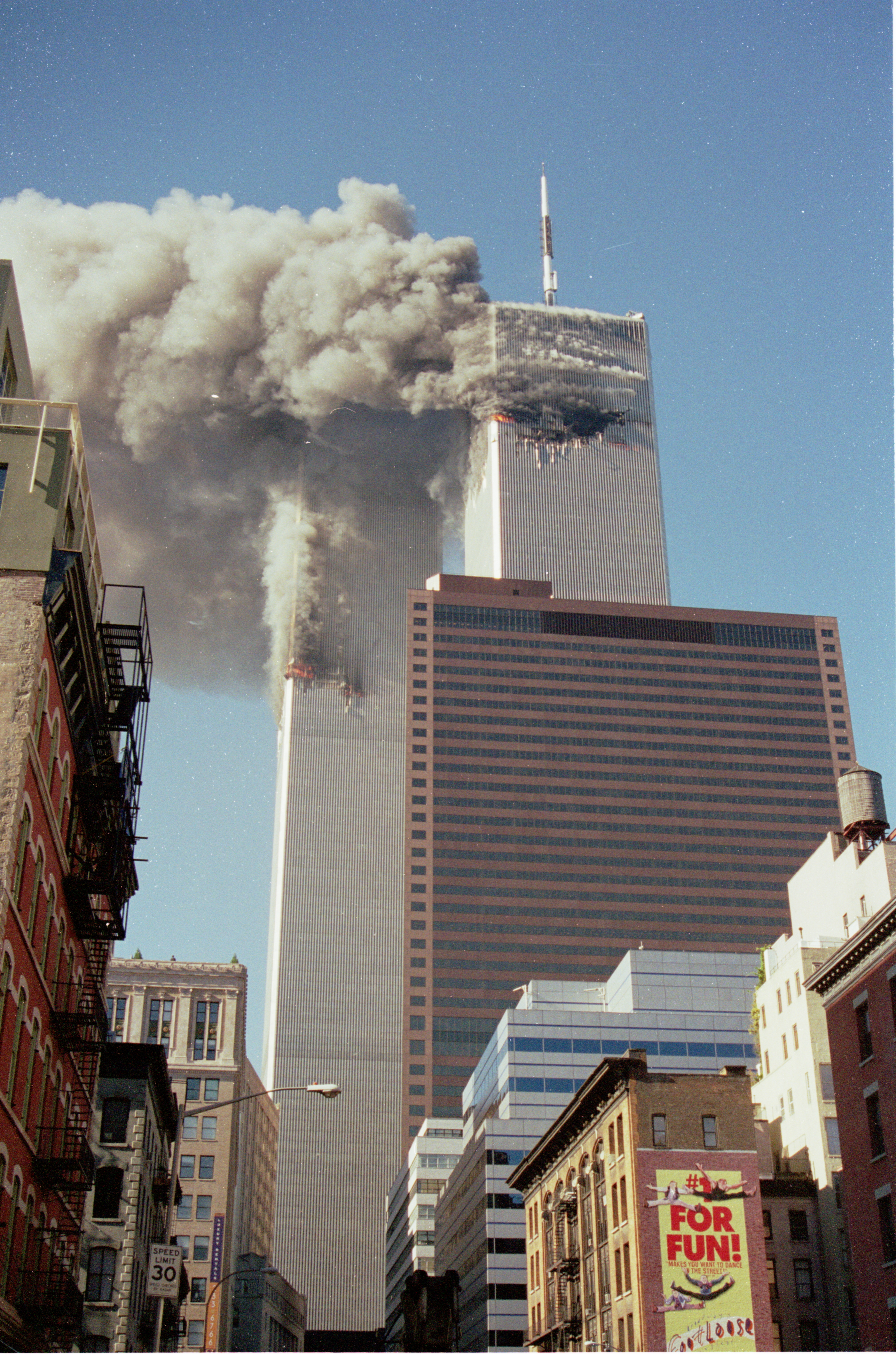
September 11th [Flickr page]

After I’d rubbed the sleep from my eyes and walked over to my computer to watch the live coverage online, I saw that huge plume of smoke and realized this was bigger than I’d thought. Then the second plane hit, and Islam–as envisioned by a small group of its most fanatically devoted followers–had introduced itself to my world.

In an effort to understand what my President was calling a “religion of peace,” I bought a paperback copy of the Qur’an1 and started reading. It didn’t seem all that peaceful to me. Just in the first three pages, Sura 2 (“The Cow”) went on and on about infidels who will receive “a severe chastisement,” whose hearts are diseased, for whom a fire has been prepared.

On page 17 (still in Sura 2), I encountered a command for Muslims to “fight for the cause of God against those who fight against you.” It was accompanied by the caveat that they should not attack the unbelievers first, at least, though that’s pretty much a moot point now, with Middle Eastern grievances stretching back many hundreds of years. Then, the text went on, “kill them wherever ye shall find them, and eject them from whatever place they have ejected you; for civil discord is worse than carnage.” With the sound still fresh in mind of turbofan engines and screams and bodies falling onto the pavement, this didn’t seem like a promising start.

And it wasn’t. Sura 8 (“The Spoils”) instructed the reader, in the name of “thy Lord” who’d apparently told some angels, “I will be with you: therefore stablish ye the faithful. I will cast a dread into the hearts of the infidels,” to “Strike off their heads then, and strike off from them every finger-tip,” because “they have opposed God and His Apostle.” Further instruction was to “Fight then against them till strife be at an end, and the religion be all of it God’s.” Sura 9 (“Immunity”) urged, “Believers! Wage war against such of the infidels as are your neighbors, and let them find you rigorous: and know that God is with those who fear him.”
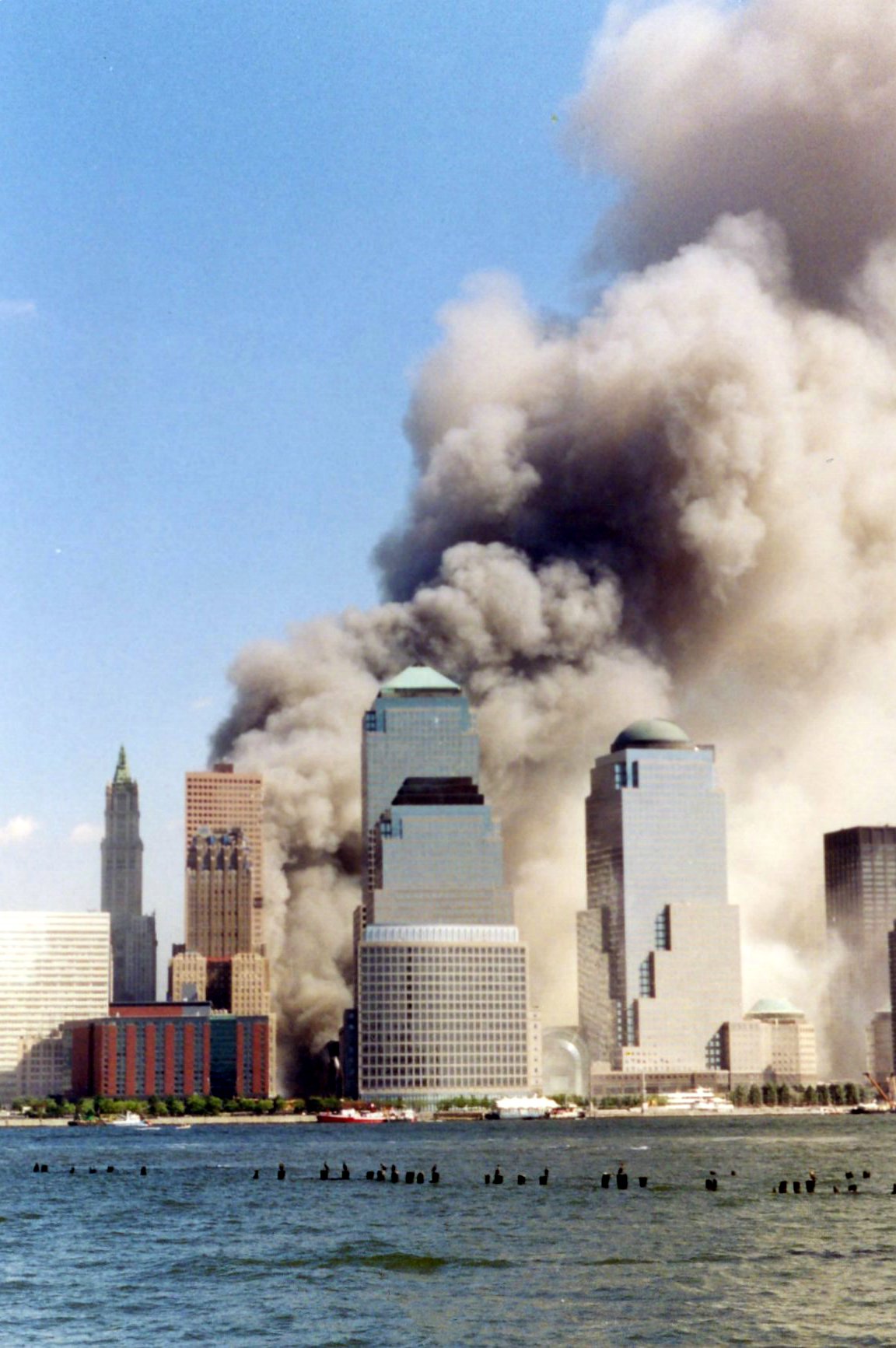
September 11, 2001 [Flickr page]

Sura 24 (“Light”) sets forth a brutal punishment for the “whore and the whoremonger,” of the type that is still being carried out by faithful Muslims of ISIS and Saudi Arabia today: “scourge each of them with an hundred stripes; and let not compassion keep you from carrying out the sentence of God, if you believe in God and the last day.” Raif Badawi may have recalled the next line as the lash bore down on him in January: “And let some of the faithful witness their chastisement.” As he himself recalled it, “when I look within, I only see that thin man who miraculously withstood fifty lashes, while a group of people celebrated his pain, repeatedly chanting Allahu Akbar.”2

The first verses of Sura 47 (“Muhammed”) included this framework for interfaith dialogue: “When ye encounter the infidels, strike off their heads till ye have made a great slaughter among them, and of the rest make fast the fetters.” Two pages later, it urged believers not to be fainthearted, “and invite not the infidels to peace when ye have the upper hand.” In Sura 66 (“The Forbidding”), the Prophet was told to “make war on the infidels and hypocrites, and deal rigorously with them. Hell shall be their abode! And wretched the passage to it!”

My passage through the text to this point had been pretty wretched, too. It was all so very repetitive, bleak, defensive, and angry. Denunciations of infidels were littered everywhere, along with copious eternal threats (“for the infidels is the torture of the Fire!”, Sura 8). There were provisions giving special privileges to slaveholders (“Forbidden to you also are married women, except those who are in your hands as slaves,” Sura 4) and the prophet (“No blame attacheth to the Prophet where God hath given him a permission,” Sura 33).
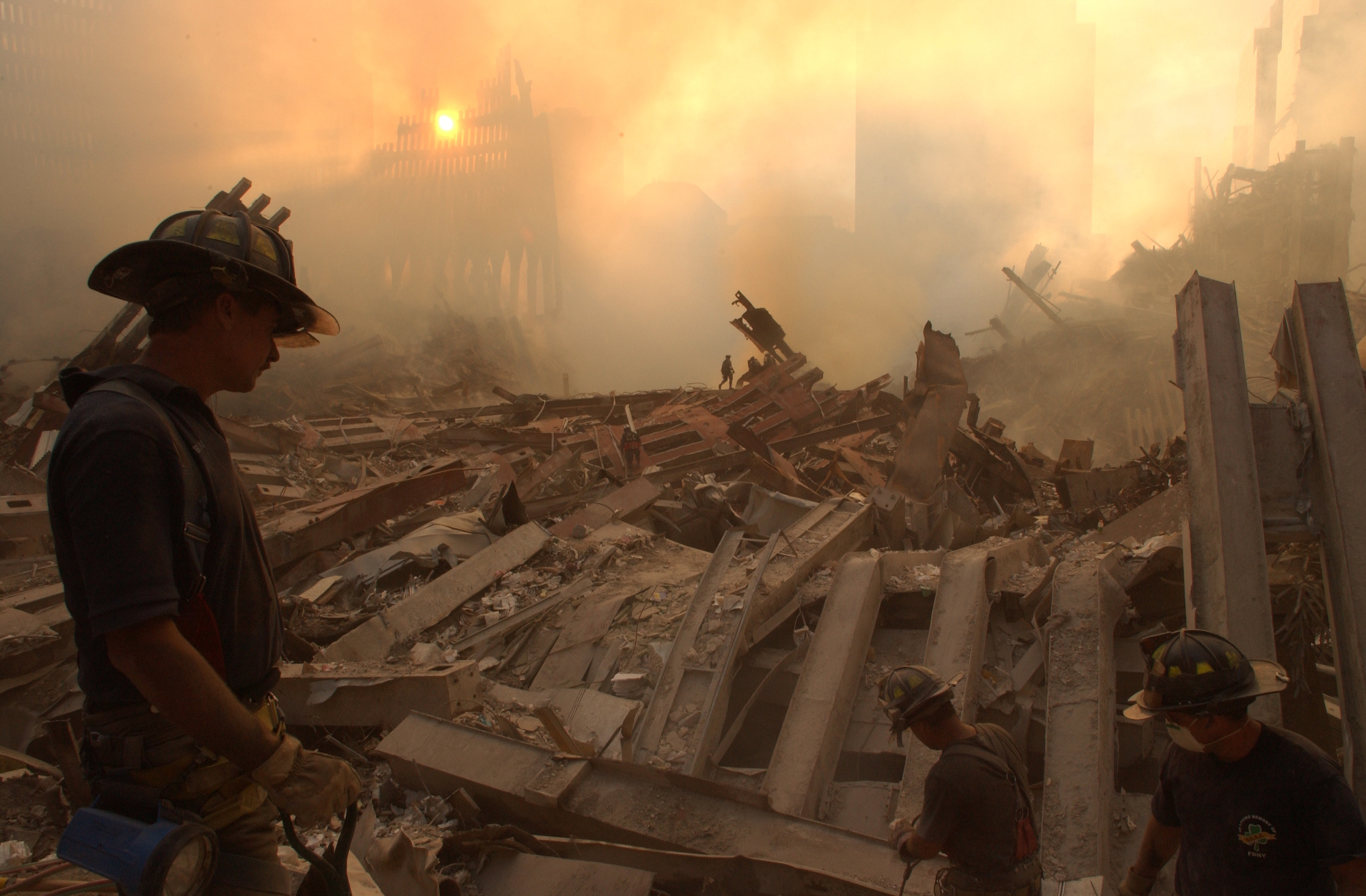
“Make war on the infidels” [Flickr page]

One entertaining diversion from the overall gloom of my reading project was coming across this license given by Allah to the man who (coincidentally!) was the very one to transmit the divine words:

O Prophet! We allow thee thy wives whom thou hast dowered, and the slaves whom thy right hand possesseth out of the booty which God hath granted thee, and the daughters of thy uncle, and of thy paternal and maternal aunts who fled with thee to Medina, and any believing woman who hath given herself up to the Prophet, if the Prophet desired to wed her–a privilege for thee above the rest of the faithful. [Sura 33, “The Confederates”]

That’s some real forward thinking on Mo’s part there. If you’re going to write a holy book, you might as well get all of your special sexual privileges defined right up front.

It’s an example of how “temporal power, aggrandisement, and self-gratification mingled rapidly with the grand object of the Prophet’s life” during the latter period of his life, in Medina. That char­acterization is from William Muir’s four-volume, mid-19th century biography Life of Mahomet, which the ex-Muslim writer Ibn Warraq says passed “a judgment on Muhammad’s character that was to be repeated over and over again by subsequent scholars.” Muir observed that Muhammad’s “personal indulgences were not only excused but encouraged by the divine approval or command.” In addition, “Battles were fought, executions ordered, and territories annexed, under cover of the Almighty’s sanction.”3 The Arab pagans of the 7th century had plenty to be Islamophobic about.4

The Prophet also seemed–to my layman’s reading at least–pretty touchy about the idea that his revelations might be questioned. He has Allah proclaim reassuringly that infidels like me will say, “This Koran is a mere fraud of his own devising, and others have helped him with it, who had come hither by outrage and lie” (Sura 25, “al Furkan”). We unbelievers scoff at Allah’s “distinct signs” by saying, “This is merely a man who would fain pervert you from your father’s worship,” and “This (Koran) is no other than a forged falsehood” (Sura 34, “Saba”).

Circling the sacred black building with its very special black rock in Mecca [Flickr page]

But wait! Sura 41 (“The Made Plain”) provides a handy rationalization for our skepticism. It’s one that sounds all too familiar from my days in Christian fundamentalism: The Qur’an “is to those who believe a guide and a medicine; but as to those who believe not, there is a thickness in their ears, and to them it is a blindness.”5

I’ll agree to that, at least. In all those pages, I saw nothing about love, nothing about joy or any real wisdom. It looks to me like blindness, all right–to everything that is good and decent about humanity.6

Edward Gibbon (1737-1794), famous historian of the Roman Empire, wasn’t impressed, either. The Qur’an he called an “endless incoherent rhapsody of fable, and precept, and declamation, which seldom excites a sentiment or an idea, which sometimes crawls in the dust, and is sometimes lost in the clouds.” Philosopher David Hume (1711-1776) was even less charitable, calling it a

wild and absurd performance. Let us attend to his [Muhammad’s] narration; and we shall soon find that he bestows praise on such in­stances of treachery, in­human­ity, cruelty, revenge, and big­otry as are utterly incompatible with civilized society. No steady rule of right seems there to be attended to; and every action is blamed or praised, so far only as it is beneficial or hurtful to the true believers.7

The Qur’an and Muhammad’s sword are, in the assessment of biographer Muir, “the most stubborn enemies of Civilization, Liberty, and Truth, which the world has yet known.”8 Admittedly, in the 150 years since he wrote that, we have seen plenty of uncivilized behavior totally unrelated to Islam or even religion–the Holocaust, Stalin’s murder of millions, the Bataan death march, and my own country’s detonation of two nuclear bombs over civilian populations come to mind. But we are also still seeing all too much of the bloody sword of Muhammed, not just in the Middle East, but in the concert halls, banquet rooms, and subway stations of the Western world.

Submit or Die

And fuck you, sir.

Nor is Liberty (to say nothing of an impartial search for Truth) a viable partner with Islam. Its very name–meaning “submission” or “surrender”–is contrary to that.9 Islam is a totalitarian ideology that hacks away at human rights and freedoms with two bloody edges of Muhammad’s sword: sharia, which subjugates those currently under Islamic control, and jihad, which seeks to extend that control to everybody else, having “for its ultimate aim the conquest of the entire world, in order to submit it to one single authority.”

The sharia or Islamic law is “based on four principles or roots.”10 One of course is the Qur’an, with all its restrictions and barbaric punishments. And it’s not going anywhere. Even the moderate Muslim reformer Maajid Nawaz, who is doing much-needed work to help promote a tolerant (and tolerable) form of Islam, admits that “most Muslims today believe that the Qur’an is the eternal, literal word of God.”11

The other three principles behind sharia are “the sunna of the Prophet, which is incorporated in the recognized traditions; the consensus (ijma) of the scholars of the orthodox community; and the method of reasoning by analogy (qiyas or kiyas).” The whole thing is a “doctrine of duties” that is

aimed at “controlling the religious, social and political life of mankind in all its aspects, the life of its followers without qualification, and the life of those who follow tolerated religions to a degree that prevents their activities from hampering Islam in any way.” . . . It intrudes into every nook and cranny: everything–to give a random sample–from the pilgrim tax, agricultural contracts, the board and lodging of slaves, the invitation to a wedding, the use of toothpicks, the ritual fashion in which one’s natural needs are to be accomplished, the prohibition for men to wear gold or silver rings, to the proper treatment of animals is covered.12

Warraq notes that Christianity has a biblical basis for separation of church and state (“Render unto Caesar the things which are Caesar’s and unto God the things which are God’s, Matt. 22:17), but there is no such separation with Islam. The reason goes back to Muhammed, who

was not only a prophet but also a statesman; he founded not only a community but also a state and a society. He was a military leader, making war and peace, and a lawgiver, dispensing justice. Right from the beginning, the Muslims formed a community that was at once political and religious, with the Prophet himself as head of state.13

“Western Islamic apologists and modernizing Muslims continue to look for democratic principles in Islam and Islamic history,” says Warraq, noting many reasons why their search will be in vain. Perhaps most glaring is the legal inferiority of women, whose testimony in court is worth half that of a man, whose movements are strictly restricted, and who are prohibited from marrying non-Muslims. Non-Muslims of either sex who live in Muslim countries suffer their own form of subjugation, while atheists and apostates from Islam can expect only death. (Warraq notes Islam’s hypocrisy in welcoming converts who move in the other direction.)

Indeed, the very “notion of an individual–a moral person who is capable of making rational decisions and accepting moral responsibility for his free acts–is lacking in Islam.” One of the greatest obstacles standing in the way of any Islamic democracy is Islam’s “emphasis that it is the final word of God, the ultimate code of conduct: Islam never allows the possibility of alternatives.”14

Mission Work, Muhammad Style

Intolerance was built into Islam from the very beginning. No “religious toleration was extended to the idolaters of Arabia at the time of Muhammad. The only choice given them was death or the acceptance of Islam.” The Prophet himself slaughtered around 600-900 Jews, expelled others, and subjugated the rest under extortionate taxes.

Then, just a couple of years after Muhammad’s death, “the caliph Abu Bakr organized the invasion of Syria,” expanding the reach of Islam outside the Arabian peninsula.

During the campaign of 634, the entire region between Gaza and Caesarea was devastated; four thousand peasants Christians, Jews, and Samaritans who were simply defending their land were massacred. During the campaigns in Mesopotamia between 635 and 642, monasteries were sacked, the monks were killed, and Monophysite Arabs executed or forced to convert. In Elam the population was put to the sword, at Susa all the dignitaries suffered the same fate.15
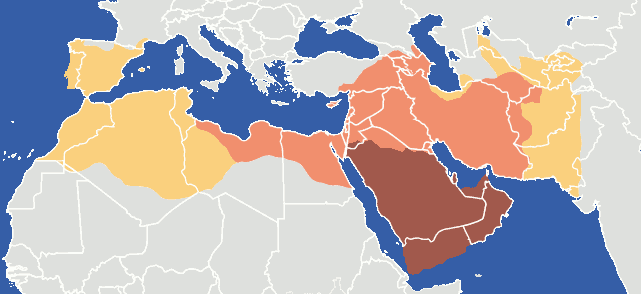
Islamic expansion under Muhammad (622-32), the Patriarchal Caliphate (632-61), and the Umayyad Caliphate (661-750). Dark brown, light brown, then gold.

About 70 years later, the Umayyad Caliphate, “the second of the four major Islamic caliphates established after the death of Muhammad,”16 provided another example of such early barbaric behavior. Another Muhammad, bin Qasim, was a commander tasked with conquering the Sindh and Multan regions of what is now Pakistan. According to Warraq’s recounting of this bit of early jihadist history, the commander had instructions from Al-Hajjaj ibn Yusuf, governor of Iraq, to “bring destruction on the unbelievers.” He was “to invite and induce the infidels to accept the true creed, and belief in the unity of God.”

This was not accomplished by door-to-door missionaries offering copies of the Qur’an. Al-Hajjaj prescribed harsh treatment and injury to anyone who “does not submit to Islam.” But after three days of slaughter at the port of Debal, it seems that commander bin Qasim got soft and allowed many of the inhabitants to stick with their religion.

The governor shot off a displeased letter to the commander via Indus Express, citing one of the same Qur’anic passages I did above, the one about striking off the heads of unbelievers. That was, he admonished, “a great command” that “must be respected and followed. You should not be so fond of showing mercy, as to nullify the virtue of the act.”17 Alas, governor Al-Hajjaj hadn’t gotten the memo from Reza Aslan et al. that Islam doesn’t promote violence.

Iraq was at the center of the Umayyad Caliphate. It’s the same neighborhood as another Caliphate that exists in the Qur’an-crazed imaginations of our latest outbreak of Islamic fanaticism, the Islamic State or ISIS. Christopher Hitchens, who did not live long enough to witness the current horrors of ISIS, saw its genesis as “al-Qaeda in Mesopotamia,” in 2011 calling it “the fantastically sadistic and homicidal so-called ‘insurgency’ put together by the Jordanian jailbird and psychopath Abu Musab al-Zarqawi.”18

In his recently published dialogue with Maajid Nawaz, Sam Harris recalled how the Islamic State had “been burning prisoners alive in cages and decapitating people by the dozen and gleefully posting videos attesting to the enormity of their sadism online.” These atrocities, he observed, “represent what they unabashedly stand for.”19 Yet, when “one asks what the motivations of Islamists and jihadists actually are, one encounters a tsunami of liberal delusion.”20

Nawaz acknowledges many of the difficulties Harris raises throughout their discussion, and laments “regressive leftists” (his words) who “have a poverty of expectation for minority groups, believing them to be homogeneous and inherently opposed to human rights values.”21 Regarding the Islamic State, he notes that more “violence does not necessarily equate with greater religious conviction. Each group is deeply convinced of its approach to achieving Islamism in society, and both face much danger in pursuit of that goal.” Not only do “they differ in methodology,” but they also very much despise each other.” Islamic State, for example, “would kill members of the Muslim Brotherhood” in Egypt.22

His efforts to salvage something separate and worthwhile from “Islamism” are commendable, but knowing that various Islam-inspired groups hate each other as well as everybody else doesn’t make me feel much better about Islam itself. My “Islamophobia,” a term I accept for myself despite its pejorative intentions, is a very reasonable aversion to Islam. It is not a phobic (i.e., irrational) fear at all, but an entirely sensible response to something very dangerous.23 Frankly, I wouldn’t want either the Islamic State or the Muslim Brotherhood anywhere nearby.

Nawaz also attempts to draw a distinction between Islam and what the Islamic State is doing, as he and millions of other decent Muslims must. “Islam is just a religion,” he says, contrary to what we have seen above from Ibn Warraq about totalitarianism. “Islamism is the ideology that seeks to impose any version of Islam over society. Islamism is, therefore, theocratic extremism. Jihadism is the use of force to spread Islamism. Jihadist terrorism is the use of force that targets civilians to spread Islamism.”

“It is this extremism,” he says, “that must be named as Islamism and opposed,” adding “that one cannot argue that the Islamic State represents all of Islam.” Then, with refreshing candor, Nawaz goes on to admit the obvious:

one cannot argue that it has nothing to do with Islam. But it should be obvious that “a desire to impose Islam” cannot reasonably be said to have “nothing to do with Islam.” Clearly, it has something to do with it.24

Yes, it certainly does. And it has everything to do with those bloody bodies of innocents lying on the ground in Paris and San Bernardino.

The Empty Quarter
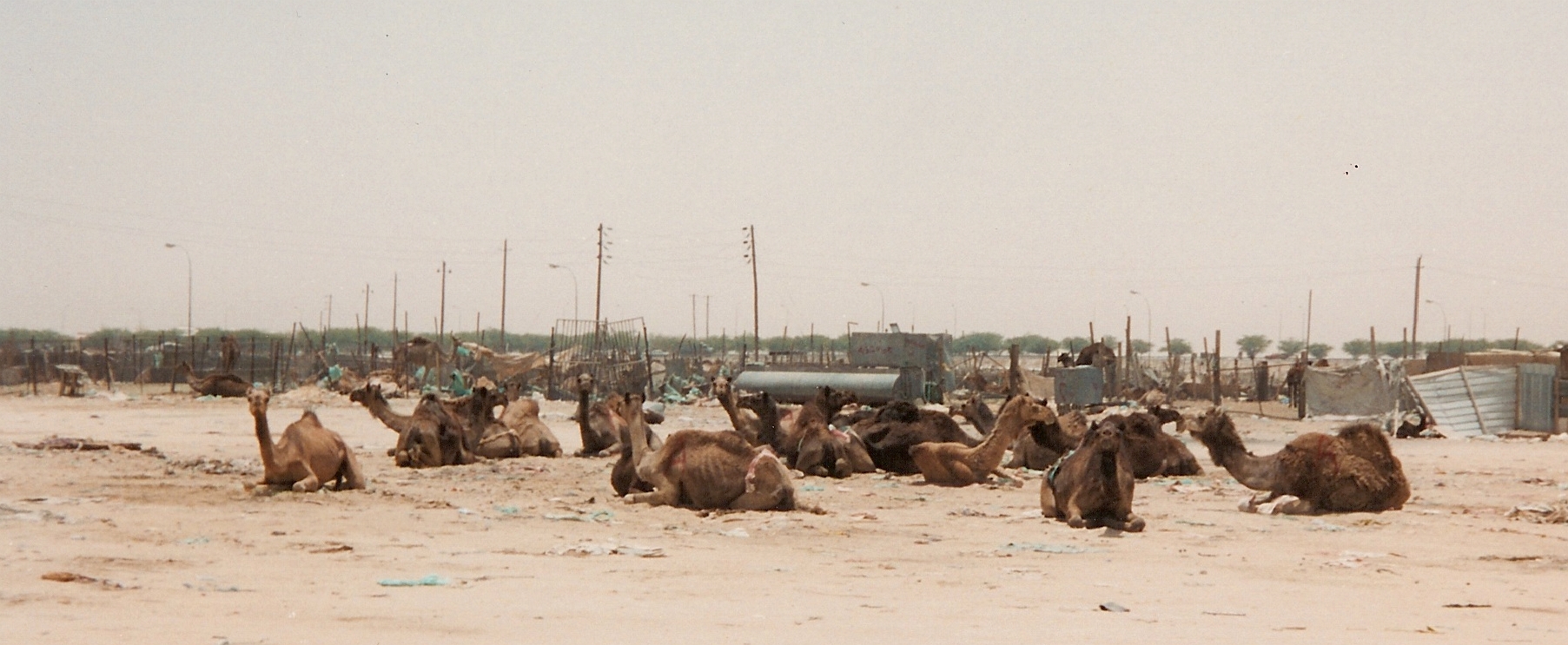
Camel market - Saudi [Flickr page]

Perhaps the best example of a devoutly Islamic society today is the place where Islam got its start, the portion of the Arabian peninsula now governed by the Al-Saud. In the assessment of John Bradley, a rare Western journalist who had some real experience there, they are “perhaps the most corrupt family the world has ever known.” Saudi Arabia, he says, is

teeming with extremists, where children are taught that “the Jews” are the eternal enemy, and where Westerners are periodically blown up in their residential compounds or gunned down in the street by attackers filled with hatred for them and seeking martyrdom. It is a place that treats Third World immigrants like slaves, where Saudi men never get to see a woman who is not a direct (and usually very close) relative, and where Saudi women themselves cannot leave the house without a male chaperone, let alone drive, and live for the most part in absolute purdah [separation from men].

Fluency in Arabic, an eager cultural curiosity, and a willingness to risk living outside some fortified expat compound allowed Bradley to spend time in another Saudi Arabia. This was one

where Westerners with an open mind and sense of adventure can and often do encounter the finest traditions of Islamic hospitality, generosity, and kindness. In this Saudi Arabia, they may spend an evening sitting with liberal-minded, and even secular, Saudi friends, drinking coffee in Starbucks while talking about the latest Western movies. Princes and princes­ses, selfless and in­corruptible, can talk pas­sionately of the need to in­troduce sweeping reforms that would limit their own power. Teenagers surf the web in Internet cafes while watching the World Cup or Superbowl on widescreen TVs, or play soccer in the street. Women, shed of their long black cloaks in the home, can quickly prove themselves to be as independent and single-minded as any in the West.25

Guess which version of the country is more faithful to Islam? Despite that business about “Islamic hospitality,” which I suspect is really no different than Arabic hospitality, it is the first one–the repressive, hate-filled, all-controlling Saudi Arabia–that has enacted a bleak dystopia of pure Islam. The “universities, charities, schools, orphanages, and print media are all . . . now in the control of the Wahhabi clerics,” spewing and sowing the seeds of extremist rhetoric, indoctrinating the next generation with the joys of jihad and martyrdom.26

University College London in Saudi Arabia. No burka on the glossy brochure. [Flickr page]

For this we can thank the British and their tragic decision in the 1930s to back a certain Abdulaziz Ibn Saud,27 whom they “viewed as the leader most likely to pacify rival tribes in the Arabian Peninsula and [who] had already proved himself very willing to cooperate closely with Britain in order to achieve his goal of carving out a state for his family to rule over.”28

Ibn Saud did not arrive on his own. He was accompanied, like a dog with a bad case of worms, by clerics who followed the depressingly fundamentalist Islam of one Muhammad ibn Abd al-Wahhab, who had signed a pact with Ibn Saud’s ancestor back in 1744. “Their aim was to bring about, through force if necessary, the reign of the word of God.” Sound familiar? “Abdul Wahhab had begun his preaching some years earlier. Wahhabism, his legacy, advocated a literalist and legalistic stance in matters of faith and religious practice.”29

Now, more than two hundred years later, the Saudis remain “loyal to the cynical pact that earned Wahhabi clerical endorsement of the ruling dynasty in return for heavy subsidy of Wahhabi clericalism,” as Hitchens observes.30 Together they have produced a miserable cultural desert where the only form of public entertainment, apart from soccer matches, are the beheadings that take place in “chop-chop square.”31

Funded by the second-largest oil reserves on the planet, Allahu Akbar, they are “putting billions of dollars at the disposal of madrassas and mujahidin alike” to infect the rest of the world with their toxic meme of Islamic madness.32 And once again, the darkness has made its way north from the Arabian Peninsula to Iraq:

For their guiding principles, the leaders of the Islamic State, also known as ISIS or ISIL, are open and clear about their almost exclusive commitment to the Wahhabi movement of Sunni Islam. The group circulates images of Wahhabi religious textbooks from Saudi Arabia in the schools it controls. Videos from the group’s territory have shown Wahhabi texts plastered on the sides of an official missionary van.

There’s one difference, which is of critical importance to Saudi Arabia itself: “Wahhabi scholars preach obedience to earthly rulers,” probably because they themselves are captive to the House of Saud. ISIS wants to do the ruling and taxation (i.e., extortion) itself in Iraq and Syria, not just the kind of religious propagandizing and religious policing that the Wahhabis handle in Saudi Arabia. Despite that and the Islamic State’s absolutist “with us or against us” attitude, which made even the likes of Al Qaeda uncomfortable, “a certain mutedness” lingered among the Wahhabis about ISIS. Finally, King Abdullah, a sort-of-secular ruler put in an uncomfortable position by all this Islamic caliphate business, “publicly urged them to speak out more clearly.”33

Calling the project of ISIS “nothing more than reviving the Wahhabism of the founding generation” and noting how the Islamic State’s leadership “absorbed the Wahhabi doctrine and mastered all its details,” Saudi researcher Fouad al-Ibrahim explains in one tidy sentence the Wahhabi clerics’ reluctance to condemn ISIS: It “adopts a global project that Wahhabism tried to achieve from the mid-eighteenth century until the end of the 1930s.” But that is a serious threat to the House of Saud, “which seeks to undermine any internationalist project that might reach within its borders.”34 The nation is, after all, the product of Al-Saud’s bloody victory over and repression of “various tribes, sheikhdoms, emirates, and kingdoms” across the Arabian Peninsula.35

Hubbert’s oil production model (upper bound) vs. actual oil production for the U.S. lower 48 states, with a recent and unsustainable fracking uptick.

The Saudi dog is feeling pretty sick nowadays from that load of Wahhabi worms it carries. But none of its symptoms, or the manifest moral failings of the Al-Saud family itself, can be publicly acknowledged by Saudi Arabia’s oil-thirsty clients. The Obama administration surely recognizes how tenuous our own oil supplies are, 45 years after the peak of conventional crude production in the U.S.36 And don’t count on hydraulic fracturing to keep your gas tank full for long: The depletion rate of those fracked wells in the Bakken is averaging 85% three years after drilling.37 If that upward spike at the end of the graph above looks anomalous to you, you’re on to something. It’s not gonna last.

Until the supergiant oil fields that lie beneath the sands of Saudi Arabia finally run dry, the United States will remain in what Bradley calls a “fundamentally absurd and self-contradictory ‘special relationship’ with the Kingdom “that has stood since February 1945, when Ibn Saud met President Roosevelt on the USS Quincy in the Suez Canal.”38 We will continue to look the other way as the cowled barbarians of Riyadh lash and behead their bloggers and poets and make a mockery of the U.N. Human Rights Commission, and as their Wahhabi parasites continue promoting toxic Islamism around the world.

We may not have that long to wait before the whole pathetic charade comes to an end. Ghawar, the biggest of the supergiants, which alone supplies 60% of the Kingdom’s output, has been producing for nearly 70 years. The notoriously secretive Saudi Aramco reported that it had gotten about halfway through the field’s proven reserves in 2008, and it may well have peaked a few years before then.39

Withdrawal symptoms will be severe, of course, for a world grown addicted to this black tar heroin from the earth’s depths. Nor can we expect Saudi Arabia to face its own austerity with much good grace. It will finally exhaust its last ancient reserves of groundwater40 along with the fossil energy it needs to run desalination plants, along with the sole economically viable export it can trade for food from the infidel world its clerics hate and condemn.

The place is an overpopulated hellhole, hotter than ever due to climate change41 and packed full of unemployed and entitled youth who have no work ethic, useful knowledge, or positive role models to fall back on once the handouts stop. A large part of what their educations have been about is the hatred of others, repression, and jihad. There a “complete lack of any kind of youth culture.” Except for a bit of four-wheeling out in the sand dunes,

young Saudis who do not have the means or desire to travel abroad remain, by and large, locked away with their frustration in their bedrooms, watching satellite TV, surfing the web, and con­templating an in­creas­ingly dif­ficult life in a kingdom full of un­employ­ment, poverty, re­pres­sion, and nepotism. That, of course, is great news for radical Islamists, ever-eager to recruit to their ranks young men who have few critical faculties and a crudely simplistic world outlook. With so many youngsters wandering aimlessly into adulthood with increasingly few prospects of a decent job, ruled by a corrupt elite closely aligned to an America the young are told to hate and hold responsible for Israel’s ruthless suppression of the Palestinians, the call of the Islamists is not falling on deaf ears.

Their “essentially shallow understanding of Islam” has been taught to them “by hard-line Wahhabi teachers and clerics,” and it “sits in their minds like a highly combustible tinder box, just waiting for a loose spark to set it alight.”42

Watch out, world. Things are just getting started.

A Civilized Defense of Civilization
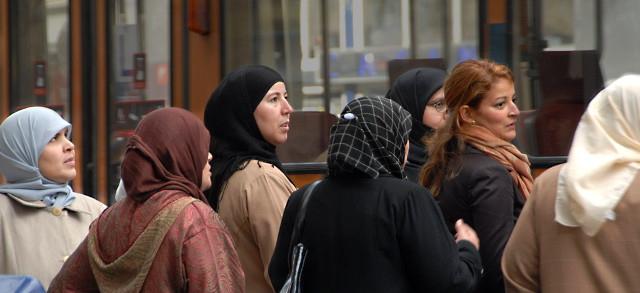
Women in The Hague, Netherlands: one free, and the others?

Is it any wonder, gentle reader, why I fear and loathe this ancient and insidious Arabian export? Yes, indeed, I am an Islamophobe. I embrace the slur that was intended to shame people into not questioning this totalitarian belief system, just as some gays have decided to embrace the term “queer.”

Islam is different, of course, than a race or an innate sexual orientation. It is a belief system, one that aspires to be more than just a religion. A religion it is, though, and as such, our Constitution and sense of human de­cency (not shared by Is­lamists or a certain nar­cis­sis­tic pres­iden­tial candidate) demand that we tolerate its free exercise. At least to the extent that it doesn’t threaten us with harm, which is an important caveat.

But I damn well don’t welcome its spread into Western society, nor do I intend to be kept silent about it. Even so, more out of consideration for your attention than the hair-trigger sensitivities of Islamists and their doe-eyed apologists, this essay has glided pretty gently over the atrocities and pain that Islam inflicts, and has from the very beginning, on its followers and resisters alike. Some of its crimes against women so disgust me that I have declined to mention them at all.

Nor have I said much about the combination of mental anguish and physical danger it poses for those who dare to shake off its cold embrace, probably unequaled in any other religion. There too, many gripping stories could be told here, like the one from “Jamila” who wrote recently about the question of when the apostasy she’s been hiding will come out and tear her apart from her family. That troubling question–when?–lurks

in the double life I live with the man who shares my bed after my father drops me home, it’s there telling me that I can’t keep him a secret forever. It’s there in the folds of the headscarf I pull out of my drawer on visit days, whispering to me that if I don’t tell them, the lies, like the material I drape over my head, will suffocate me. It’s there in slight hesitation in my voice when I recite the duaas to younger siblings and I wonder if they realise that this is not the recitation of a person who prays regularly. It’s there, it’s there, it’ll destroy us again one day, and I don’t know how to stop it.43

You can see more of this personal evidence about the iron grip that Islam keeps on its subjects via the /r/exMuslim subreddit and the #ExMuslimBecause Twitter hashtag, and by following the work of courageous and vocal ex-Muslims like Maryam Namazie, Faisal Saeed Al Mutar, Riz Rashid, Ali A. Rizvi, and Aliyah Saleem. And be sure to read the sobering article by Suraiya Simi Rahman, MD–an ex-Muslim who has lived in Bangladesh, the UAE and Pakistan–in which she says one “really can’t tell until the moment before they pull the trigger, who is moderate and who is jihadi.”

These people are all standing up to the many bullies and defenders of Islam, not just mullahs and creepy ISIS shills, but their own families and even–dismayingly–supposed feminists and leftists whose good intentions have somehow been co-opted to serve the Islamist meme. I have tremendous respect for the courage and strength of character that ex-Muslims have shown. To help support them, I’ve made donations to each of two important organizations that assist people like them on their difficult journeys to freedom: the Ex-Muslims of North America and the Council of Ex-Muslims of Britain.

The stories of apostates from this backwards, controlling religion need to be told–more and more, and with polite but firm criticism of the religion itself. Ibn Warraq was another one who courageously did so, regardless of the risks. “Without criticism,” he writes, “Islam will remain unassailed in its dogmatic, fanatical, medieval fortress; ossified in its totalitarian, intolerant, paranoid past. It will continue to stifle thought, human rights, individuality, originality, and truth.”44

Standing up to all that is a project of civilization well worth our effort, and with care to avoid adopting any of its loathsome aspects ourselves.

———
The first Twin towers photo is from Mark Yokoyama and the second from Wally Gobetz, both CC-NC-ND licensed. The UCL London photo is CC-NC licensed by UCL Institute of Education.
The photo of firefighters at the World Trade Center is CC licensed (re-licensed?) by Flickr user World Trade Centers with the note: “Andrea Booher–FEMA Photo News.Mandatory byline–No payment.” The caption, a quote from Sura 66, is my own.
The map of Islamic expansion from 622-750 A.D. is adapted from a public-domain SVG file accessible at Wikimedia Commons The crude oil production graph is adapted (with my annotation) from “Hubbert Upper-Bound Peak 1956,” CC-SA licensed by “Plazak,” Wikimedia Commons.
The photo at the sacred mosque is CC-SA licensed by Citizen59. The Saudi camel market photo is CC licensed by Michael Glasgow. The photo of women in The Hague is slightly post-processed from a CC-licensed image by Flickr user FaceMePLS. The “Freedom go to hell” protester photo is a cropped version of a CC-licensed image by Vayou Desoeuvre.

Notes


  1. The Koran (Ballantine Books, 1993), based on an English translation by J.M. Rodwell. All of the following quotes are from there, as I encountered them during my reading. An ex-Muslim correspondent once advised me that the preferred spelling of the name is Qur’an, and so that’s the one I use here. 

  2. Raif Badawi, 1000 Lashes (Greystone Books, 2015). For guidance on judicial amputation and crucifixion, see Sura 5 (“The Table”). The horrors of ISIS are, of course, merely the result of careful and uncompromising attention to the text. 

  3. William Muir, quoted in Ibn Warraq’s Why I Am Not a Muslim (Prometheus Books, 2010), p. 87. Here I depart from my usual practice of only quoting from books that I’ve actually read. Hopefully you will excuse me for declining to slog through a four-volume biography of Muhammed written 150 years ago. I have read Warraq’s book, however, and highly recommend it. 

  4. “The basis of the Islamic attitude toward unbelievers is the law of war; they must be either converted or subjugated or killed (excepting women, children, and slaves); the third alternative, in general, occurs only if the first two are refused. As an exception, the Arab pagans are given the choice only between conversion to Islam or death. Apart from this, prisoners of war are either made slaves or killed or left alive as free dhimmis or exchanged for Muslim prisoners of war” (Warraq at p. 181, quoting Joseph Schacht, An Introduction to Islamic Law). 

  5. E.g., “the light shineth in darkness; and the darkness comprehended it not” (John 1:5). 

  6. “But what about the Bible!” is the common interjection at this point by Islam apologists. Well, yes, what about it? I’ve amply criticized that collection of backwards and violent writings, in two books and plenty of essays. See, e.g., Gutting Your Kid for God, Moral Midgetry, Jehu’s Jihad, and Fighting Words

  7. Both quoted in Warraq, p. 10. Again, I must confess to not having read the original works cited here. But it’s hard to imagine any context in which Gibbon and Hume might have written that would have made these scathing critiques much less forceful. Indeed, Warraq says Gibbon “painted Islam in as favorable a light as possible to better contrast it with Christianity” (p. 21). 

  8. Quoted in Warraq at p. 88. 

  9. “Islam is a verbal noun originating from the triliteral root s-l-m which forms a large class of words mostly relating to concepts of wholeness, safeness and peace. In a religious context it means ‘voluntary submission to God.’ Islām is the verbal noun of Form IV of the root, and means ‘submission’ or ‘surrender.’ Muslim, the word for an adherent of Islam, is the active participle of the same verb form, and means ‘one who submits’ or ‘one who surrenders.’ Believers demonstrate submission to God by serving God, following his commands, and rejecting polytheism” (Wikipedia). That part about “following his commands” is problematic, of course, when they include the Qur’anic violence described above. 

  10. Warraq at p. 163. 

  11. Sam Harris and Maajid Nawaz, Islam and the Future of Tolerance: A Dialogue (Harvard University Press, 2015), loc. 626. 

  12. Warraq at p. 163. I have taken the liberty of replacing Warraq’s quotation remarks with italics in quotations that include Arabic words. 

  13. Warraq at p. 164. 

  14. Warraq at pp. 172-73, 83-84 

  15. Warraq at p. 215-16, 219-20. 

  16. Umayyad Caliphate, Wikipedia. 

  17. Warraq at p. 220, writing about Al-Hajjaj ibn Yusuf, governor of Iraq and his commander Muhammad bin Qasim in 712 A.D. The passage is Sura 47.4, which reads as follows in Warraq’s quotation of Hajjaj’s letter: “O True believers, when you encounter the unbelievers, strike off their heads.” 

  18. Christopher Hitchens, The Enemy (2011), loc. 124. 

  19. Harris and Nawaz at loc. 706. 

  20. Harris and Nawaz at loc. 457. 

  21. Harris and Nawaz at loc. 481. 

  22. Harris and Nawaz at loc. 425. 

  23. See also this truly excellent video counter-argument to the silly and pernicious “Islamophobia” meme. 

  24. Harris and Nawaz at loc. 1196. 

  25. John R. Bradley, Saudi Arabia Exposed: Inside a Kingdom in Crisis (St. Martin’s Press, 2015). 

  26. Bradley at loc. 1223, 1237. 

  27. His full name, in case you were curious, is Abdulaziz ibn Abdul Rahman ibn Faisal ibn Turki ibn Abdullah ibn Muhammad Al Saud (Wikipedia). 

  28. Bradley at loc. 235. 

  29. Bradley at loc. 243. 

  30. Christopher Hitchens, The Enemy (2011), loc. 172. 

  31. Bradley at loc. 2537 

  32. Hitchens at loc. 172. 

  33. David K. Kirkpatrick, “ISIS’ Harsh Brand of Islam Is Rooted in Austere Saudi Creed.” New York Times, September 24, 2014, nyti.ms/​Y4erG6

  34. Fouad al-Ibrahim, “Why ISIS is a threat to Saudi Arabia: Wahhabism’s deferred promise.” Al-Akhbar, August 22, 2014. english.al-akhbar.com/​node/21234

  35. Unification of Saudi Arabia, Wikipedia. 

  36. Hubbert Peak Theory, Wikipedia. 

  37. J. David Hughes, Drilling Deeper: A Reality Check on U.S. Government Forecasts for a Lasting Tight Oil & Shale Gas Boom (Post Carbon Institute, 2014). shalebubble.org/​drilling-deeper

  38. Bradley at loc. 1374. 

  39. Ghawar, Wikipedia. 

  40. Bradley at loc. 1863. 

  41. Nathan Halverson, “What California can learn from Saudi Arabia’s water mystery.” Reveal, April 22, 2015. Center for Investigative Reporting (link). 

  42. John Schwartz, “Deadly Heat Is Forecast in Persian Gulf by 2100.” New York Times, October 26, 2015, nyti.ms/​1LRVcSO (“By the end of this century, areas of the Persian Gulf could be hit by waves of heat and humidity so severe that simply being outside for several hours could threaten human life”). 

  43. “I craved too much the warm welcome home,” atheistinaheadscarf.wordpress.com

  44. Warraq at p. 14. 


Saturday, October 31, 2015

Let it Snow

When the glaciers are gone, they are gone. What does a place like Lima do? Or, in northwest China, there are 300 million people relying on snowmelt for water supply. There’s no way to replace it until the next ice age.
—Tim Barnett, climate scientist1
Genesee residents during the winter of 1912-132

Autumn came late this year, and climate change was very much on my mind as the skies remained warm and dry throughout much of October. With our house windows left open long after dark to cool the place down, I lingered over the pictures and stories of deep snows in the book I’ve just finished editing and publishing for my fellow Eastern Washington resident Gerald Hickman. Good Times in Old Genesee: A Tale of Two Families (Tellectual Press, 2015) is about a tiny dot of a pioneer town a couple hours’ drive south of here where Gerald and his parents were born and raised.

When he was growing up, it snowed there. A lot, if the “walked through miles of snow to school, uphill both ways” memories of an elder citizen can be relied upon:

My brother and sister and I would walk down the steep hill on our ranch road about a half mile through the snow drifts to catch a ride to school on the bus. We had to buck the drifts about ten months of each year. Finally, when summer came, we were mostly snow-free, and free of classes as well.3

He recalls snowball fights and sled riding down a hill on the drive to his childhood home. “The best part: We were really close to home for hot chocolate from Mom’s warm and loving kitchen.”4

Detail: Snowball

In the early 1900s, he says (here drawing on historical research rather than memory), “there was often so much snow that they had to tunnel under the snow to cross Main Street.”

His great-uncle John Platt, who arrived in Genesee as a child with his family in the late 1800s, “said that the snow did not seem so deep around Genesee in the later years of his life,” and Gerald agrees. “With the exceptional year or two, winters seem to have become less severe in my later years as well.”5

Just in the 15 years or so we’ve been in the Inland Northwest, we’ve seen a decrease in snowfall. I love the feeling of huddling inside our house with the woodstove burning wood I grew, logged, hauled, bucked, split, and stacked myself, from my own property, as the snow fills the skies and piles up outside. I love stomping through it and seeing the cold clean whiteness of it all, the graceful curves of it piled on trees and roofs, softening every sharp angle. One memorable winter, I spent 26 days skiing down it on a mountain that is less than 40 minutes from my driveway.

Now, thanks in part to automobile trips as long as the ones I made back and forth to that ski hill, undertaken every day by millions of commuters across the country and beyond, those snowfalls are faltering. Climate change, driven by greenhouse gas emissions from my tailpipe and everyone else’s, has thinned the clouds in our Pacific Northwest skies. When they do offer us the winter moisture that has carpeted this region with evergreens, it often comes down as rain rather than snow.

———

According to a Nepalese study cited in Bill McKibben’s book Eaarth: Making a Life on a Tough New Planet, there has been an annual temperature rise of 0.1°F in the Himalayas. That, McKibben observes, works out to “a degree every decade in a world where the mercury barely budged for ten millennia.”

Detail: Eye contact with the past

In 2008, a 57-year old Nepalese man looking at a glacier that’s retreated more than a mile since he played on it as a child said, “I feel that the sun is getting stronger, and in the past there used to be a lot more snow in winter. We used to get up to two metres in the winter, and it would stay for weeks. Last winter we only had two centimetres.”6

The drastic warmth in Nepal “is spurring melt with almost unimaginable consequences,” says McKibben.

Indian researchers recently predicted that glaciers could disappear from the central and eastern Himalayas as early as 2035, including the giant Gangotri Glacier that supplies 70 percent of the dry-season water to the Ganges River. That would leave 407 million people looking for a new source of drinking and irrigation water.7

On the other side of India lies Pakistan, “a country that is essentially a desert with a big river flowing through it.”8 That river is the Indus, which is fed by glaciers in “the Himalayas, the Hindu Kush and the Karakoram, forming the largest reservoir of ice outside the poles.” This is a country that is already getting hit by climate change, with “catastrophic floods which displaced millions, and a deadly heatwave this summer that killed 1,200 people.”9

But the suffering is only going to get worse, because those glaciers are retreating fast. By 2050, the Intergovernmental Panel on Climate Change “predicts a decrease in the freshwater supply of South Asia, particularly in large river basins such as the Indus.” Karachi, which draws almost all of its water from the Indus “will somehow have to manage its growing population with even less water–a population with a significant poverty rate that will also struggle should food prices rise.”10

This is not just a problem for some distant people we never see except occasionally on the news, because India and Pakistan both have nuclear weapons, about a hundred between them as of 2010. They glare at each other across a hostile border, possibly “the most worrisome adversaries capable of a regional nuclear conflict today.”11 What happens when one of them–thoroughly infected with religious fanaticism and filled with millions of desperate, starving citizens–finally decides to lash out at its hated rival?

Consider, as Gwynne Dyer does in his scary look forward to a planet at war over climate pressures, that five

of the six rivers that eventually feed into the Indus system rise in Indian-controlled territory. In undivided, British-ruled India, the water flowed unhindered into the intricately linked irrigation canals that covered much of the provinces of Punjab and Sind, but Partition in 1947 left most of the headwaters in Indian hands, while well over four-fifths of the farmers who depended on the water lived in the new state of Pakistan.12

Nations do not “go gentle into that good night” when dwindling resources make bare survival look impossible. Backed against the wall, with military options at hand–frightfully so in Pakistan and India to say nothing of China, another thirsty nation with dicey water prospects–they follow Dylan Thomas’s poetic admonition to “rage, rage, against the dying of the light.”13 The consequences are horrific for their neighbors, sometimes the entire world.

This is what Lebensraum was all about, as historian Tim Snyder soberly explained on a recent episode of Tom Ashbrook’s On Point NPR program. Climate change could well return us to a tribalistic world convulsed by resource wars. We are already seeing the beginning of sorrows in the mass exodus from Syria.

“Organized societies can endure a lot of hardship and still carry on, but when populations go hungry all bets are off for cultural cohesion and political stability,” observes James Howard Kunstler in his masterpiece Too Much Magic.

If world events follow their usual perverse course, food shortages and other resource scarcities will express themselves indirectly in quarrels that may seem to have little to do with the pertinent issues: conflicts over abstractions such as interest rates and currencies, trade wars, revolutions, fights over boundaries and islands, nationalist chest-beating displays, and religious warfare of the jihad and crusade variety. There may be little public acknowledgment or even consciousness of the reasons behind one outburst of trouble or another.14

And we certainly can’t expect that an abused planet already under stress would respond well to even a “local” outbreak of mushroom clouds in the Subcontinent:

A nuclear war could trigger declines in yield nearly everywhere at once, and a worldwide panic could bring the global agricultural trading system to a halt, with severe shortages in many places. Around one billion people worldwide who now live on marginal food supplies would be directly threatened with starvation by a nuclear war between India and Pakistan or between other regional nuclear powers.15

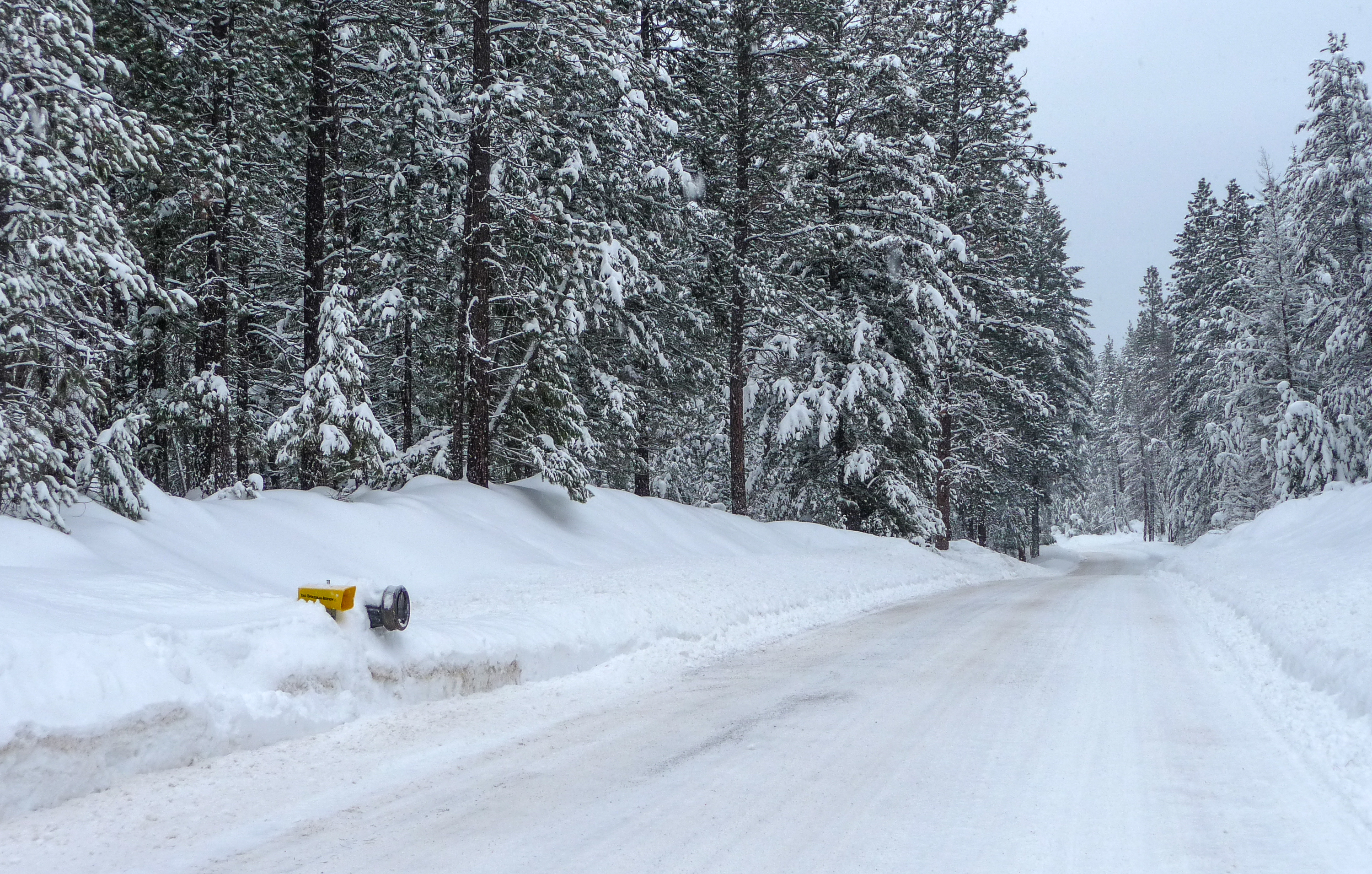
Snowy street in early Genesee, Idaho

It’s a grim picture, and there has been no shortage of what doomsday ecologist Guy McPherson memorably calls “hopium” to assuage a public that’s becoming increasingly concerned, despite campaigns of denial financed by fossil fuel interests. The pharmacopoeia of hopium includes grandiose techno-fixes such as implausible carbon capture schemes and seeding the stratosphere with sulfates to reflect solar radiation. Bill McKibben is critical of such fantasies, though with some sympathy for “the daydreams of the developing world” like the suggestion made at a meeting of Asian journalists that “Bangladesh could be relocated to Siberia and Iceland.” Melting snows would, it was claimed, “turn them into ‘bread-baskets.’” How, he asks, does one tell these front-line casualties of our war against nature “that the tundra is turning into a methane-leaking swamp?”16

Besides, there is the small issue of what the Russians and Icelanders might think about an invasion of 150 million Bangladeshis. Even an enlightened new generation of Germans ever mindful of their grandparents’ Holocaust is getting twitchy about all the Syrian refugees mobbing their borders.

January 2009: Our last really good snow in Eastern WA [Flickr page]

“Have you entered the storehouses of the snow, or have you seen the storehouses of the hail,” the Book of Job has God sniff at us mere mortals, storm-stuff that he has “reserved for the time of distress, for the day of war and battle?”17 Those storehouses are not hidden somewhere above clouds in God’s heaven, but on snow-capped mountains right here on earth. Their stock is running low, not just in the Himalayas, but around the world in this time of distress we have made for ourselves.

The last of Bolivia’s 18,000 year-old Chacaltaya Glacier melted away in 2009.18 Andean glaciers like that one are “the main source of water across South America, from Colombia to Ecuador, Peru, Bolivia and Chile,” and their disappearance is going to cause major problems. One climate change advisor for Latin America at a humanitarian organization says that conflicts over water “will become explosive over the coming decades because the glaciers will dry out.”19

An increasingly rare treat [Flickr page]

Agriculture “is practically at an end in California’s Central Valley,” says Dyer, “due to the failure of the rivers that used to be fed in the summer by the melting snowpack on the Sierra Nevada and Rocky Mountains.”20 This is not a trivial situation: The Central Valley “accounts for one-quarter of the food grown for human consumption in the United States.” But its rivers will likely become seasonal in world that is 2°C warmer, flowing only in the winter with precipitation that falls on the mountains mostly as rain instead of snow.21

The Sierra Nevada mountain range is, or was, “a giant water faucet in the sky, a 400-mile-long, 60-mile-wide reservoir held in cold storage that supplies California with more than 60 percent of its water.” Now the snow is coming later and melting earlier.22

Rainwater, alas, runs off immediately instead of adding to a storehouse of moisture that melts and feeds rivers late into the spring and summer.23 Farmers and ranchers in the American West need that slowly melting snow to keep water flowing throughout the dry summer. Otherwise, a lot of the water is gone by the time their crops need it.24

And there are a lot of us eating food produced from those crops. Don’t kid yourself about agricultural abundance from the Midwest, either. About 30% of the groundwater used for irrigation in the U.S. comes from the Ogallala Aquifer, the saturated volume of which has gone down by about 9% since 1950, according to Wikipedia. “Depletion is accelerating, with 2% lost between 2001 and 2009 alone. Once depleted, the aquifer will take over 6,000 years to replenish naturally through rainfall.”25 In the crucial Kansas section of the Ogallala, 30% has already been pumped out and farming there will likely peak by around 2040 due to water depletion.26

Brown Christmas, 2014 [Flickr page]

Meanwhile, back in Latah County where Gerald Hickman’s little town of Genesee still sits among the monoculture, petroleum-fertilized grain fields of Big Ag, a local club in the Idaho State Snowmobile Association (“Snodrifters of Latah County”) canceled its February 15, 2015 “Raffle Run” due to lack of snow. “Look for us to be back next year,” they plead on their website.27

For reasons that go far beyond a little winter recreation, we can only hope they will be.

———
The pictures with Flickr links are my own, and you can click on them to enlarge and download for your own non-commercial use, as usual.
The Genesee snow pics are digital restorations I’ve done of photos from the Latah County Historical society. If you’re interested in some plain-spoken personal and local history interspersed with old photos, check out Jerry’s book page at tellectual.com.

Notes


  1. Quoted in “Retreat of Once-Mighty Glacier Signals Water Crisis, Mirroring Worldwide Trend” by Doug Struck (Washington Post, July 29, 2006), dougstruck.com/​journalism/on-the-roof-of-peru-omens-in-the-ice

  2. Dated according to Julie R. Monroe in her book Latah County (p. 41). 

  3. Gerald Hickman and Tea Joe Hickman, Good Times in Old Genesee: A Tale of Two Families (Tellectual Press, 2015), loc. 333. 

  4. Hickman at loc. 511. 

  5. Hickman at loc. 522. 

  6. “Himalayan villagers on global warming frontline,” phayul.com/​news/article.aspx?id=23518

  7. Bill McKibben, Eaarth: Making a Life on a Tough New Planet (Henry Holt and Co., 2010), p. 7. 

  8. Gwynne Dyer, Climate Wars: The Fight for Survival as the World Overheats (Oneworld Publications, 2010), loc. 1758. 

  9. “Climate Change Bomb Ticking in Pakistan”, Khaleej Times (Oct. 21, 2015). 

  10. Khaleej Times

  11. Alan Robock and Owen Brian Toon, “Local Nuclear War, Global Suffering,” Scientific American (Jan. 2010), pp. 74-81. 

  12. Dyer at loc. 1761. 

  13. poets.org/​poetsorg/poem/do-not-go-gentle-good-night 

  14. James Howard Kunstler, Too Much Magic: Wishful Thinking, Technology, and the Fate of the Nation (Grove/​Atlantic, 2012), loc. 3477. 

  15. Robock and Toon. Ironically, one result of a nuclear war (even a regional one) would be a drastic cooling of the planet into a “nuclear winter” situation. Some consolation! 

  16. McKibben at p. 100. 

  17. Job 32:22-23, New American Standard Bible

  18. McKibben at p. 7. 

  19. Eva Mahnke, “Water conflicts come to the Andes as glaciers melt” (Deutsche Welle, Nov. 13, 2012), dw.com/p/16iC6

  20. Gwynne Dyer, Climate Wars: The Fight for Survival as the World Overheats (Oneworld Publications, 2010), loc. 387. 

  21. Dyer at loc. 997. 

  22. Tom Knudson, “Sierra Warming: Later snow, earlier melt: High anxiety” (The Sacramento Bee, Dec. 28, 2008, online version here). 

  23. Dyer at loc. 997. 

  24. McKibben at p. 44. 

  25. en.wikipedia.org/​wiki/Ogallala_Aquifer 

  26. Brad Plumer, “How long before the Great Plains runs out of water?” (Washington Post Wonkblog, Sept. 12, 2013). 

  27. idahosnow.org/​latah 


Thursday, August 27, 2015

Apocalypse Now

Everything was as it should be, except that it wasn’t. We were living in two worlds. The old one, which never seemed more beautiful, had not yet vanished; and the new one, about which we knew little except to fear it, had not yet arrived.
—Carol Blue, widow of Christopher Hitchens, on his cancer diagnosis. In Hitchens, Mortality (2012).
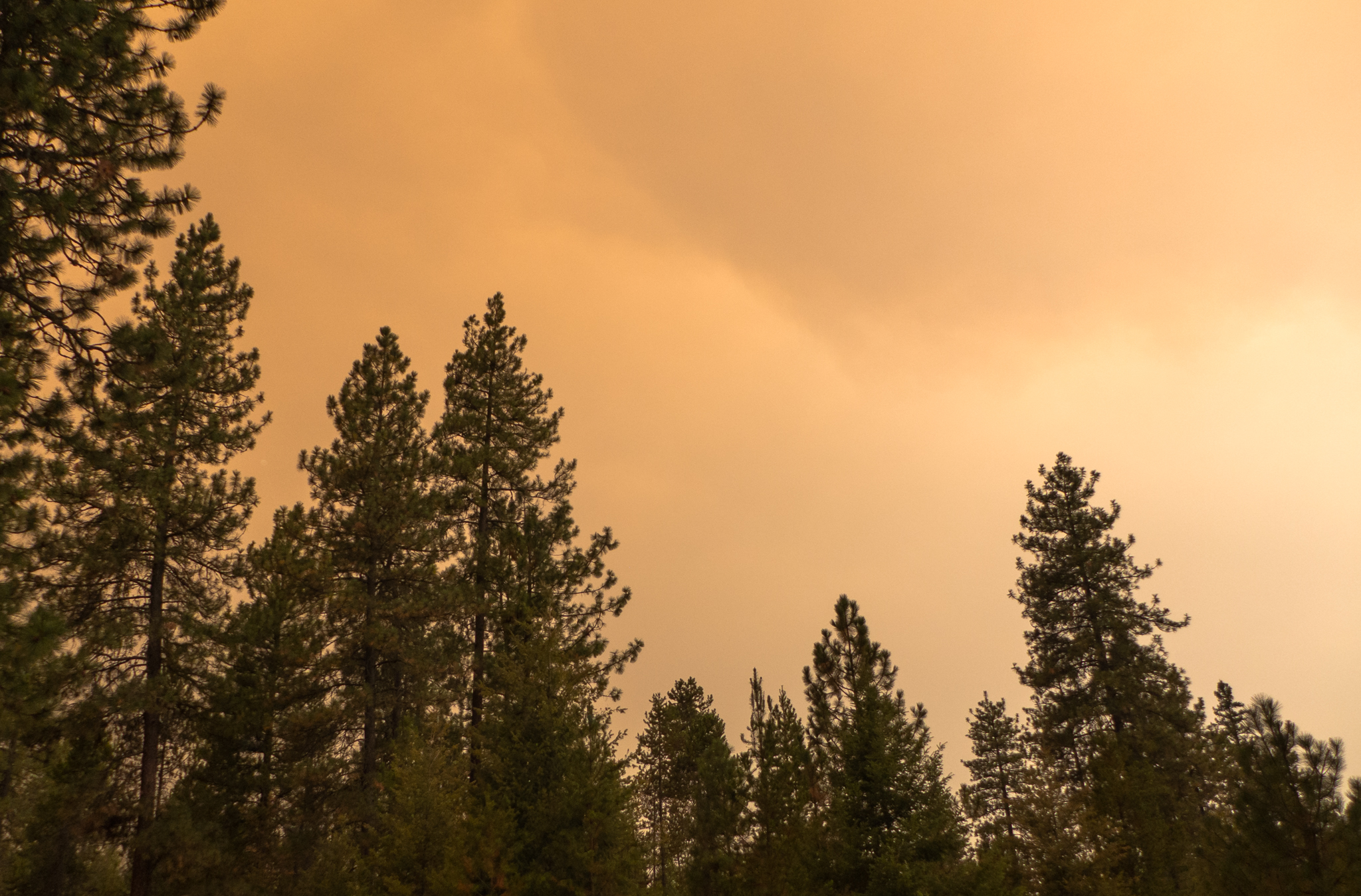
A dry and smoke-filled sky [Flickr page]

This essay has sat lurking in my head for weeks now, threatening to force me into verbally confronting a reality that has borne silent witness in the hot forest and the burning skies. Instead of writing, I chopped wood and stacked it and then retreated into the stale artificial coolness of my air-conditioned house. When it was cool enough outside, I carried my folding chair to shaded places between the trees and read my books.

As the summer wore on, the ground went dusty and the birds grew quiet. The rich smells of my living forest faded into the dessicated air.

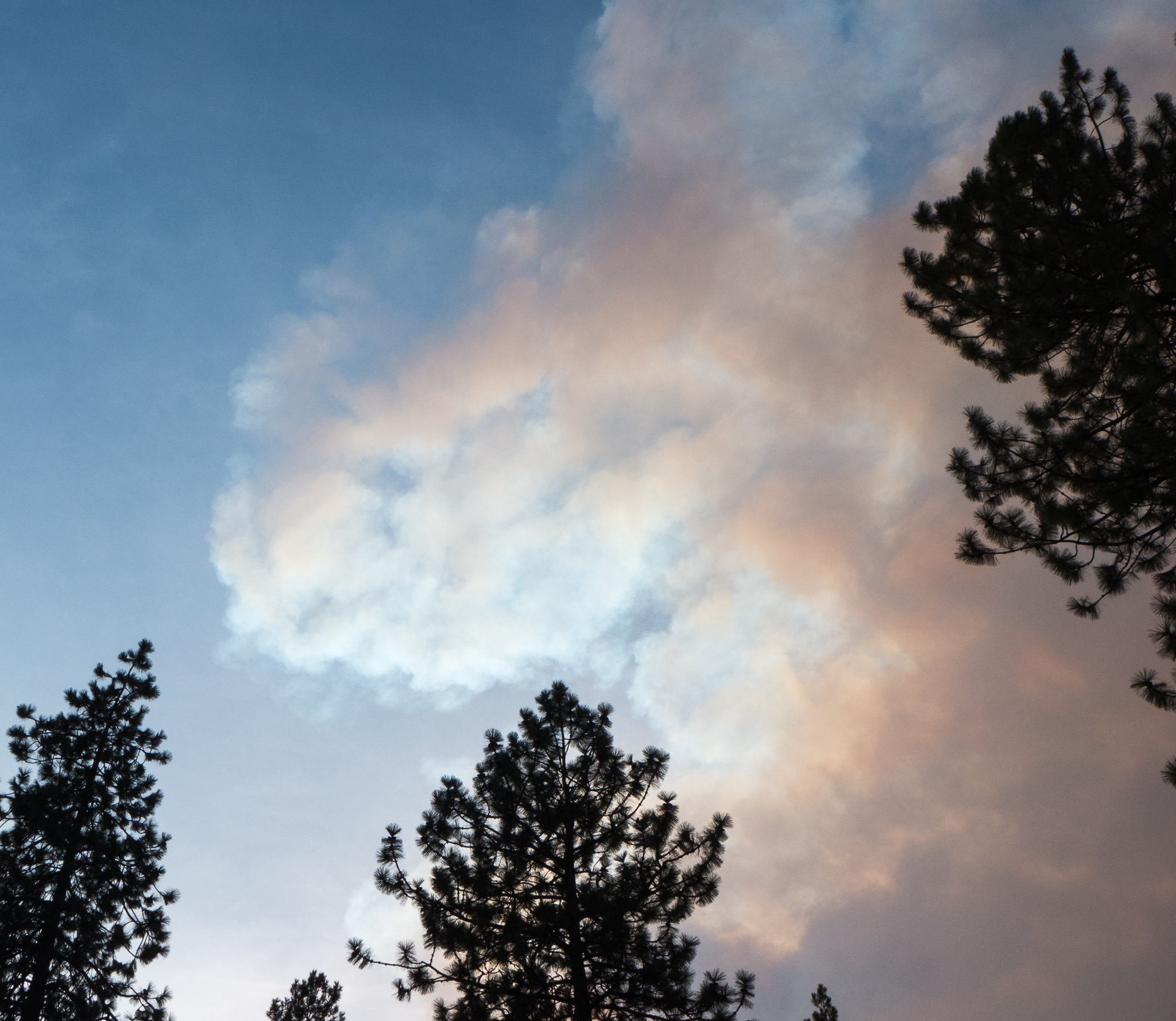
Then the wildfires began. Plumes of smoke drifted in, for days and then weeks. I stayed inside, obsessively checking fire update pages on Facebook. I drew the shades and watched movies in the dark.

For the first time, I took to watering the century-old trees within reach of my well. It may save them, for this year at least, from the bark beetles whose white larvae wriggled around the scarred surface of firelogs I’d cut from their dead neighbors. Several times per day for weeks now, I’ve pounded holes into parched earth near trunks six feet around, shoving the end of a long hose down to dribble fifteen gallons per hour into the dirt around their stressed roots. I have borrowed nearly twenty thousand gallons from the acquifer beneath me to pay the balance due to old ponderosa pines that expect more than what the skies have given them this year.

Getting worse by degrees1

Except for two tenths of an inch that fell one glorious day in July, it has not rained here since May. This summer has been hotter than these trees or I have ever experienced in these woods. And now they are burning, thousands of acres turned into smoke and ash, in all directions.

“Across the Northwest U.S., a region known for its damp climate, its rainforests, and for often cool and wet weather,” observes writer and outstanding climate blogger Robert Marston Fanney, “wildfires have been exploding. This summer, heat and dryness settled over the region in a months-long drought and heatwave.” And he adds something I’ve thought myself, having lived in Arizona for many years and now in Eastern Washington: “The climate of the Desert Southwest has been forced into Northern California, Oregon, Washington, and Montana.”2

The forest floor is dry and gray and withered. Sad little clouds of dust stir up when I walk through it, coating pale stiff lichen and parched leaves of bearberry and Oregon grape. How much more of this can they take?

The closest fire to me, some twenty miles away, has scorched more than 40,000 acres. Meanwhile, Washington State has had over 280,000 acres burned out of its midsection from some giant fires that are still far from being contained. Considered together (though they have not yet merged, as of this writing), they form the largest wildfire in Washington state history. The previous record was set last year.3

Something is going terribly wrong.

———
Standing dead [Flickr page]

“Not even people who are preoccupied with climate change like to think about it anymore,” writes James Howard Kunstler in his excellent book Too Much Magic. “The more you explore the problem, the worse it seems and the more hopeless you feel.”4

“The whole idea of climate change is so overwhelming, you want to tune it out,” agrees Ted McGregor, publisher of Spokane’s alt-weekly newspaper. “But this summer, the smokey skies won’t let us. It might seem like an insensitive time to inject politics, but we need to face facts.”5

Those facts are daunting indeed. NOAA just reported that the “combined average temperature over global land and ocean surfaces for July 2015 was the highest for July in the 136-year period of record.” That’s 1.46°F higher than the 20th century average. The previous record was set in 1998.6

Unless greenhouse gas emissions are restrained, the next four decades are likely to move many parts of the planet to “a new, permanent heat regime in which the coolest warm-season of the 21st century is hotter than the hottest warm-season of the late 20th century.”7 From this point on, we can expect about a third of the summers in the American West to be hotter than the hottest season we experienced between 1980-1999. By mid-century, most of them will be.8

That’s a drastic change for the climate of a big chunk of the United States. And as the following map shows (from NASA’s Goddard Institute for Space Studies), it’s one that’s been underway for some time now. For the past fifteen years, average July temperatures in the American West have been at least 1°F higher than they were between 1920-1980, perhaps nearly twice that.

July temps for past 15 years vs. 1920-80 average9

The Third National Climate Assessment, a report produced last year by more than 300 experts and “guided by a 60-member National Climate Assessment and Development Advisory Committee,” shows that much of the U.S.–not just the West–was more than 1°F hotter on average between 1991-2012 compared to 1901-1960.10 “Summers are longer and hotter,” the report notes, “and extended periods of unusual heat last longer than any living American has ever experienced.” And it speaks directly to what I’ve been seeing: “Hotter and drier weather and earlier snowmelt mean that wildfires in the West start earlier in the spring, last later into the fall, and burn more acreage.”11

Where I live, it’s actually been worse than just earlier snowmelt: We got almost no snow to have melted this year. Another map from the Goddard Institute shows one reason why: Our winters are getting warmer, too.

Wintertime temps for past 15 years vs. 1920-80 average12

It does get cold here in the winter, with temperatures often in the teens and below. But that almost always happens under clear skies. When the clouds gather overhead and decide to dump some precipitation on us, temperatures are usually hovering right around the freezing mark.

One degree of average increase in that temperature can make for a lot more rain than snow. And it is snow, not rain, that remains on the shaded forest floor until March or even April in a slow melt that soaks the trees for a burst of bright green growth each spring.

We have been getting less of that sky water, lately, in either form. A so-called “ridiculously resilient ridge” of high pressure has parked itself off the West Coast for much of the past three years, keeping moisture-bearing storms from making landfall. Last year, a team of Stanford University scientists “used a novel combination of computer simulations and statistical techniques to show” that this high-pressure region “was much more likely to form in the presence of modern greenhouse gas concentrations.”13 Their simulations came up with extreme high-pressure events significantly more often between a 1979-2005 interval compared to “pre-industrial” times, but only when “anthropogenic forcings” (greenhouse gas emissions) were included along with natural forcings. The “heightened probability cannot be explained without the anthropogenic contribution.”14

It’s a significant, unprecedented weather event that we are witnessing right before our eyes. And the likely reason we are seeing it is that we’ve spent the past two centuries dumping the carbon that nature accumulated over nearly 500 million years into those skies.15 “This isn’t a projection of 100 years in the future,” says one of the Stanford scientists. “This is an event that is more extreme than any in the observed record, and our research suggests that global warming is playing a role right now.”16

Given this, and with all the talk of present and future drought, I was surprised to see that the National Climate Assessment report actually predicts more precipitation for our region later in this century, between 10-20% more in fall, winter, and spring. More spring rain might helpful. But the summer forecast is a cruel one, calling for 20% less rain.17 That’s when the sap is really running and the trees are trying to use all the sunlight from endless days that barely dim, or to at least survive the blistering heat.

Still, for some reason, the report projects an increase of 1-5% in average soil moisture for my area by the middle of this century.18 I’ll take it, if that ridiculous ridge will just get out of the way.

Apocalypse Now [Flickr page]

In his book Climate Wars, Gwynne Dyer offers four conclusions that he reached “after a year of trailing around the world of climate change.” First is that “this thing is coming at us a whole lot faster than the publicly acknowledged wisdom has it. When you talk to the people at the sharp end of the climate business, scientists and policy-makers alike, there is an air of suppressed panic in many of the conversations.”19

Panic, and despair. You can feel it welling up from the scientists who were interviewed for John Richardson’s sobering article this summer in Esquire. One of them, Jason Box, is an outspoken climatologist who “escaped America’s culture of climate-change denial” by moving to Denmark. Now he tries not to talk about the magnitude of the problem because leaders of even that liberal country “still did not take kindly to one of its scientists distressing the populace with visions of global destruction.” He is thinking about a bug-out plan in Greenland, whose melting glaciers he studies.

“Among climate activists, gloom is building,” says Richardson, and then he lists some examples:

Jim Driscoll of the National Institute for Peer Support just finished a study of a group of longtime activists whose most frequently reported feeling was sadness, followed by fear and anger. Dr. Lise Van Susteren, a practicing psychiatrist and graduate of Al Gore’s Inconvenient Truth slide-show training, calls this “pretraumatic” stress. “So many of us are exhibiting all the signs and symptoms of posttraumatic disorder–the anger, the panic, the obsessive intrusive thoughts.” Leading activist Gillian Caldwell went public with her “climate trauma,” as she called it, quitting the group she helped build and posting an article called “16 Tips for Avoiding Climate Burnout” . . .

Anger is another of the emotions Dr. Box is dealing with. He has little patience for the climate-change denialists he says “are risking everyone’s future.” The Koch Brothers he calls “criminals” who “should be charged with criminal activity because they’re putting the profits of their business ahead of the livelihoods of millions of people, and even life on earth.” But he is relieved, at least, not to “have to bother with this bullshit anymore” in Denmark.20

Kunstler thinks it’s probably more accurate to call it reality denial. “It’s another of the universe’s jokes on us,” he adds, “that the humans who call themselves conservatives tend to be the most avid for squandering everything the planet affords us to live.” It’s more than politics, though. We just don’t want to face what we have done, and what’s in store for us. And that, says Kunstler,

has spawned a lively industry in climate change denial that is a wholly owned subsidiary of the oil, gas, and coal industries and a political subculture in its own right, aimed at defeating any policy consensus that would reduce the use (and sale) of oil, gas, and coal. Climate denial also happens to work nicely for that big chunk of the public at large that does not want to entertain any comprehensive change in the way we currently do things. And so the debate about what to do about climate change decays into incoherence as the deniers deliberately distort the facts while the science-minded are buffaloed by such mendacity and frustrated by a public that isn’t interested in the facts.21

I’m all too familiar with head-in-the-sand behavior, thanks to my studies of Christianity’s responses to evolution. Seeing such willful denial gets me angry, too, though I understand that there are many motivations for people to let themselves be misled. But, as William Catton observed 35 years ago, “real limits not seen are not limits repealed.”22

I also acknowledge my own complicity. My flights to Hawaii and back, to snorkel among coral reefs that will likely all be dead before I am, have added hundreds of pounds of carbon to the skies. I eat meat and drive a car, and had children (quite a few, as it turned out) who now do the same. Richardson asks one of his climate scientists if he think it would be wrong to take a transatlantic flight for his interviews. (Unlike Al Gore with his private jet, Richardson appears to have a healthy dislike for hypocrisy.) The scientist laughs and replies, “You have to answer that yourself.”

Perhaps there is some cold comfort for our collective guilt in Dyer’s second conclusion: Everyday lifestyle changes like changing light bulbs and reduced driving are “practically irrelevant to the outcome of this crisis.” Without “zero greenhouse-gas emissions globally by 2050 and, preferably, 80 per cent cuts by 2030,” we are in for a very rough ride. His third conclusion? That ain’t gonna happen. “Maybe if we had gotten serious about climate change fifteen years ago, or even ten, we might have had a chance, but it’s too late now.”

In happier times [Flickr page]

It is already too late for the Colorado forests that Dr. Box left behind. They “are dying,” he says, “and they will not return. The trees won’t return to a warming climate. We’re going to see megafires even more, that’ll be the new one–megafires until those forests are cleared.” I look around at the green landscape that I cherish, sullied by smoke for weeks now, and wonder. Will my trees also die, and not return?

Dyer’s fourth conclusion is that “mass movements of population, the number of failed and failing states, and very probably the incidence of internal and international wars” are correlated with increased global temperature. There is an important point to this: International mayhem from failed states and wars, “if they become big and frequent enough, will sabotage the global cooperation that is the only way to stop the temperature from continuing to climb.”23 This is a geopolitical positive feedback mechanism, one involving human behavior: Bad may prevent the prevention of worse.

Positive feedback is what makes the PA system squeal when a microphone gets too close. Something about the current output of a system causes future outputs to increase even more. There are natural positive feedbacks to the global climate system, too, and they are scary because they are completely out of our control. Once we have dumped the carbon dioxide from our planes and cars and the methane from our cows’ burps and farts (seriously, they are an issue), the resulting rise in temperatures “feed back” in various ways to make temperatures rise even faster.

Michael Mann’s hockey stick. (We’ve now passed 400 ppm.)24

That’s why increases in temperature are so dangerous even though they look small as mere numbers–unless you are sweating out a hot summer or wondering why it hardly snows anymore. “So far we’ve been the cause for the sudden surge in greenhouse gases and hence global temperatures,” says Bill McKibben,

but that’s starting to change, as the heat we’ve caused has started to trigger a series of ominous feedback effects. Some are fairly easy to see: melt Arctic sea ice, and you replace a shiny white mirror that reflects most of the incoming rays of the sun back out to space with a dull blue ocean that absorbs most of those rays. Others are less obvious, and much larger: booby traps, hidden around the world, waiting for the atmosphere to heat.

The biggest of those booby traps is found in the ground and under the seas of the Arctic, which is warming faster than any part of the planet. There are “immense quantities of methane natural gas locked up beneath the frozen tundra, and in icy ‘clathrates’ beneath the sea. Methane, like carbon dioxide, is a heat-trapping gas; if it starts escaping into the atmosphere, it will add to the pace of warming.” And it is doing just that. “In 2007, atmospheric levels of methane began to spike.”25

“Arctic permafrost ground that has been frozen for many thousands of years is now thawing because of global climate change, and the results could be disastrous and irreversible,” warns the Woods Hole Research Center. It’s releasing not just methane but also carbon dioxide. And then, after these additional greenhouse gases have been added to what we are continuing to dump into the atmosphere, you can guess what happens: The temperature goes up faster still. There is an acceleration of climate change, “which in turn causes more thawing of the permafrost. This potentially unstoppable and self-reinforcing cycle could constitute a calamitous ‘tipping point.’”26

Another example: The forests and oceans are getting less efficient as carbon sinks as we add more carbon.27 The trees are stressed from heat and drought. Millions of them are getting killed off by bark beetles that aren’t being controlled by cold enough winters or the trees’ natural defenses.

We started this mess in just the past century, mostly, when we began extracting and burning fossil fuels. Once the temperature had gone up enough, the feedback mechanisms got established. Now, the freight train is moving down the tracks, heading downhill, and it’s getting away from us. We’re not even trying to slow it down; we just continue to add more and more carbon, faster than ever. Drill, baby, drill.

What I stand to lose. That cottonwood is already dead. [Flickr page]

After attending a community meeting a few days ago about the monster of a fire near us, I realized that yet another nasty feedback mechanism is at work in the forests of Eastern Washington. It involves bad consequences of over-stressed resources, system collapse.

When lightning sparked a small fire in the Huckleberry mountains west of here, thousands of acres were already burning to the north. Our local fire chief had lent out resources for other fire districts to help fight those. That’s just what you do. It was a terrible night, with dry lightning sparking fires seemingly all around us and then strong winds fanning the flames.

Unfortunately, when yet another chief called him for help with a few acres burning in the Huckleberry Mountains, he was forced to decline. It pained him to do that, he said, both personally and professionally, but there was no choice. He couldn’t leave his own fire district defenseless, especially on such a night as that. The whole state–indeed the entire American West–was stretched to the breaking point. Yet if he had been able to answer that call, the fire might have been stopped with just dozens of acres burned instead of thousands.

And so another tipping point was reached. The local fire fighting system was overwhelmed and the Carpenter Road fire has burned forty thousand acres of forest near our home. What else is in store for us, this year, and next year, and the one after that?

It’s stressful enough just thinking about next week. Despite aggressive efforts and over four hundred personnel working the fire, the monster has just jumped its main fire line, Springdale-Hunters Road. And there is yet another “red flag warning” heading our way tomorrow. “CRITICAL FIRE WEATHER CONDITIONS ARE LIKELY,” shouts the all-caps message from the National Weather Service. “A COMBINATION OF GUSTY WINDS, LOW RELATIVE HUMIDITY, AND WARM TEMPERATURES WILL CREATE HIGH FIRE GROWTH POTENTIAL.”

They might as well just extend a red flag warning to the entire planet, from this point on.

———
Apocalypse Now is of course the title of a great old movie. The pictures with Flickr links are my own, and you can click on them to enlarge, as usual. Clicking on the others takes you to links from their original sources. And please take a look at the excellent if horrifying RobertScribbler blog.

Notes


  1. From ncdc.noaa.gov/​temp-and-precip/​state-temps. In fairness, it’s worth noting that the maximum summertime temperatures, while also on an upward trend over the past forty years, experienced anomalously high values averaged over the years 1920-1930, and that there were two very hot years way back around 1960. As with the prediction of higher soil moisture in my area, such isolated records of previous hot weather are hopeful little islands in a sea of awful upward trends. 

  2. “US Experiencing Worst Fire Season on Record as Blazes in Washington and Oregon Explode Twelvefold to Over 1 Million Acres,” robertscribbler blog, August 24, 2015 posting

  3. The Carpenter Road fire started by a half-dozen or so lightning strikes near Fruitland, WA and was quickly fanned by high winds into a monster that raised evacuation alerts just miles away from my home. This information comes from an information meeting I attended at the local Grange hall. Regarding the other, larger fire, see en.wikipedia.org/​wiki/Okanogan_Complex_fire. As of this writing, the “Okanogan Complex fire has not merged into a single fire,” so, technically, last year’s “Carlton Complex remains the state’s largest single fire.” 

  4. James Howard Kunstler, Too Much Magic: Wishful Thinking, Technology, and the Fate of the Nation. (Grove/​Atlantic, 2012), Kindle loc. 3185. 

  5. “The New Normal,” Publisher’s Note, The Inlander (Aug. 19, 2015), inlander.com/​spokane/the-new-normal/​Content?oid=2540653

  6. National Oceanic and Atmospheric Adminisration, Global Analysis–July 2015, ncdc.noaa.gov/​sotc/global/​201507. It gets worse: “As July is climatologically the warmest month of the year globally, this monthly global temperature of 16.61°C (61.86°F) was also the highest among all 1627 months in the record that began in January 1880.” As you might expect from that, the trend doesn’t look good: “The July temperature is currently increasing at an average rate of 0.65°C (1.17°F) per century.” 

  7. Noah S. Diffenbaugh and Martin Scherer, “Observational and model evidence of global emergence of permanent, unprecedented heat in the 20th and 21st centuries.” Climatic Change (Springer, 2011), No. 107, pp. 615-624. Accessible online at link.springer.com/​article/10.1007/​s10584-011-0112-y

  8. These predictions are drawn from the climate modeling maps shown in Fig. 1 on p. 618 of Diffenbaugh and Scherer. 

  9. Generated from an interactive web page hosted by NASA’s Goddard Institute for Space Studies. Earlier this year, the Institute “was threatened with 30 percent budget cuts by Republicans who resent its reports on climate change” (John H. Richardson, Esquire, Jul. 7, 2015). 

  10. Jerry M. Melillo, Terese (T.C.) Richmond, and Gary W. Yohe, Eds., Climate Change Impacts in the United States: The Third National Climate Assessment. U.S. Global Change Research Program, doi:10.7930/​J0Z31WJ2, Fig. 2.7 (p. 29). PDF available at nca2014.globalchange.gov/​downloads

  11. Melillo et al., p. 1. 

  12. Generated from the Goddard Institute interactive web page for Northern Hemisphere winter, with a time interval of 2000-2015 and a base period of 1920-1980. 

  13. Ker Than, “Causes of California drought linked to climate change, Stanford scientists say,” Stanford Report (Sept. 30, 2014), news.stanford.edu/​news/2014/​september/drought-climate-change-092914.html 

  14. Daniel L. Swain, et al., “The Extraordinary California Drought of 2013/14: Character, Context, and the Role of Climate Change,” special supplement to the Bulletin of the American Meteorological Society (Vol. 95, No. 9, Sept. 2014), journals.ametsoc.org/​doi/suppl/​10.1175/1520-0477-95.9.S1.1/​suppl_file/​10.1175_1520-0477-95.9.s1.3.pdf 

  15. Kunstler, loc. 3278. 

  16. Noah Diffenbaugh, quoted in Than, Stanford Report

  17. Melillo, et al. (Fig. 2.14, p. 34). 

  18. Melillo, et al. (Fig. 2.22, p. 41). See also Kunstler, loc. 3366 (“Rainfall over landmasses has increased by about 2 percent through the twentieth century. Global warming increases the evaporation of moisture from oceans. It eventually precipitates out as rain or snow”). 

  19. Gwynne Dyer, Climate Wars: The Fight for Survival as the World Overheats (Oneworld Publications, 2010), loc. 112. 

  20. John H. Richardson, “When the End of Human Civilization Is Your Day Job,” Esquire (July 7, 2015), esquire.com/​news-politics/​a36228/ballad-of-the-sad-climatologists-0815 

  21. Kunstler at loc. 3221, 3490. 

  22. Willam R. Catton, Overshoot: The Ecological Basis of Revolutionary Change. Urbana and Chicago: University of Illinois Press (1982). 

  23. Dyer at loc. 121. 

  24. Graph from climate.nasa.gov/​climate_resources/24. Regarding the “hockey stick,” see Richardson’s Esquire article: Mann “was a young Ph.D. researcher when he helped come up with the historical data that came to be known as the hockey stickthe most incendiary display graph in human history, with its temperature and emissions lines going straight up at the end like the blade of a hockey stick. He was investigated, was denounced in Congress, got death threats, was accused of fraud, received white powder in the mail, and got thousands of e-mails with suggestions like, You should be “shot, quartered, and fed to the pigs along with your whole damn families.” Conservative legal foundations pressured his university, a British journalist suggested the electric chair. In 2003, Senator James Inhofe’s committee called him to testify, flanking him with two professional climate-change deniers, and in 2011 the committee threatened him with federal prosecution, along with sixteen other scientists. 

  25. Bill McKibben, Eaarth: Making a Life on a Tough New Planet, Henry Holt and Co. (2010), p. 20. 

  26. “U.S. scientists warn leaders of dangers of thawing permafrost,” Woods Hole Research Center, Aug. 27, 2015. whrc.org/u-s-scientists-warn-leaders-of-dangers-of-thawing-permafrost

  27. McKibben at p. 22.