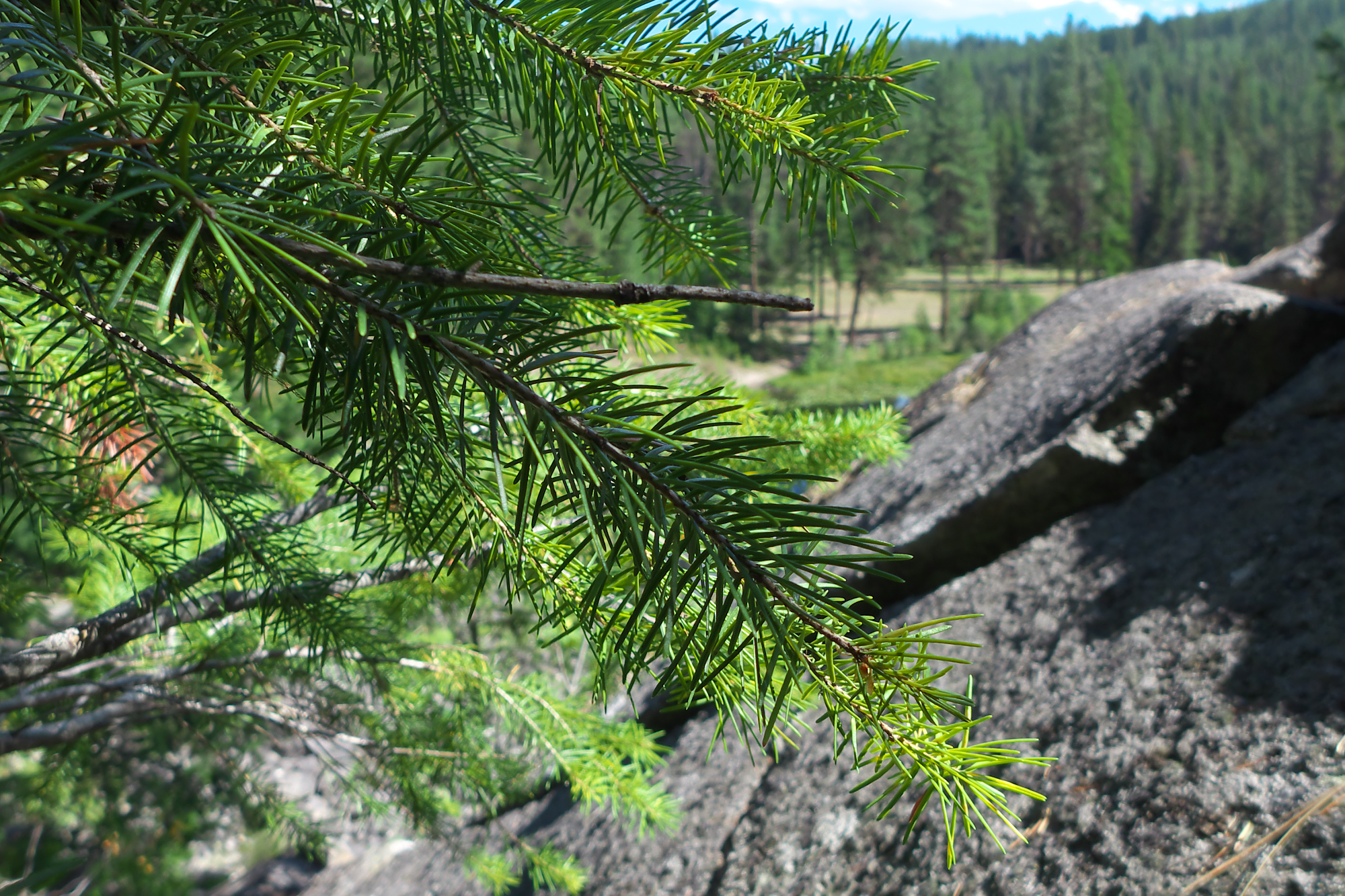
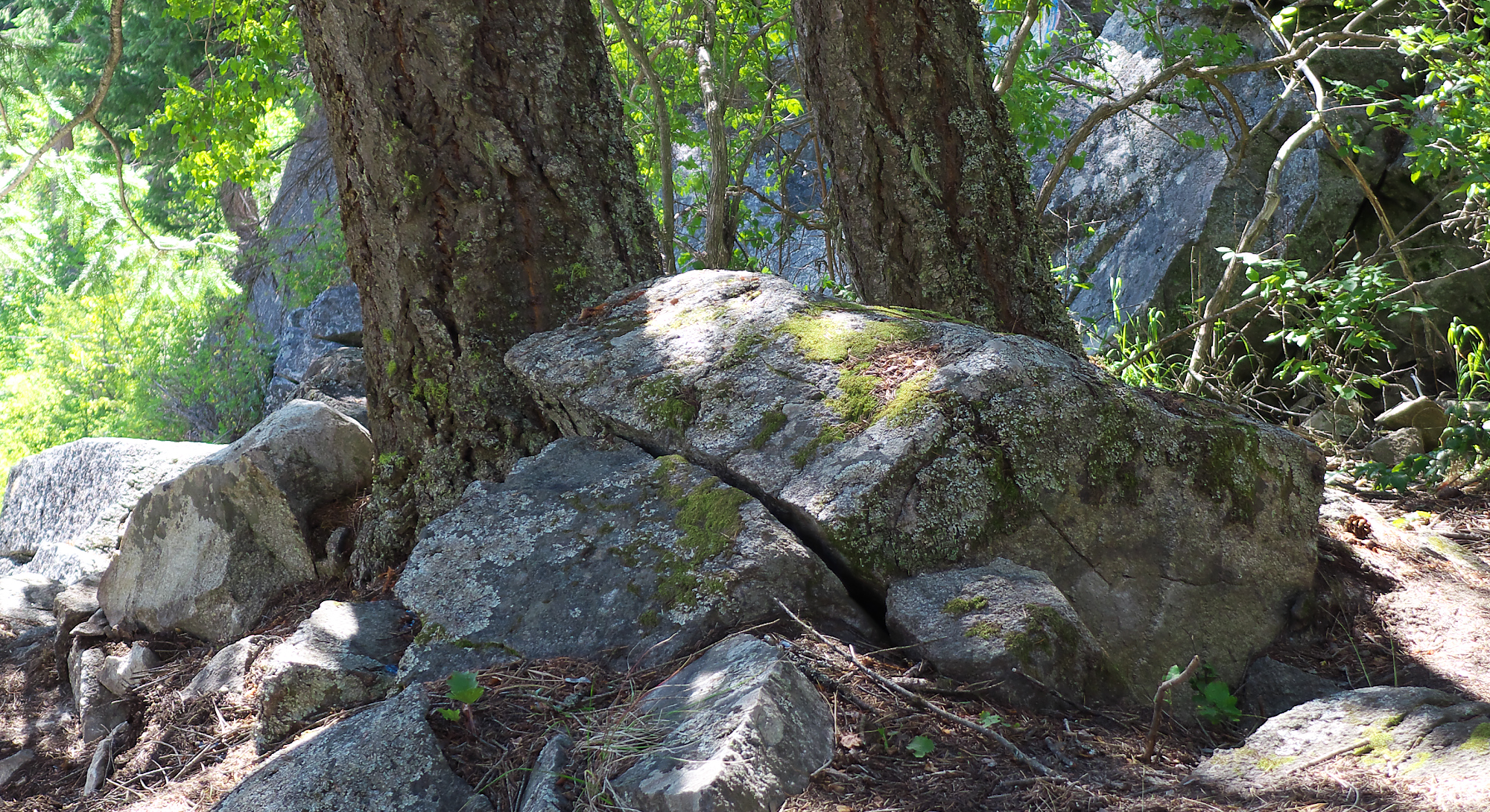
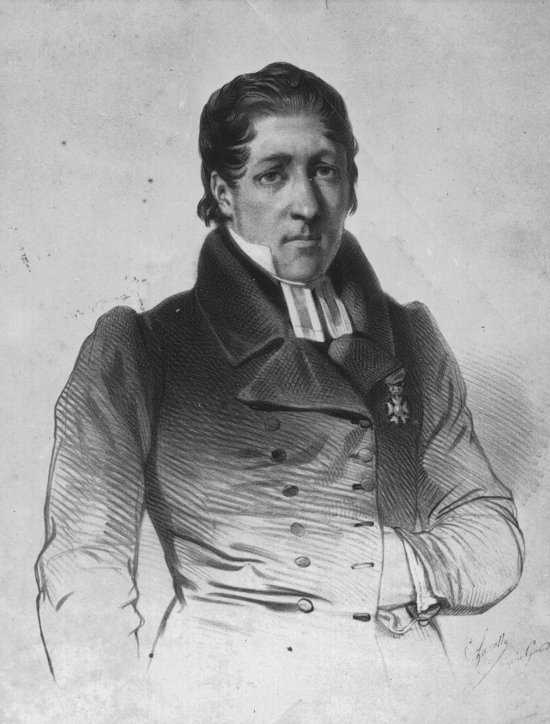
Showing posts with label Musings. Show all posts

Thursday, November 10, 2022

Thread

Both town and country people talk to me a great deal. They really think of nothing except their fields and their bits of farms and investments. And look how the tables are turned! They fear the man they used to trust and love the man they used to dread.
—Roman Senator Cicero, writing of Julius Caesar.

The title of this little essay is simply “Thread” because that’s how I did most of my writing in the last couple of years. It also applies to what our Constitutional republic hangs by–a frail little thread of razor-thin majorities and judges with integrity–as we witness the slow, grinding ascent of fascism not only in this country but also around the world.

Hanging by a thread, in more ways than one

There are surely better descriptions for what I want to say today, but I’m trying not to spend as much time worrying about things like titles and footnotes anymore.1 It was freeing not having them available on Twitter; I’d lean back in the recliner and tap away furiously on my iPad for an hour, one chunk of 240 characters after another. The results inspired 6,700 or so people to follow my Tweets.

Mostly, they were warnings about what a dangerous gamble it is to get yourself infected with the SARS-Cov-2 virus. There were expositions on probability theory, engineering analogies, and even a nose-only PAPR device I invented to go to the dentist and feel safe while people coughed in cubicles nearby. Some of them got seen by tens of thousands of people–occasionally more than a hundred thousand. I developed an online friendship of sorts with some of those people, and hope to keep in touch with them. It was fun while it lasted.

But the time for that feels mostly over now. Why? Not just because another narcissist billionaire is infecting yet another public gathering space with his grandiose and fragile ego. Certainly not because of the few pathetic trolls that tried their best to seem like they where the smart ones for making fun of a person urging caution against an airborne respiratory pathogen during the worst pandemic in a hundred years. They were kind of fun to toy with, actually.

What finally got me off Twitter, at least for a while, was the 2022 midterm election in my beloved battered country, the barely-United States of America. As of this writing, I remain among what must be a small number of people who still don’t know the result.

Seriously, I have no idea what happened. The acres of trees surrounding my home remain silent as to the outcome, as does my wife. She’s seen me enter this virtual monastery before. She respects the vow of silence about current events.

I was cloistered here for about a month after the 2016 election, unable to watch one of the worst human beings of a generation take a wrecking ball to the foundations of the country I love. Another visit was in 2020, for a week after Ruth Bader Ginsburg died and the country found itself at the mercy of Mitch McConnell’s sense of fair play–entirely absent, of course.
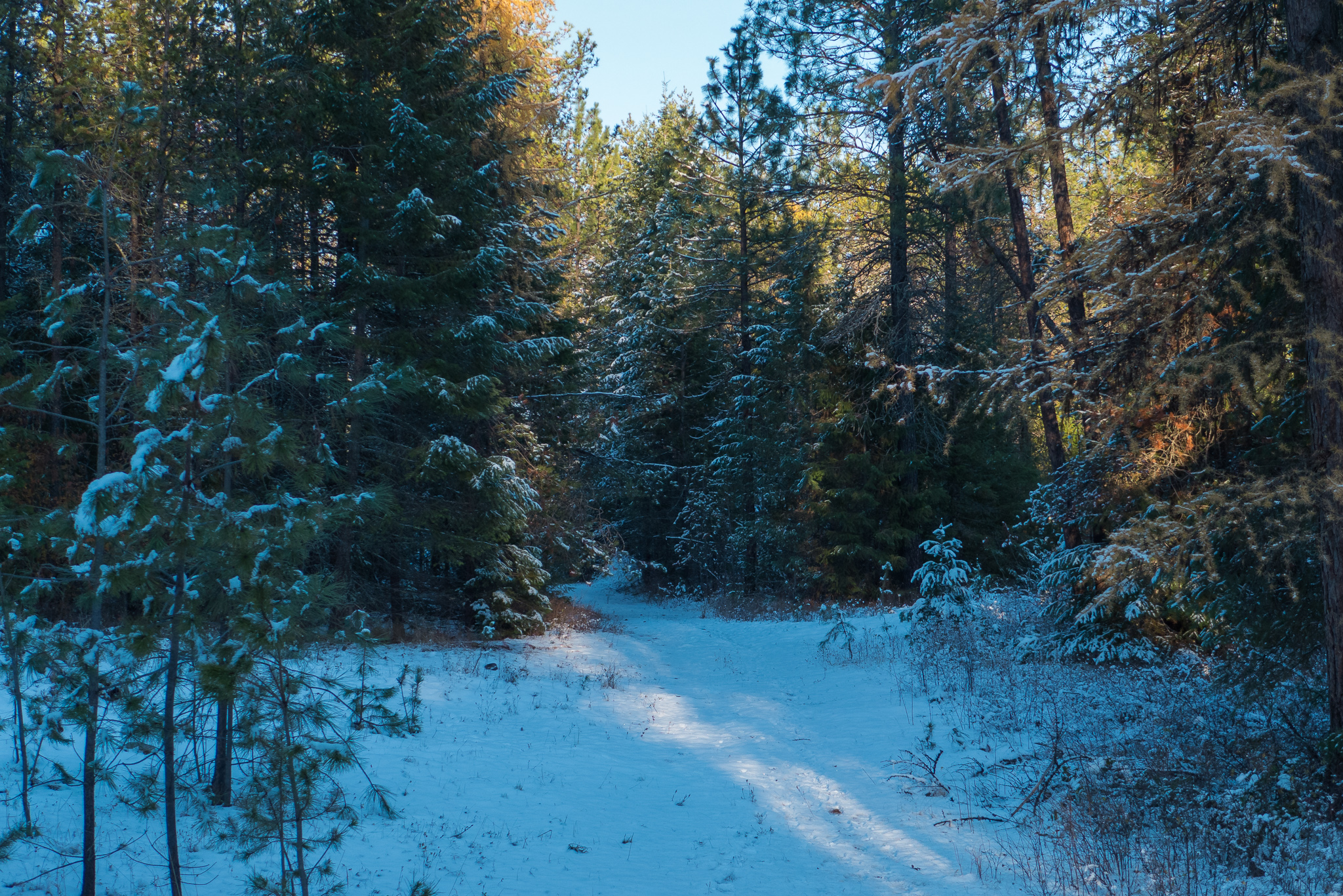
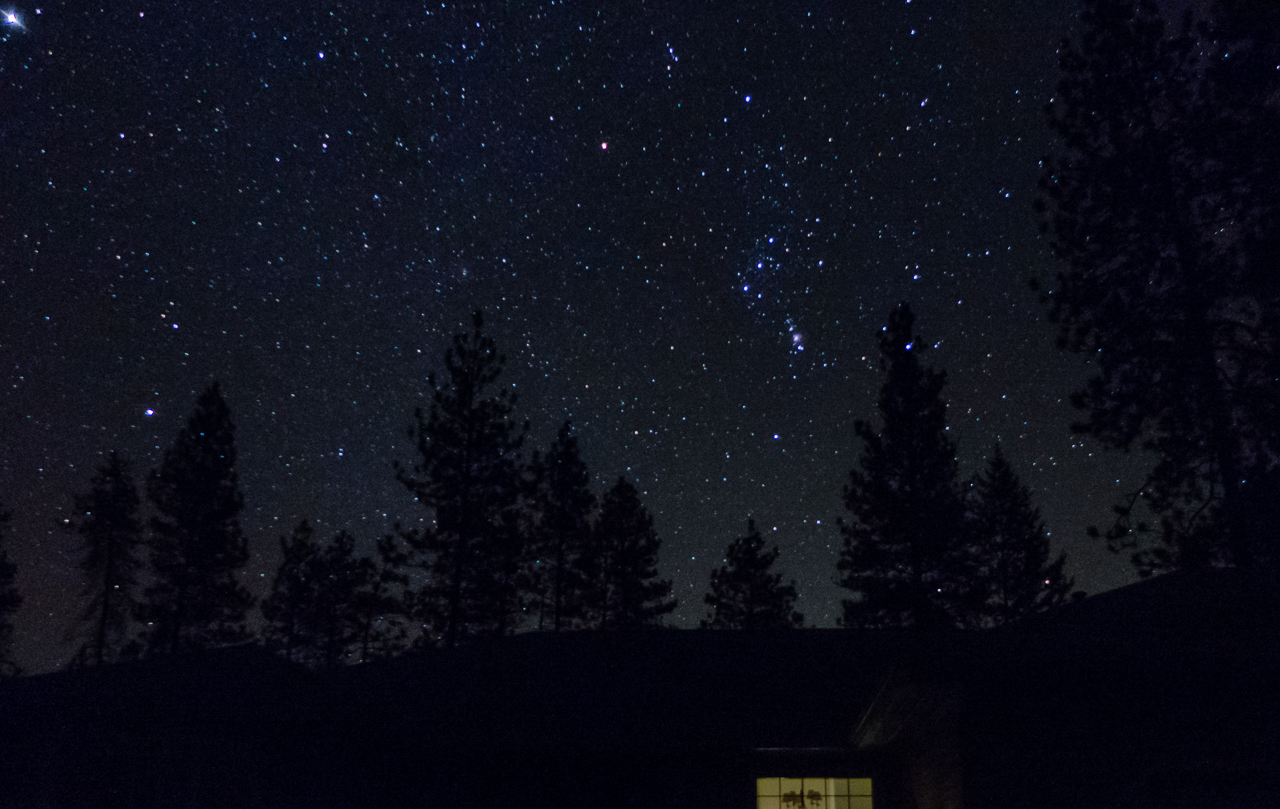
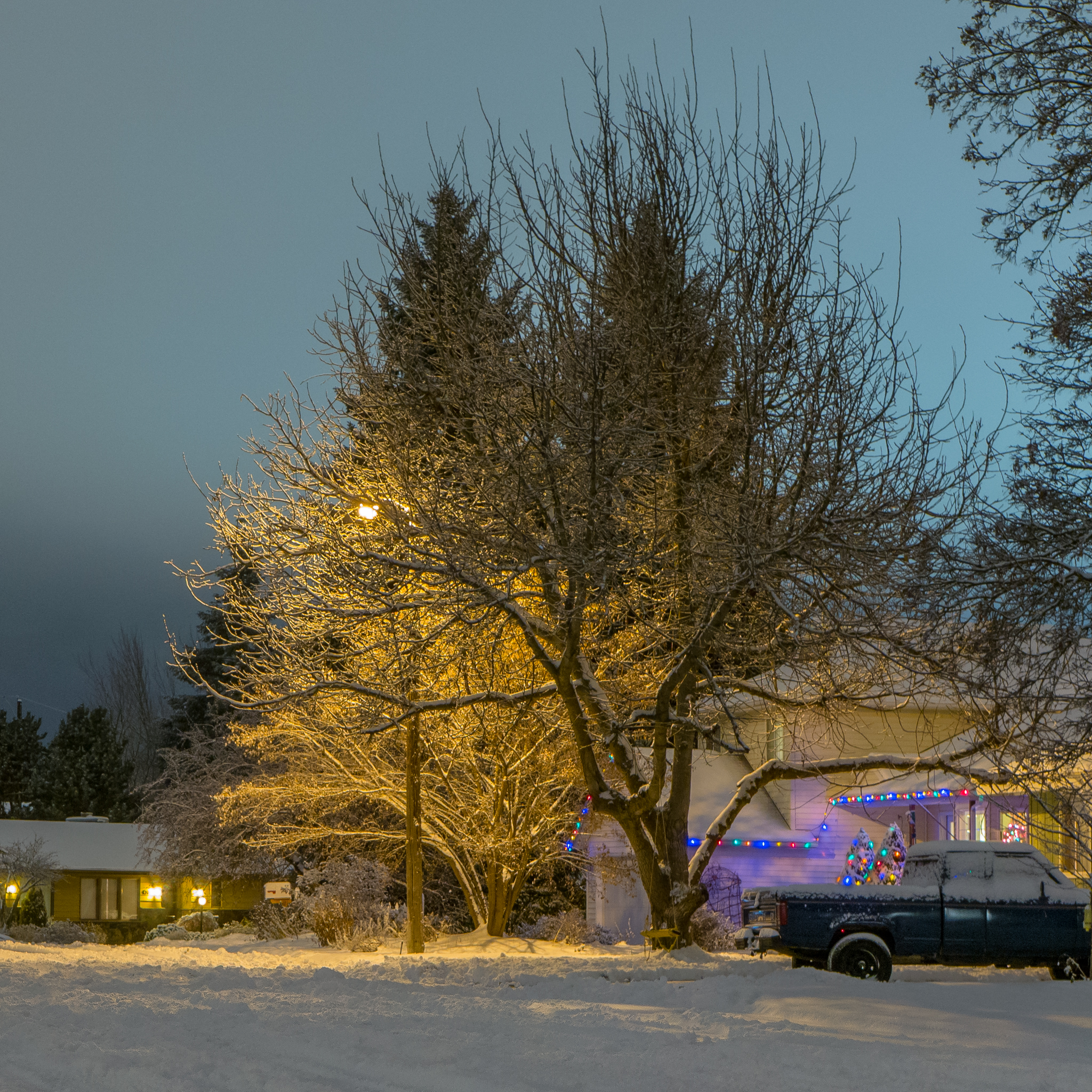
The virtual monastery yesterday evening

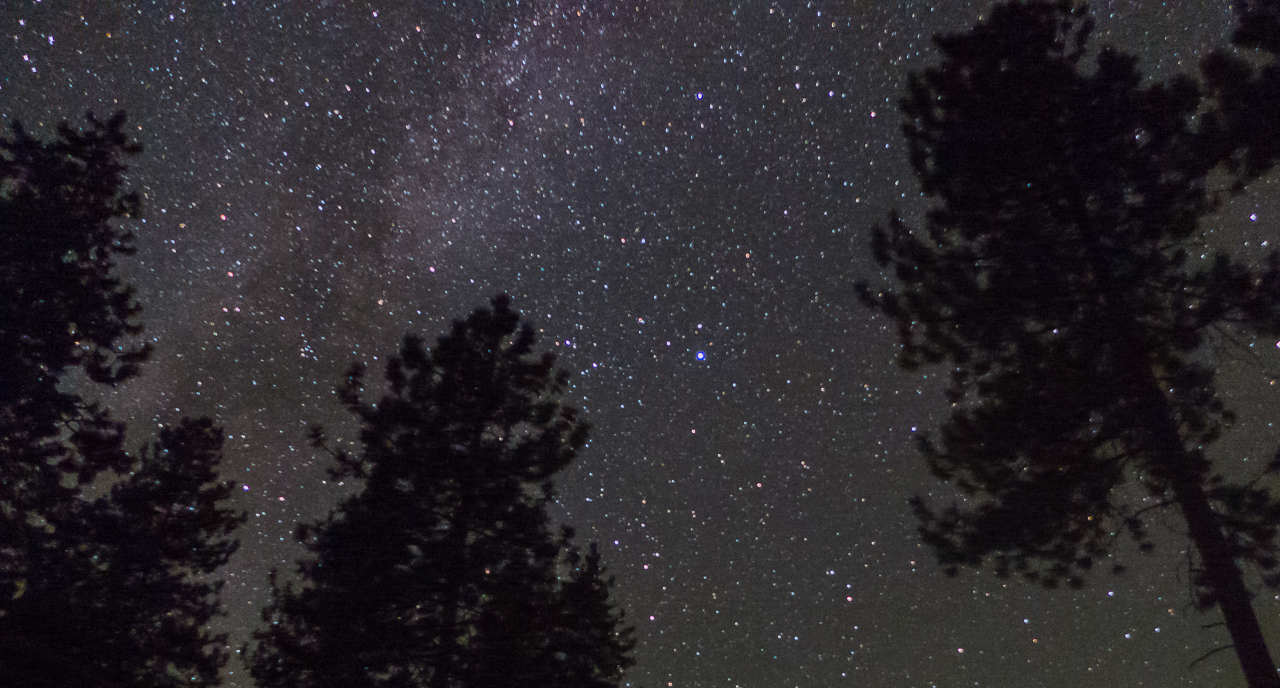
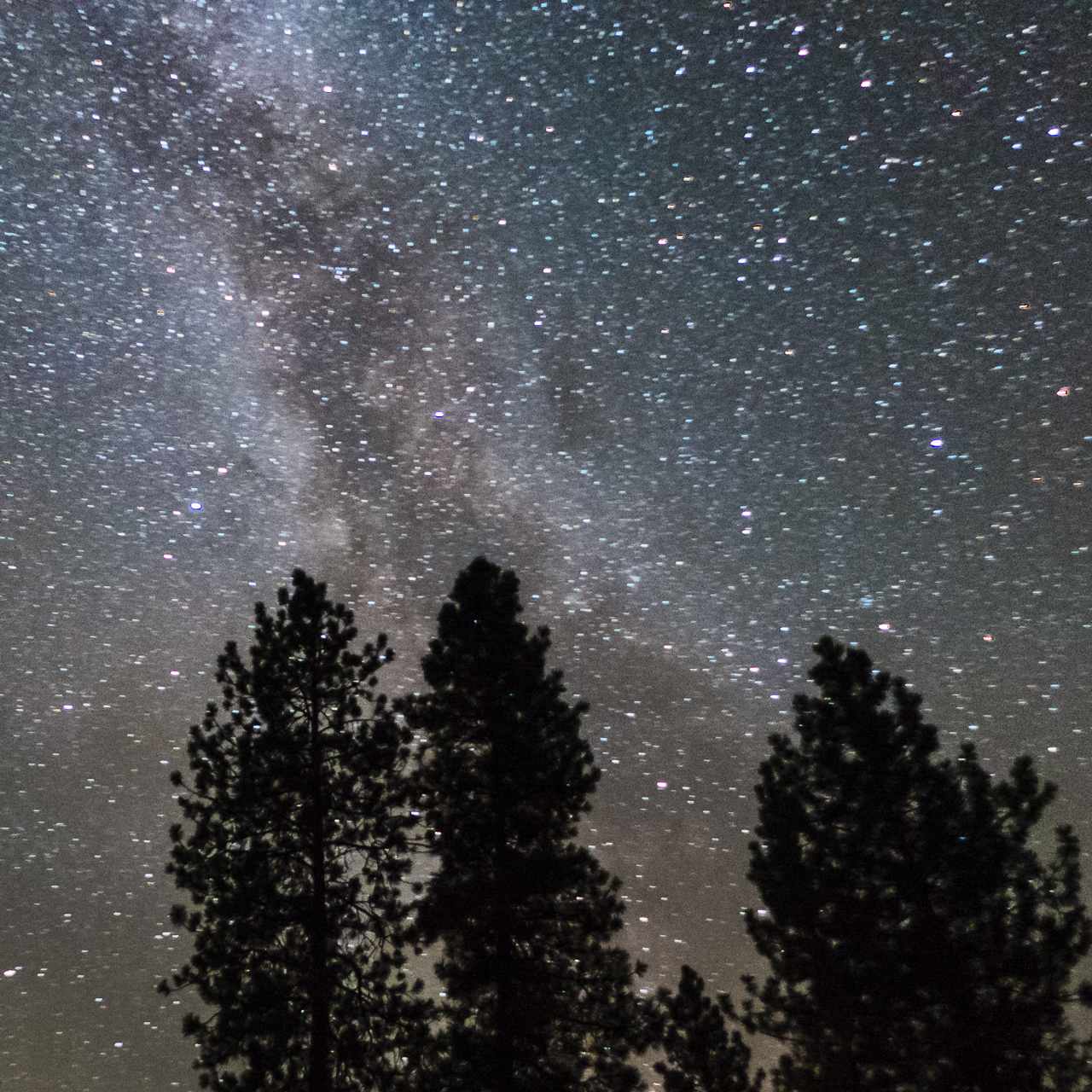
It’s a way of giving myself space to process a historical event with an uncomfortably high probability of a disastrous outcome. (We’ve had a few of those lately.) And, as these photos from a walk in the woods yesterday evening demonstrate, it’s a beautiful place to be disconnected.2

What a rare thing it is to simply walk away from all sources of information about the madness of our world! Few are even inclined to try, and for most it’s nearly impossible anyhow. You’ll get some alert on your phone that you feel compelled to check, or Fox News will be playing on the TV somewhere you’d rather not see it, or a friend will ask you about what happened. And then–poof!–your ignorant bliss is gone.

Sadly, a lot of those information sources are easily disconnected for me now. The worst pandemic in a hundred years is still very much underway, contrary to the mass delusion that has taken over the entire world saying everything’s back to normal again. It’s deepened the social isolation of those of us who haven’t been persuaded to go around breathing a dangerous airborne pathogen with a proven track record of causing long-term damage to people’s bodies.

I’m not really looking forward to letting the world back in. There were no surprises upon my return from previous visits to the virtual monastery. Things turned out about as badly as I’d expected. The unpleasant reality is that there is simply no limit to how much the Republican Party will exploit every possible opportunity to seize and retain power.

Let me use this fleeting state of innocence to do a bit of reflection. I am deliberately not going to provide any references for what I say in the next several paragraphs. Another sad reality: Hardly anyone cares about what you put in the footnotes anyhow.3

Hell, hardly anyone even reads anymore beyond the bite-size chunks of social media. If you are one of those rare souls and like what you’re seeing here, please retweet or retoot of whatever and maybe there will be views of this to make it feel worthwhile doing again.
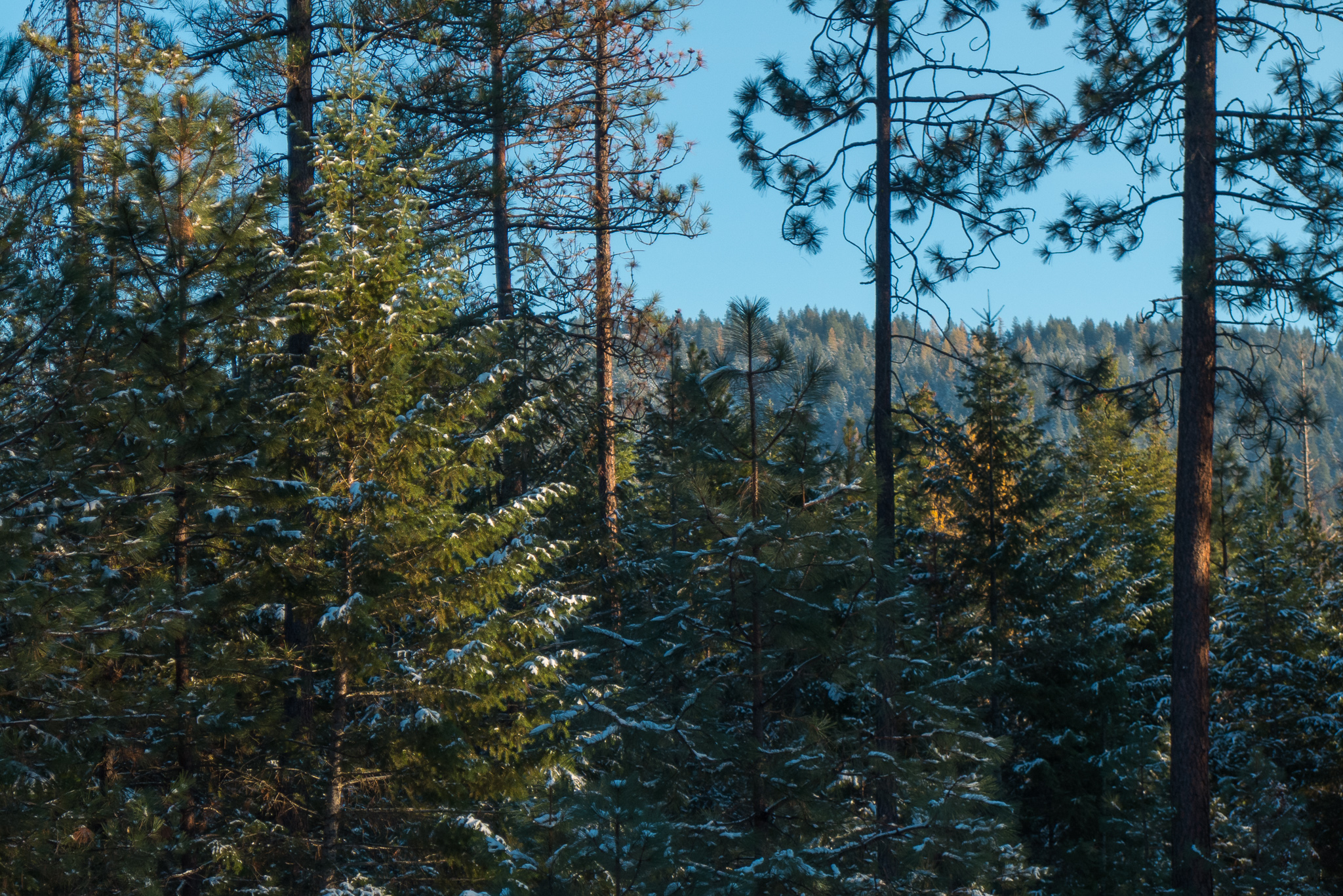
“The mountain is still green today.”

The election is an example of probability meeting reality. The ethereal “could be this, but maybe that” cloud of possibility represented by a random variable gets collapsed into a single established value. Nate Silver’s red and blue poll-analysis diagrams (to which I have not paid the slightest attention this time around) turn into a Congressional seating chart.

This happens on the quantum level everywhere and at every moment. Radioactive elements unleash particles when some wave function finally tunnels past a barrier of the improbable to escape its unstable home in an unwieldy mass of protons and neutrons that had been clumped together for seconds, years, even centuries. Photons end their journeys through space-time and land on surfaces that do not care about double-slit experiments but just get hot in the sun. The RNA of a virus fails to exactly preserve the original sequence of amino acids of its predecessor, switching things around or dropping something old or inserting something new and thus starts the next wave of a pandemic.
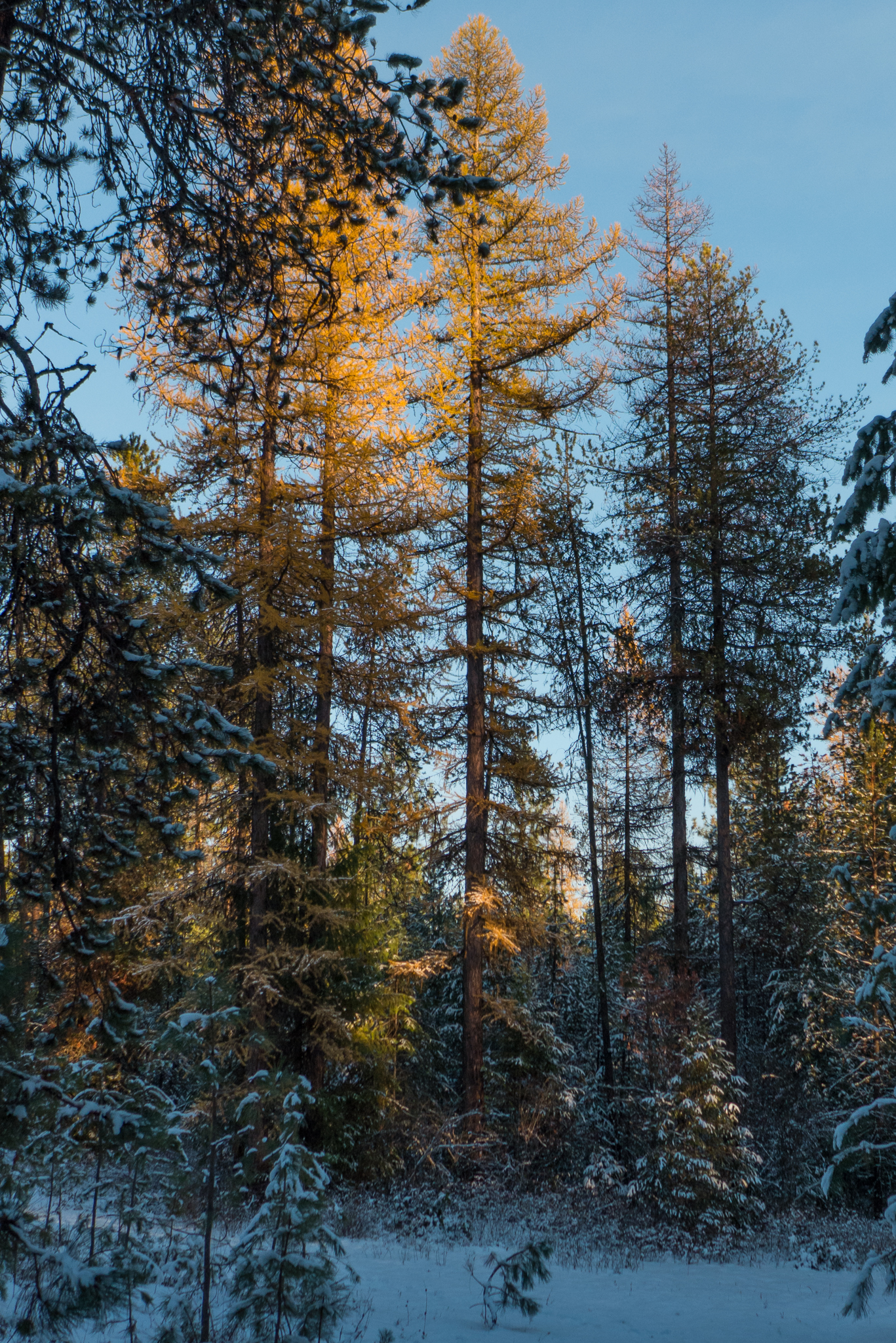
Still as they were–for one more season of a hundred

Randomness—which all ultimately traces back to the dice being thrown in a truly unpredictable way down at the subatomic level—is the engine driving the evolution that made us and all the life around us.

When you zoom out from quarks and photons and electron probability clouds, when the instability of interconnected systems amplifies countless tiny inputs in ways that we can’t possibly comprehend, big things happen sometimes and make other big things happen more often. That virus walks out of a lab in the nose of a careless worker or flies out of a cave in a bat (pick whichever scenario you prefer) and three years later tens of millions have had their lives changed or ended by it. An FBI director shoots his mouth off in front of the cameras days before a Presidential election and swings just enough votes in just the right places to infect the Oval Office and then the nation with a disease of cultish bigoted authoritarianism.

Probabilities become realities. Sometimes, the improbable nonetheless occurs, and then the random walk we are all on collectively lurches abruptly this way or that. A Supreme Court can collapse with the ceasing of a hubristic old woman’s heartbeat. Lingering disease becomes the commonplace and even accepted outcome of daily life visiting stores, restaurants, or friends. Democracies wither and die.

One day you’re waving at the neighbor guy, and ten years later he’s standing at the edge of a pit with a rifle pointed at your head. Do not delude yourself into thinking it will never happen again. It will, and in many parts of the world even now, is.4

I’ll know about the election outcome tomorrow or a day after. The trees aren’t talking, but I won’t stay this isolated for long. My wife or one of the kids will say something offhand, or I’ll see some email whose subject line breaks the news.

It’s fascinating, though, this not knowing. For me, personally, the photon is still going through both slits simultaneously; the wave function has not yet collapsed into a detection of this discrete outcome or that one.
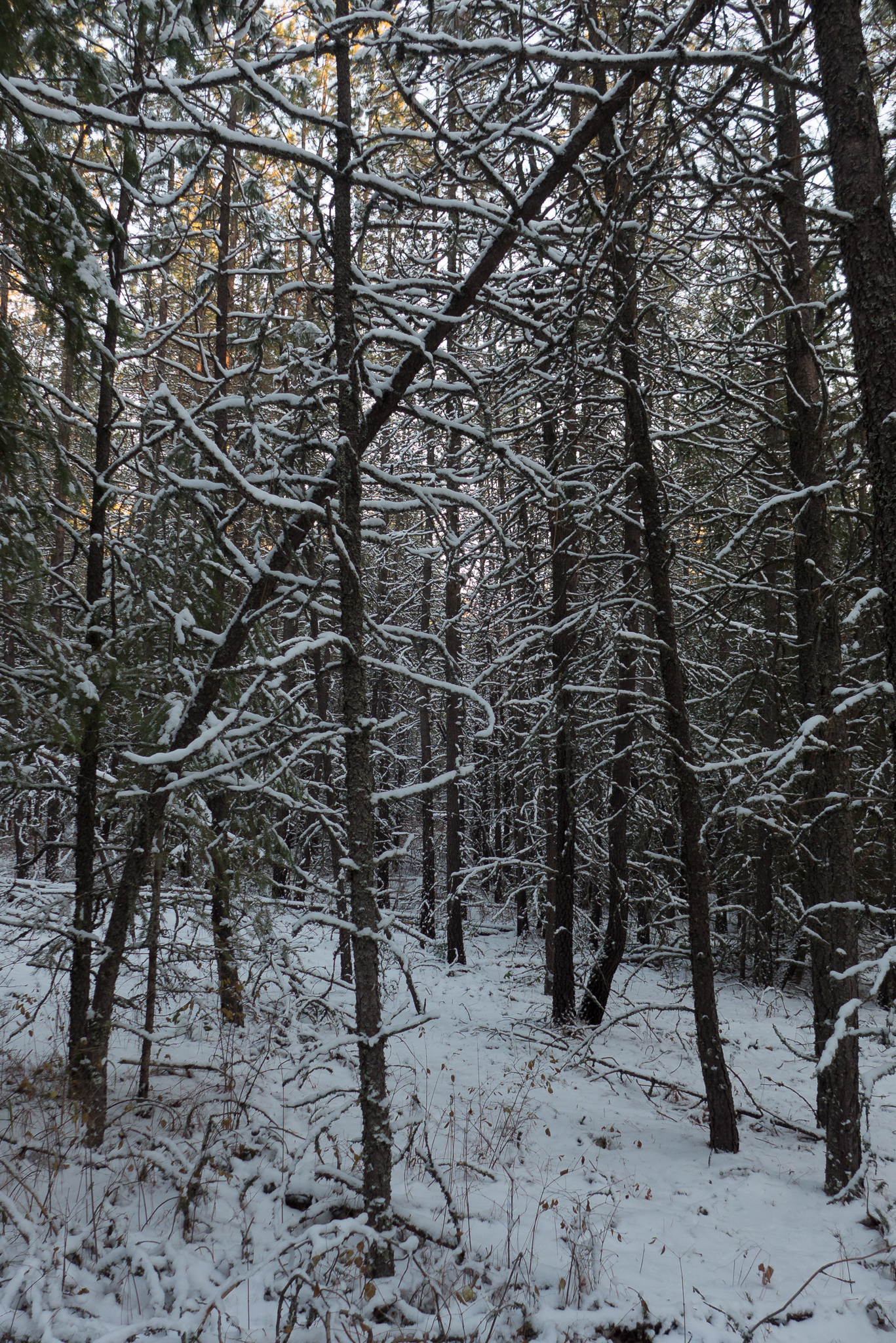
As with most things that have potentially terrible outcomes, like a SARS-CoV-2 infection or marrying into a MAGA family, the probability of badness seems to follow a log-normal distribution. This is because our perception of how bad things are tends to be logarithmic rather than linear.

When your body can walk half as far as it did before you brought the virus home from that concert, it’s bad, but only being able to walk a fourth as far doesn’t seem four times worse. You move to the right, toward the long tail of the log-normal curve. You have to get quite a ways out there before you can rest assured that nothing so bad will happen to you.

Sitting down for an unmasked dinner at Denny’s probably won’t get you bedridden for the rest of your life; if it did, even a society as careless and stupid as ours would be taking this virus seriously. But it is happening, and for those it happens to, it’s the end of their life as they knew it. The log-normal curve is a tricky deceptive thing; it piles up the not-so-bad outcomes down on the left and fools us into thinking there’s no long tail out there to worry about.

Well, I’m sorry, but it’s there, and it grabs people and nations and even planets, and sometimes never lets go. Things fall apart; the center cannot hold, as Yeats wrote in his immortal poem.

Beware the log-normal probability distribution

The happiest scenario A, not as likely as it would have been even ten years ago, is an uncontested loss by the party seeking to deny election results they don’t like, further dismantle the public commons and any semblance of environmental protections, roll back the last forty years of progress in women’s rights and stop people from loving and marrying consenting adults of whatever their preference.

Mitch McConnell would call Joe Biden and offer his congratulations, promising to respect the will of the people and work together with a solidified Democratic majority. A chastened Supreme Court realizes that it’s not an imperial star chamber and gets busy following precedent again.

Yeah, right.

———

In scenario B, the Democrats manage a convincing enough win. No Turkish grifters, anti-Semites, or brain-damaged serial cheaters manage to win high office. The GOP complains, Mitch remains a royal pain in the ass, but the health of our representative republic remains intact–perhaps stronger. Joe Biden might even decide to finally fire Rochelle Walensky now that he doesn’t have to pretend Covid is over.

This also feels unlikely. Sure, I hope it’s what happened, but there’s a lot more area under the curve to the right.

———

Scenario C is at the mode of our log-normal distribution, though not at the mean or even the median. If you were to ask what is the single most likely isolated outcome, that’s it, but, critically, it is not yet at the point where half of the time things will turn out better. It’s a narrow win or stalemate, where things aren’t really worse than they were before the election but we can sort of stumble along for a while. Maybe a Democrat with charisma, integrity, and a few decades of remaining life expectancy might win the Presidency in two years. Maybe.

But here is where I have some bad news to share, regardless of whatever news you might be wishing you could tell me right now, if you’ll excuse my abuse of the language: Things can get much more worse than they can get much more better.

Much better than now isn’t some paradise where everybody lives in blissful abundance and harmony. It’s just a functioning democracy where both sides respect the outcome of elections and aren’t trying to wreck the planet or other people’s lives. That doesn’t seem like much to ask, but we weren’t there the last time I looked at the news a couple of days ago.

This random walk we’re on now is as likely as not to take you to far worse places. And if you wind up there, you’ll be facing a whole new log-normal probability distribution that is centered on how bad things have become, complete with its own long tail farther to the right.

———

Scenario D is the Democrats winning, but not by much, and the GOP engaging in an all-out cold civil war of trying to cheat or bully their way to victory.

Pretty much the same probability is the scenario E, with the democrats losing–also not by much, but it doesn’t matter. The GOP will take any sort of victory as a massive mandate to tear down what’s left of the country and keep marching us on a random walk toward fascism. I wish I were more optimistic about that bunch, but I’m not.

———

Scenario F is the Democrats losing by a lot, and G is them losing by a little and the GOP being even worse about it than my wildest expectations.

Neither of these are things I choose to dwell on this evening. May I be proven a pessimist this time. I’ll take scenario B with all the humility it brings, and gladly.

Notes


  1. Still, it feels irresponsible not to provide a few. The epigraph was quoted in Ancient Rome: The Rise and Fall of an Empire by Simon Baker. “In Rome,” Baker says, “Caesar’s enemies were thrown into a fit of panic. They had hoped that the respectable classes in towns throughout Italy would rise up as one in defence of the republic against the invader. But as Caesar waged his blitzkrieg without significant opposition, they quickly realized that they had hopelessly misread the majority view.” Sounds all too familiar. 

  2. All but the first are from yesterday. You can click on any of them to see the high-resolution versions. 

  3. When I self-published my first book An Examination of the Pearl ten years ago, I was proud of how carefully it documented the historical and doctrinal problems with the fundamentalist Christian cult in which I was raised and spent the first 40 years of my life. But the rigor of providing footnotes and references and context for quotations now feels like a lost art. Many of the same people who complimented me on that and expressed relief at someone finally standing up to church authorities now seem eager for unconstitutional authoritarian rule of the whole damn country. 

  4. My pessimism in this department might be the result of generational memory. See, for example, In Memoriam: Kurt Stein written in honor of my uncle who was shot by firing squad for refusing to fight in Hitler’s army. 

Friday, July 29, 2016

Galaxy Gazing

I think that the dying pray at the last not “please,” but “thank you,” as a guest thanks his host at the door. Falling from airplanes the people are crying thank you, thank you, all down the air; and the cold carriages draw up for them on the rocks. Divinity is not playful. The universe was not made in jest but in solemn incomprehensible earnest. By a power that is unfathomably secret, and holy, and fleet. There is nothing to be done about it, but ignore it, or see.
—Annie Dillard, Pilgrim at Tinker Creek1
The Milky Way from my driveway

Tonight, with clear weather and no moon around, I am up late to look at a dark sky with the first decent pair of binoculars I’ve ever owned. The vaguely textured white blur of the Milky Way that my eyes have long admired, unmagnified, now resolve through the 10x binoculars into clusters of countless stars with crisscrossing fuzzy ribbons of black woven in between.

I pan the circular field of view slowly along our galaxy’s long overhead arc, immersed in the depth I sense above me from my two eyes merging a single image. There’s a satisfying tangible connection between the fine motions of my arms and the slow sweeping past of this collection of a hundred billion stars in our little corner of the universe.

A dim smudge near Cassiopeia teases my eyes’ limits of sensitivity and resolution. I think it’s M52, a globular cluster a few thousand light-years away. It was first identified by Charles Messier in 1774. The photons I’m collecting in my binoculars tonight from its 193 or so stars were more than 90% of the way here when Messier peered through his telescope. In the meantime, a nation rose through a rebellion and then quashed one of its own; enslaved, freed, and still long oppressed a large fraction of its citizens; conquered its native peoples and then rescued others from conquest in two world wars.

The smudges are clusters of countless stars.2

These photons had already emerged from their nuclear furnaces by the time some settlements along the river Tiber formed the first humble beginnings of the Roman empire.3 Their journey may even have been halfway underway by then; we’re not sure exactly how far away M52 is from us.4

It’s been a little more than two thousand years ago since a citizen of that empire, a gifted poet and philosopher, stood next to some pool or pond beneath the night sky. The skies anywhere in Europe were darker than they are now, even at my place out in the country. I imagine Titus Lucretius Caras (c. 99-55 B.C.) looking at an image of the blazing array of stars overhead, seeing their “images,” which, he muses, must “be able to run through space incalculable / In a moment of time.”5

The pointpoints and patterns of the stars are mirrored in the still water before him, “not turned round intact, but flung straight back / In reverse,” with the features thus shown “in reverse.”6 He moves slightly to one side along the water’s edge and notices how one particularly bright star near the horizon comes abruptly into view from behind the tree. Its direct image and its reflection both wink on instantly–at exactly the same time, as far as he can tell.7

A smooth surface of water is exposed

To a clear sky at night, at once the stars

And constellations of the firmament

Shining serene make answer in the water.

Yet he knows that the “images” raining down from the sky take a longer route when they make the extra trip to the water and back than when they go directly into his eye.

Now do you see how in an instant the image

Falls from the edge of heaven

to the edge of earth?

Wherefore again and yet again I say

How marvellously swift the motion is

Of the bodies which strike our eyes

and make us see.8

Those image-bearing bodies are “marvelously swift” indeed. They move 186,000 miles–more than 23 earth diameters–through the vacuum of space every second. Yet the immense vault of our universe is so incomprehensibly vast that it’s taken most of the span of human civilization for them to reach us, from a relatively nearby neighbor within just our own galaxy (there are at least a hundred billion others).9

My kind of nightlife

Silent and impassive to all the twitches and ripples in the microscopic biofilm of one ordinary planet, in the hundreds of years since Messier noticed this odd feature among the stars–in the thousands filled with death and wars and tears of joy and sorrow since Lucretius did his ancient poolside musings–the photons from its clustered stars continued their long journey outward. Only now do they finally land on my retinas to collapse wave functions and trigger individual rod-shaped cells to launch neurotransmitters down neighboring filaments of cell-strings along my optic nerves.

In my brain, a little smudge registers. Something’s really up there.

The stars in M52 will keep launching their photons all my life, as they have for 35 million years now. They’ll get lost in the sea of light that covers and warms the daylight half of earth, fall through clear skies over the other half in darkness, and remain ignored almost always, as the earth swings around its own little star a few dozen more times until my eyes no longer see anything at all.

And yet, despite my absence, the earth will stay in its orbit and the photons will stream on.

Notes


  1. Does it surprise you to see such ringing words of spirituality as the epigraph to an atheist’s essay? Such prose retains its profound beauty regardless of one’s disagreements with its message. And even with no God in the picture, I am still happy to call whatever was behind the Big Bang, or the quantum fluctuation that unleashed the Big Bang, or whatever was behind that, a “power that is unfathomably secret,” even holy, filling me with a sort of reverence as I gave upwards at night. 

  2. There’s also some light pollution near the horizon, even out here, miles from the nearest city. I’ve tried to de-emphasize it with reduced yellow and green luminance. 

  3. en.wikipedia.org/​wiki/Ancient_Rome 

  4. Because “this cluster is in the plane of the Milky Way,” our available “methods of determining distance are too uncertain,” some yielding estimates “as small as 3,000 light years, while others are as large as 7,000” (Ethan Siegel, “Messier Monday: A Star Cluster on the Bubble, M52,” ScienceBlogs

  5. Lucretius, Book IV, line 191. From On the Nature of the Universe, Ronald Melville, trans. (Oxford University Press). 

  6. Book IV, lines 295-99. 

  7. It’s not exactly the same time, of course, something I remain well aware of as an electrical engineer with a radio background. Indeed, engineers rely on the known and limited speed of light to do antenna design with all of its resonant and carefully spaced conductive elements. Quarter-wavelength spacings abound. 

  8. Book IV, lines 210-17. 

  9. “How Many Stars Are There In the Universe?”, European Space Agency. I’ve seen another dim smudge out there in the night sky from the nearest of those other galaxies, Andromeda. Its photons took millions of years to reach me instead of thousands. 


Tuesday, November 10, 2015

Frozen and the Chosen

It hit me as I was walking home–I could think anything! I could have any opinion on any subject, and it would be my own! No longer would I have to check against Scripture and other doctrine to make sure that my opinions were in line with God; I could decide my opinions with my own reason! . . . That moment was one of the most liberating, beautiful, and happy experiences of my life.
—Michael Amini in Generation Atheist, Dan Riley, editor (2012)
[T]he whores of the world wash their hands in the blood of creatures, but the daughters of Jerusalem do not wash themselves in the blood of the innocent Lamb, but with soap and with lye, and nevertheless their filthiness is visible.
—Lars Levi Laestadius, randomly selected passage from a random sermon (Palm Sunday 1854).
Kristoff Levi Laestadius, reindeer fan

Last week, I went with my wife and some of our kids to see the Disney on Ice figure-skating adaption of the musical movie Frozen. It was great fun to see Anna and Elsa zipping around the rink with Olaf, Kristoff, and Sven, who materialized as a rather large reindeer comprised of two skaters inside a furry brown costume. When Elsa went out on the ice under blue light for her big solo act, two little girls sitting behind us sang along at the top of their lungs: “Let it go, let it GO!”

A husband-and-wife pair of composers wrote Let it Go as “Elsa’s Badass Song,” specifically intended to be sung by Idina Menzel, “one of the most glorious voices of Broadway.” They succeeded brilliantly. The song is the highlight of the film and has sold over 10 million copies on its own.1

Lamplit Tree [Flickr page]

I first heard it while sitting in a theater with my family nearly two years ago. This was still a fairly novel experience after a lifetime of being told–and then allowing it to be told to my children–that seeing movies is a sin. Laestadianism and its oddities were still very much on my mind as I watched Anna make her cute wisecracks and accompany a socially-inept ice merchant and his furry best friend on a quest that included, among other delightful implausibilities, a visit with some witty and wise rock-rodents who dispensed relationship advice.

“So he’s a bit of a fixer-upper,” they sang about Kristoff while working on setting him up with Anna. Aren’t we all, I thought, musing about all the mental remodeling my wife and I were doing on ourselves and our older children, after the nonsense we’d all heard for years and years sitting alongside each other in a very different setting.

When Elsa finally broke out of her self-imposed shell, flung out her arms, tossed back her head, and proclaimed that she wasn’t going to hold back anymore, I felt like applauding.

Conceal, don’t feel, don’t let them know

Well, now they know!

Yes! You go, girl! I silently cheered, feeling a bit embarrassed about how emotional I was getting watching this movie. But there was a good reason for it. For a year, I’d had to “conceal, don’t feel, don’t let them know” what I’d learned from some diligent and sincere research about my childhood faith. Sharing that information with a few friends in the church got me hauled into a meeting with my local congregation’s preachers and board of trustees.

After a two-hour inquisition, having been told I was to retrieve the dozen or so copies of the book I’d given away, “I went home and told my wife, ‘You are about to witness the intellectual disintegration of your husband.’ Then the years of doubt, fear, and frustration–culminating in being muzzled into silence by a church far more interested in rebuke than reality–boiled over. I collapsed into my wife’s arms in tears, and went to bed for a fitful night.”2

Let it go, let it go

Can’t hold it back anymore

Let it go, let it go

Turn away and slam the door!

After some months, I just couldn’t hold it back anymore, either. My half-hearted promises to stay away from dangerous studies didn’t stick, of course, and I “learned and questioned more about church history, the Bible, and aspects of science that conflicted with important points of doctrine.” I also “lost the energy to continue swimming against the current of the church’s clannish, insular social scene,” which treated my family and me like we all had some dangerous and contagious disease once my doubts became known.

I was ready to “shake off the muzzle” and put into print what had “been swirling around my head and flagged in the pages of my library of books.” The result, An Examination of the Pearl, wound up being more than twice the size of the print-shop copy that had gotten the elders so bent out of shape.

Given the outraged reaction I encountered to a very limited, private distribution of the book, which consisted mostly of church statements and relatively restrained footnotes about those statements, I have no illusions that this published edition will be well received. As Ken Daniels noted about his own book, “whether I take a gentle or harsh approach, I am sure to elicit criticism. The very act of confronting deeply cherished religious convictions is unforgivable to some, regardless of my tactics.”3

Frost on Ponderosa [Flickr page]

I’m not the only one who has been moved by Let it Go as an anthem of liberation from fundamentalism. Blogger “Libby Anne” wrote about that in March 2014, after being shocked at how much her conservative evangelical mother obsessed over the movie. “How could they see Frozen and not realize that it was about self acceptance and freedom from others’ expectations–and moral standards?” she wondered.

When she first watched Let it Go on YouTube,

before seeing the movie in theaters, I completely choked up at the line “no right no wrong, no rules for me.” Tears started streaming down my cheeks. It was beautiful. I grew up in a conservative evangelicalism that I eventually found highly restrictive. As I began to extricate myself, my family and friends put me through a special kind of hell. But even through all of the pain and the tears, I entered into freedom when I left behind their rules, their expectations, their control. This song spoke to so many emotions. I’ve watched it again and again many times since that first time, and each time I’ve achieved some form of catharsis.

It’s now her personal theme song, she says.4 Another blogger, Maranda Russell, says she fell in love with the song as soon as she heard it:

At times in my life I felt like I had to hide my true self to get approval and love from friends, family and the church. I had to pretend to be a “good girl” who never questions anything and believes blindly what I am told. I still feel like many wish I would just shut up and believe what they tell me is true, but I just can’t do that anymore.5

I don’t care

What they’re going to say

Let the storm rage on,

The cold never bothered me anyway!

Maranda admits that “maybe I still care a little (after all I am still human), but I won’t let it rule me.” I did, too, about what I knew my “brothers and sisters in faith” were going to say, but I went ahead anyway. A storm would rage, friendships would be lost–most of those that I’d forged since childhood, it turned out, in a church that discouraged social contact with the outside world.

And the stakes were infinitely higher than what one friend called “social suicide”: Publishing the book against the wishes of the Laestadian Lutheran Church would inevitably be viewed as an act of apostasy, no matter how balanced I tried to be in presenting my findings. Eternal damnation loomed in my future.

To those who tell me my writing was courageous, I reply that it took less courage then what many of them have done–simply walking away. I needed to have my brethren push me out instead, simply for making the facts known, asking difficult questions about them, and refusing to accept the tired old insistence that the most important matter of one’s life “cannot be understood by reason.”

My introduction to the book quoted Clement of Alexandria from 18 centuries earlier: “If our faith is such that it is destroyed by force of argument, then let it be destroyed; for it will have been proved that we do not possess the truth.” Recalling the “faith” of a board member who said he won’t read anything critical about what he supposedly believes,” I asked if that was

really faith in anything other than the people around him who are repeating the old slogans? They, too, are ignoring the facts about their “faith,” making the whole thing a self-sustaining doctrinal bubble that quivers unsteadily in the air, vulnerable to being poked by the slightest intrusion of fact.6

Looking Back [Flickr page]

Now, nearly four years later, these words from Let it Go are exactly my experience:

It’s funny how some distance

Makes everything seem small

And the fears that once controlled me

Can’t get to me at all!

There is simply no fear anymore. And it’s not for any lack of knowledge about what this weird little sect thinks my eternal fate will be. Hell, I still listen to sermons sometimes to get to sleep, because the preachers’ somber, familiar, repetitive intonations send me drifting off faster than anything else. Sometimes I get several nights’ worth of use out of a single sermon, because I start the iPod at different points in the recording and am out within ten minutes.

One correspondent told me, “My old Laestadian world view is gone. If I talk to certain people or listen to sermons I can feel the world view there and experience it sometimes. I don’t think it’s ever coming back, though, and I am the better for it.”

Yes, my friend, you are. And, as Elsa sings out, fully embracing her unique identity and abilities, “one thought crystallizes like an icy blast”: You’re “never going back. The past is in the past!”

———
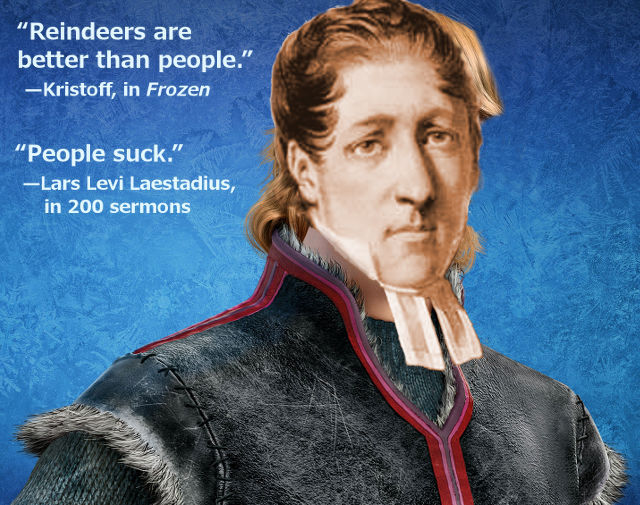
The picture of Lars Levi wearing Kristoff’s reindeer-hide coat was fair-use adapted from a Frozen wallpaper image and a classic portrait of Lars Levi Laestadius. Take a look online at Laestadius’s sermons and you’ll quickly see what I mean by the “People suck” paraphrase. He was not a happy man. The fictional Kristoff of Frozen seems to have had a more meaningful “conversion” experience with Anna than old Lars ever did.
The other photos are Copyright © 2013-15 Edwin A. Suominen. Click to enlarge, or check out my Flickr photostream. You may freely use them for non-commercial purposes, with attribution, under the Creative Commons Attribution-NonCommercial 3.0 Unported License.
See the online Dictionary of Christianese for an interesting discussion of the expression “frozen chosen.”

Notes


  1. Wikipedia, Let it Go

  2. An Examination of the Pearl, §1.2 (“Introduction–Disputation– The June 2010 Edition”). 

  3. §1.2 (“Introduction–Disputation–Alienation”), quoting Ken Daniels, Why I Believed: Reflections of a Former Missionary (self- published, 2010). 

  4. “Let It Gay? Subversive Messages from Disney’s Frozen,” Love, Joy, Feminism blog, March 4, 2014 

  5. “What the Disney ‘Frozen’ song ‘Let It Go’ means to me,” Maranda Russell blog (April 25, 2014). 

  6. §1.2, quoting from Clement’s Stromata, 6.10.80. William Wilson’s translation, freely available online, goes as follows: “But if the faith (for I cannot call it knowledge) which they possess be such as to be dissolved by plausible speech, let it be by all means dissolved, and let them confess that they will not retain the truth. For truth is immoveable; but false opinion dissolves.” 


Friday, May 9, 2014

The Memes Shall Inherit the Earth

I think that a new kind of replicator has recently emerged on this very planet. It is staring us in the face. It is still in its infancy, still drifting clumsily about in its primeval soup, but already it is achieving evolutionary change at a rate that leaves the old gene panting far behind.
The new soup is the soup of human culture. We need a name for the new replicator, a noun that conveys the idea of a unit of cultural transmission, or a unit of imitation. ‘Mimeme’ comes from a suitable Greek root, but I want a monosyllable that sounds a bit like ‘gene’. I hope my classicist friends will forgive me if I abbreviate mimeme to meme.
—Richard Dawkins, The Selfish Gene
Replicators galore, these ones biological rather than cultural  [Flickr page]

We are all familiar with the deep-seated biological drive to replicate our DNA into new packages, to form a next generation of couriers who will carry this ancient genetic blueprint when our short-lived bodies no longer can. We may not understand or even accept the evolutionary basis for this procreative imperative, but few of us have been aloof to its power.

Every one of us is the product of it, after all. Somewhere, decades ago, two people messily mingled their chromosomes in the most intimate of acts and, nine months later, bestowed you unto the world. And another pair did the same to produce me, my proud father being older than I am now when he cradled his late-in-life newborn son. Each of those parents of ours was in turn the results of earlier sexual encounters from a sepia-toned age. There’s been a lot of that going on, a grey-haired old attorney once said to me with a smile as we ate our workday lunch in dress shirts and ties next to a table where a young couple groped and kissed. Thou shalt be a father of many nations, Abraham was promised.

Offspring  [Flickr page]

Even when we don’t have the end (a baby) in mind, or actively take steps to prevent its fulfillment, the means certainly preoccupies us to no end. A laughable amount of our attention and effort is devoted to pursuing an act whose fleeting peak moments will add up to mere days over a lifetime. For most of us, this long project begins in earnest before we’ve yet spent twenty years on the planet. But that was already middle age for those prehistoric forebears whose liaisons by the fire ultimately gave rise, a few thousand generations later, to the kids now pretending not to notice each other in high schools, malls, churches, and on Facebook.

The project never quite ends, either, at least not mentally. Long after the boiler quits producing enough steam to move the engine of actual reproduction, the whistle still blows. Whatever our age or sex, we still admire the curves or square shoulders, fair faces or rugged jawlines, of the beautiful people we encounter, both on the sidewalk and in the staged scenes playing out on our video screens. We continue to preen and posture, adorn ourselves with cosmetics and ornaments, and demonstrate our genetic fitness by preaching rousing sermons, writing books and blogs, taking selfies.

This behavior is signaling for sexual selection, which is an important mechanism behind biological evolution. It’s not just about the “survival of the fittest,” as the misleading but common phrase goes, but the replication of the fittest. What is “fit” is determined not just by how well organisms survive until they can reproduce, but how successful they are at the business of reproduction. And that, at least in sexually reproducing animals where both parties have a say in the matter, usually begins with a choosy female—faced with the investment of bearing and raising offspring—selecting the male whose feathers, fanny, or financial status are pleasing to her.

Once our species developed some cognitive abilities, demonstrations of brainpower became an important part of this signaling. Look at me, I’ve drawn some cave paintings! Invented a religion of which I, coincidentally, am shaman and seer! Written a poem! (The process can get carried away with itself, with runaway selection occuring for features that really have no importance for actual fitness or even signaling of fitness.) But all this strutting about was accompanied by—perhaps even led to—another realm of mutation and selection entirely apart from biology: cultural evolution.

Gaining a Foothold  [Flickr page]

Cultural evolution is a big topic, as witnessed by the size of Paul Ehrlich’s fine book on it. But one aspect I find particularly compelling (that enthusiasm not shared by Ehrlich, I might add) is the idea that units of culture propagate themselves for their own sakes, using the brains and information-conveying apparatus of humans as their hosts. “These proposed evolutionary units are memes rather than genes, propagating themselves through the minds of human beings instead of the gonads.”

So says our chapter “The Memes Shall Inherit the Earth” in Evolving out of Eden. (Look, ladies, I co-authored a book!) I’m very proud of that chapter. Memetics pioneer Susan Blackmore praised it as “one of the best descriptions” she’s seen “of how the memes of religion work.” So now I will take the liberty of using a few paragraphs excerpted here and there from it.

These memes compel me to reproduce them.

———

We are now well acquainted with the foundational idea of biological evolution: The genes in the DNA recipe for the best-adapted organisms are the ones that wind up replicating the most. Today’s evolutionary survivors among the genes are being propagated in beetles and basketball players rather than dodo birds and dinosaurs. Memetics posits memes as cultural equivalents to the biological replicators: Those memes that have replicated the best—via books, videos, blog postings, sermons, gossip, etc.—are the ones that now occupy the most cognitive territory in our brains.

Certainly, the success of the ideas we cherish and spread isn’t an accident. It is these ideas that won the struggle for our attention, having the right attributes to survive in our brains and replicate from one brain to the next. They are cultural equivalents to the genetic winners who are now alive rather than vanished from the earth with only fossils as their legacy.

Seed Pod  [Flickr page]

Kate Distin, an independent scholar of cultural evolution, views attention as the meme’s limited resource, analogous to the limited ecological resources for which genes compete. “There is a struggle for existence because a vast array of memes is competing for the limited resource of human attention, and therefore the fitness of any given meme will be influenced chiefly by its ability to gain and retain attention.”1

Brains constitute “a world full of hosts for memes,” and there are “far more memes than can possibly find homes,” says Blackmore.2 So they must be selfish and competitive, like genes; “their success depends on the advantages they confer on themselves. In the struggle for brains’ attention they must in some way be ‘better’ than their rivals.” This doesn’t necessarily have anything to do with the effects the memes “have on the genetic success of their possessors.”3 Contraception usage is an example of an idea that has flourished despite the direct and drastic effect it has on the genetic propagation of individuals adopting it.

Often, however, there is indeed a symbiosis between a meme and the person bearing it. Luther’s revolutionary theological ideas put his life in danger, but they also greatly impressed the Elector Frederick of Saxony. Spared Rome’s wrath by the interventions of this powerful friend, Der Reformator had a full lifetime to refine and spread these ideas, and also to procreate his genes: He had six children. There are genetic descendents of Luther walking around today, as well as countless Protestant churches with doctrines that incorporate Lutheran memes of sola scriptura and justification by faith alone.

The organisms, religions, and political parties produced by genes and memes don’t need to be appealing or useful in the grand scheme of things. Neither “gene nor meme theory has anything to say about the intrinsic value (i.e., ‘goodness’) of the information that its replicators carry.”4 They just need to be good at replicating, and they are happy to use you as a host.

———

It is a bit unsettling to step back and view yourself as a mere carrier of genes and memes. My entire life, it seems, is devoted to the propagation of information. The payload is not just the hard-won result of a billion years of evolutionary experiment that are encoded in my body’s cells and half of the encoding in my kids, but also the raw ideas that I convey with every word I speak and write. The memes want me to spread them around, for the same reason that mindless genes “want” to replicate: Those that do so (because their ancestors did) are the ones that now exist. And they are using me to achieve that goal.

We are helpless to resist the pull of the memes that have colonized us. My own urge to share ideas and, on some primal level, hope that others will adopt them (despite my conscious protests about the necessity of individual thinking) is as strong, in its way, as the sweet and tingling drives that led to these eleven kids of mine. And thus I sit here and type out yet another essay on this blog, fussing about the placement of pictures and the rhythm of my prose. Thus I bared my soul last week about a religion lost and science found, in an interview that will have been heard a hundred thousand times next month.

Now those memes packaged in the book my co-author and I spoke about in that interview, some of which just got themselves propagated again here, give Bob and me little food-pellets of satisfaction at seeing more copies sold, hard work appreciated, carefully written words read. Good humans. Keep on writing.

We are products of our genes, and now servants to our memes. We might as well revel in the absurd complexity of what we have become: walking primates who spend our days siphoning information from place to place and pretending that a little of it is our own.

———
Click on individual images to enlarge, or check out their photo pages in my Flickr photostream. All are Copyright © 2013-14 Edwin A. Suominen. You may freely use them for non-commercial purposes, with attribution, under the Creative Commons Attribution-NonCommercial 3.0 Unported License.

Notes


  1. Kate Distin, The selfish meme: A critical reassessment. New York: Cambridge University Press (2005), pp. 14, 57. 

  2. Susan Blackmore, The meme machine. Oxford University Press (1999), p. 37. 

  3. Distin at p. 11. 

  4. Distin at p. 75. 

Wednesday, July 31, 2013

Haleakala

[T]he chief pride of Maui is her dead volcano of Haleakala—which means, translated, “the house of the sun.” We climbed a thousand feet up the side of this isolated colossus one afternoon; then camped, and next day climbed the remaining nine thousand feet, and anchored on the summit, where we built a fire and froze and roasted by turns, all night. With the first pallor of dawn we got up and saw things that were new to us. Mounted on a commanding pinnacle, we watched Nature work her silent wonders. The sea was spread abroad on every hand, its tumbled surface seeming only wrinkled and dimpled in the distance. A broad valley below appeared like an ample checker-board, its velvety green sugar plantations alternating with dun squares of barrenness and groves of trees diminished to mossy tufts.
—Mark Twain, Roughing It
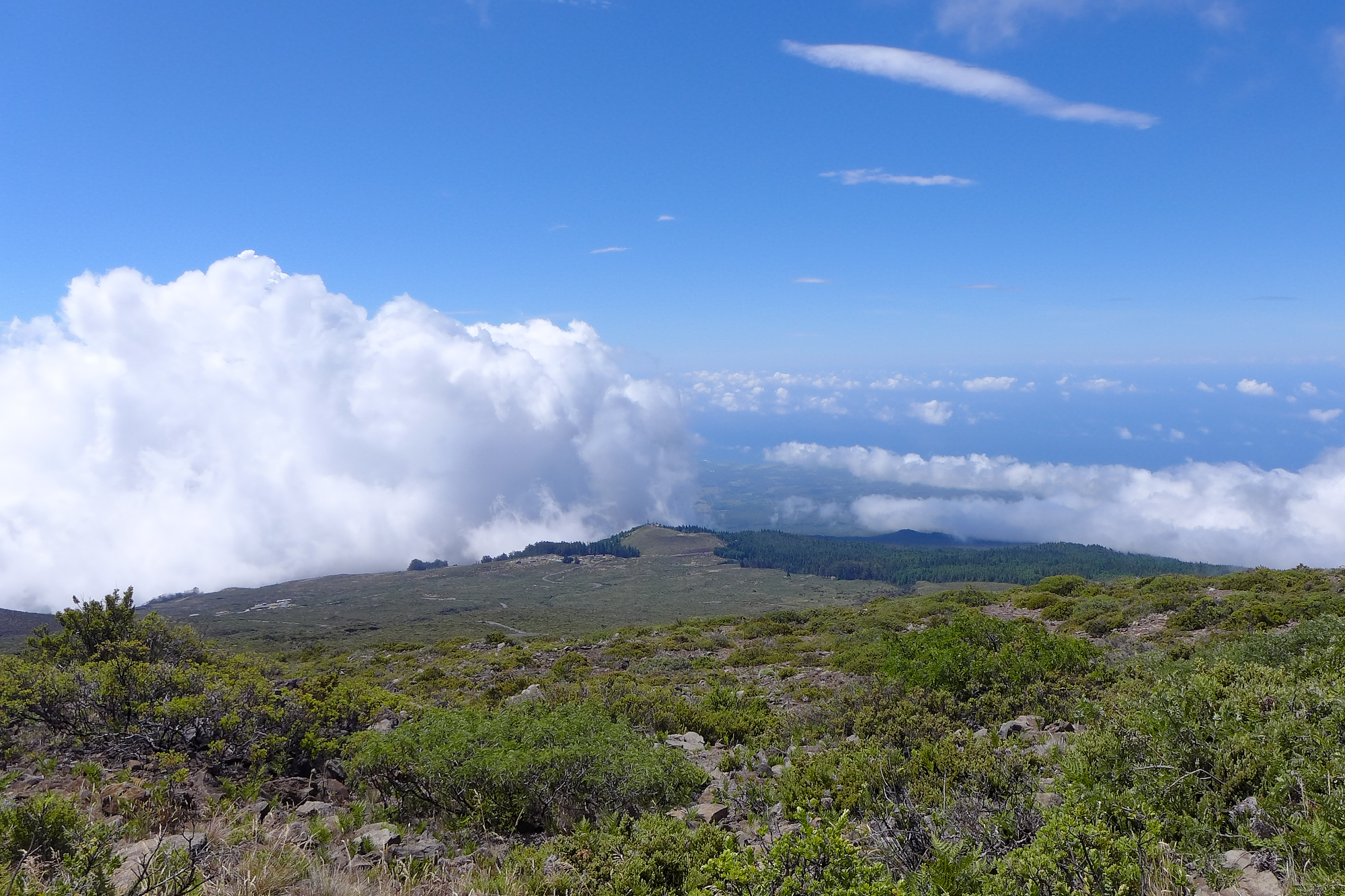
Clouds upwelling on the lower slopes of Maui’s central mountain  [Flickr page]

I am standing on the roof of the House of the Sun, just over 10,000 feet above the sea that is visible in the distance. This is a pinnacle of earth, rising impossibly high above the water and then the beaches and grazing lands, and it is flying eastward away from the sun.

Looking into the vast maw of Haleakala Crater  [Flickr page]

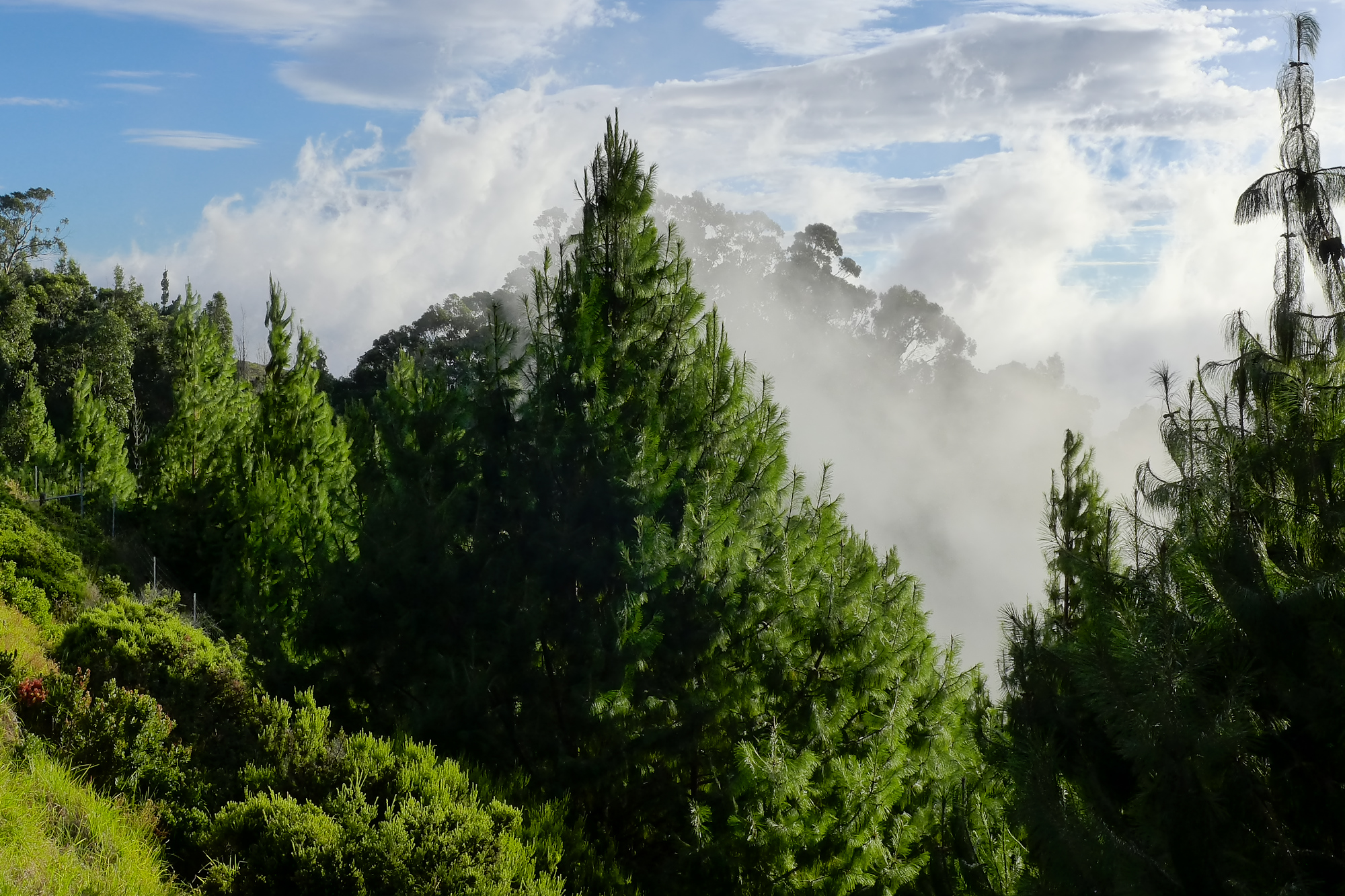
There is a monk’s tonsure of clouds around the mountain, and earlier we stopped to look at their upper reaches mingle with a narrow fringe of pine trees. There was sun, shadows, vivid green, and tendrils of white mist snaking magically in between.

Upcountry Conifers on Maui  [Flickr page]

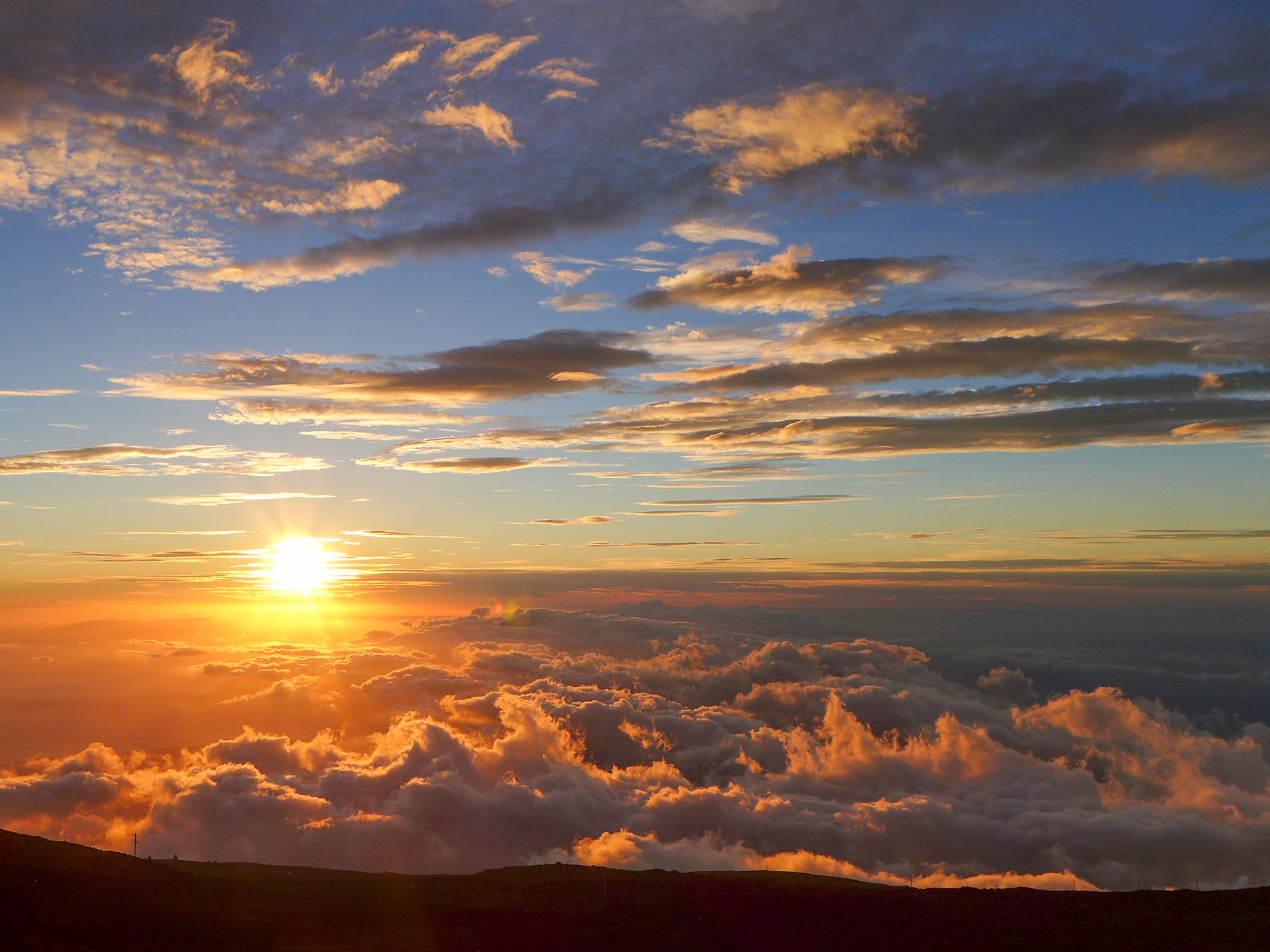
Now the sun is setting into a distant sea and a bed of brilliant clouds. Desperately I want to capture the stunning beauty of everything around me at this instant, this brief and glorious snapshot of my life. But the moment, I know, will soon blow past me as the wind.

Sunset at 10,000 feet  [Flickr page]

It is a thin and cold wind. The sparsity of this air’s gas molecules causes it to register just over 50 degrees Fahrenheit while the beachgoers far below sweat their way through 90 degrees. There is an odd sensation about breathing noticeably faster while just standing in place, which has an exhilarating slight edge of panic to it. The cool sharp air licks around the edges of my clothes, carrying faint, living scents of plants even up here.

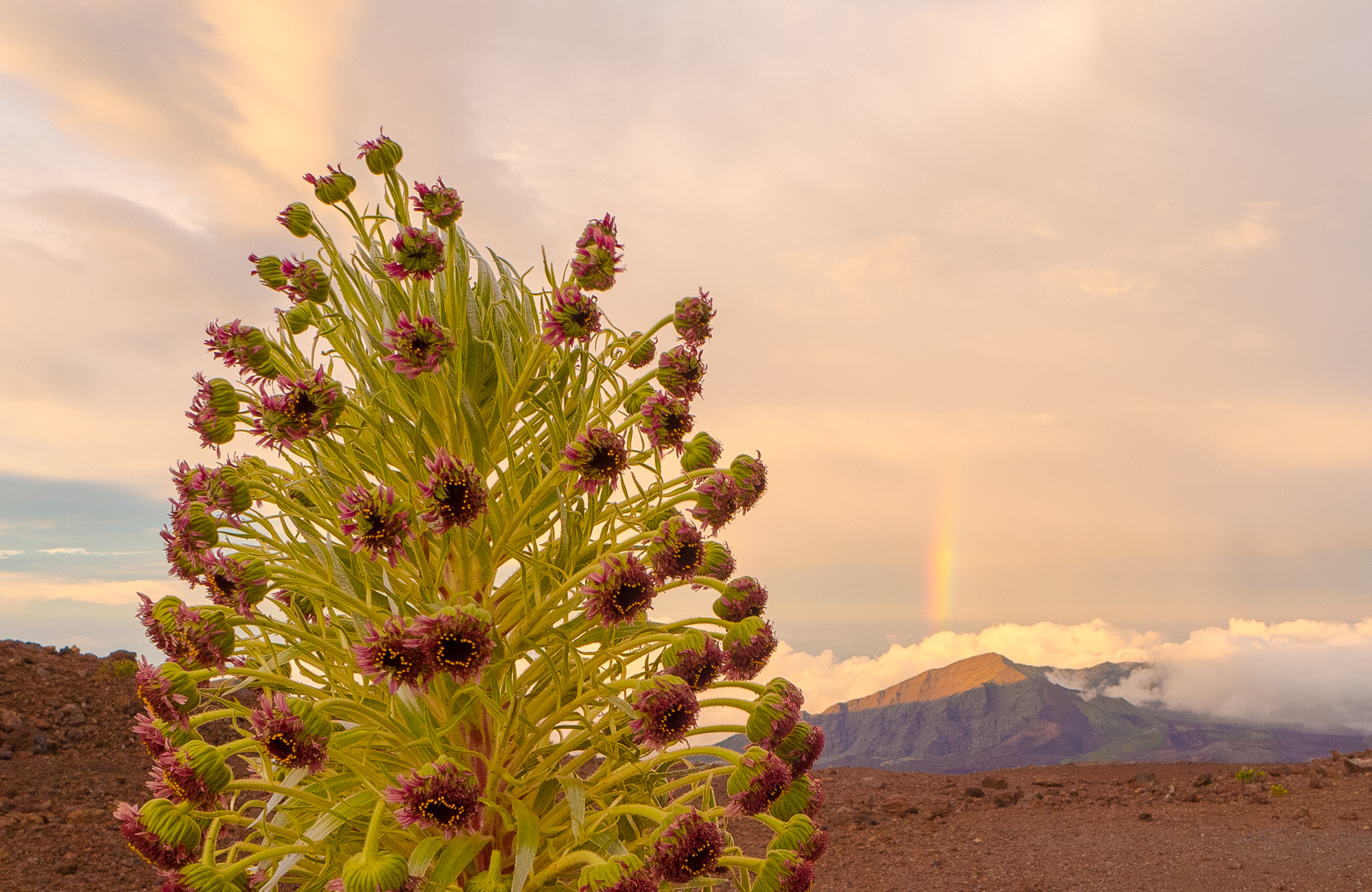
Silversword at sunset  [Flickr page]

Silverswords and jagged dark brown rock fade into the rapid dusk. When I turn around to look away from the sunset, I see a looming triangular shadow that this mountain casts on the clouds to the east. A rainbow plunges into barren lava rock, far below it distant ocean swelling unheard.

Who arrayed this glorious outrage of vision? I do not fault those who see behind it the face of God. I am in as much awe as they are, as deeply uncomprehending of any mundane explanation when standing mute before such majesty.

Sunset Rainbow in Haleakala Crater  [Flickr page]

Now, now, now! It is the moment: Standing atop this little bit of rock near the summit, I am falling backwards from the sun, the wispy clouds with me, turning purple and orange with the fading light from a sun that will not dally for anyone’s meditations. And yet, I have already seen such beauty today. Is there room in my mind for still more?

Quiet, chattering voice, writer of mental drafts! I must hush even the student of mindfulness. Quiet, quiet, all of you! Rush and rustle, wind, go on. I will listen, I will watch. Eyes open wide, drinking in the sight, holding back tears that are not just from the wind.

I gasp with a sudden determination to just be, here, now, as the saying goes. This is the time! I will seize its wispy tendrils, gather them in, store them. Even though I know that, like the manna in the wilderness, it will have lost its freshness by the morning. That day will require its own gatherings, of good or ill.

Too bad! Pause. Gape. Heartbeats, breaths, wide open vision. My camera is now in its pack; I will not share these seconds with its little screen. The best of the colors, the moment when the sun finally slips beneath that distant horizon, are for my eyes alone.

A deep breath, the edge of a sob: This is raw, this air has moved high across an ocean to reach me. Why must we move so relentlessly away from the last fringes of even the most beautiful of days, the same as all the rest?

Listen, feel, lean backward into the wind. Watch the colors redden, darken. Watch, hear, feel. Quiet.

No, it won’t last. It never does, neither moments of ecstasy nor days of beauty, nor a lifetime of all of those strung together along a thread of hopes and dreams and work. Nor even of generations, civilizations, the eons that this mountain required.

It all fades and flies with the wind. But for now, at least, I am—deliciously, joyously, incomparably—alive.

———
Click on individual images to enlarge, or check out my entire set of Maui photos (and others from Hawaii) on Flickr. All are Copyright © 2013 Edwin A. Suominen. You may freely use them for non-commercial purposes, with attribution, under the Creative Commons Attribution-NonCommercial 3.0 Unported License.

Monday, July 1, 2013

Turn Onward, Earth and Life, Turn

We who breathe air now will join the already dead layers of us who breathed air once. We arise from dirt and dwindle to dirt, and the might of the universe is arrayed against us.
—Annie Dillard, For the Time Being
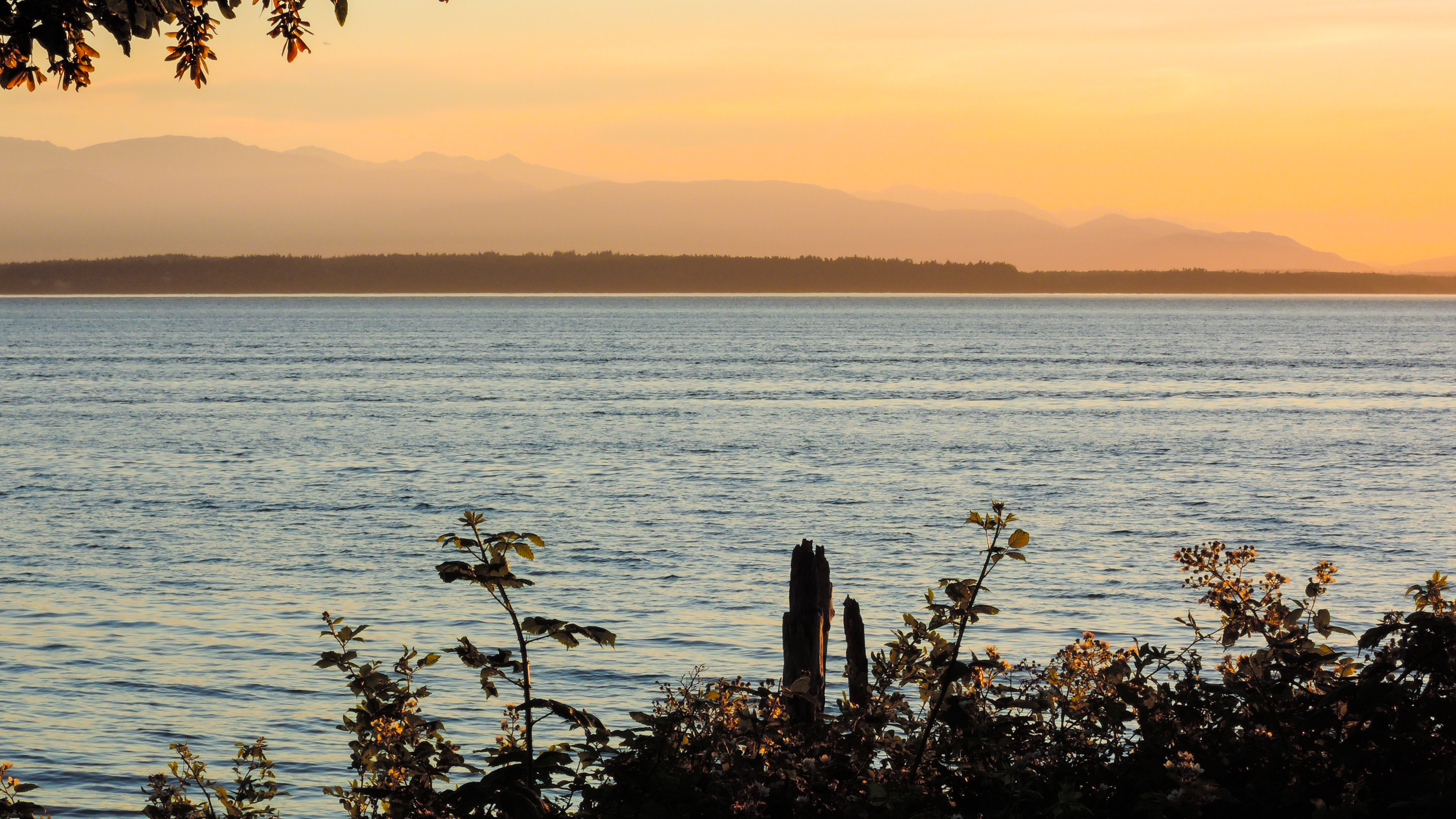
Puget Sound Sunset  [Flickr page]

When I wasn’t looking, the midsummer sky finally darkened. It was light, and then it was not.

I remember when this happened a year ago. The earth turned, heedless of my attention, and the sun’s slanted rays slipped below the northern horizon. Now the earth has circled the sun once more.

Trunk Lines  [Flickr page]

Always turning, always circling, the sun itself making an ancient orbit around the center of a galaxy impossibly huge and old. It all laughs at my noting the passage of a single day, a single year, a single human life.

I must savor it while I can, grasp the waterfall of time as it flows before me. What else should I do? Where else should I be?

Nowhere. Watching my kids play in the water after a long day of making memories is enough. The water cannot be grasped, but its splash can be felt.

Turn onward, earth and life, turn. Meanwhile, it’s time for bed.

———
Click on individual images to enlarge. All are Copyright © 2013-14 Edwin A. Suominen. You may freely use them for non-commercial purposes, with attribution, under the Creative Commons Attribution-NonCommercial 3.0 Unported License.

Monday, March 25, 2013

Brief Flashes of an Unseen Future

This man died on the Jutland Peninsula in what is now Denmark, sometime around 300 B.C., plus or minus 80 years. His head lay preserved in a peat bog for over two thousand years.

Tollund Man – Wikimedia Commons

Our lives are the brief flashes of an unseen future to long-dead ancestors, sparks of flame that we now kindle in our children as our own embers burn ever lower.

—First posted (without links) on Facebook, 3/25/13

Thursday, February 28, 2013

The Low Little Branch

For parents of special needs kids, whose reservoirs of patience and love far exceed my own, I want to share some thoughts about this picture I took yesterday [Feb. 27, 2012] while on a walk.

This little branch does not know how far below the others it is growing. They strain far up and away from the trunk, growing old and woody and eventually supporting other branches. Not this one.

It doesn’t care about any of that. The others can extend the tree, draw up the sap, thicken the trunk. This little branch has a different job to do. It remains low and accessible to those walking by.

Yes, it seems a little out of place, and can get in the way. People sometimes have to brush past it as they pass the trunk. But then the clouds part, its needles shine green in the sunlight, and people see the living beauty of the tree, right there in front of them. It is a burst of life, a soft and delicate aspect of the tree not found in the heavy strong trunk, and only distantly visible in the branches high above.

And so the stunted little branch remains, never trimmed, tolerated and admired, as the tree, like your family, grows and reaches for the sky.

—First posted on Facebook, 2/28/12
———

A mother who read the original post added this thought:

Thank you for the poem and the picture. Someday, when the tree is cut and only the stump remains, its roots still feed the delicate branch. It may grow taller, because it is no longer shaded by the tree itself.

Friday, November 30, 2012

Appealing our Convictions

Our mental limitations prevent us from accepting our mental limitations,” writes Robert Burton, M.D., in his thought-provoking book, On Being Certain: Believing You Are Right Even When You’re Not. He explains the power of “deep down conviction,” that “feeling of knowing” we have about cherished convictions that enables us to shake off seemingly any contradictory facts that threaten them.

Does your stomach clench in a knot when reading or hearing viewpoints contrary to your own? That is a threat response. Your brain has invested a lot of time, if not effort, toward establishing sets of strong beliefs about many important things–religion of course, but also politics, relationships, your own special place in the world–and it wants to defend them.

Of two minds

Intellectually, you may recognize that the objective truth is more important than your established viewpoints, but there is far more lurking within our brains than what we have conscious awareness of. Burton: “Because our minds have evolved to operate largely outside of consciousness, it may not be possible to gain direct access to unconscious processing.”

Consciously or otherwise, we just don’t want to lose the sense of purpose and meaning we get from our deepest convictions. We “are nearly always aware of the sickening feeling when we don’t possess them,” he says. “This isn’t an intellectual misapprehension; it is a gut sense of disorientation and a loss of personal direction. Rarely are brute mental effort and self-help pep talks able to rekindle the missing feeling.”

I have experienced this not just with religion but also in other aspects of life. One example is my urgent advocacy to family and friends several years ago of “peak oil” apocalypticism. On sites like The Oil Drum and Energy Bulletin (recently renamed), I read for hours about limited petroleum supplies, about the prospect of declining yields from the big oil fields of Mexico and Saudi Arabia. The facts seemed to fully support the sense of panic that was fostered by eloquent authors like James Howard Kunstler (The Long Emergency), and I wondered why people weren’t talking about it, doing something.

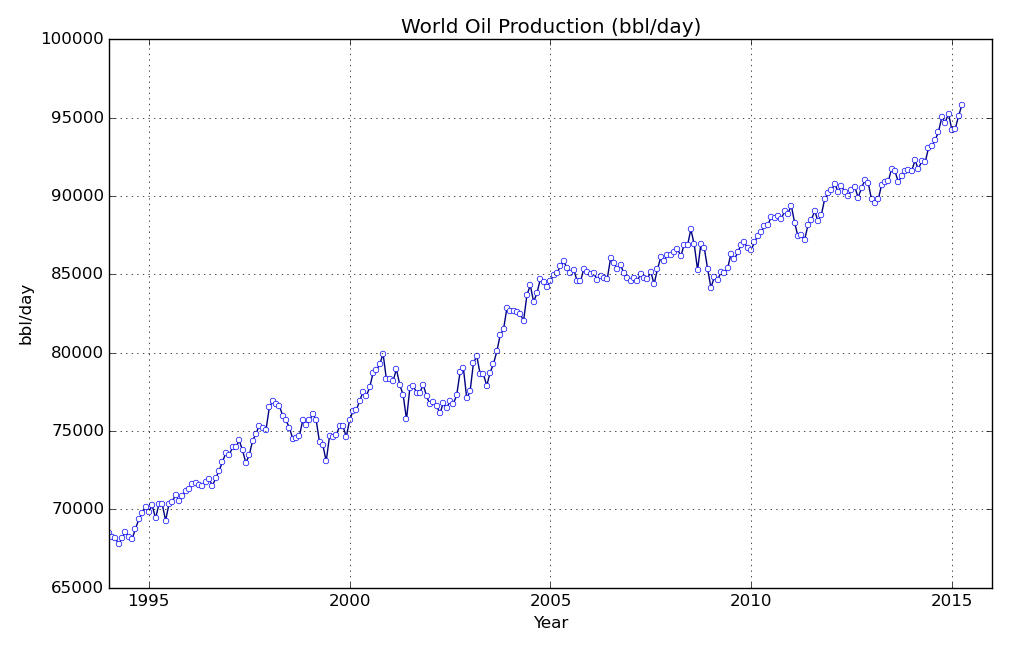
No peak in sight, at least not as of April 2015

Well, many of those facts still seem compelling, but we are still here, driving our cars, buying container loads of cheap plastic trinkets from China, with no dystopian nightmare in sight. New extraction technologies have boosted the yields of old fields and there are drilling rigs in places that were once thought unpromising. The number of barrels pumped per day is at an all-time high. The environmental travesties of oil sand mining and the BP oil spill have barely put a bubble in the relentless flow of crude.

I look at all this and wonder, was I so wrong? Was I led along a path of alarmism by people who I thought knew what they were talking about? Or should I still cling to the belief, slightly adjusting aspects of it to maintain the general idea? The temptation is also there to restrict my reading to those who continue beating the drum for my erstwhile beliefs (and there is no shortage of such writers), but I have learned all too well that a painful truth is ultimately far more useful than a comforting falsehood.

My answer for now is not to have a clear answer, and that is a difficult state for the human brain to maintain. It craves decisiveness, the neat packaging of convictions in a box, a satisfying end to the difficult work of questioning. The brain’s structure and the reinforcement it experiences over a lifetime makes us highly value the “feeling of knowing,” Burton says. Any search for objective truth must override our innate bias, and often causes us pain in the process–cognitive dissonance, hurt to our self image, sometimes even social rejection. Small wonder that we so often choose to shrug our shoulders and plod onward down the well-trodden path.

———
Adapted from a Facebook posting on 11/30/​12.
Update, August 30, 2015: The graph was generated from EIA Total Oil Supply data (link) from January 1994 to April 2015. As the graph shows, world oil production has gone even higher in the nearly three years since I first posted this.

Sunday, November 4, 2012

San Juan Summer Afternoon

Recalling an August afternoon in Washington’s San Juan Islands

She is shopping in Friday Harbor, and I have escaped the tedium of feigning interest in trinkets, returning on my own to the pebbly beach on the island’s south end. The little three-wheeled “Scoot Coupe” gives a bracing ride at the speed limit, a bit more than twice the top speed that was so sternly warned about in the rental instructions. Slow down a bit into the turns, and then let the pavement fly on by, inches away, at fifty tree-lined miles per glorious hour of summertime afternoon.

The green canopy gives way to an open vault of flawless blue, the evergreen scent fading into the fresh air. Up and over the ridge we go, this ridiculous machine and I, and then descend to the parking lot by the beach. I check the time; just a few minutes before it’s time to head back, turn this thing in, and meet her at the ferry. Better make them count.

I walk over the driftwood logs and rocks again, sniffing at the breeze and taking it all in. As everywhere, there is life poking through, a variety of humble plants elbowing their way between pebbles, leaves waxy and small grabbing their share of the sunshine. We are all just doing the same thing in our own way, sprouting briefly in the sun.

Now the water’s edge stretches out before me, a vaguely defined interface between the rocky shore and glassy swells. They break on the pebbles in miniature, vigorous from the breeze but stunted from the short fetch between all these islands. Tiny oceans spawning baby surf, leaving the pebbles clean, round, and visible beneath water without much foam. It all looks and smells so clean, even the green hills of shoreline faded into the miles on both sides, its houses and No Trespassing signs rendered invisible by the benign kindness of distance.

It is, for this moment, a world primeval and pure. I kneel, putting my hand into the coldness and movement of the water, picking up a few of the rounded stones. Ebb and flow, wind and wave. Summer sun falling, falling on warm skin. And all of it suffused with the contented glow of fatigue, the sense of a day well spent.

The moment is nearly over. I drink in the beauty through every pore, my eyes roaming over every detail, my ears recording the splash and scratch of water over rock. A deep breath: This is now, and in seconds will be then. But it is enough.

Tuesday, September 11, 2012

Live, and Be Alive

Do you have two legs at your command? Walk through forests and neighborhoods, leap and run for joy. Climb stairs with loads of laundry as some climb mountains with backpacks and dreams.

Arms and fingers that bend and move to your wishes? Feel what they touch, note the textures of the world around you. Caress and sense, support, sustain. Is this intricate mechanism of muscle and tendons, bone and joints best purposed for a clenched fist or an outstretched hand of friendship?

Do your eyes convey the light and vision of what’s around you? Look, then, and see. Find the beauty in every scene and face. Know that billions of neurons are locked in complex arrays of interconnection to interpret what your eyes have chosen to look upon. Make it worthy.

Do you have an ear—perhaps two—to hear what life has to say? Listen to the voices soft and loud, to the whispers of the wind, to the music in all its forms. A quiet place reveals rustles and creaks of life’s underside; all need not be loud and overbearing.

Think of the delicate hairs inside your ear, swaying in time to their own sections of the received symphony of sound–some slowly to discern low hums and groaning strings, others quivering fast to bring you alarms and put sharp edges on the music. Your brain performs wonders of spectral analysis to perceive the ambiance of nature and expressions of art and love. Yet it will strain with equal diligence to bring rants of hate and ignorance into your mind, should you choose to hear them instead. So choose wisely.

Catching Rays  [Flickr page]

Countless wonders are being enacted within to bring each day of life to you. The food you’ve just eaten has finished giving your tastes a savory reward for bothering to have a meal. Now it’s grinding into mash within your stomach, in readiness for its true molecular payload—to enrich your blood. Hidden red rivers carry tiny cargo-loads of oxygen and nourishment to the farthest reaches of your toes and brain, returning darkened and ready for the next run, in an endless cycle.

All the while, nerves blaze with impulses electrical, then chemical, then electrical again. The consciousness that you call yourself perceives only the tiniest fraction, the gurgles and pangs of hunger, the racing pulse of a new love or race run well. But it is there, all of it, just beneath the surface, for you.

You do not have a life; you are a life. The blueprint of your every cell carries the wisdom of eons. You are the final cut, the compilation of research done by untold painful experiments in life and death of long-departed faceless ancestors and many more others not so lucky as to be your ancestors.

You are a life finally able to contemplate itself. In that you are privileged beyond all other creatures, with a wisdom beyond measure. Live, then, and be alive.

—First posted on extoots and Facebook, 9/11/12

Sunday, August 12, 2012

Reflections

Peaceful Lake  [Flickr page]

Today I have seen water lilies in still waters, and lichens pebbling the surface of dry rocks nearby. I watched the flurry of infant butterflies, and the running footsteps of my children. I sat in the shade of trees a century old and smelled their sap mixed with the snuffy spice of a fresh-growing meadow. A centipede crossed a patch of dirt, and a little boy warned me not to touch it. Then he ran to chase grazing cows, heedless of their size.

Fir Branch with a View  [Flickr page]

Warmth enfolded me from all sides. Retreating from the grandeur of the evergreens, I lay on the meadow-grass, yet found nature scaled down to meet me there. Endless forms most beautiful, as Darwin said, even in the varied tufts of foreground green. All struggling to grow and bud and then die in a single summer’s sun, while patient giants above us worked quietly for another season’s needles, sap, and cones.

Down in the Meadow  [Flickr page]

Reflecting, now, I feel the earth cool and the scents fade into the recesses of the night. The Milky Way traces its arc above the silhouettes of trees that stand expectant for the life-driving light of tomorrow’s sun. I watch meteor trails, and wonder at the beauty of this day, of this one life among so much, so many. All blazing, brief sensations that then pass into memory.

Ponderosa Pine Trunks and Rock  [Flickr page]

In the ghostly glow of thousand-year old starlight photons, I finally walk home. Now, without my witness, the earth will continue hurtling through a comet’s wake, spinning, until it turns my land again towards the sun. The universe will spark and strain and glow without me, until I awaken, and dance with it once again.

—First posted on Facebook, 8/12/12
———
Click on individual images to enlarge, or check out the full album of photos on Flickr. All are Copyright © 2013-14 Edwin A. Suominen. You may freely use them for non-commercial purposes, with attribution, under the Creative Commons Attribution-NonCommercial 3.0 Unported License.