Showing posts with label Deconversion. Show all posts

Wednesday, April 27, 2016

Metamorphosis

It is not that we have a short time to live, but that we waste a lot of it. Life is long enough, and a sufficiently generous amount has been given to us for the highest achievements if it were all well invested.
—Seneca, On the Shortness of Life, trans. C.D.N. Costa
Tracks toward the light [Flickr page]

My very public departure from the Laestadian Lutheran Church–a conservative, exclusivist sect of Protestant Christianity–has put me in touch with many others who struggle inside this group and who have left it. One of them recently sent me these thoughts about her metamorphosis from fundamentalism to freedom. She gave me permission to convey them anonymously through this blog to those who had–with the very best of intentions–cocooned and caged her.

———

GENERATIONS have told you how to mold me. What to think. How to feel.

Bring her to the sacred place.

She will follow your lead.

Separate her from the world.

Tuck her into your safe cocoon.

Clip her wings and put her in a cage.

Feed her with approval of her obedience

and shame her with guilt over her transgressions.

I let this happen. I let your fear tactics rule my thoughts and actions until I could no longer hear my heart song.

I tried to find my own way, but it threatened to separate me from all I had ever known. I was scared. You made me fear the world outside of my cocoon. So I took your medication and ate your damn poison until I was too sick to fight back.

You almost broke me. Almost.

My consciousness is finally agitated enough by the imprisonment of my spirit.

I see it now. . .

The big picture!
I’m breaking out of my cocoon!

Slowly but violently shedding the old. It’s uncomfortable at times in this transformative state. Loss and grief are an essential part of this transformation.

Destroying the old brings separation from those you love. I feel their love is conditional. But I am remembering what I forgot, before my world was darkened with fear and shame. Moments of unhindered bliss and awakening joy are replacing the old. Transformed and reset!

My only regret is that I didn’t see this sooner. I made a life for myself, only to realize it’s never really what I wanted. My soul didn’t want this hectic production of being so busy you can’t hear yourself think.

I’ve literally gone out of my mind, to truly use my mind for myself! I’ve had to scramble myself in order to put me back together in a new form. The next level of my life requires a new me!

I’m ready.

———

Yes, indeed, I think she is.

Eventually, so will you others whose anguished stories I’ve heard, who know that you no longer believe what you were told as children–what some of you have in turn told your children. Someday, the painful metamorphosis will finally occur for you. But don’t let too much of your life continue to pass you by before it finally happens.

Day after day, in newfound bursts of frightening clarity, your mind shouts the truth at you, and the only response your preachers have is to tell you not to listen to it. “One of Christianity’s most toxic teachings is that we must not trust our own minds and emotions,” Dr. Valerie Tarico, a psychologist and former Christian, told me after reading this piece, which she thought was powerful, as do I.

“In particular,” she added, Christianity asserts that “we dare not trust our intuitive sense of the basic goodness in people around us and ourselves.” But when you finally dare to make those first tentative friendships with the scary people of “the world,” when you see the continued love and joy in those former brethren whose longtime friendships you refuse to end, you see that basic goodness. You can’t help but see it, and delight in it, and witness yet another case of your dreary preachers being wrong.

New life [Flickr page]

Another amazing thing happens when you open up that cocoon and expose yourself to the experiences of all those “unbelievers” outside the church walls. You see not just how varied and fascinating they all are, but how similar many of their experiences are to yours. You realize that the fear and pain of leaving their “dead faith” churches is every bit as real to them as leaving yours has been to you. And then another chink appears in the wall that separates you from all of them, that great undifferentiated mass of outsiders who now have faces and voices and feelings, and the hole is almost big enough for you to finally crawl through.

“Reading this was very much like looking at my own reflection in a mirror,” said Brenda Nicholson, a survivor of the Fundamentalist Latter Day Saints (FLDS) cult. It took her a few minutes to respond to my question because she was still in class (“Foundations of Business and Elements of Effective Communications”), a quite different setting than she could have imagined for herself while back in Colorado City, wearing the required swept-up hairdo and plain pastel dress and trying to have all the required babies, despite miscarriage after miscarriage. “I found myself unconsciously nodding in agreement to every line. Yes, it is the same story from different backgrounds! The aspects of control through ‘breaking’ a person is so real–and far too often so effective.”

She also wishes that she’d seen the truth sooner, “that I hadn’t sacrificed so many years of my life to a lie.” Our stories, she said, “have a different background, but our journey is the same.”

Like Dr. Tarico, Brenda used the word “powerful” to describe this piece. “It touched deep inside at the hurt I’ve experienced.” She asked me to give my anonymous correspondent her “most sincere congratulations and admiration” and best wishes on this new life. Mine, too, along with my hope that all those others will soon find their own freedom as well.

Tuesday, November 10, 2015

Frozen and the Chosen

It hit me as I was walking home–I could think anything! I could have any opinion on any subject, and it would be my own! No longer would I have to check against Scripture and other doctrine to make sure that my opinions were in line with God; I could decide my opinions with my own reason! . . . That moment was one of the most liberating, beautiful, and happy experiences of my life.
—Michael Amini in Generation Atheist, Dan Riley, editor (2012)
[T]he whores of the world wash their hands in the blood of creatures, but the daughters of Jerusalem do not wash themselves in the blood of the innocent Lamb, but with soap and with lye, and nevertheless their filthiness is visible.
—Lars Levi Laestadius, randomly selected passage from a random sermon (Palm Sunday 1854).
Kristoff Levi Laestadius, reindeer fan

Last week, I went with my wife and some of our kids to see the Disney on Ice figure-skating adaption of the musical movie Frozen. It was great fun to see Anna and Elsa zipping around the rink with Olaf, Kristoff, and Sven, who materialized as a rather large reindeer comprised of two skaters inside a furry brown costume. When Elsa went out on the ice under blue light for her big solo act, two little girls sitting behind us sang along at the top of their lungs: “Let it go, let it GO!”

A husband-and-wife pair of composers wrote Let it Go as “Elsa’s Badass Song,” specifically intended to be sung by Idina Menzel, “one of the most glorious voices of Broadway.” They succeeded brilliantly. The song is the highlight of the film and has sold over 10 million copies on its own.1

Lamplit Tree [Flickr page]

I first heard it while sitting in a theater with my family nearly two years ago. This was still a fairly novel experience after a lifetime of being told–and then allowing it to be told to my children–that seeing movies is a sin. Laestadianism and its oddities were still very much on my mind as I watched Anna make her cute wisecracks and accompany a socially-inept ice merchant and his furry best friend on a quest that included, among other delightful implausibilities, a visit with some witty and wise rock-rodents who dispensed relationship advice.

“So he’s a bit of a fixer-upper,” they sang about Kristoff while working on setting him up with Anna. Aren’t we all, I thought, musing about all the mental remodeling my wife and I were doing on ourselves and our older children, after the nonsense we’d all heard for years and years sitting alongside each other in a very different setting.

When Elsa finally broke out of her self-imposed shell, flung out her arms, tossed back her head, and proclaimed that she wasn’t going to hold back anymore, I felt like applauding.

Conceal, don’t feel, don’t let them know

Well, now they know!

Yes! You go, girl! I silently cheered, feeling a bit embarrassed about how emotional I was getting watching this movie. But there was a good reason for it. For a year, I’d had to “conceal, don’t feel, don’t let them know” what I’d learned from some diligent and sincere research about my childhood faith. Sharing that information with a few friends in the church got me hauled into a meeting with my local congregation’s preachers and board of trustees.

After a two-hour inquisition, having been told I was to retrieve the dozen or so copies of the book I’d given away, “I went home and told my wife, ‘You are about to witness the intellectual disintegration of your husband.’ Then the years of doubt, fear, and frustration–culminating in being muzzled into silence by a church far more interested in rebuke than reality–boiled over. I collapsed into my wife’s arms in tears, and went to bed for a fitful night.”2

Let it go, let it go

Can’t hold it back anymore

Let it go, let it go

Turn away and slam the door!

After some months, I just couldn’t hold it back anymore, either. My half-hearted promises to stay away from dangerous studies didn’t stick, of course, and I “learned and questioned more about church history, the Bible, and aspects of science that conflicted with important points of doctrine.” I also “lost the energy to continue swimming against the current of the church’s clannish, insular social scene,” which treated my family and me like we all had some dangerous and contagious disease once my doubts became known.

I was ready to “shake off the muzzle” and put into print what had “been swirling around my head and flagged in the pages of my library of books.” The result, An Examination of the Pearl, wound up being more than twice the size of the print-shop copy that had gotten the elders so bent out of shape.

Given the outraged reaction I encountered to a very limited, private distribution of the book, which consisted mostly of church statements and relatively restrained footnotes about those statements, I have no illusions that this published edition will be well received. As Ken Daniels noted about his own book, “whether I take a gentle or harsh approach, I am sure to elicit criticism. The very act of confronting deeply cherished religious convictions is unforgivable to some, regardless of my tactics.”3

Frost on Ponderosa [Flickr page]

I’m not the only one who has been moved by Let it Go as an anthem of liberation from fundamentalism. Blogger “Libby Anne” wrote about that in March 2014, after being shocked at how much her conservative evangelical mother obsessed over the movie. “How could they see Frozen and not realize that it was about self acceptance and freedom from others’ expectations–and moral standards?” she wondered.

When she first watched Let it Go on YouTube,

before seeing the movie in theaters, I completely choked up at the line “no right no wrong, no rules for me.” Tears started streaming down my cheeks. It was beautiful. I grew up in a conservative evangelicalism that I eventually found highly restrictive. As I began to extricate myself, my family and friends put me through a special kind of hell. But even through all of the pain and the tears, I entered into freedom when I left behind their rules, their expectations, their control. This song spoke to so many emotions. I’ve watched it again and again many times since that first time, and each time I’ve achieved some form of catharsis.

It’s now her personal theme song, she says.4 Another blogger, Maranda Russell, says she fell in love with the song as soon as she heard it:

At times in my life I felt like I had to hide my true self to get approval and love from friends, family and the church. I had to pretend to be a “good girl” who never questions anything and believes blindly what I am told. I still feel like many wish I would just shut up and believe what they tell me is true, but I just can’t do that anymore.5

I don’t care

What they’re going to say

Let the storm rage on,

The cold never bothered me anyway!

Maranda admits that “maybe I still care a little (after all I am still human), but I won’t let it rule me.” I did, too, about what I knew my “brothers and sisters in faith” were going to say, but I went ahead anyway. A storm would rage, friendships would be lost–most of those that I’d forged since childhood, it turned out, in a church that discouraged social contact with the outside world.

And the stakes were infinitely higher than what one friend called “social suicide”: Publishing the book against the wishes of the Laestadian Lutheran Church would inevitably be viewed as an act of apostasy, no matter how balanced I tried to be in presenting my findings. Eternal damnation loomed in my future.

To those who tell me my writing was courageous, I reply that it took less courage then what many of them have done–simply walking away. I needed to have my brethren push me out instead, simply for making the facts known, asking difficult questions about them, and refusing to accept the tired old insistence that the most important matter of one’s life “cannot be understood by reason.”

My introduction to the book quoted Clement of Alexandria from 18 centuries earlier: “If our faith is such that it is destroyed by force of argument, then let it be destroyed; for it will have been proved that we do not possess the truth.” Recalling the “faith” of a board member who said he won’t read anything critical about what he supposedly believes,” I asked if that was

really faith in anything other than the people around him who are repeating the old slogans? They, too, are ignoring the facts about their “faith,” making the whole thing a self-sustaining doctrinal bubble that quivers unsteadily in the air, vulnerable to being poked by the slightest intrusion of fact.6

Looking Back [Flickr page]

Now, nearly four years later, these words from Let it Go are exactly my experience:

It’s funny how some distance

Makes everything seem small

And the fears that once controlled me

Can’t get to me at all!

There is simply no fear anymore. And it’s not for any lack of knowledge about what this weird little sect thinks my eternal fate will be. Hell, I still listen to sermons sometimes to get to sleep, because the preachers’ somber, familiar, repetitive intonations send me drifting off faster than anything else. Sometimes I get several nights’ worth of use out of a single sermon, because I start the iPod at different points in the recording and am out within ten minutes.

One correspondent told me, “My old Laestadian world view is gone. If I talk to certain people or listen to sermons I can feel the world view there and experience it sometimes. I don’t think it’s ever coming back, though, and I am the better for it.”

Yes, my friend, you are. And, as Elsa sings out, fully embracing her unique identity and abilities, “one thought crystallizes like an icy blast”: You’re “never going back. The past is in the past!”

———
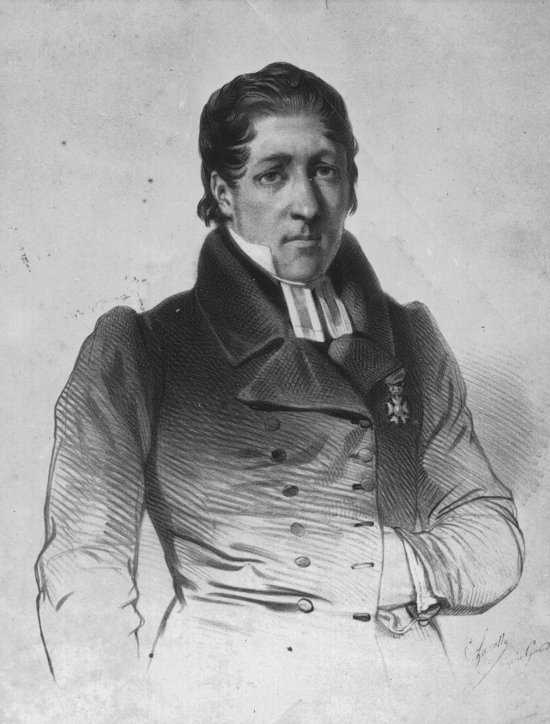
The picture of Lars Levi wearing Kristoff’s reindeer-hide coat was fair-use adapted from a Frozen wallpaper image and a classic portrait of Lars Levi Laestadius. Take a look online at Laestadius’s sermons and you’ll quickly see what I mean by the “People suck” paraphrase. He was not a happy man. The fictional Kristoff of Frozen seems to have had a more meaningful “conversion” experience with Anna than old Lars ever did.
The other photos are Copyright © 2013-15 Edwin A. Suominen. Click to enlarge, or check out my Flickr photostream. You may freely use them for non-commercial purposes, with attribution, under the Creative Commons Attribution-NonCommercial 3.0 Unported License.
See the online Dictionary of Christianese for an interesting discussion of the expression “frozen chosen.”

Notes


  1. Wikipedia, Let it Go

  2. An Examination of the Pearl, §1.2 (“Introduction–Disputation– The June 2010 Edition”). 

  3. §1.2 (“Introduction–Disputation–Alienation”), quoting Ken Daniels, Why I Believed: Reflections of a Former Missionary (self- published, 2010). 

  4. “Let It Gay? Subversive Messages from Disney’s Frozen,” Love, Joy, Feminism blog, March 4, 2014 

  5. “What the Disney ‘Frozen’ song ‘Let It Go’ means to me,” Maranda Russell blog (April 25, 2014). 

  6. §1.2, quoting from Clement’s Stromata, 6.10.80. William Wilson’s translation, freely available online, goes as follows: “But if the faith (for I cannot call it knowledge) which they possess be such as to be dissolved by plausible speech, let it be by all means dissolved, and let them confess that they will not retain the truth. For truth is immoveable; but false opinion dissolves.” 


Tuesday, September 22, 2015

The Forgiver

For we, like children frightened of the dark

Are sometimes frightened in the light–of things

No more to be feared than fears that in the dark

Distress a child, thinking they may come true.

—Lucretius, On the Nature of Things, c. 50 BC, tr. Ronald Melville.
Forbidden fruit: The new Receiver tries to do some giving.
Review: The Giver by Lois Lowry. Houghton Mifflin (1993). Movie adaptation produced by The Weinstein Co. (2014).

The other week, I watched The Giver on DVD with my wife and a few of my kids. It’s a 2014 film adaptation of Lois Lowry’s 1993 book about a future collectivist society that does away with all but a bland, utilitarian remnant of human emotion and ambition. “The community” has even eliminated history from the minds of its people, with one significant exception.

A single chosen individual, the “Receiver of Memory,” is designated to take care of recalling past civilizations and events. This exalted and burdened person is set apart with an exclusive collection of books and memories, which he keeps to himself except to cryptically advise the Elders in their decision-making.

Eventually, the Receiver takes on an apprentice, to whom he passes all that knowledge and memory. The selection of a new Receiver “is very, very rare,” as the community’s Chief Elder tells her community at the Ceremony of Twelve,1 where young people are being assigned their occupations with much fanfare, and without any say in the matter. “Our community has only one Receiver. It is he who trains his successor.”2

The story’s hero, Jonas, is named as that successor. “I thought you were The Receiver,” Jonas tells him during their first teaching session, “but you say that now I’m The Receiver. So I don’t know what to call you.” Call me The Giver, the old man says.3 And from him Jonas goes on to learn some amazing and troubling things. His life will never be the same again.

———

Around the end of 2010, one of my daughters had been assigned the book in school, and I wound up reading it myself. At the time, I was in the early stages of researching the doctrine and history of my old church. The things I was starting to learn would turn my own life upside-down and result in my first book, An Examination of the Pearl, about a year later.4

I was stunned by the parallels between Lowry’s sheltered, intellectually stunted community and the “Kingdom of God” in which I’d been struggling. After a lifetime as one of “God’s children,” I’d finally started to look at my odd little church in a clear-headed way. What I was seeing disturbed me a great deal, and so I put together a listing of church writings with footnotes stating some of my concerns. I had it printed and bound into a dozen softcover copies that I shared with a few friends in the church. Oops.

In September 2010, I was hauled before the church board of trustees and preachers for a stressful, coercive, and emotional meeting about my little copy-shop book. “Are you really believing?” I was asked. Beyond some concern about how I could dispute what “God’s Word” teaches regarding Adam and Eve and Noah’s Ark, there wasn’t much substantive discussion of what the book actually had to say. It was mostly about me for having said it.

Repent or Else

They told me the book was an expression of my doubts, which would have been best kept to myself or private conversations. It could be dangerous if it fell into the wrong hands, they said. It would leave the impression among outsiders that there are dif­ferences of opinion in “God’s Kingdom.” And it is certainly not something that believers should be reading. After over two hours of this, the meeting concluded with the understanding that I was to retrieve copies of the book.5

Just a few months after that experience, here I was reading about a closed community of myriad rules and “appropriate remorse” and public apologies, where uncomfortable history was extinguished from memory, where intractable rule-breakers were released to “Elsewhere.” And I was seeing a frightful near-future version of myself in Jonas, not some lofty hero but simply a wide-eyed seeker of truth–unable to tolerate cen­sorship and propelled by an irresist­ible call to look at reality, at long last, come what may.

Comparing Lowry’s all-controlling community with Christian funda­mentalism doesn’t seem to be a unive­rsal or even a com­mon interpretation of her book,6 but she would be happy to let me keep it as my own. “A book, to me, is almost sacrosanct: such an individual and private thing. The reader brings his or her own history and beliefs and concerns, and reads in solitude, creating each scene from his own imagination as he does.” And I was certainly interested to see her recall a “man who had, as an adult, fled the cult in which he had been raised” telling her “that his psychiatrist had recommended The Giver to him.”7

———

The first thing that jumped out at me was the rigid structure of rules that govern life both in Lowry’s dystopia and for the “believers” in the Laestadian Lutheran Church. Community members are careful to maintain “precision of language,”8 while believers do not swear, tell dirty jokes, or speak light-heartedly about faith matters. Each family unit of the community receives two children–no more–while believing parents are to accept as many children as they are “given”–no less. Community girls are instructed to keep their hair ribbons “neatly tied at all times”9 while believing girls are instructed not to wear earrings, make-up, or spaghetti straps.

Even a minor rule like the one against bragging (there is “never any comfortable way to mention or discuss one’s successes without breaking the rule against bragging, even if one didn’t mean to”) is best followed by steering clear of occasions where breaking it would be too easy.10 Thus believers have restrained themselves from playing violins in orchestras where they might get “puffed up” in their talents, even if they would just be one of many players helping to produce one of the few types of music to which they can listen in good conscience. Thus many an athletic Laestadian boy has walked home while his unbelieving sort-of friends go off to football practice. God’s glory must not be given to another, and the world cannot become too close.

And then there are those Stirrings, which begin for young Jonas with a dream about a girl his age. He describes it to his parents during a “sharing-of-feelings” rap session they are expected to do over dinner each day. (“Be free,” the board members would tell us during the many congregational meetings of my youth.) In the dream, he and the girl were in front of a tub in the House of the Old, where the elderly get cared for in their final days.11

“I wanted her to take off her clothes and get into the tub,” he explained quickly. “I wanted to bathe her. I had the sponge in my hand. But she wouldn’t. She kept laughing and saying no.”

His father asks Jonas about the strongest feeling he experienced during the dream.

“The wanting,” he said. “I knew that she wouldn’t. And I think I knew that she shouldn’t. But I wanted it so terribly. I could feel the wanting all through me.”12

His parents look at each other and Jonas is then told about the Stirrings.

He had heard the word before. He remembered that there was a reference to the Stirrings in the Book of Rules, though he didn’t remember what it said. And now and then the Speaker mentioned it. ATTENTION. A REMINDER THAT STIRRINGS MUST BE REPORTED IN ORDER FOR TREATMENT TO TAKE PLACE.13

In the dystopia of The Giver, the treatment is medication, taken every day to deaden a person’s natural sex drive until it finally disappears in old age. In Laestadianism, the treatment is the forgiveness of sins–dispensed in a sermon every Sunday and, if parents are following recommended procedure, in the words of absolution being preached to their children at bedtime every night.

Believe all sins forgiven in Jesus’ name and precious blood, the young innocents are told, night after night by parents or siblings. That proclamation offers redemptive relief for all sins, and does the job in most cases, certainly from sinful thoughts of providing erotic bathing assistance to the cute girl or boy next door. If one’s Stirrings have moved beyond mere fantasy to masturbation or–heaven forbid–to a little kissing and heavy petting behind the garage where the yard light don’t shine, guilt pangs may persist despite the generic assurance of forgiveness. The preachers recommend confession in such cases.

The assembled community: Looks a lot like church to me.

Confession was a big deal in Laestadianism during my childhood. Most sins beyond mere impure thoughts, doubts, etc. were considered to remain on the conscience until one had spoken of them “by name.” It was not an absolute requirement to confess, but was widely expected, at least for those infractions falling into a non-biblical category of “name sins,” a category that was often referred to but never very specifically defined.14 A 1978 article from the church newsletter pretty well encapsulates how things were back then:

It is never an easy matter to repent of sins for the flesh fights against the Spirit. But sin has a name, and those named sins will not go away without our speaking of them to a dear brother or sister. We are assured that we can freely go to a dear one and open our heart. But those sins that have affected the congregation of God are to be re­pented of before the con­gregation; otherwise we will not receive freedom.15

That last part about repentance before the congregation offers a hint of the public confessions that people often made after the Sunday morning service when I was a kid. In my congregation and at least some others in North America, members would head up to the front of the church after the ser­mon and ask the en­tire con­gregation for forgiveness of various sins.

During the congregational “caretaking” meetings that were a regular Saturday night event, where some issue or person(s) of concern would be discussed with much emotion, such repentances would go on and on.16 I’ll always remember one of them in particular, from a young father who dutifully walked up to the microphone and asked forgiveness of the congregation for “reading filthy literature.” Poor guy. It was probably just a paperback novel with a vague sex scene or two.

With all those memories in my head, you can see why I saw some Laestadian parallels in Jonas’s recollection of his friend Asher showing up late to class:

“When the class took their seats at the conclusion of the patriotic hymn, Asher remained standing to make his public apology as was required.”

“I apologize for inconveniencing my learning community.” Asher ran through the standard apology phrase rapidly, still catching his breath. The Instructor and class wait­ed patient­ly for his ex­planation. The students had all been grinning, because they had listened to Asher’s explanations so many times before.

“I left home at the correct time but when I was riding along near the hatchery, the crew was separating some salmon. I guess I just got distraught, watching them.

“I apologize to my classmates,” Asher concluded. He smoothed his rumpled tunic and sat down.

“We accept your apology, Asher.” The class recited the standard response in unison.17

“I’d like to ask forgiveness for, er, reading filthy literature,” the Laestadian Asher stammered, looking down at the floor. Believe all your sins forgiven in Jesus’ name and blood, replied the congregation with their standard response, in unison.

———

Back in those bad old days, there was another chilling parallel to The Giver. It was release from the community, the Laestadian form of which we called “binding.” Believers would be bound in their sins, and any requests they made to be forgiven would be denied unless it was decided that they were being specific and penitent enough about the issue at hand. Usually, there was some “false spirit” at the heart of the matter, which needed to be exorcised by being named in the confession.

This was a sad outcome of many “care­taking meet­ings” that were common­ly held to discuss the spiritual state of individual congregation members. Such a meeting was considered the third step in Jesus’ instructions regarding the rebuke of a brother who has caused offense (Matt. 18:15-16). Offense was taken not so much for individual actions against another member but as a result of the wayward one’s observed sins (e.g., acquiring a television) or erroneous doctrinal views.

In a 1971 newpaper article, the Finnish counterpart to my North American Laestadian church had set forth the binding procedure in no uncertain terms: “If the ones spoken to do not humble themselves to repentance, consider them pagans and publicans and refuse them membership in the association. The disobedient are not to be greeted with the greeting of God’s children.” My old church took “precisely the same stand in America” three years later.18

“For a contributing citizen to be released from the community was a final decision, a terrible punishment, an overwhelming statement of failure.”19 In The Giver, release was just to “Elsewhere.” Nobody but the Planning Committee knew exactly where the released person went.20 We readers, along with a wiser and sadder Jonas, come to realize that release actually involves death, not mere departure.

The horror and injustice of the community killing off its members–not just for disobedience, but for perceived unfitness at birth or just running out the clock on one’s old age–is what propels Jonas to take drastic action as the apprentice Receiver. Obviously, it would be a stretch to draw much of a parallel there, but it’s worth mentioning what a sad impact the Laestadian practice of binding did have on people.

Beyond the gate: Actually a good place to be. [Flickr page]

I personally witnessed it several times as a youth. It is quite unforgettable to see people ask the congregation for forgiveness at a meeting held concerning their spiritual affairs and receive only cold silence as a response. Sometimes they would sit gamely at their table at the front of the church while the meeting continued to the bitter end, often late into the night. And sometimes they would reach their breaking point and storm out of the building, ending the meeting of their own accord. I saw it go either way. Both outcomes were heartbreaking to the subjects as well as the congregation members who sincerely believed that the soul of their brother or sister hung in the balance that night.

There could be a good deal of secret resentment even when one had jumped through the hoops set before him. Grumbling behind the back of the church elders was the only possible relief. To approach them with concerns about their activities carried the very real danger of seeming unrepentant and becoming subject to yet another meeting. Instead, for a couple of years to come, the public face remained one of compliance and thankfulness for the opportunity of correction. In many cases the corrected one was probably so beaten down by the experience as to feel a Stockholm-syndrome sense of gratitude.21

The last case of binding I’ve heard of happened ten years ago, and that’s quite a late anomaly. The Finnish counterpart to my old church issued an apology of sorts in 2011 for “errors [that] were able to expand almost everywhere in our Christianity,” though it puts the blame on individuals rather than the supposed­ly inerrant community, er, Mother con­gregation.22 But the trauma and col­lective memory of it still lurks behind the rebukes taking place in every private board meeting with a wayward believer. There is usually no alternative but to accept what you are told and repent of your supposed sin if you want to continue being considered “heaven acceptable.”

———

One “morning, for the first time, Jonas did not take his pill. Something within him, something that had grown there through the memories, told him to throw the pill away.”23 He has gotten some of the forbidden knowledge into his head, and a bit of color has started seeping into his black-and-white world.

It hasn’t been an altogether pleasant transformation:

He found that he was often angry, now: irrationally angry at his groupmates, that they were satisfied with their lives which had none of the vibrance his own was taking on. And he was angry at himself, that he could not change that for them.

He tried. Without asking permission from The Giver, be­cause he feared–or knew–that it would be denied, he tried to give his new awareness to his friends.24

The reactions are mixed. Asher gets uneasy when Jonas tells him to look at some flowers very carefully, wondering if something is wrong. In the film adaptation, Fiona (the girl of Jonas’s bathtub dream) takes more readily to this scary new Jonas and his crazy ideas. “There is something wrong. Everything’s wrong. I quit,” Jonas tells her in response to the same question Asher had asked.25 He persuades her to quit taking her own stirring-stopper medication, too, and some difficult consequences ensue.

Ultimately, the Receiver of Memory cannot remain in the community. He knows too much. He feels too much. The community insists on keeping itself ignorant of what he has learned. It will not raise up its eyes from the safe grey sameness of doctrinal familiarity to look–really look–at the world he now sees all around.

“Listen to me, Jonas,” the old Giver tells a sobbing Jonas. “They can’t help it. They know nothing.”26 And then Jonas leaves the community of his birth and up­bring­ing, to a new and scary but joy­ous place–outside for the first time, inside never again, and the better for it.

———
The film (IMDb page) hasn’t been highly rated by critics or viewers. But I loved it, and not just because of the connection I felt with the story. The book is a Newberry Medal winner and has sold more than 10 million copies.
The three screenshots are from The Giver film, reproduced under “fair use” for purposes of review and commentary. The photo is Copyright © 2013 Edwin A. Suominen. Click to enlarge, or check out my Flickr photostream. You may freely use it for non-commercial purposes, with attribution, under the Creative Commons Attribution-NonCommercial 3.0 Unported License.

Notes


  1. “Ceremony of Advancement” in the film adaptation, since it has the kids being 16 years old, not 12, at the time their assignments are given (DVD playback at 06:50). 

  2. The Giver, p. 61. 

  3. p. 87. 

  4. Self-published January 2012, for Amazon Kindle, in print, and available for free reading at examinationofthepearl.org

  5. Adapted from An Examination of the Pearl, Section 1.2, “Disputation.” 

  6. Daniel D’Addario, “Lois Lowry: The dystopian fiction trend is ending,” Salon (July 10, 2014). salon.com/​2014/07/10/​lois_lowry_the_dystopian_fiction_trend_is_ending. Lowry: “People who are very conservative and feel they represent family values find that in this book. And ultraliberal people the same thing will hold true at the other end of spectrum. It happens also with theology, they’ll find it. I’ve had very conservative Baptist churches use the book as part of religious cur­riculum. Also ultra­conservative religious groups want it banned. It’s something that speaks to whomever wants to hear it. I have no control over that. I did not plan any specific political or theological interpretation, but people seem to find it.” 

  7. Lois Lowry, “Reflecting on 20 Years of The Giver,” Huffington Post (June 24, 2014). huffingtonpost.com/​lois-lowry/​the-giver-movie_b_5527063.html

  8. Once, before the midday meal at school, Jonas had said, “I’m starving.” Oops, that was a no-no. “Immediately he had been taken aside for a brief private lesson in language precision. He was not starving, it was pointed out. He was hungry. No one in the community was starving, had ever been starving, would ever be starving. To say ‘starving’ was to speak a lie. An unintentioned lie, of course. But the reason for precision of language was to ensure that un­intent­ional lies were never uttered. Did he understand that? they asked him. And he had” (pp. 70-71). 

  9. p. 23 

  10. p. 27. 

  11. Until being killed off, that is, in a nice little “release” ceremony that nobody seems to really recognize for what it is. 

  12. p. 36. 

  13. p. 37. 

  14. The following excerpt from An Examination of the Pearl, at the end of Section 4.6.3, provides some context about the Laestadian concept of “name sins”: It “is probably based on the ‘mortal sins’ that in Catholic theology must be confessed by name: ‘All mortal sins of which penitents after a diligent self-examination are conscious must be recounted by them in confession, even if they are most secret . . .’ (Catechism of the Catholic Church, para. 1456). But Luther downplayed and criticized the distinction between mortal and venial sins, criticizing theologians who ‘strive zealously and perniciously to drag the consciences of men, by teaching that venial sins are to be distinguished from mortal sins, and that according to their own fashion’ (Discussion of Confession, 89-90). Not all sins of either type ‘are to be confessed, but it should be known that after a man has used all diligence in confessing, he has yet confessed only the smaller part of his sins.’ Furthermore, he wrote, ‘we are so far from being able to know or confess all the mortal sins that even our good works are damnable and mortal, if God were to judge with strictness, and not receive them with forgiving mercy. If, therefore, all mortal sins are to be confessed, it can be done in a brief word, by saying at once, “Behold all that I am, my life, all that I do and say, is such that it is mortal and damnable”’” (p. 89). 

  15. Voice of Zion, October 1978. 

  16. These two paragraphs are adapted, with the quotation, from An Examination of the Pearl, Section 4.6.3, “Confession.” The psychological health of the current generation of Laestadians owes much to a greatly reduced emphasis on confession, and public confessions are now pretty much unheard of. 

  17. The Giver, pp. 3-4. 

  18. Päivämies No. 29, 1971, and then Voice of Zion, October 1974. These two paragraphs are adapted, with quotations, from An Examination of the Pearl, Section 4.6.4, “Rebuke.” 

  19. The Giver, p. 2. 

  20. p. 32. 

  21. These two paragraphs are also adapted from An Examination of the Pearl, Section 4.6.4. 

  22. See An Examination of the Pearl, Section 4.10.2 (“Rethinking the 1970s”). 

  23. The Giver, p. 129. 

  24. p. 99. 

  25. Film, DVD playback at 52:19. 

  26. p. 153. 


Friday, March 20, 2015

Round Trip Trauma

Now that she had seen the world, now that she had been in it–she could not go back. She tried to imagine it, for a minute, being like Brita or Nels, accepting life where you had babies and had babies, where she would have to marry some carpenter from Minnesota. Never, she thought, and she thought of Will, his apartment with exposed brick walls–small, yes, but his, and the place quiet and clean. The two futures were so dissimilar she was sure they did not exist on the same continent.
—Hanna Pylväinen, We Sinners
Round trip [Flickr page]

A friend of mine from my old Laestadian Lutheran church told me the other day that he once went back so he could drink and get stoned with the guys there. It seems that their parents had forbidden them from hanging out with him once he attained unbeliever status, and he didn’t care for the hard-core attitude of the party crowd at his school. The school kids he did like didn’t party as much as the Laestadian guys.

So he “repented” and was allowed back into the company of his lifelong friends, free to live it up with them on Saturday nights and sit through sermons alongside them on Sunday mornings. Their well-meaning parents only witnessed the second part of that social interaction, of course. That was a while ago; his partying days are over and he has left the church for good now.

There are a lot of people who go back for a while on their way out, for a variety of reasons that are seldom so amusing as I found his to be. Fundamentalist religion exerts a powerful social and psychological pull that forces them into a return trip or two before–if they can achieve escape velocity–their final trajectory to the universe beyond. They might spend years or even lifetimes stuck in unsettled orbits around Planet Faith, well within sight of everyone down there but at a tolerable distance from whatever absurd rules and doctrines made them take off in the first place.

———

Another person provided me with a fascinating little story about how this worked in his own life for over 20 years. He “encountered something that seriously strained” his faith and “started running up against all kinds of” conflicts between science, the Bible, and faith. “I didn’t know how to deal with this stuff and eventually I even began to doubt God,” he said. There was a lot of guilt,

even though I was living a life that would seem very moral and praiseworthy by most peoples’ standards. Unable to reconcile my conflicts, I simply unplugged and became religiously inactive. I did my best to simply switch off religion from my life and I found a lot of joy and richness in my new way of being but, having never really dealt with my faith issues, I still carried a lot of my old worldview under the hood. Also, coming from a very conservative and faith-oriented family, I had to keep up appearances for my parents’ sake.

He became close with a woman in the church he “had loved from afar for years,” and

eventually it became obvious that we were headed for marriage. But she was committed to marrying someone who was strong in the faith. And to me, a faithful life together with her sounded like a wonderful future. I committed to her and to myself that I would recommit myself. And boy did I try. From the beginning I had no intention of just going along to get her to marry me. I was going to be that man of faith that I thought I should be.

But his issues with the faith remained, as did his feelings of being inadequate and unacceptable. He diligently studied the church’s publications that attempted to address those issues, but they just weren’t cutting it anymore. Indeed, he said, they were

introducing me to more problems than I had been aware of originally. More and more it seemed like the apologetic answers were falling flat. After more than 20 years I finally realized the problem. This method of answering questions, which appeared to be scientific, was actually the exact opposite of science. If you start with your conclusion and cherry pick your evidence you can “prove” anything you want. It was anti-science.

A few times around [Flickr page]

Finally one day, he came across a passage of scripture that he just couldn’t reconcile. “My brain hurt from trying,” he said. “Finally I thought, ‘Hey, maybe I don’t have to believe all of it!’ Then, a few seconds later, ‘Maybe I don’t have to believe any of it!’” And then his “entire world changed. It was like the parallax shift when you close one eye and open the other, but the view from the other eye was of a completely new world.”

His wife remains in the church but is supportive of her husband, he said, and a “huge weight has been lifted. My greatest joy now is to be able to say ‘I don’t know’ and to ponder the possibilities. The need for certainty was so much more of a burden than I realized at the time.”

It’s a powerful story, isn’t it? Does it make any difference when you learn that my correspondent wasn’t a Laestadian or even a Protestant Christian? He’d never heard of Laestadianism before running into me.1 That last deal-breaker passage of scripture he encountered was in the Book of Mormon, and the sign out in front of the building he still visits with his wife reads, “Church of Jesus Christ of Latter-Day Saints.”

There are certainly differences between the church buildings and some of their troublesome scriptural passages. But they build upon the same shifting sands of the Bible–with all its contradictions, ancient outrages, and indisputable errors. And the stories–the hundreds of stories from people disillusioned with all their varied religions–sound much the same.

Bend in the path [Flickr page]

The author of I’m (No Longer) a Mormon: A Confessional writes eloquently about her own orbit around the LDS Church. “I felt like Eve in the Garden of Eden: My eyes had been opened. I had been lied to. Worse, I had spent decades living my life for those lies, trying to fashion myself into a being that conformed to the standard of those lies.”2

Yet she stays, as do many others, and asks her readers to understand “our absolute desperation to believe what we’ve been taught, even if it makes absolutely no sense at all. Please pity us. This is no way to live, and coming out of it is pure and absolute agony.”3

She does a frank assessment of the costs and benefits. “If I walk away from this church, everything I have ever known evaporates instantly.” She would forsake her faith along with her “understanding of the way the universe operates.” She would be largely ostracized or at least “publicly lambasted” by her entire social network, and lose the support of most of her and her husband’s family.

And if she leaves? What does she get from that? “The rug pulled out from under me. Live a lie, or live with the consequences. And I’m not abandoning all and following after Truth. I’m not leaving everything for something better. I’m just leaving.”4

———

One ex-Laestadian correspondent “wanted to cave many times” but “knew I’d be back to square one.” That pull has lessened over the years, though it certainly can be a strong one. My own process of leaving is a testament to that, requiring a year of full-time effort to research and write a hefty doorstop of a book about the church: “Examining this pearl of Conservative Laestadianism was in some sense to cherish and value it. But I also had a very personal need to confront it, to stare down its threats and dismantle–to my own satisfaction at least–its most outrageous claims.”5 There is, another correspondent notes, “such a huge codependency on everything church.”

Others leave and never look back. My favorite story in that regard was one I heard secondhand about a guy who announced to his family, “Not believing. Don’t want to talk about it.” And for him, that was that. An ex-Laestadian friend of mine has much the same mindset: “No interest in returning to the dark abyss.” Another says, “Knowing how hard it was to leave the first time was part of what kept me from caving in to pressure to come back. I didn’t want to go through it again, and once I was out, I knew I wasn’t going back to stay.”

Some ex-LLCers frame the matter in terms of personal integrity:

  • “The pressure is real, although I don’t know how I would look at myself in the mirror if I went back.”

  • “I have never considered going back. Even if I did in the future for who knows what reason, I would never be a ‘real’ believer again because I don’t agree with the church, so I would just be pretending.”

“Feeling very vulnerable, awkward and emotional,” another person “cracked and repented. Two hours later I started feeling the same old anxiety creeping in.” There was the old “doubt and disbelief,” which had started going away the further this person got from the LLC. “So I knew it wasn’t a real thing, I just had put myself in a very vulnerable spot. And when I went to church, people I didn’t know very well were more happy about it than I ever was. I knew nothing had changed inside, I had to decide–did I want to be truthful to myself or did I want to conform to the group?”

It’s not an easy path, still difficult in fact, “but I think it is the right way for me to go.”

Intersection [Flickr page]

The difficulty of the path is beautifully described–again with reference to Mormonism–in Libbie Hawker’s lyrical book Baptism for the Dead. The first-person protagonist reflects on an emotionally difficult departure from her childhood faith. She’d been having a passionate affair with “X,” a traveling photographer and painter right out of The Bridges of Madison County. He’s a shadowy outsider who fit his key into the lock of her latent doubts, revealing the broader perspective of a world outside the small-town Mormonism that had so frustrated her.

They flee Rexburg, Idaho for a photography road trip, taking in the natural beauty of the American West by day and each other in motel room beds by night. But the church follows her.

A beautiful book well worth reading.

She appreciates a certain irony about that, one that contributes to the return-trip phenomenon: Only after leaving Rexburg had she “come to doubt my doubt.” Everyone she’d “ever known was in that town. I could not picture a life that didn’t revolve around my community, assuming I could still call it my community at all. Yet what else did I have? An artist I had met only days before, the interior of his car, and the shifting crowds at scenic overlooks and highway rest stops.”

As she and X drive through the Grand Tetons and she reflects on her poor gay husband back home who’d tried to fit into the Mormon mold just like she had, unsuccessfully, she muses about “this ember inside of me, an animal red, an awful crimson. No matter how I try to smother it, it continues to glow.”

She feels crippled, silently wondering to herself and to X “how even a God I don’t believe in still has the power to rub the scales from my wings, how even when I am with you I can still feel that miserable brand inside me, smoking, and how sometimes I wish I did believe, just for the simplicity of it, for the ease of knowing that to want you and to have you is wrong, absolutely, unmistakably, simply–even though it feels as right as breathing.”6

But she experienced all this with no belief in and thus no “fear of a vengeful God.” So why, she asks,

even after I left, did that wretched guilt consume me? It smoldered inside me; it obscured the world with its sickening smoke. And how could I feel so splendidly alive, so awakened to the world, with the bird in the pine trees scolding inside my head, with the pines moving in the breeze of my pulse, with the sunrise coloring my skin and my skin coloring the sunrise, and yet feel so ashamed of you, X, of my love for you, which was the very thing that had finally made me live?7

———

Our other Mormon author, Regina Samuelson, concludes her book still in the closet, still uncertain about what to do, moving “forward one step at a time, hurt but hopeful, and desperately seeking Truth, no matter how difficult that truth may be for me to cope with or accept.”

“Please help me,” she asks from behind the veil of her pen name:

Please help us. While you cannot exactly understand our position unless you, too, have experienced it, I pray fervently that this book has helped in some small way for you to relate to those of us who are searching for answers, for understanding, and for love.

We are alone.8

It does seem that way at times. But she is not alone, and neither are you. Viewed as a whole, there are thousands of people leaving Mormonism and Laestadianism and many other high-control religious groups. There are online forums and websites for apostates from the Jehovah’s Witnesses, the Exclusive Brethren, Iglesia ni Cristo, the “Truth”, and even Islam–often at significant personal risk in that last case.

You can leave, for good, if that’s what you want to do. If you’re not ready–now or ever, for your own set of entirely understandable reasons–that’s perfectly fine. Lots of people manage to have happy, fulfilled lives inside of restrictive religions. For some of them, I’d wish nothing better. And it’s not like there’s any sort of hell awaiting you after you die because you decided not to become an unbeliever.

The reality, even from the vast majority of the Bible’s indications on the subject, is that there’s no hell at all. There is just this single brief lifetime, and the grains of its remaining days are dropping through that little passage in your hourglass one by one. So, if you are ready to leave, then do it already! Enjoy those remaining days free of that “dark abyss,” making your own choices about your life and with a set of your own beliefs–whatever they are–that you can openly and honestly call your own.

———
See also my essay “Getting Out.” Click on (most) individual images to enlarge, or check out their photo pages in my Flickr photostream. All except for the cover of Libbie Hawker’s fine book are Copyright © 2014-15 Edwin A. Suominen. You may freely use them for non-commercial purposes, with attribution, under the Creative Commons Attribution-NonCommercial 3.0 Unported License.

Notes


  1. He told me, “I had to look up Laestadianism. I didn’t even know there was a fundamentalist pressure cooker form of Lutheranism. I come from Norwegian stock, so maybe I’m already LLC at the core. Double-jeopardy.” Well, there are some Norwegian Laestadians, but alas, they are the wrong kind of Laestadian in the eyes of my old church, along with the OALC, ALC, FALC, and IALC. 

  2. Regina Samuelson (a pseudonym), I’m (No Longer) a Mormon: A Confessional. Self-published (2012), p. 18. 

  3. Samuelson at p. 85. It seems she might be making more of an official exit soon, though: nolongeramormon.blogspot.com/​2014/01/im-officially-ex-mormon-by-regina.html 

  4. Samuelson at p. 176-77. 

  5. An Examination of the Pearl, Epilogue. It took me quite a while, but I can honestly say that I am over being a Laestadian or even an ex-Laestadian. These in-depth Laestadian-related essays, inspired though they are by stories I hear about people’s difficult experiences, are becoming something of a chore to write at this point. There are unlikely to be many more of them, though you can probably expect a little something on April 1 for years to come. 

  6. Libbie Hawker, Baptism for the Dead, Running Rabbit Press (2013), pp. 162-63. If you read just one book I recommend on this blog, make it that one. See libbiehawker.com/​baptism-for-the-dead

  7. Hawker at p. 179. 

  8. Samuelson at p. 183. 


Thursday, October 2, 2014

Getting Out

“Relax,” said the night man, “We are programmed to receive. You can check-out any time you like, but you can never leave!”
—The Eagles, Hotel California

The world beyond the gate. Can you make that first step and keep going? [Flickr page]

I spent the first forty-odd years of my life in a fundamentalist Christian sect that considers itself “God’s Kingdom,” the exclusive repository of grace on this earth after 2,000 years of Christianity. Leaving it was one of the best and hardest things I’ve ever done.

Conservative Laestadianism attracts few converts and retains fewer still of those, with the notable exception of some vibrant missionary activity in Africa. In Finland–where most of its 100,000 or so adherents reside–and in North America, almost all new members arrive at the maternity ward. There are plenty of them, since birth control is frowned upon.

The church safeguards the souls of its new arrivals by instilling into their small brains its doctrines and all the nuances of a uniquely closed and controlling subculture. Its own survival is at stake. These are the innocent little lumps of fresh clay that this religion, like so many others, molds and shapes into the soft living stones of its shaky spiritual house.1

A substantial portion of them last through early adulthood, until young marriages can start producing their own fresh batches of new members. The cycle continues anew, as it must. These blocks of flesh and blood wear out, sometimes even slip away, and must be replaced if the structure is to stand.

———

Until recently, it was very rare for anyone beyond their twenties to walk away from this “living faith.” The few cases I’d heard about were older singles who despaired of having their nets come up empty in a stagnant little pond of church-approved prospects, and a few spouses who had been faced with or created problems in their marriages. Then a friend of mine left the church, staying happily married and with kids, for reasons that focused on the church itself. That sort of thing just did not happen once you reached a certain age.

Then it happened to me, too, and my wife. And now it has been happening to quite a number of people, both in Finland and North America. Even more than the open defections, there seems to be a lot of private grumbling, questions no longer so easily tamped down. Pressure slowly and silently builds inside the minds of troubled believers–sermon after sermon, baby after baby–and the familiar preaching of forgiveness for “sins and doubts” no longer seems to provide much relief.

But the believing brain can withstand a lot of pressure. Those who make it through all those years of indoctrination and cozy familiarity–of family, friends, and social setting–have strong containers in their heads to keep it all bottled up. Sundays pass, more children are born and taught sound doctrine, and for every person who manages to leave, there are probably a dozen who want to but do not.

Pine Droplets and Webbing [Flickr page]

A Finnish correspondent who did manage to leave describes a web of stuff that he had to cut through before he could finally set himself free. The first strand of it is social dependence.

“My whole life I have been ‘rooted into God’s Kingdom,’” he says. That made him “almost completely dependent on this religious community.” He was taught that most of his “friends should be ‘other believers,’ meaning other Laestadians,” and spent his childhood being brought to services, church camps, Sunday schools, Bible classes, and church youth activities. Molding and shaping the clay.

There was plenty of time for it. He was kept from the “‘worldly’ leisure activities that non-Laestadian kids attend.” No team sports at school, no dances, no TV or movies.

Next is moral dependence. There was little emphasis on any individual conscience. Rather, he was taught about a “community conscience: An individual may be erring but ‘God’s congregation’ cannot.” From childhood, he had been told

that ministers and Laestadian publications are God’s Word. When they say that God is Almighty, and that he doesn’t want us to use birth control, that he tortures the disobedient people infinitely, then I have no other option but to believe. I have also been warned that I can’t make decisions based on my own opinions and thoughts, because I should ask the congregation for advice.

He was also made spiritually dependent on Laestadianism. His “own will and conscience” was “crushed and replaced with a gospel”–a formulaic preaching of absolution central to Laestadian doctrine and practice–“that only this community can provide.” Laestadians preach “the gospel” often, regular believers in private conversation and ministers from the pulpit: Your sins are all forgiven in Jesus’ name and blood.2 My correspondent was

taught by these minister-gods that I get my sins forgiven by the absolution gospel. If I don’t go to Laestadian services, I won’t hear this sermon and the gospel, and therefore I remain a prisoner in sin. And if I remain a prisoner in sin and die in such condition, I will be condemned to eternal perdition and torture.

Light at the End of the Tunnel [Flickr page]

“Wouldn’t a smart individual, living in modern Finland, be able to question these doctrines?” he asks. “Of course, but everything is not always as simple or easy as it may seem.” Indeed not. My own process of questioning and eventually rejecting that same inherited faith compelled me to do a year of full-time research and writing, spending “thousands of hours researching seemingly every aspect of Conservative Laestadian history, doctrine, and practice, plus Christianity in general, plus the Bible and the very nature of God,” as I put it in the resulting 700-page book, An Examination of the Pearl. It was “a labor driven by love, but also by the mental anguish of being unable to avoid questioning a doctrinal system that demands firm confession of belief, on pain of eternal damnation.”

Leaving the faith I had inherited and cherished for 40 years was not an easy thing for me to do. Nor was it for my Finnish correspondent. He “had been made dependent on the community in every possible way.” And when he “started to question a small portion of this doctrine,” he “was immediately faced with the alarm mechanisms in the community.” Structural damage, one of the building blocks is slipping out of place!

He got rebuked and heard about people’s worries that he was on the wrong path. “The community that now pressured me threatened to take away all the good that the community was giving me, if I continued to question these matters” (my emphasis). Because of this threat, he says, “most Laestadians don’t let these questions arise even in their own minds: They stifle these thought processes immediately, and ask for their sins and doubts forgiven like they have been taught to do at services.”

Now he happily reports that he’s been able to build a social life outside the church. The old “Laestadian-based network was getting thinner,” anyhow, because of his questioning things. And he’s noticed that he just doesn’t “need the spiritual nourishment in this community” anymore: “I was able to break free from this dependence and obey my own conscience.”

The church social network doesn’t readily extend far outside its narrow confines, and that’s certainly true among Conservative Laestadians in North America, too. One man who left the LLC (Laestadian Lutheran Church) has managed to stay somewhat attached, though only after dealing with a huge outcry from church friends and family. It was, he says, “one of the most painful experiences I ever went through.” But the “constant badgering only reinforced the thought that I made the right decision.”

After a few months of heated arguments and accusations about not loving family, of hearing about people’s prayers “for me to have restless days and sleepless nights so I would see the condition of my heart,” it finally started to get better. “People must have finally realized that I no longer wanted to remain inside the LLC box.”

The same thing happened to a correspondent from another branch of Laestadianism, the Old Apostolic Lutheran Church. She got “calls, texts, voicemails, old-fashioned letters, and even emails.” (The Internet is mostly a no-no in the OALC.) “A majority of what I received was genuine concern–for my soul, my life, my eternity.” There was some coercion and manipulation there, too, she says, but believes that was done out of concern. “Though it hurt me then, I understood where they were coming from, and still feel the same today. They know only what they know. I think Maya Angelou said, ‘We did then what we knew then, we do now what we know now,’ or something along those lines. That is all that they know, and I pity them for it.”3

There are a lot of religious groups filled with people who “do only what they know” and make life difficult for their friends and family who have learned a bit more. I’d like to give some perspective and encouragement to people facing a difficult path out of their inherited religions–Laestadian and otherwise–by discussing two extreme examples.

The Exclusive Brethren

The first of these is a Protestant Christian sect that holds what Wikipedia calls “an uncompromising ‘separatist’ doctrine.” David Tchappat’s fascinating book Breakout (official excerpt available here) describes the difficult departure he made from their midst. This fascinating half-hour audio interview with the author is highly recommended, especially for troubled Laestadians; you will hear a lot of things that sound weirdly familiar.

Social dependence was certainly a factor for Tchappat. Being “born into the Exclusive Brethren,” he says, “ensured that your small following of fellow churchgoers was your society whether you liked it or not. Having a social circle outside of this was not an option.”4

Journalist Michael Bachelard estimates the number of worldwide members at 43,000, Australia being home to about a third of them.5 Tchappat provides the same estimate, adding, “Almost all growth comes from births, as conversions into the faith are practically unheard of.”6 It is indeed a “small following,” as Tchappat puts it, at least when compared to most Christian denominations. But that’s a matter of perspective; the closed church society in which I grew up has about half as many members in my country as Tchappat had in his.

The Australian TV program A Current Affair recently aired a scathing documentary, twelve minutes of which you can watch online, about what it bluntly calls a “secret cult.” Bachelard describes the Brethren as having erected “a wall between themselves and the outside world.” Since 1960, he says, there has been a rule against “eating, drinking, or socializing with any outsider.” What that means, he says, is “there are no friendships, no social intercourse whatsoever with outsiders, and sect members are encouraged to behave with an air of being impervious to the outside world and aloof from it.”7

A fascinating book

Tchappat refers to his life in the group as a “fishbowl existence.” He fantasized numerous times about leaving it before finally doing so. But that was a daunting prospect: “I knew no one in the outside world and had no idea how to look after myself. Since birth, every decision had been made for me. My life was regulated by rules and laws set in place by the Man of God, which were in turn implemented and policed by the local priests.”8

Some of the prohibitions he lists are the same as those from my own upbringing: marrying outsiders, physical contact before marriage, contraception, TV, hair coloring, make-up, gambling, and attending “anything that could be deemed as fun or entertainment.” As I did in my childhood Laestadianism, it seems Tchappat felt an urge to confess any infractions of all those rules: “After church when the rest of my family had gone to bed, and my dad was tidying the kitchen, I approached him and told him I had to speak with him. He shut the kitchen door and I immediately broke down, pulling out my list of sins and confessing them to him.”9 And this part sounds uncomfortably familiar, too: “We were told that we were the chosen people and should feel privileged to be born into this group.”10

“It was only the courageous and inquisitive minority that ever dared to leave the Assembly of God,” says Tchappat. That is also true in the Kingdom of God, my old group’s informal self-designation, though the number of defectors is growing surprisingly fast. In my own case, the fear was more of eternal rather than earthly consequences. After many dark and bloody centuries under the Church, secular governments are finally forcing Christianity to leave its exit doors unlocked. But most of them still have the awful eternal threat written in fiery letters overhead. Abandon all hope, they read, in a twist from the words inscribed on Dante’s gates of Hell, you who leave from here.11

According to Tchappat’s account, the Brethren are no exception. More than a year after leaving, he “would wake up in the dead of night dripping with sweat and would dream of the burning pits of hell.” Going back, he thought, “was the only way to avoid eternal punishment.”12 Though “the Brethren do not officially believe that they are the only Godly people,” in modern times, anyhow, Bachelard says they do “believe that those who leave the sect will not be saved.”13

While still in the group, Tchappat had worried about being excommunicated for having sex with his girlfriend. Those in that position fared no better in the eternity department. They were, he says, “described as being worse than people of the world because they had known the light and turned their back on it. It was considered an eternal damnation to die out of fellowship and only the grace of God and forgiveness of the Brethren would redeem such people from the pits of hell.”14 Here is his harrowing description of “massive guilt attacks” he suffered several years after walking away from the group:

I would lie in bed on my days off staring at the ceiling and crying to myself. I was falling apart. I had my [friends] but I could not confide in them about my inner personal turmoil. All my teachings from childhood were coming back to me. I was petrified that I was going to the gates of hell if I did not fall down and repent. I began to read my Bible constantly and could not sleep for fear of dying and entering eternal damnation. I was seriously entertaining the thought of returning to the Brethren. I did not know how I was going to cope with such a life change but I did not care. It was a way of escaping my problems.15

That is some heavy shit. Eternity has a way of messing with people’s heads. But he also describes dire consequences right here on earth, in this brief life, for those who “enter the world” from the Brethren:

If caught planning an escape, the local priests would place them under house arrest along with their families and have them put under assembly discipline, revoking any rights to attend church or socialise with those in the inner circle of the Brethren. Those over sixteen years of age who made it to the outside world without detection, would be ex-communicated and starved of all monetary assistance and family support, forcing them to return or find alternative methods of survival.16

Bachelard’s book is full of tragic stories about family breakups occurring because one spouse was excommunicated from or voluntarily left the group, about parents devoid of contact with their children. Tchappat’s own story is much the same–a final letter he sent was “the last form of contact I would ever have again with my family.” His gripping and sad narrative has an upbeat ending of sorts, though: “There has never been a time in my life where I have experienced such inner peace, happiness and satisfaction as the present day.”17

Islam

One way. You’d better believe it. [Flickr page]

Leaving the fold is also serious business for the nearly one fourth of the world’s population who are professing Muslims. In addition to social coercion and the prospect of their own version of Hell, there is often a serious threat of physical harm.

Just look at this comment thread on a web forum calling itself “the online Muslim community” to see how real that danger is. Some guy with over 2,000 comments posted at that site states that death is preferable over continued life to people who claim to be of Islam, leave it, and then call others away from it. Presumably, the actual preferences of the apostates themselves are of little consequence. “It’s a mercy,” he says, “for if they continued, their place in hell would be lower, and lower, and lower. We judge law by the belief of an afterlife 100% without a shadow of a doubt. Thus, death is not a ‘bad’ thing if it is done to prevent chaos.”

Another commentator (4,000 posts) clarifies, “The death penalty for apostates is for those apostates that leave Islam then work against Islam in some way.” It’s the same as treason, after all, and the “penalty for traitors throughout history has been death.” Still another commentator (not quite 500 posts) adds, “The apostate should not be put to death until he has been asked to repent three times,” generously allowing him three days to think things over first.

What a disgusting little attempt to defend medieval intolerance and barbarity. And there it is, polished with a veneer of twisted logic, showing up on an Internet discussion forum built by the technology of a more enlightened age. Seeing that sort of thing helps us outsiders appreciate why an American ex-Muslim highly regarded on reddit was moved to post a “Public Service Announcement” on Reddit warning about coming out. If you are considering telling “your friends and family that you are not a Muslim anymore,” he says, you should only do it if:

  • You are 18+ years of age
  • You are old enough to live on your own
  • You are financially independent from your family
  • You know where to go if you get kicked out
  • You do not live in a religiously conservative country like Pakistan, Saudi Arabia, Iran, etc.

If even one of these conditions is not met, he adds with sober emphasis,

do not tell anyone you are not a muslim anymore. Seriously. I understand how hard it is to live a lie and to put up with bullshit, but in the end, you are going to have a bad time. This can’t be stressed enough. I can’t tell you how many times I’ve read self-posts by young, financially dependent ex-Muslims in Muslim countries that want to do this or have done this and felt deeply worried for them. It’s not a rational decision to make, and it’s not gonna do anyone any good if you end up hurt or even killed over it. Don’t put yourself in danger like that. Believe me, it’s not worth it at all. Please be considerate of your safety and well-being, and don’t be a hero unless you’re fully capable of facing the consequences.18

Those consequences are very real for one high school student in Saudi Arabia. I hope he’s been careful about keeping his identity and IP address well concealed when posting to public discussion forums online. Out of an abundance of caution, I will just paraphrase his comment without a link. He hates living in the closet, he says, but coming out to his parents means that he’ll be shipped off to Mecca to study Islam for the rest of his life or get beheaded. And his parents will grieve about his apostasy. Only if he can become financially independent and move to a country that respects religious freedom will he even consider it.

Reading this stuff does have a way of putting things into perspective. Your family has sent you emails and texts expressing sadness for your soul and offering some self-righteous prayers? You’ve lost most of your oldest and dearest friends? You miss having a place to go see familiar faces every week? Yes, that sucks. But at least you don’t need to worry about being sent to a religious re-education camp or having your head chopped off. Count your blessings.

Heina Dadabhoy

Islamic states are not good places to be when you don’t enthusiastically share the state religion. (Or when you are in the female half of the population, or when you have been accused of a crime, or when you would just like to have a little enjoyment in life, but that’s another blog posting.) These anonymous comments from fearful closeted nonbelievers often express a longing, sometimes even hope, to live in secular countries.

As an American citizen, Heina Dadabhoy had that good fortune, at least, when she told her family she was leaving Islam. They thought she was “turning [her] back on them,” she said in an interview with the New York Times, her parents accusing “her of thinking that she was better than her grandparents and other ancestors.” They “reacted the way they knew how, which was to freak out.” Public defections from the faith are still very rare, and her parents “had never heard of anybody leaving Islam. We were raised with the idea you can’t leave, that nobody can leave. Leaving Islam was something somebody incredibly deranged would do.”19

At a conference a few years ago, I asked Dadabhoy if the fear of Hell is also a factor for those considering leaving Islam. It definitely is, she said. Indeed, you can see the eternal fate of the ex-Muslim spelled out in the Quran itself:

Whoso desireth any other religion than Islam, that religion shall never be accepted from him, and in the next world he shall be among the lost. How shall God guide a people who, after they had believed and bore witness that the Apostle was true, and after that clear proofs of his mission had reached them, disbelieved? ... Their recompense, that the curse of God, and of angels, and of all men, is on them! Under it shall they abide forever; their torment shall not be assuaged!20

Moving On

There are countless other examples of the difficulties people experience trying to get out of the religions that were foisted on them at birth. The stories I’ve read in books and on Internet discussion forums are so numerous and compelling that this essay would turn into a book of my own if I were to venture too deeply into any of them.

Indeed, even thinking about that makes me recall a whole genre of books about Leaving the Fold. That, for example, is the exact title of both Edward Babinski’s fine collection of stories about people deconverting and Dr. Marlene Winell’s thoughtful guide to doing so.

People are leaving these high-control religious organizations–slowly and at great cost, and often thinking they are the only ones going through such a difficult process. Many more stay behind, wishing they too were in the right circumstance to leave, biding their time until they can. Here is a brief listing of a few groups I’ve read about, with quotes from former members who have walked away and told their stories. I recommend every one of their gripping, illuminating books.

  • Scientology: “All of a sudden, I felt as if a weight had been lifted from my shoulders. These were things I didn’t have to worry about ... a radical thought formed in my head. Because I am not a Scientologist. It felt good to think it, to say it, to scream it. I am not a Scientologist.... If something is wrong, I can say so, honestly and openly, without fear.” –Jefferson Hawkins, Counterfeit Dreams (2012).

  • Non-Denominational Christianity: “When you’re five and contemplating Hell, concepts like ‘proportionality’ exist far out of reach, well beyond climbing range, unknowable. No young child can digest or discern whether such overt sadism is an appropriate punishment for the heinous act of simply being born as a descendent of Adam.” –Seth Andrews, Deconverted (2012).

  • Fundamentalist Baptist Christianity: “I had developed some kind of gag reflex for my brain. I just couldn’t think clearly or objectively about my childhood or my surroundings. I felt like if I acknowledged things done to me in my childhood that were negative, I would be guilty of breaking a great commandment. I would be dishonoring my parents or somehow loving them less. Love entailed a lot of denial.” –Timothy Michael Short, Preacher Boy (2011).

  • The People’s Temple (Jim Jones, thankfully defunct): “When our own thoughts are forbidden, when our questions are not allowed and our doubts are punished, when contacts and friendships outside of the organization are censored, we are being abused for an end that never justifies its means. When our heart aches knowing we have made friendships and secret attachments that will be forever forbidden if we leave, we are in danger. When we consider staying in a group because we cannot bear the loss, disappointment, and sorrow our leaving will cause for ourselves and those we have come to love, we are in a cult.” –Deborah Layton, Seductive Poison (2010).

  • Evangelical Christianity: “Imagine what it would cost you to give up your faith tomorrow morning; if it is unbearable even to think of it, then you ought to consider how much the cost of leaving your faith is influencing your ability to judge your faith critically and objectively.” –Kenneth W. Daniels, Why I Believed (2010).

  • The Churches of Christ: “I was deprived of showing spiritual compassion to others because I was taught that if they were not in the CoC they were not ‘real’ Christians, and the CoC didn’t seem to have a lot of concern about people who weren’t real Christians in their eyes. I was deprived of the fellowship of my classmates on their religious turf.” –Charles Simpson, Inside the Churches of Christ (2009).

  • Mormonism: “I had been taught early on that the only reliable evidence about the Church–in fact the only evidence at all worth looking at–comes from the Church itself. This evidence can be undeniably confirmed, not through logical, deductive reasoning, but by the emotional feelings we were taught from early childhood to recognize as being from the Holy Ghost.” –Jack B. Worthy, The Mormon Cult (2008).

  • The Jehovah’s witnesses: “[T]he only way out of this dilemma was to acknowledge my feelings and doubts about the organization that I had suppressed for so long, and what it meant that I was having them. But doing so was extremely frightening to me, because trying to face up to my doubts nine years ago only resulted in panic attacks and anguish, which ultimately drove me back into the organization. This time, though, I knew I would have to see it through, as my body would not cooperate with the charade any longer.” –Diane Wilson. Awakening of a Jehovah’s Witness (2002).

There is a lot to learn and think about for people who are considering the exhilarating but terrifying possibility of leaving their childhood faith. Are you one of those people? If so, let me offer you my respect and encouragement, whatever you ultimately decide. Even without taking another step, you have allowed yourself the delicious freedom of thinking for yourself, in the privacy of your own brain.

Take your time. The church is right to say that this is the most important matter of your life, even if its own web of dependencies–social, moral, spiritual–is what made things that way. Don’t beat up on yourself for acknowledging how strong that web is. Cut through each strand at your own pace, however slow that is, or not at all.

———

And in the process, if there is still a God in your heart that is the object of your private devotion, give him a little more credit than your hellfire preachers ever will. Would you ever torture anyone, for five minutes, even for some terrible crime? You’re better than that, aren’t you?

How about a child who wandered into your office where she didn’t belong and messed up your papers, and, after being scolded, angrily told you she didn’t love you anymore? Would you throw her little body into a pit of flames and watch the smoke of her torment swirl and rise as you listen to her scream?21 For five minutes?

“What kind of a monster do you think I am?” you say. The thought upsets you, and it should. Think about how slanderous it is against anything remotely resembling a loving God. Or an omnipotent one: A God that could stop such horrors but stands aside, unmoved and doing nothing, is no better than whatever diabolical force you might imagine feeding the fire.

How about five hours? Five days? Let her scream and burn for five long days. Disgusting, isn’t it? How about forever? Unrelenting agony, pain without end, utterly pointless suffering with no hope of relief. And for what? For not knowing better, just like everybody outside the particular group you are thinking about leaving? There is simply no way that anyone–person or God–with the slightest shred of decency could do such a thing.

Whatever else you do, take that awful and impossible idea off of your shoulders and quietly put it down. It is not worthy of another moment’s belief.

Incandescent Forest [Flickr page]

Step up from your computer, put down your smartphone. Look at your innocent child, look outside. See the blue sky and the green trees and all the good things that you have joyously attributed to your God. Leaving a controlling religious group does not make all of that disappear. There is still wonder, there is beauty, there is joy. And there is a whole lot less guilt and fear.

———
Thanks to Heina Dadabhoy for her photo and the suggestion to “go with the more modern transliteration of ‘Quran’ rather than ‘Koran.’” Also thanks to my anonymous correspondents. Several opined that there have indeed been more departures of late from the SRK, which added to my own impressions about the recent state of affairs in the LLC. I am grateful to the one in Finland who provided an insightful analysis of the various dependencies established by religious groups, and to his able translator. The two in the U.S. have never heard of each other, and come from different groups that call each other heresies, yet they expressed so well the same difficult experience of leaving.
A note of continued appreciation, too, to my dear friend and mentor Robert M. Price, who helped me stay, and then, when I was ready, helped me leave.
I neither have nor claim any inside knowledge about any of the religious groups discussed here except my own former faith, Conservative Laestadianism, and, to some extent, its rival branches. Everything written in this essay about other groups is quoted directly from various published works or publicly available materials. Those who are seriously interested in particular groups should consult the footnotes, read the sources cited as well as the many others available, and form their own opinions accordingly. Those intrigued by Laestadianism may wish to consult the hefty volume I spent a year researching and writing, An Examination of the Pearl, and its 180 or so references.
Click on (most) individual images to enlarge, or check out their photo pages in my Flickr photostream. All except for the cover of David Tchappat’s book and Ms. Dadabhoy’s portrait are Copyright © 2014 Edwin A. Suominen. You may freely use them for non-commercial purposes, with attribution, under the Creative Commons Attribution-NonCommercial 3.0 Unported License.

Notes


  1. “Ye also, as lively stones, are built up a spiritual house, an holy priesthood, to offer up spiritual sacrifices, acceptable to God by Jesus Christ” (1 Peter 2:5). 

  2. Suominen, Edwin A. An Examination of the Pearl (2012), §4.6.2 (“Forgiveness of Sins” / “The Sole Means of Grace”). Available at Amazon.com and for free online reading at ExaminationofthePearl.org

  3. OALC members are “spiritually dependent” on the proclamation of absolution, too. But the SRK/​LLC considers the preaching of forgiveness in the OALC to be just the empty words of “heretics,” without the Holy Spirit behind it. The person proclaiming the absolution needs to be the correct kind of Laestadian for things to work. That raises an interesting dilemma. One correspondent from the LLC says he’d had church friends come to him countless times with serious sins for absolution, and he preached it to them without actually believing himself. According to Conservative Laestadian doctrine, they are, to use a theological term, shit out of luck. 

  4. Tchappat, David. Breakout: How I Escaped From The Exclusive Brethren, New Holland Australia (2011), Amazon Kindle ed., loc. 3213. After being known as the Exclusive Brethren for many years, the group has recently started calling itself the Plymouth Brethren Christian Church

  5. Bachelard, Michael. Behind the Exclusive Brethren, Scribe Publications Pty Ltd (2008), p. 2. 

  6. Tchappat at loc. 3467. Same with my old group, except for 600 or so conversions in Africa over the past decade or so and a handful elsewhere that have stuck around. It’s plenty “exclusive,” too, at least in a spiritual sense. Outside of that one little flock–the correct one of a dozen schismatic branches of a 19th-century revival movement of Scandinavian Lutheranism–you cannot be saved. It’s not a doctrinal tenet that is discussed much in public. 

  7. Bachelard at p. 49. 

  8. Tchappat at loc. 105. 

  9. Tchappat at loc. 300-350, 842. The Brethren seem to go quite a ways beyond even the moral conservatism of Conservative Laestadianism, whose confession expectations have also diminished substantially since I was a kid. Brethren marriages must be pre-approved by their top leader, the “Elect Vessel”? No computers, except, says the documentary from A Current Affair, approved ones purchased from an official Brethren supplier? No domestic pets, including goldfish? The rules make my strict upbringing sound positively libertine. And some of what Tchappat says sounds just bizarre to me: “Cordless telephones and remote control-operated garage doors are also outlawed. Prestige vehicles such as BMWs and Mercedes Benz are not permitted and any vehicle red in colour is banned. Personalised number plates are not allowed and the ownership of a motorcycle is also not acceptable with farmers being the only exception.” Wow. 

  10. Tchappat at loc. 109. In my own former church, I heard a preacher say that giving up “this most precious gift of living faith” is the worst thing a person could possibly do–even worse than murder. It’s an outrageous statement, and not one that most Laestadian preachers would make–at this point, probably not even the one who originally made it. But it does accurately convey the importance Laestadians place on being “God’s Children.” And the punishment for murder is not an eternity of unspeakable torture. 

  11. Those still troubled by the Hell idea might take a look at my December 2013 blog posting on the subject, “Healing from Hell Horror.” 

  12. Tchappat at loc. 2681. 

  13. Bachelard at p. 56. 

  14. Tchappat at loc. 2129. 

  15. Tchappat at loc. 2929. 

  16. Tchappat at loc. 110. 

  17. Tchappat at loc. 2602, 3258. 

  18. reddit.com/r/exmuslim/​comments/2gzm42/​psa_for_exmuslims_considering_coming_out_to_their 

  19. Oppenheimer, Mark. Leaving Islam for Atheism, and Finding a Much-Needed Place Among Peers. New York Times, May 23, 2014. 

  20. Quran, Sura 3:80 (J.M. Rodwell trans., Ballantine Books, 1993). Liberal apologists for the supposed tolerance of Islam like to toss around another passage that states, “Let there be no compulsion in religion” (Sura 2:256). Regarding that, one ex-Muslim on reddit cites the passage I quote here and asks, “If there really was no compulsion in religion, then why does Allah not accept those who desire religions other than Islam? The Quran is one big contorted contradictory mess from which nothing consistent is ever going to emerge.” The same can of course be said about the Bible, Old and New Testaments alike. 

  21. “And the smoke of their torment ascendeth up for ever and ever: and they have no rest day nor night, who worship the beast and his image, and whosoever receiveth the mark of his name” (Rev. 14:11).