Showing posts with label Hawaii. Show all posts

Monday, August 11, 2014

Mauna Kea

Mauna Kea is a dormant volcano on the island of Hawaii. Standing 13,803 ft above sea level, its peak is the highest point in the U.S. state of Hawaii. However, much of Mauna Kea is below sea level; when measured from its oceanic base, its height is 33,100 ft—more than twice Mount Everest’s base-to-peak height of 11,980 to 15,260 ft.
—Adapted from Wikipedia
Pacific Ocean and Clouds from Mauna Kea Summit  [Flickr page]

In the predawn darkness of an early morning many summers ago, standing on a 35-foot sailboat off the coast of Hawaii’s Big Island, a young man watched in awe as the sun lit up a mountain nearly three miles high.

He’d been awoken from his cramped little berth in the bow of the boat a few hours earlier. It was his final turn at standing watch for a 25-day passage from San Diego with a 75-year old skipper and a crewmate in his 40s named Roy. Recalling that magical morning upon his return home, the young man wrote:

I crawled out into the cockpit and was startled by the sight of flickering pinpoints of light clustered near the western horizon. I spent the next several hours before dawn watching the panorama of lights unfold around the boat as it drifted toward the island.

“It was an enchanting sensation,” his flowerly prose said, full of youth and vivid memory, “after a month on the open, forlorn sea, to stand out in the cockpit, trying to steer the boat through an almost dead calm, contemplating these silent announcers of civilization.” The towns north of Hilo appeared to him as

neat little arrangements of lights on the slopes of the island, whose only sign of existence was a faint outline of black land against starry, black sky. An airport beacon flashed at regular, hypnotizing intervals. Tiny navigation lights blinked red, white, and green directions.

I felt a sort of distant kinship for the faceless humans who slept beneath those lights, some 15 miles away. I had stared at two haggard, bearded faces for a month, and hungered for the smiles, laughs, and speech of the people of the island of Earth.

Now, with the arrival of sunlight skirting past a bulge of ocean clinging to a round planet, the long-dormant red lava at the top of Mauna Kea glowed like a torch. The boat was still in the earth’s shadow; it was dark everywhere else he could see but that blazing mountaintop. The young man grabbed the 35mm camera he’d borrowed from his mother and snapped this picture:

First Light on Mauna Kea  [Flickr page]

Then he watched the light creep down the mountain as the earth’s shadow retreated, toward a patchwork of sugar cane fields on the lower slopes and finally the surrounding sea. “The massive island off our starboard beam began to glow with the sunshine, shining its beautiful deep green shades through the morning mists. Furtive sheets of clouds raced across the higher mountains, shrouding them from our sight.” At this point, the boat was about a mile off the coast.

I was seventeen years old.

180-degree panorama at the top, 7531px high-res  [Flickr page]

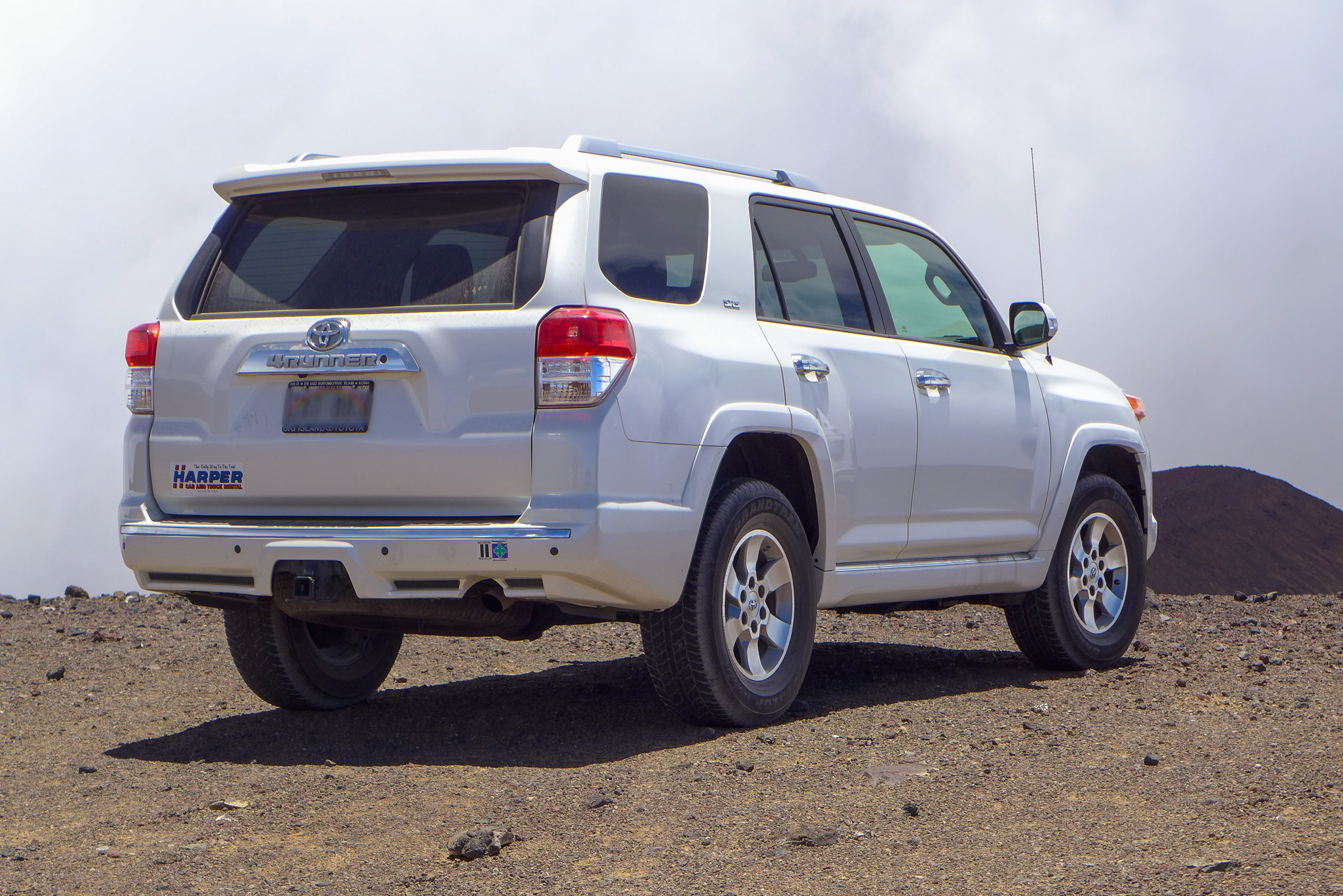
Last summer, my wife and I drove a rented Toyota Forerunner to very nearly the top of that massive island. We parked it next to the silver dome of the NASA Infrared Telescope Facility at 13,674 feet above the sea level where we’d awoken that morning. It was within a hundred and fifty feet of Mauna Kea’s summit elevation, a long ways to climb in such a short time even with a four-wheel drive vehicle doing all of the work. The engine had gotten slow and hesitant above 12,000 feet or so, and our brains were, too.
White Mountain Goat  [Flickr page]

A few days earlier on Maui’s Haleakala Crater, I’d experienced the slightly panicked sensation of being winded while just standing still. And that was nearly a mile lower, 10,023 feet above sea level. We staggered out of the Forerunner with 40% less oxygen in every breath than we’d had with this morning’s breakfast, and we were feeling it.

When I knelt down to take pictures, I could feel the immediate effect of my legs pushing up against my chest cavity and preventing deep breaths. This wispy air demanded consumption in big gulps. Gasp, gasp, click. Stand—dizzy, unsteady—and breathe fast without feeling like the body’s getting caught up.
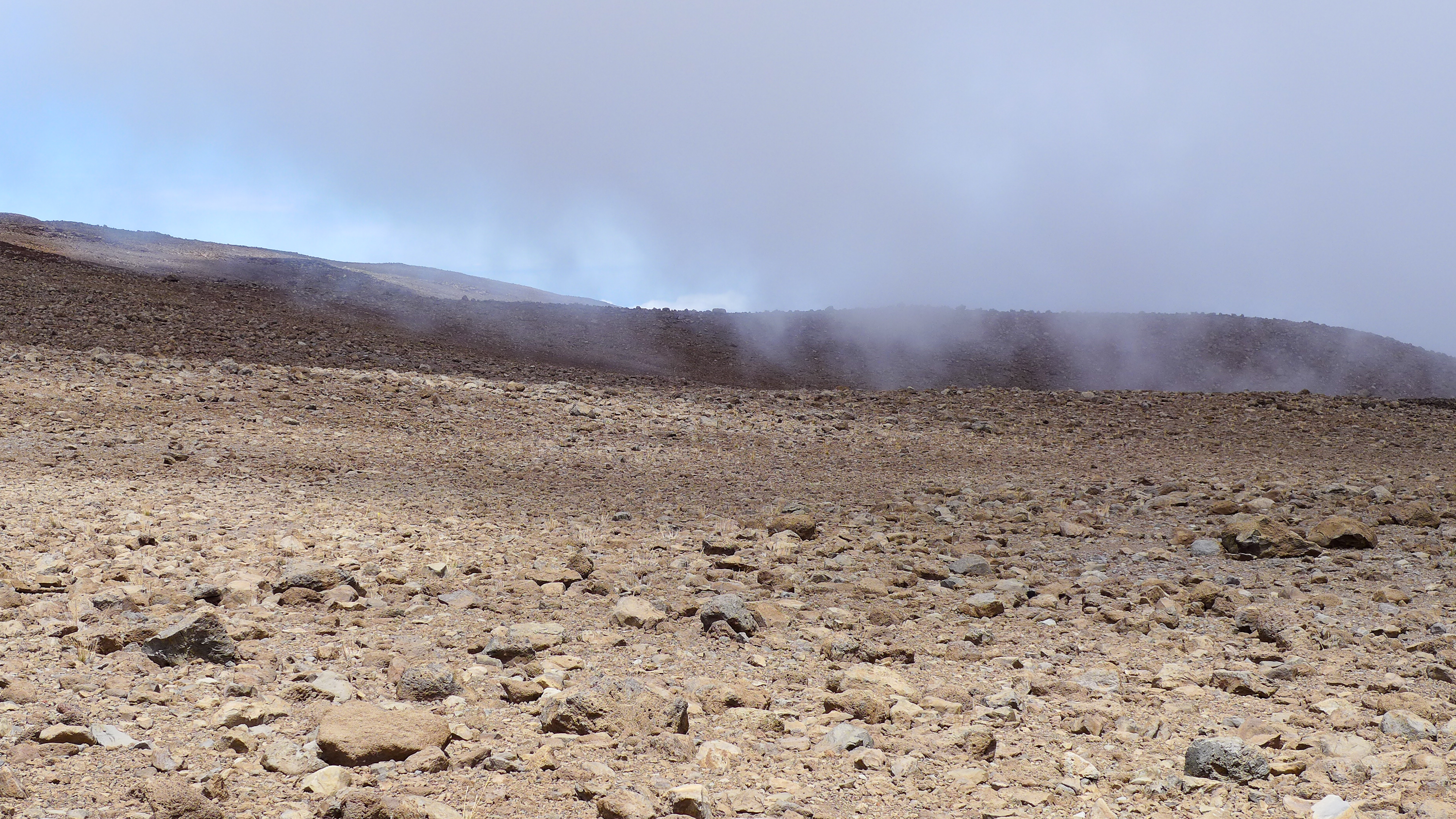
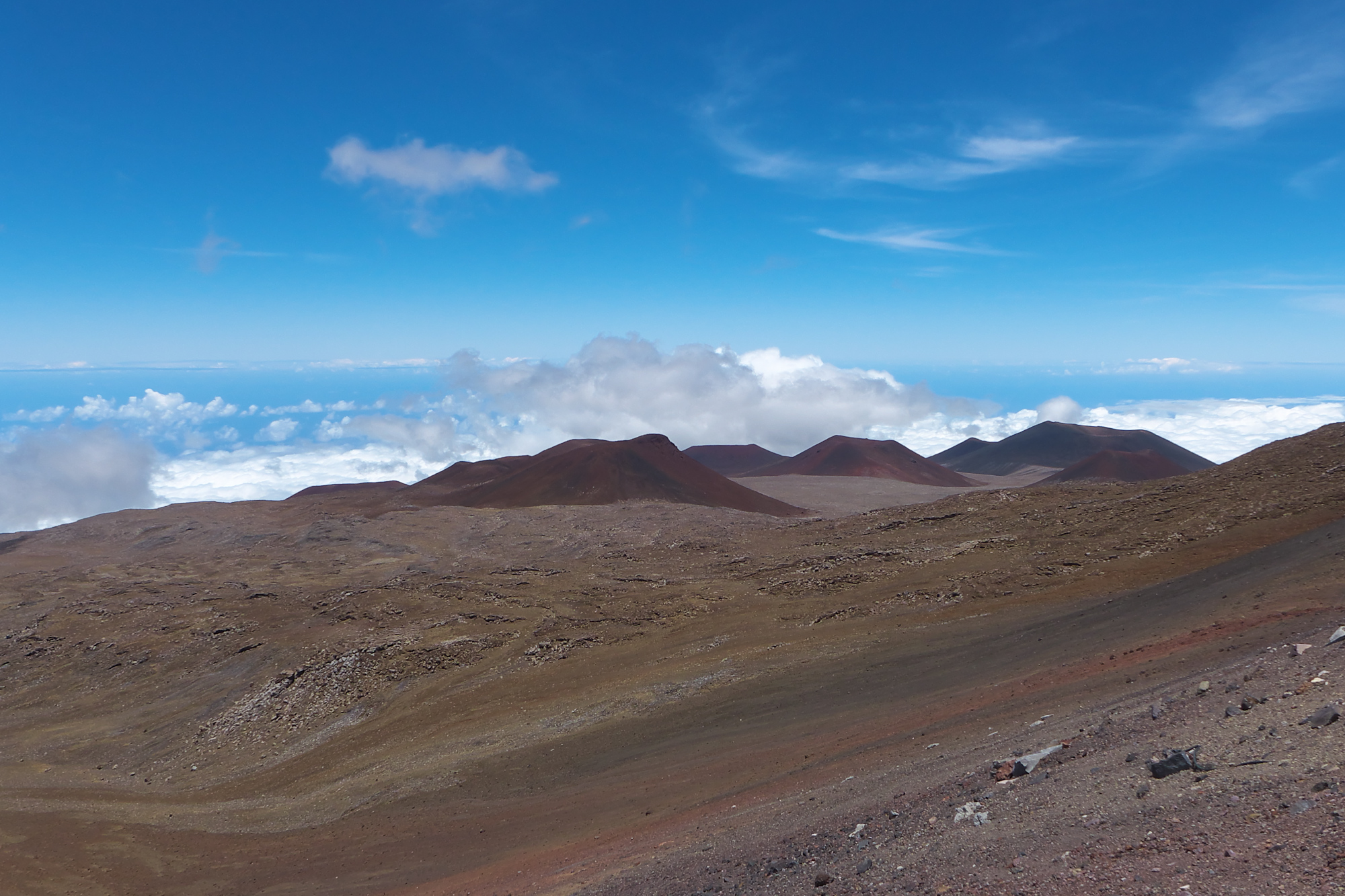
Mauna Kea Moonscape  [Flickr page]

But what scenery there was! The Pacific Ocean stretched out miles below and away from us, dark solid blue below its patchy clumps of cloud cover. And we were well above those clouds. So, more pictures. Gasp, gasp, click. And gasp some more.

“Shortness of breath” and “impaired judgment,” warns the visitor information station. “Reduced atmospheric pressure at high altitudes may cause altitude sickness or result in the development of other life threatening conditions such as pulmonary edema (fluid in the lungs) and cerebral edema (fluid on the brain).”

My wife was a reluctant visitor to this godforsaken outpost in the sky, much preferring the tourist-friendly packaged comforts of Honolulu. She looked around for a few minutes and sat down in some patch of man-made shade. She did not join me in expressing awe about the view or the grandeur of the planet. She wanted to go down, now.

Opened empty at the summit

“Also,” the visitor information station sternly continues, “because the summit is above much of the atmosphere that blocks the sun’s damaging ultraviolet rays, you risk exposure to serious sunburn and eye damage.” I kept my sunglasses on and applied generous amounts of sunscreen.

Was the sky really a bit darker blue up here, or was that my imagination? It also didn’t feel as cool as it should have, given how much lower the Forerunner’s thermometer was saying the temperature was than it had been down at sea level. Were the sparser air molecules doing noticeably less of a job at ferrying heat away from my body? That might’ve been my engineer’s imagination, too. But limited convection was a real concern for the rental agency when it came to overheating the brakes on the drive back. Use the engine to slow down, their brochure said, because the brakes can’t cool off enough in the thin air.

I saw (and heard) more tangible evidence of how thin that air was from a water bottle that I’d emptied and opened at the top. Its flimsy plastic walls crunched and popped as the atmosphere thickened outside it during the drive back down the mountain. We stopped to use the bathroom at the visitor’s center and took easy breaths of air that felt rich and generous at 9,200 feet. Closed and still crumpled up at the 2,000 foot elevation of my Eastern Washington home, the bottle now sits on my shelf as a souvenir.

In the space of six hours, I went from the bottom of Earth’s atmosphere to a point where there’s less than half of it left, and then back again. It was quite a day.
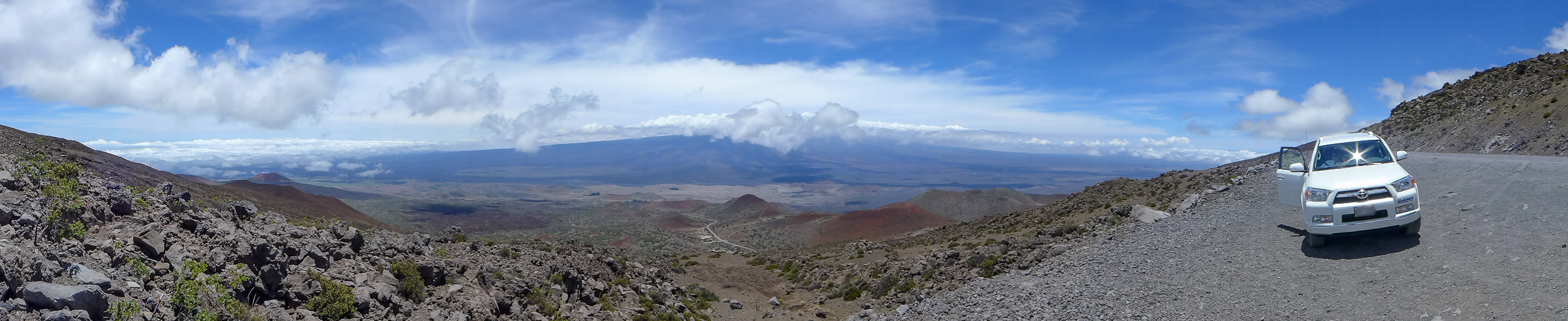
Panorama partway up, 3000px hi-res  [Flickr page]

What will never fail to impress me after taking a month to do a Pacific crossing is the gigantic scale of it all. That huge, dramatic mountain-that-is-an-island, rising nearly three miles above the Pacific and much further still from the seafloor beneath, is just a barely visible zit on the surface of our remarkably smooth ball of a planet.

Imagine a blob of Silly Putty that you’ve smooshed into an irregular, flat pancake with a couple of little lumps near the middle. It’s a relief map of Hawaii’s Big Island, and the tallest bump (not by much) is Mauna Kea. (The next biggest one, 99.1% as high, is Mauna Loa.) Your flattened blob-map is about seven inches across at its widest and only a quarter of an inch high.

To mash this onto the surface of something representing the earth, at its proper scale, you’d need a very big globe. Really big. Its diameter would be about 63 feet.1

Mauna Kea is just a flat little bump. You couldn’t even tell it was there if you looked at this giant globe from fifty feet away, just far enough to see the whole thing in profile. Earth deviates from a spherical shape by 43 km, an equatorial bulge at the planet’s waistline from the centrifigal force of twirling around once a day. That wouldn’t be noticeable, either, but it’s a full ten times as much as Mauna Kea’s height.

We don’t appreciate such enormities, because they dwarf us. “When I consider thy heavens, the work of thy fingers, the moon and the stars, which thou hast ordained,” asks the Psalmist, “what is man, that thou art mindful of him?” Ancient cosmology aside, he was onto something there. We are mere specks. The bacteria your hands would have left on that blob of Silly Putty when forming it are about the same size, on this scale, as I was standing on that mountain.2
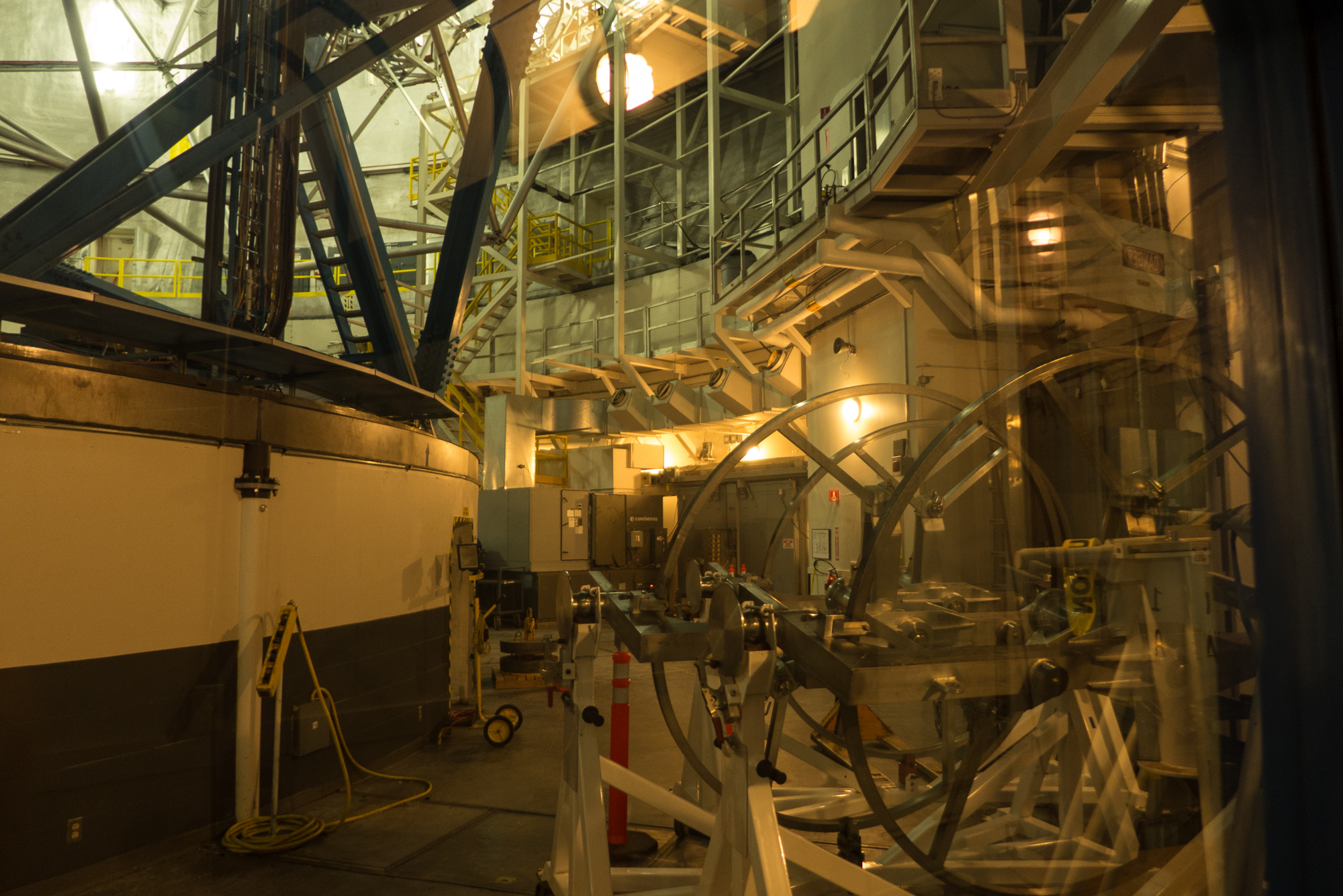
Keck Observatory  [Flickr page]
For most individual images, you can click to enlarge or check out their photo pages in my Flickr photostream. All are Copyright © 2013-14 Edwin A. Suominen. You may freely use them for non-commercial purposes, with attribution, under the Creative Commons Attribution-NonCommercial 3.0 Unported License. With one exception: I am holding onto the lit-up-lava picture I took in the 1980s as All Rights Reserved, for some reason I can’t quite articulate. I suppose I’ll never go back to that spot and see that sight again.

Notes


  1. The scale is 662,520. In metric, and with more precision, the dimensions of the model island would be 18.4 cm across by 6.35 mm high. (That might require a couple of eggs’ worth of Silly Putty.) The globe would be 19.23 m in diameter. 

  2. Bacteria range in size from half a micrometer to five μm. The height of a scaled-down human, say 2m orginally, would be 3 μm. The enormity of scale continues as things get bigger: A model sun would be just over a mile across and about 140 miles away (2.1 km and 225.8 km, respectively). 

Sunday, September 1, 2013

Paradise

Eden was a choice garden in comparison with the magnificence of the whole earth, which itself also was a Paradise compared with its present wretched state.
—Martin Luther, Lectures on Genesis
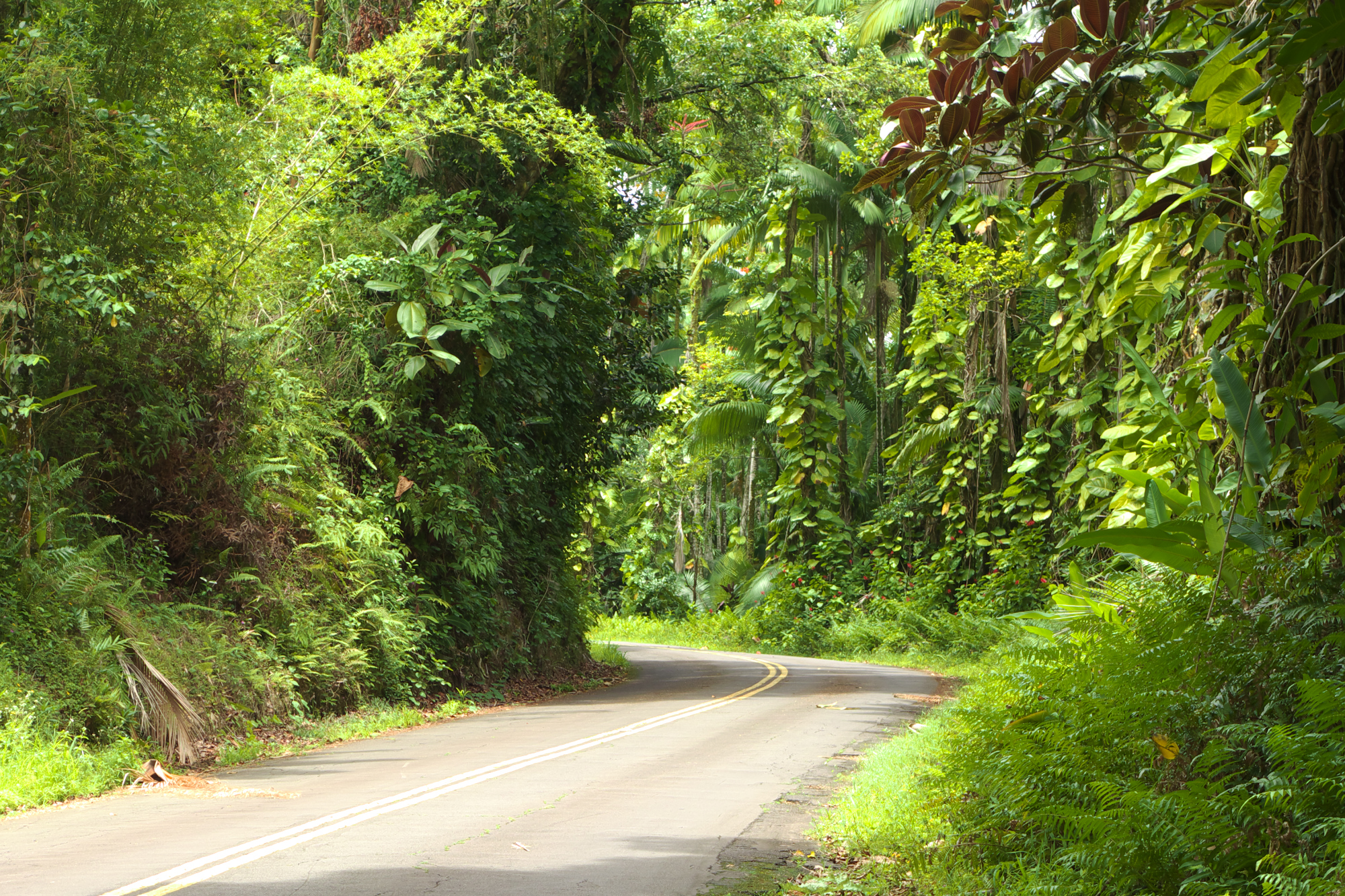
Tropical rainforest north of Hilo on the Big Island.  [Flickr page]

After co-authoring a book entitled Evolving out of Eden and spending three weeks in Hawaii, I’ve given a thought or two to the idea of paradise. For much of our existence on this planet, it seems that humans have been longing for such a place.

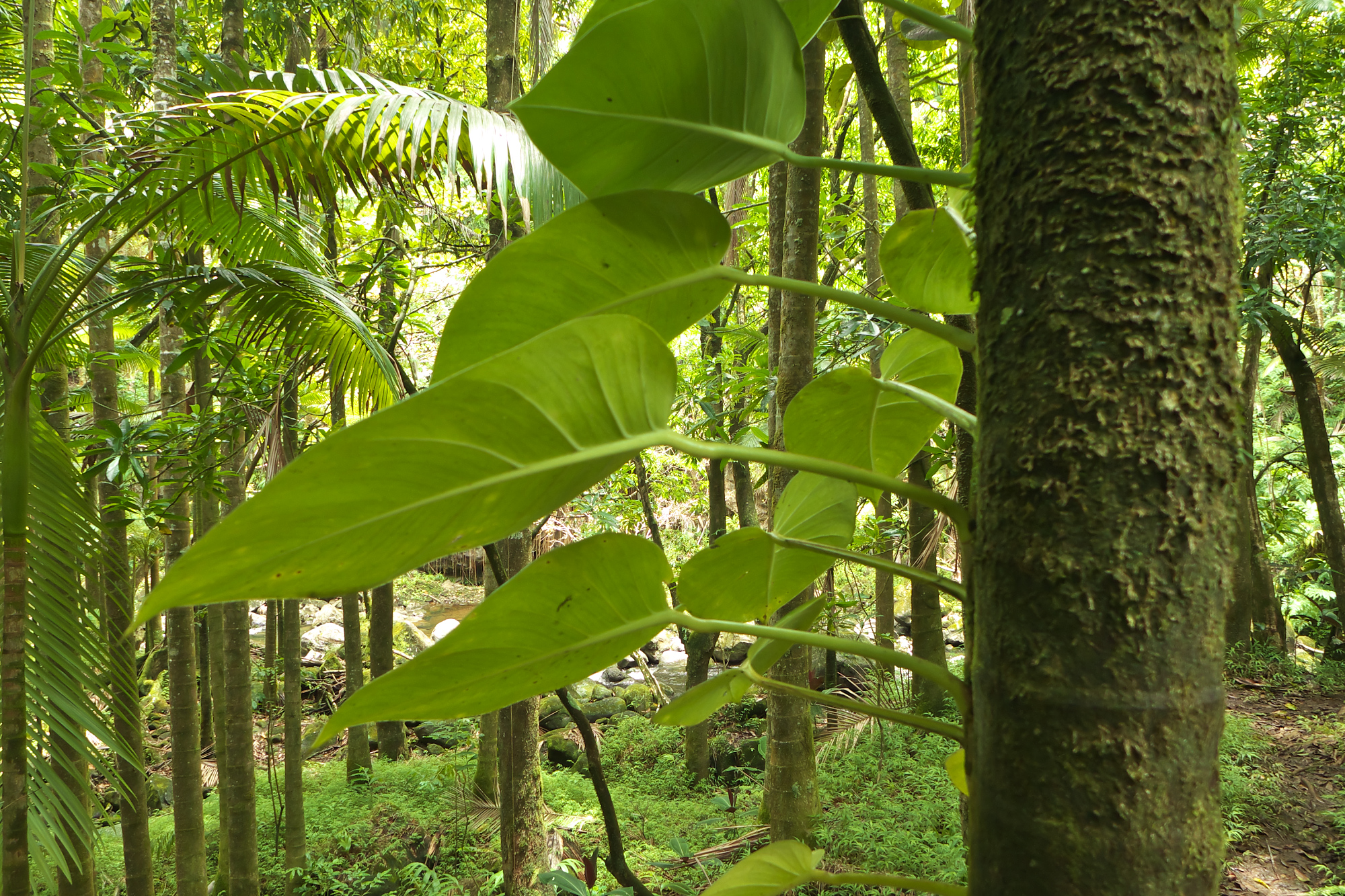
Life supporting life, in vivid green abundance.  [Flickr page]

A variation of this theme is that of lost innocence, a time when everything was wild and simple and good. One of our earliest recorded creation myths, the Epic of Gilgamesh inscribed onto Mesopotamian clay tables over 4,000 years ago, describes a primeval superhero who was happy and at home with his friends the wild animals. Alas, this “child of nature, the savage man from the midst of the wild” (Tablet I, line 175) is seduced by a harlot down at the watering hole, literally. After a week-long sex marathon, he was a weakened shell of his former self, a stranger to the gazelles and beasts of the field. “Now he had reason, and wide understanding” (line 195).

The story far better known to us, though almost entirely ignored in the rest of the Hebrew Bible, is the one based in large part on the Mesopotamian epics and set in the same region. Actually, it’s two accounts, written with different agendas in mind. According to Genesis 1, the Gods (whoops, leftover polytheism) create the first man and woman in their image (v. 26), and tell them to get busy having babies and taking over the place, enjoying a varied diet of pretty much everything that grows or moves. (None of the Jewish dietary laws had been invented yet.) The account of Genesis 2-3 is the one where the First Couple munch on fruit in Eden, naked and innocent, until things go terribly wrong, and we get Paradise Lost.

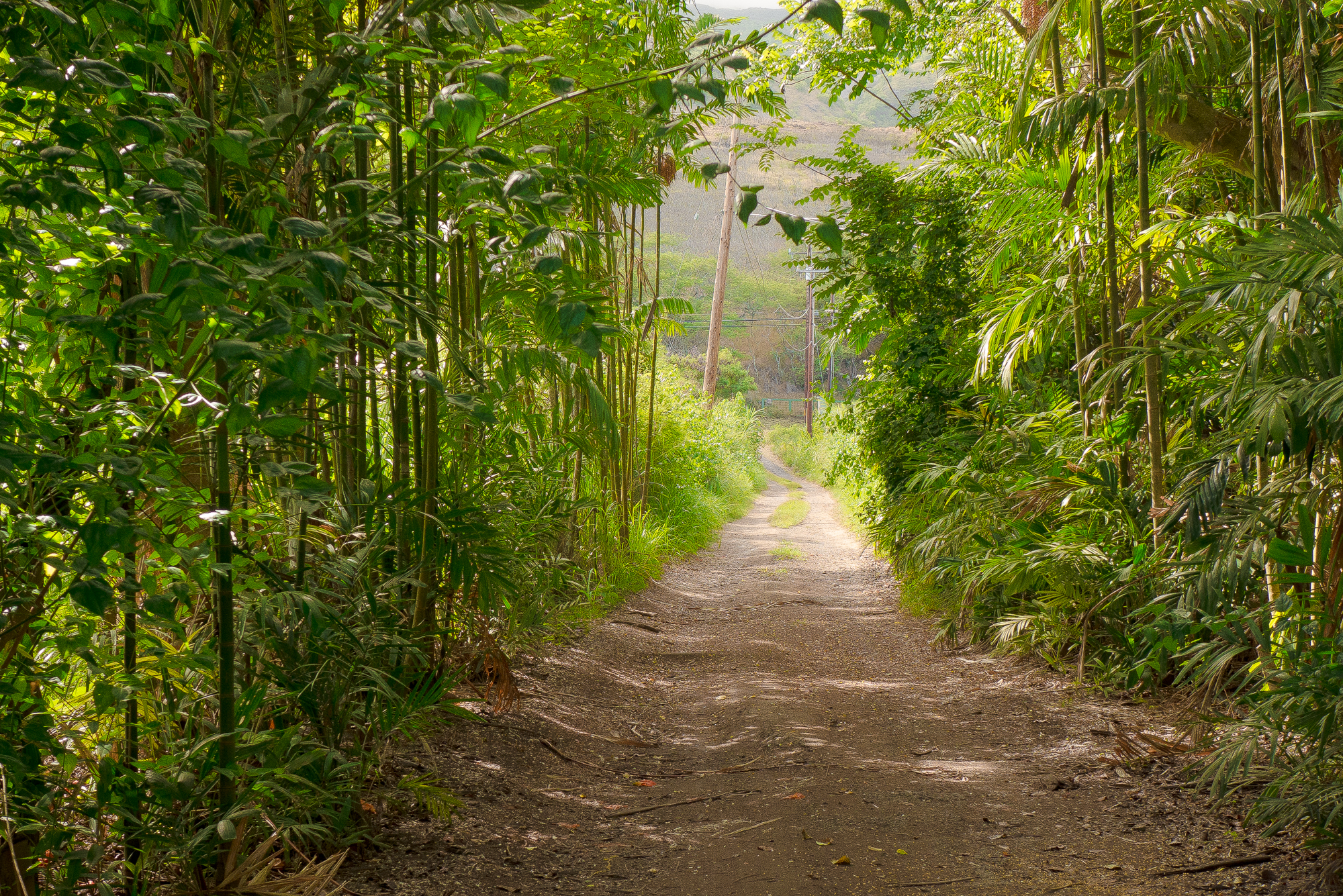
Maui: Green, beautiful, and very humid.  [Flickr page]

The religion of the early Hebrew Bible was just a step away from its polytheistic roots. Yahweh was a tribal war deity who showed favor and displeasure in crop abundance or famine, battles won and lost, loot from conquering and the horrors of being conquered. As this God evolved and became more of a remote abstraction, however, his divine judgment took on less immediacy. Promises of a paradisaical life after this one finally began to emerge.

At first, we see the barest glimmer of eternal sunshine in the gloom of the lifeless, neutral Hebrew Sheol: Job expresses the hope of seeing God even after worms destroy this body, though the rest of the book paints the usual muted and bleak picture. The Psalms provide a few mentions of glory afterward among lots of talk about a dreaded, forgotten nothingness in the grave.

Eventually, Isaiah would offer a clear indication of the dead being resurrected. They, God’s dead at least, “will live, their dead bodies will rise. The dwellers in the dust will awake and shout for joy! For your dew is like the dew of the dawn, and the earth will give birth to the dead” (Isa. 26:19). Interestingly, Isaiah seems to hint at the change in viewpoint by contrasting this promise with a statement a few lines earlier about God’s previous disposition of the dead: “The dead will not live, and the departed spirits will not rise. You punished and destroyed them, and imprisoned all memory of them” (Isa. 26:11, both from the Dead Sea Scrolls Bible).

Molokai’s lush east end.  [Flickr page]

As evidenced by the mountain of grave goods that were crammed into King Tut’s tomb in 1323 B.C., the Egyptians had a detailed view of the afterlife much earlier than the Israelites. The Greek pagans were ahead in the Mediterranean afterlife game by many centuries, too: Elysium was their eternal resting place for the gods and some favored mortals. According to Wikipedia, Homer’s Odyssey mentions an “Elysian plain … where life is easiest for men. No snow is there, nor heavy storm, nor ever rain, but ever does Ocean send up blasts of the shrill-blowing West Wind that they may give cooling to men.”

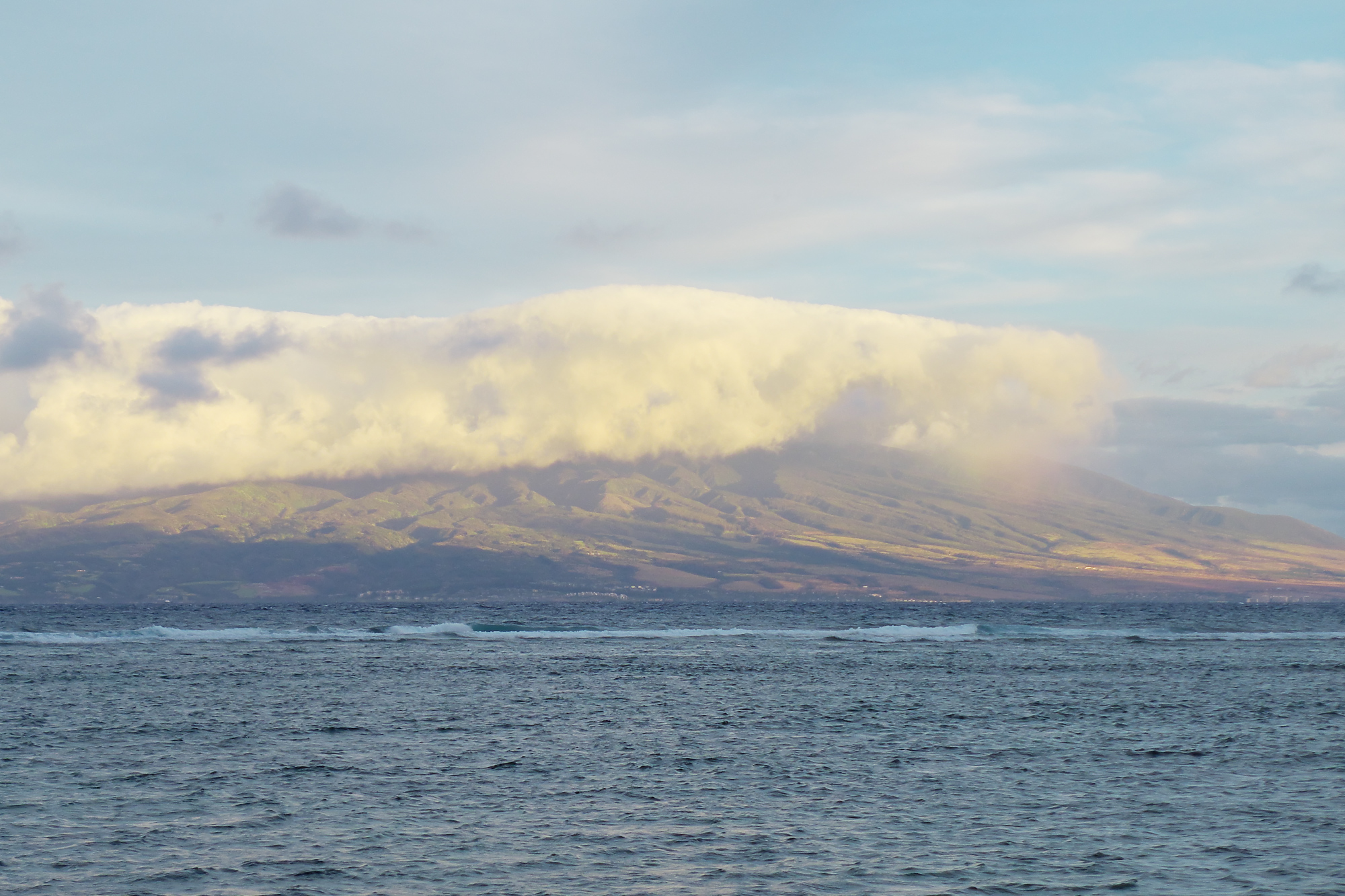
Clouds Over Maui, from Molokai  [Flickr page]

The Old Testament would have to pass to the New before those monotheists along the Mediterranean’s eastern shore would really come to embrace the idea of life eternal. The most famous Jew of all time (whether he existed as an actual man or only in the hazy memories of devotees writing decades later) came along and raised the post-mortem stakes, warning that “if thine eye offend thee, pluck it out, and cast it from thee: it is better for thee to enter into life with one eye, rather than having two eyes to be cast into hell fire” (Matt. 18:9). Of course, it was eternal life he was promising. When the penitent convict turned to him on the cross, according to Luke’s account, the words he chose to speak as a comforting response were, “Today shalt thou be with me in paradise” (Luke 23:43).

The new Jesus sect had its main earthly champion in another Jew, Apostle Paul, who promised a wondrous reward for God’s beloved. He could offer no details, though: “Eye hath not seen, nor ear heard, neither have entered into the heart of man, the things which God hath prepared for them that love him” (1 Cor. 2:9).

Clouds Swirling on Maui Mountain Slopes  [Flickr page]

These things awaited the faithful somewhere above the great blue dome of the sky. Mark and Matthew tell their readers that Jesus will come in the “clouds of heaven” (Matt. 24:30 & 26:64, Mark 14:62). It was an unattainable place far overhead. When the writer of 1 Thessalonians assured an unexpected new generation of Christians that their dead relatives also would attain this ethereal reward, along with the living, he was looking skyward. And it would happen, he promised, real soon now. “We which are alive and remain shall be caught up together with them in the clouds, to meet the Lord in the air: and so shall we ever be with the Lord” (1 Thess. 4:17).

The idea had evolved to the point where this life was a mere prelude to the next. It had a certain comfort to it: God would finally wipe away the tears of a difficult life, at last right the injustices of a beggar foraging scraps at a rich man’s table. The rest of Judaism seems not to have paid much attention, though. To this day, they focus much more on how you live your current life than what might happen to you afterwards. That’s surprising in a way: Jews have more reason than most to complain about the way things have gone for them, historically.

Beautiful above the water, and with a paradise of fish and coral below.  [Flickr page]

Even without regard to Rome, Masada, the Pogroms, and the Holocaust, most everybody throughout history had reason to yearn for some sort of better existence after death. Life basically sucked, and for all too many, still does. There is and always has been slavery, famine, disease, and war. In the natural state of things, observed the 16th century pessimist Thomas Hobbes, the life of man was “solitary, poor, nasty, brutish, and short.” No wonder the promises of heaven have maintained such appeal.

And no wonder the hereafter was envisioned as a marked contrast with what was being experienced in the here and now. The Revelation of John, written for people in the sun-baked islands of the Mediterranean, promised that there would be respite from the sun, heat, and thirst in heaven (Rev. 7:16-17). Luther’s extensive complaints about paradise lost have the distinct sound of a cranky old man tossing and turning on a filthy straw mattress in late medieval Europe. An obedient Adam, he laments, would have had access to the Tree of Life and

would have eaten; he would have drunk; and the conversion of food in his body would have taken place, but not in such a disgusting manner as now. Moreover, this tree of life would have preserved perpetual youth. Man would never have experienced the inconveniences of old age; his forehead would never have developed wrinkles; and his feet, his hands, and any other part of his body would not have become weaker or more inactive. Thanks to this fruit, man’s powers for procreation and for all tasks would have remained unimpaired until finally he would have been translated from the physical life to the spiritual. [Lectures on Genesis]

The Finns of my own ancestry and Laestadian faith tradition longed for a “homeland shore in heaven.” That has no biblical basis; the closest maritime parallel is the lake of fire and brimstone. But it was a compelling picture for exhausted fishermen out on their boats, and it’s still heard in Laestadian sermons today.

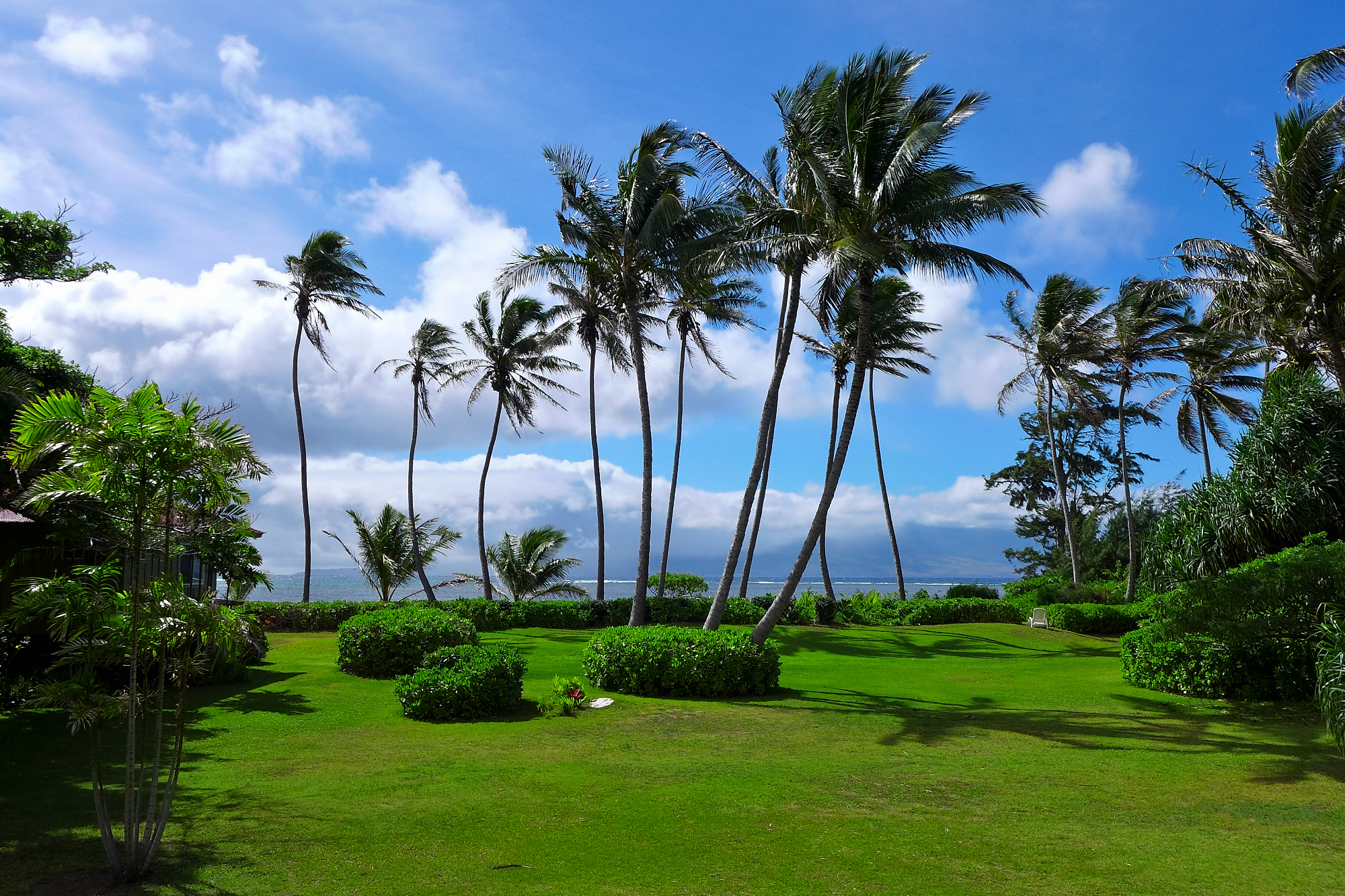
Paradise often looks best with a little trimming…  [Flickr page]

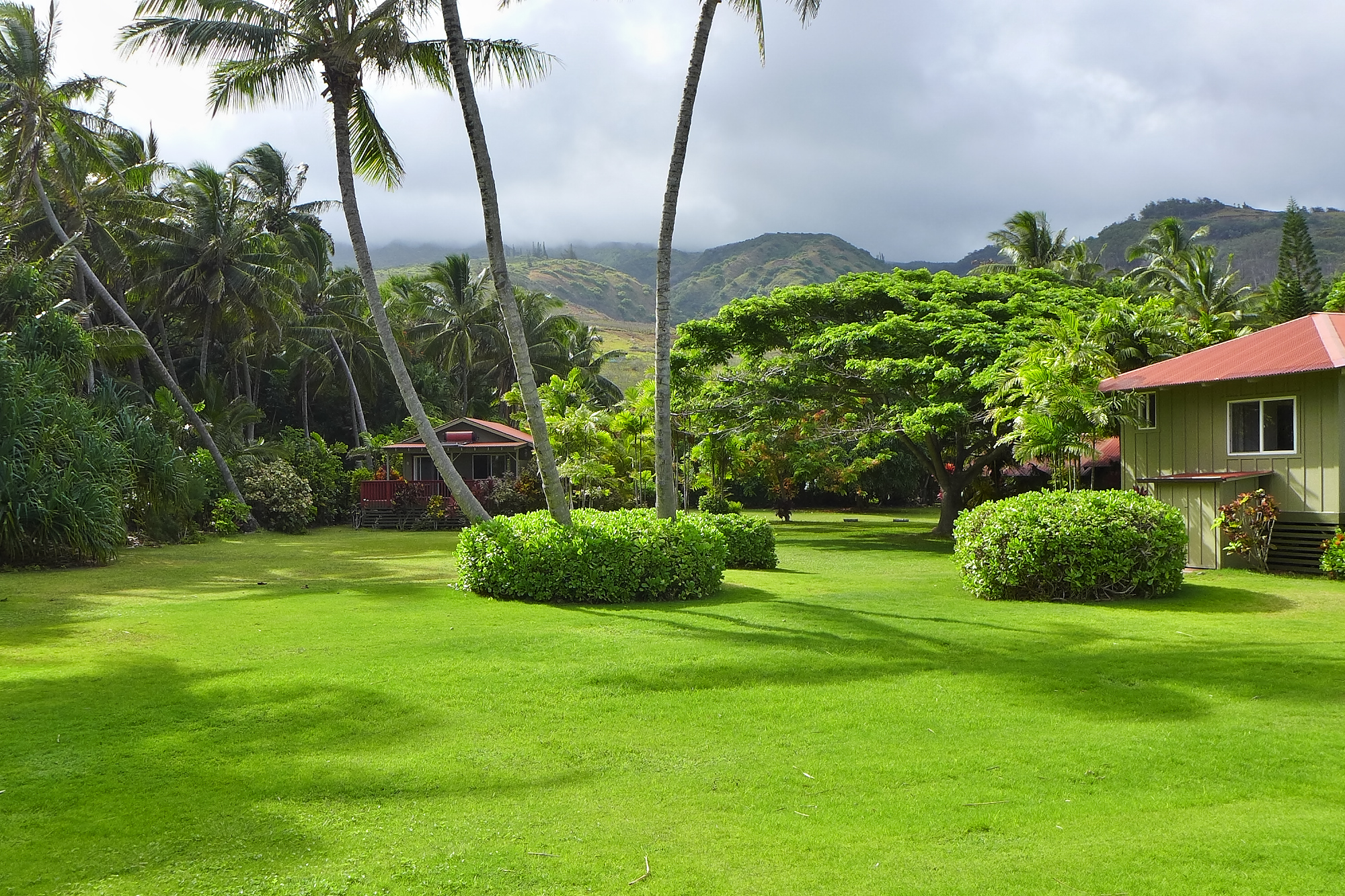
As a mere mortal who has probably lived about half his life already, I do understand the appeal. And having a wonderful life full of light, love, and beauty actually doesn’t change that too much. There is so much to experience, so much to see. Yet someday, as it did for King Tut and Homer and Paul and Luther, it will end for me. My paradise will only remain in these pictures, and the others I take in my remaining days filled with blue and green.

…and mowing.  [Flickr page]
Click on individual images to enlarge, or check out the entire set (and others from Hawaii) on Flickr. All are Copyright © 2013 Edwin A. Suominen. You may freely use them for non-commercial purposes, with attribution, under the Creative Commons Attribution-NonCommercial 3.0 Unported License.

Monday, August 19, 2013

A Fading Fascination with Faith

What a relief, to be rid of that obnoxious, intrusive presence, and to have my privacy and the freedom to explore my own thoughts and feelings returned to me.
—Edmund Cohen,
quoted in Walking Away From Faith by Ruth Tucker
Hikiau Heiau at Kealakekua Bay [Flickr page]

When you have spent your entire life as one of a chosen few recipients of “living faith” in “God’s Kingdom,” the only place on earth where salvation is to be found, your religion is no casual matter. As you progressed through childhood and the milestone of Confirmation Camp, and continued along the church’s clearly marked path of courtship, marriage, and children (lots of them), its importance rose onto a central pedestal from which it looks out over the whole of your thinking.

The foundation stones of that altar are from your childhood indoctrination: teachings about Jesus riding into Jerusalem and then writhing on the cross, eternal life versus damnation, and sin, sin, sin, in all its abundant variety. Its upper layers are built from the same sort of material, too, repeated in weekly sermons and visits with believing friends.

But there are additional reinforcements to keep faith sitting firmly in its venerated place. Your social structure has been defined, and limited, for you: cousins, respected elders, and childhood friends, all from church. It’s very difficult to do anything that would jeopardize that, and rejecting the faith you all share certainly will. Then there is the lurking realization that you’ve made irrevocable decisions about the people populating your life and your home, about all the things you’ve let yourself miss out on.1 That gives the faith idol an invisible mental prop that’s often just as strong as the more tangible social one.

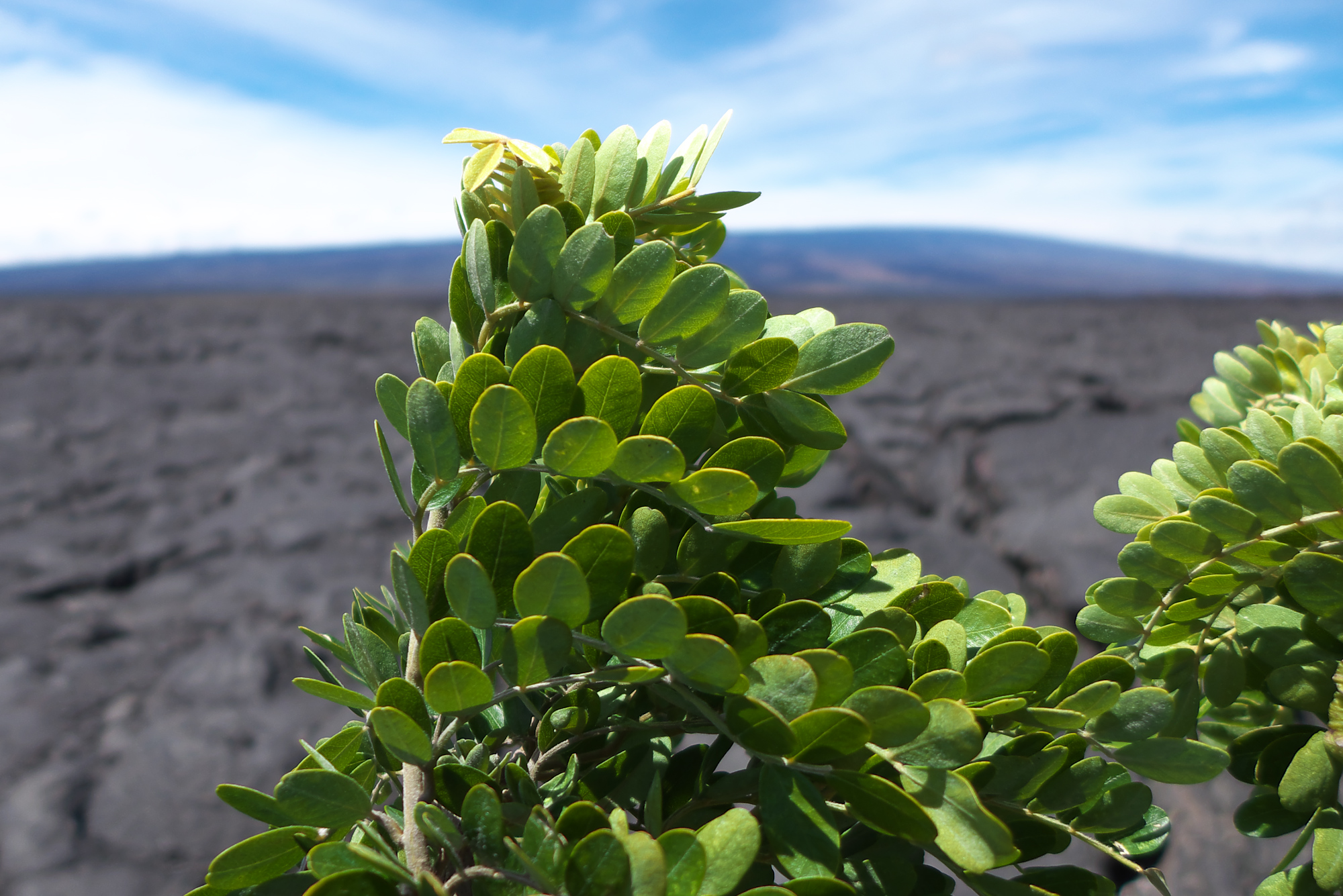
The cells of the leaf cling together and to a common vein. But there are other leaves nearby... [Flickr page]

Cognitive dissonance flares up at the thought that it might all have been for naught. Your mind desperately seeks to protect the integrity of the person you once were, the one who spent her days walking by an endless row of doors to “the world’s pleasures” that you had obediently locked. The self-limitations were imposed on you by others who claimed to speak on behalf of your conscience. It’s a cunning trick of the religious meme, especially when those pulling it off don’t even understand that they are being played, too.

Can you stand the thought of the roads not taken, the first and most formative third or half of your life put aside for eternal promises now grown stale? It’s a very tough thing to do. But when you feel you have no choice, when the mental anguish of staying finally outweighs that of leaving, then you will do it. I finally did, too.

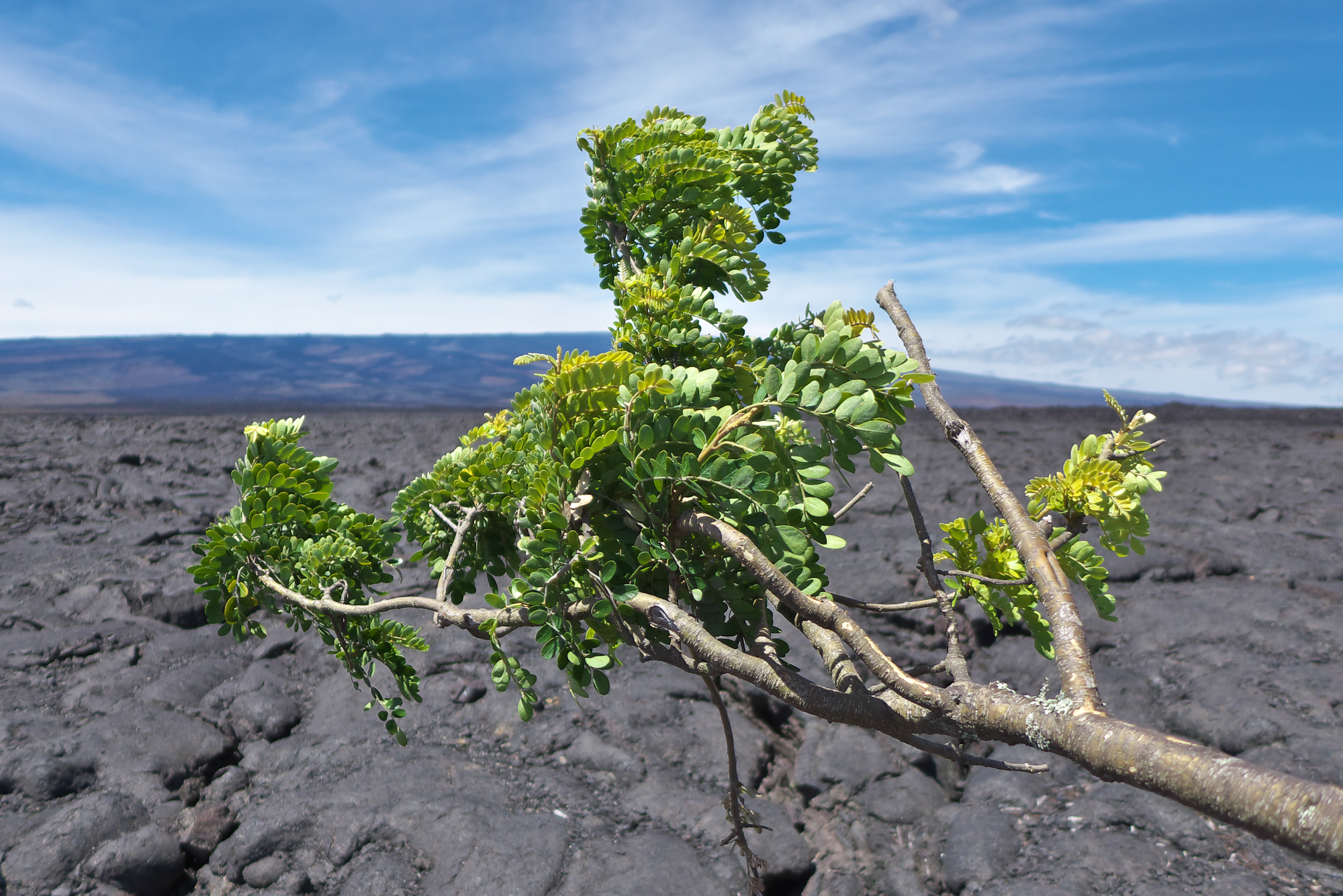
Many similar leaves, in fact, arrayed on ever-dividing branches... [Flickr page]

It was a slow process for me, though. With the altar of my own childhood faith looming over my every thought and action, I could not simply turn my attention away when I encountered difficulties with it.2 To my continual surprise, there are some people who can simply say, “That’s just a pile of rocks,” turn away, and find a new place for themselves. I was not one of them. Instead, I wound up devoting a year of my life to researching and writing a 700-page book about my troublesome faith, An Examination of the Pearl.

The distinctions blur with distance... [Flickr page]

Now, a year and a half later in the midst of a wonderful summer full of travel and natural beauty, the whole thing seems small and petty. There have been a few pangs of longing–for the people and the spectacle–when the church’s summer services were held just a dozen miles away this year. But the closest I got to the place was sitting on the grass of the high school grounds watching fireworks, and riding with a Finnish friend as he picked up his daughter from an after-hours youth gathering there.

Some of the sermons made their way into my iPod for bedtime. (I’ve found no better sleep aid.)3 As I dozed off, after a full day of walking around San Francisco or taking in Hawaiian scenery, I wondered how any of the people sitting in that gymnasium listening to these guys could take them seriously. It was easy to forget how seriously I myself had taken it, for most of my life.

When the preachers drone on about this imagined ailment of sin and their proprietary cure-all, it now sounds like some contrived fantasy story:

———

God created a first human couple in a garden where there lived an angel who had rebelled against him (and lost), then took on reptilian form, and now invisibly stalks the earth, utterly corrupting human society and producing some damn fine movies and music in the process. The reptile gave our first ancestors a sales pitch about a bit of magic produce that would give them knowledge of good and evil, which God opposed for some reason. They ate, which made God condemn everybody who would be born thereafter to an unrelenting eternity of horrific agony unless they develop the exactly correct beliefs about a part of himself that he would send to earth as a sacrifice, to himself.

Despite being almighty and loving, God is either unwilling or unable to exempt from his torture chamber anyone other than the tiny fraction of humanity who will hear a specific ritual incantation referring to this blood sacrifice, from one precise kind of believer, only a few tens of thousands of whom can be found anywhere on earth. And, truth be told, a lot of them don’t really believe much of the story, either.

———

If this is what you profess to believe, and reading my summary makes you uncomfortable or upset, consider whether there is anything actually incorrect about what I wrote. Isn’t it just my irreverent clarity of expression that actually offends you? Pious language covereth a multitude of nonsense.

A native Hawaiian (“as far as I know, my family has been here since there was a Hawaii”) with whom I spent a few hours in and out of the water told me, in language I quote without censorship due to its forceful bluntness, “I couldn’t believe I was expected to believe this bullshit.” He didn’t know the half of it. He was just talking about the problems with Christianity in general.

With enough perspective, even the tree comes to look stark and odd, dispensable... [Flickr page]

Laestadianism adds its own deep, aromatic layer to the pile. There aren’t any Laestadians living in Hawaii, though there are plenty of churches. We drove by many of those churches there, including some that consider themselves the only true believers. The nerve of them!

There are other leaves on the branches. Acknowledging that is one of the first departures Laestadians are willing to make from what their preachers insist upon. For many, doing that is enough. They remain Laestadians, less judgmental ones, perhaps sneaking in some movies on Netflix and encountering infertility at unexpectedly young ages.4 Or they leave the church and fall back on a more inclusive, hands-off Christianity.

It’s all good; I’m happy for them either way, or no way. But, for myself, I have seen that there are also other branches on the tree, and in fact a whole lot more than just this lousy little tree to look at in this amazing landscape of life.

And finally disappears altogether in the vastness of reality. [Flickr page]
All original images on this site are Copyright © 2013 Edwin A. Suominen. Click on any of them to enlarge it. You may freely use them, with attribution, under the Creative Commons Attribution 3.0 Unported License. You can view and download the tree-in-lava-flow images from a Flickr photo set of high-resolution images.

Notes


  1. For me, the part about people populating my life mostly involves the ongoing challenge of raising children who inherited my stubborn independence and disinterest in many practical matters. But I mostly agree with the devout parents of huge church families in posing the classic emotion-driven question, “Which one would you have me give back?” That’s not to say I don’t have one candidate or another (from the eleven of them) in mind on difficult days! I’ve been fortunate in so many ways: in love with my bright and beautiful wife, a varied and memorable career, and healthy (though often challenging) children. After hearing all too many heart-rending stories, I know that things can be quite different for others. 

  2. As I’ve written elsewhere, the trouble started with my realization that evolution is real and Adam and Eve were not. Then it progressed to the history and doctrines of the church and the Bible itself. 

  3. Update, September 2014: Kicked the sermon-to-sleep habit, I’m happy to report. It feels good not knowing what the preachers are saying nowadays. The fascination continues to fade, and it just seems like a crazy dream at this point. Life is good. 

  4. Those odd fertility problems are becoming epidemic in southern Finland. Must be the water. 


Wednesday, August 14, 2013

Coral

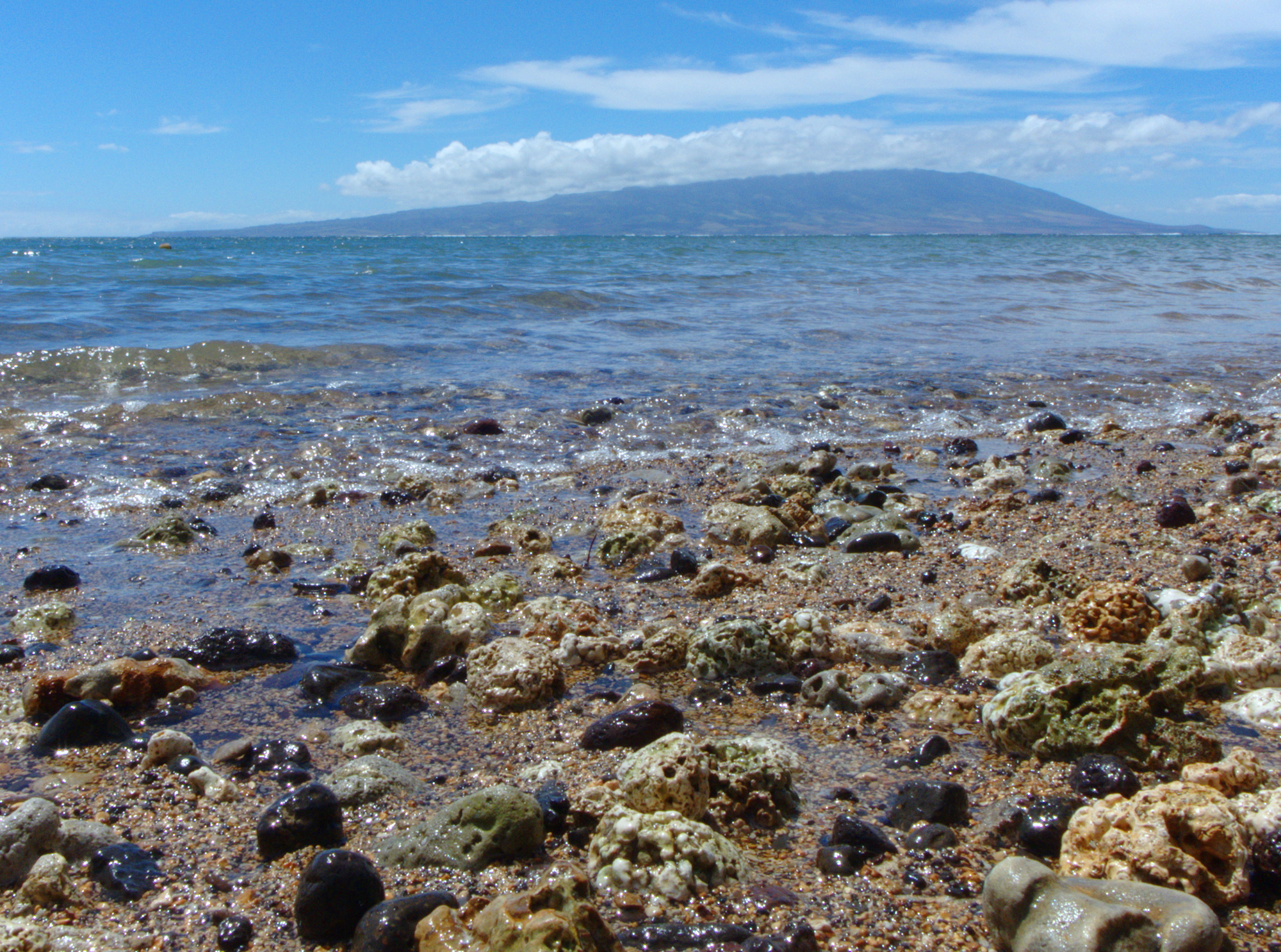
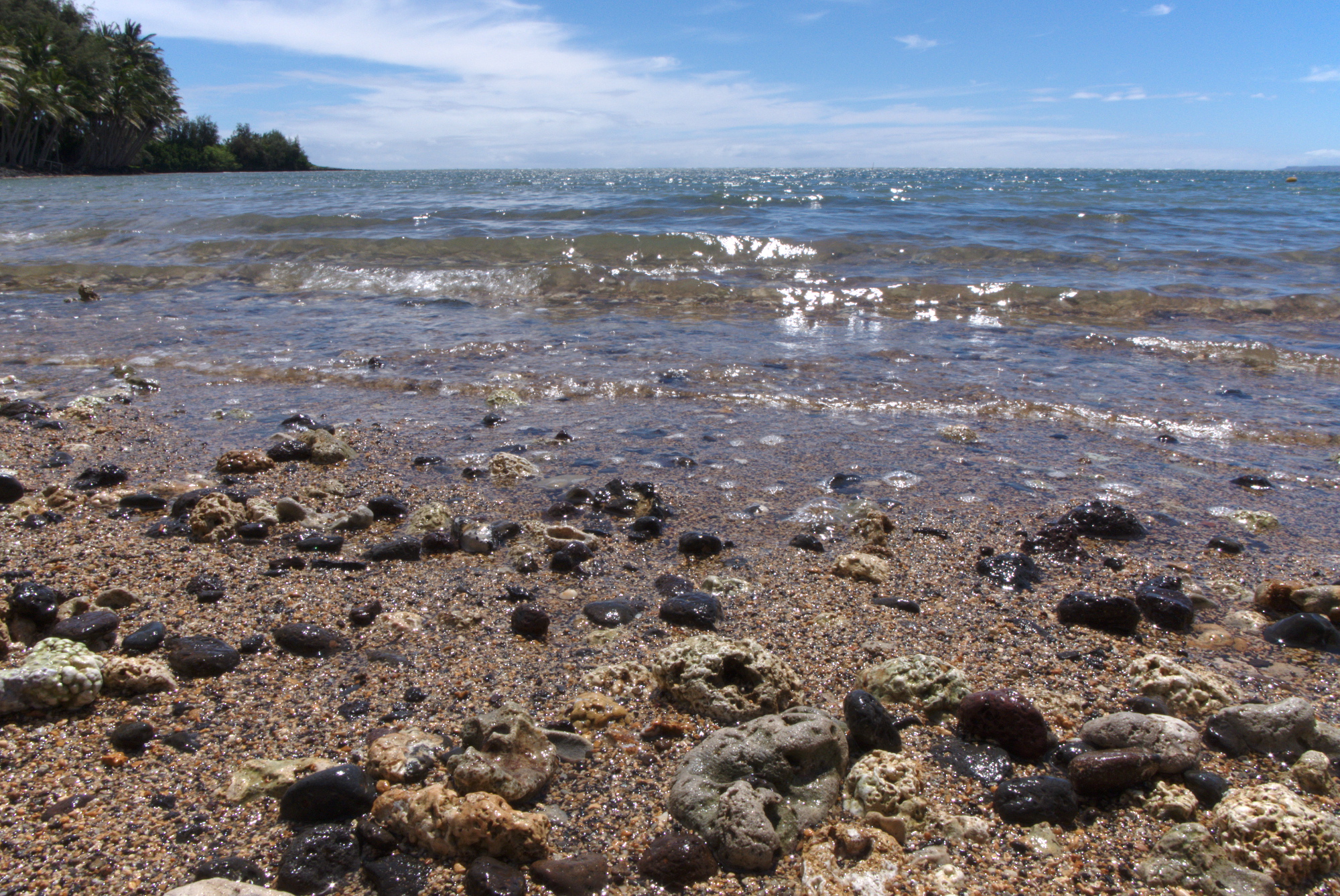
Corals are marine invertebrates in class Anthozoa of phylum Cnidaria typically living in compact colonies of many identical individual ‘polyps.’ The group includes the important reef builders that inhabit tropical oceans and secrete calcium carbonate to form a hard skeleton.”
—Wikipedia, Coral
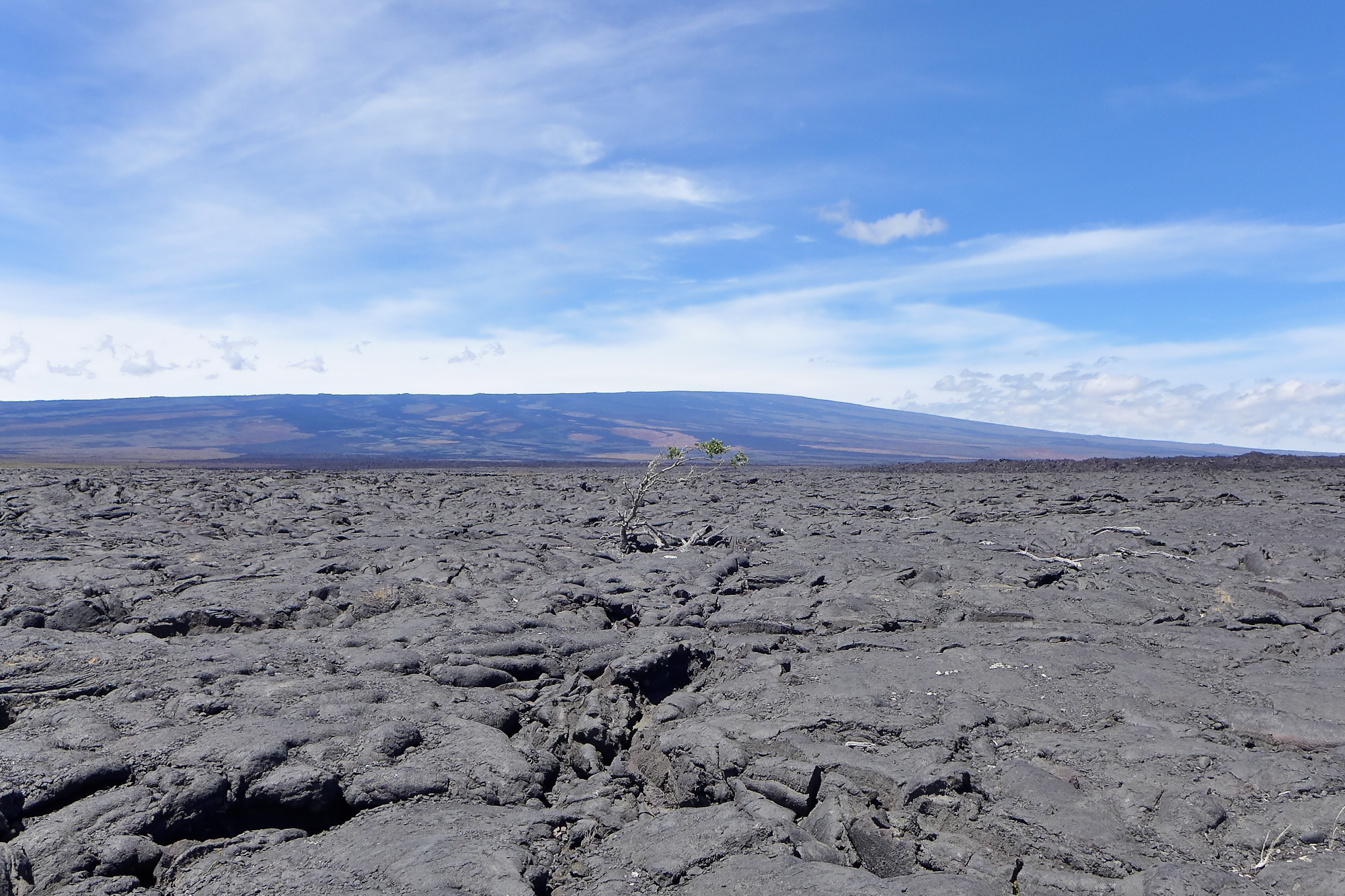
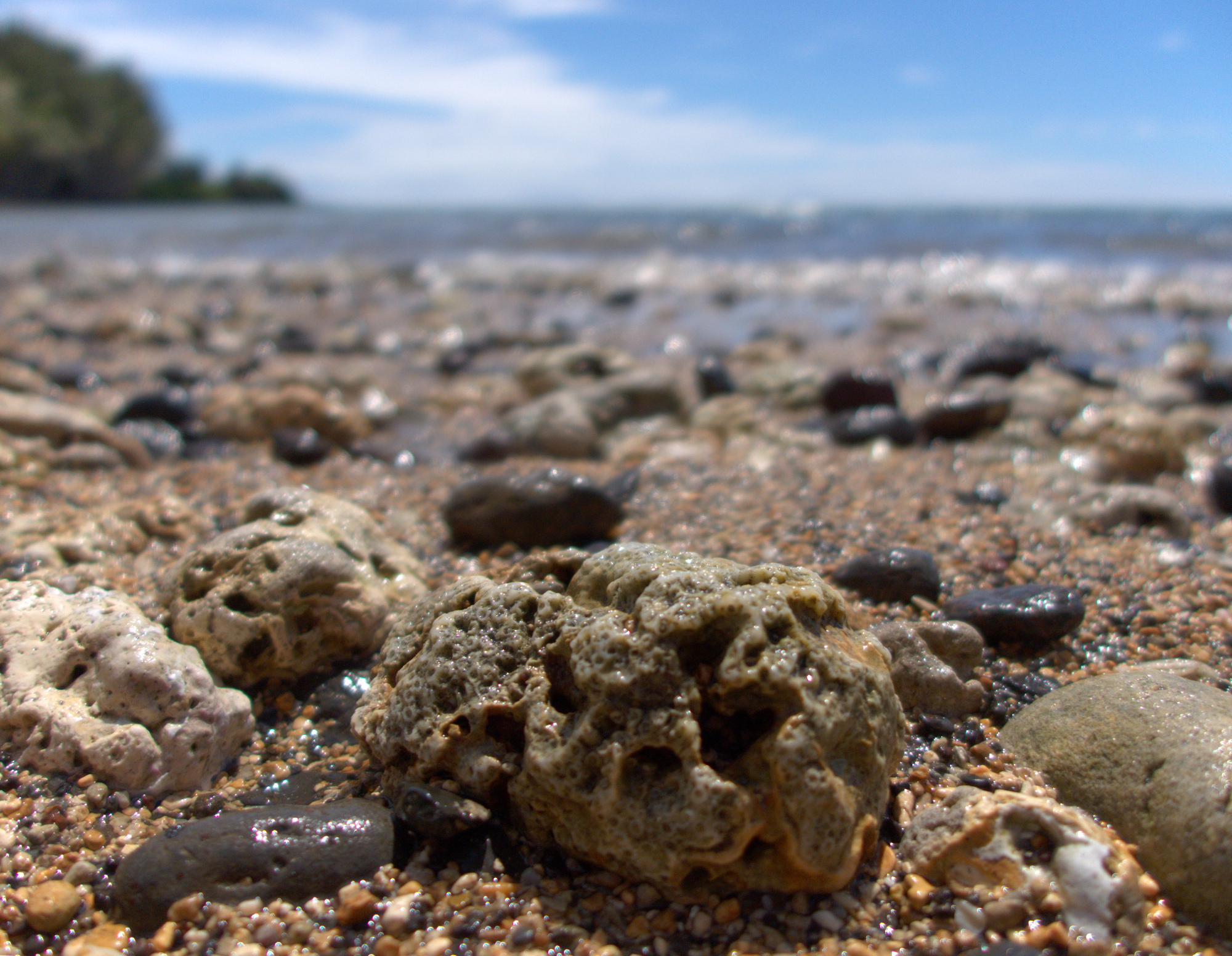
Exposed Coral at Low Tide  [Flickr page]

There is a fringe of surf that runs a little ways along one of Hawaii’s islands where I have found something magic. The beach itself is a beautiful place, a sloping field of coarse white and gold sand grains bounded on one side by clear ocean water and on the other by a thicket of bright green naupaka shrubbery. Palm trees arc overhead, reminding me that I am in the tropical Pacific. No crowds or litter mar the scene; my jaded eyes that have seen all too many of nature’s faces trashed with cans and foil chip bags find nothing—nothing—sullying this place.

But the beauty that sparks so brilliantly into my eyes today, into the memories of sight and sensation that I will treasure, is not so much the clean sand. Nor is it the greenery escorts the sand into the sea, nor the neighboring island whose silhouette looms beyond. It is in what lies beneath the swells and ripples.

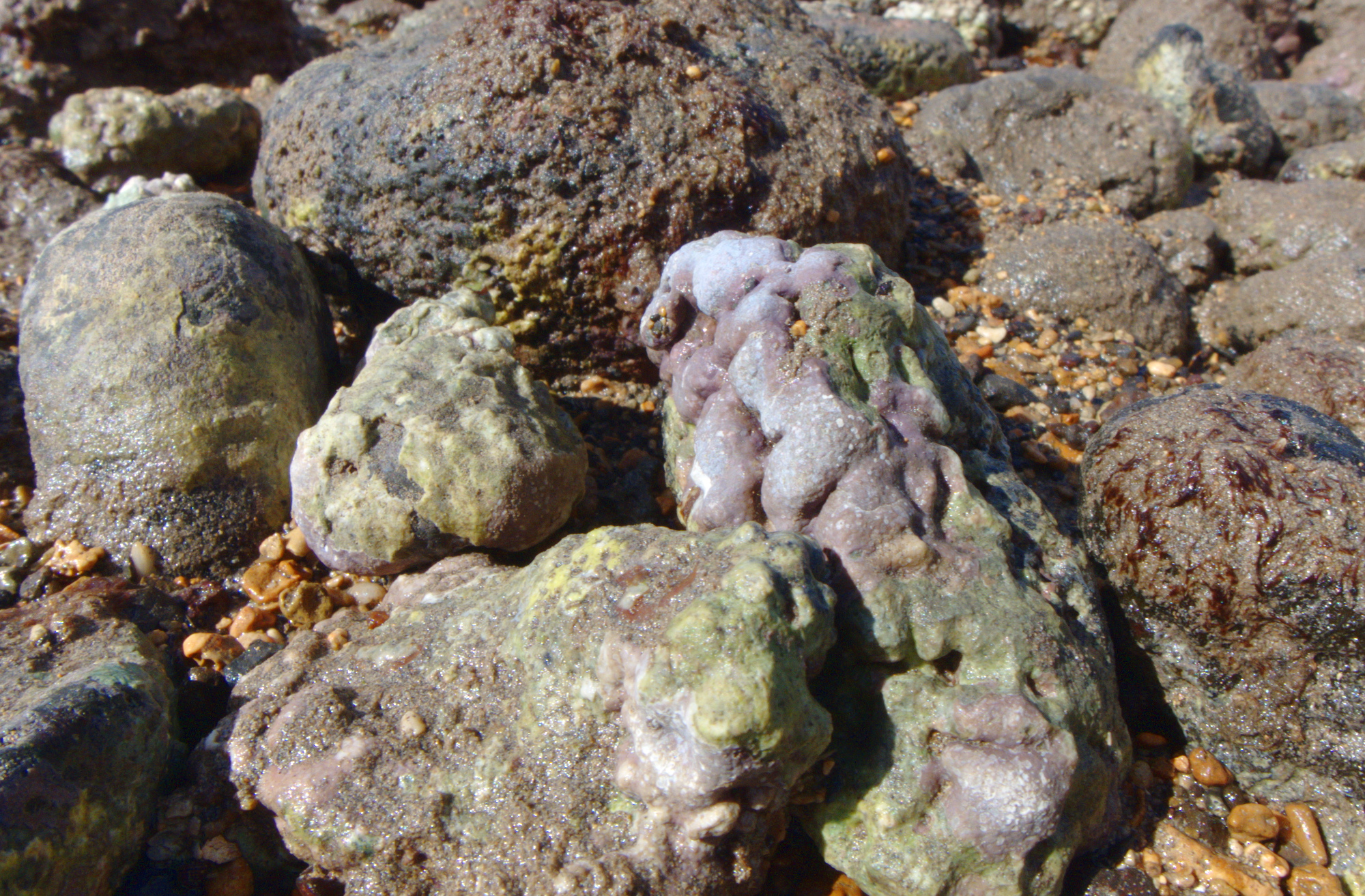
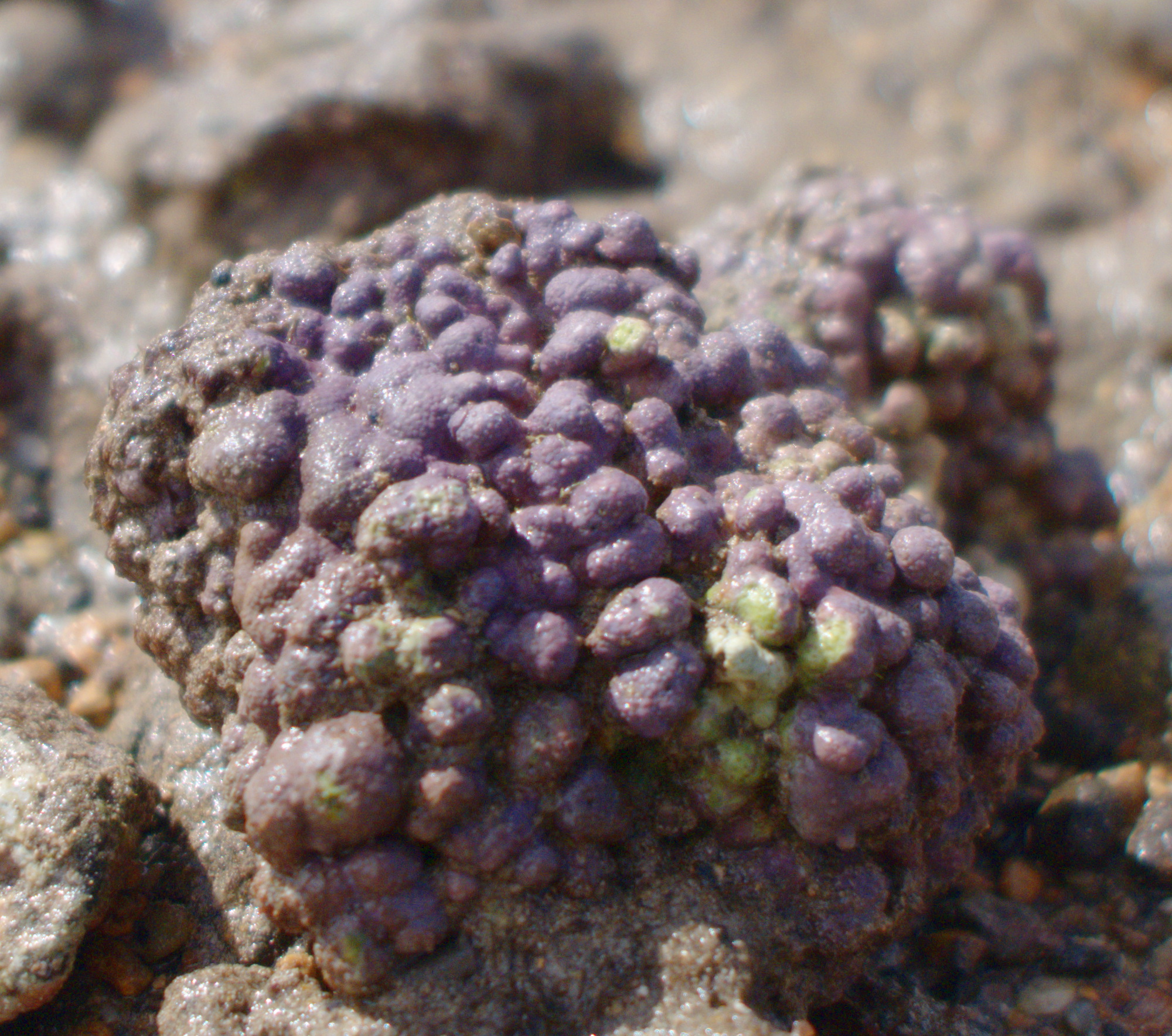
Living stones: Some of the colors still survive in the tide zone  [Flickr page]

I put on the fins and mask and snorkel, and move into the warm water. Just a few steps in and there is coral—delicate life that is no better off from my touch than my skin is to it—and I push off my feet and float. I am just inches above it, mere feet from the water’s lapping edge, barely enough room to twitch my fins up and down to get myself moving toward deeper water. All the while, I look and gape through the mask at what I’m already seeing. Living coral, and fish, right next to the shore.

Coral at Low Tide  [Flickr page]

Layers of colder water brush by my skin as I skim, improbably fast with the efficiency of the fins, across the reef and out to sea. I mind the currents; there is no shelter here from the open ocean. The coolness I am feeling is the Pacific, drifting in at a pace of a dozen or more miles a day. It is delicious, this unsettled interface between warm and cool waters, like the feel of ice cubes clinking in a glass, a cat’s chin resting on bare feet.

There is a bit more room now, but not much. The coral grows upward, seeking the light, and big bulky heads of it form the walls of an underwater maze. In between, fish poke and nibble, darting into holes. Together we swish back and forth above the reef, moving with the swells that pass just overhead, wiggling our hind parts against the current.

A rocky beach at low tide hints at what is visible below the water at the sandy one  [Flickr page]

As it was on the beach, there is no mark of humankind visible down here. Not one bottle or can. There is dead coral in this reef, yes, but so much bright and living!

I swim past big brainy rocks with their convoluted waves of filter-feeding polyps, and walls of color. The black and red spines of sea urchins fit into recesses, and plump black things sit in sandy spaces. There are delicate little green petals growing out of coarser coral rock. A swipe of a hand could break it off, and how long does it take to grow? But no hand has done so, and mine will not, either.

Coral Beach at Low Tide on Molokai, Hawaii  [Flickr page]

It is all so breathtakingly beautiful. In between wiping the condensation out of my mask, chuffing water out of the snorkel from the swells above (I did wind up going a good ways out), weaving and dodging my way through the coral maze, and checking on my whereabouts, I am immersed in wonder, suffused with color. I watch the fish poking around the reef, going about their business, see the sea urchin spines sway in the currents, even notice the polyp fuzz of coral details with its watery undulations.

At one point, aware of the ticking clock and my limited time left here, I open my arms wide toward the spectacle below me and thank it for being there, for surviving the abuses of my species. I wish it well, and hope some of my children can see this, or at least feel a little better knowing that a few places like this remain for them to visit, carefully and reverently. I take in a few last moments of the colors and contours, saddened that I must leave, that moments like this always end, but grateful that here, at least, some of the coral lives on.

Snorkel-equipped land-dweller (me), visiting the edge of a still-living ocean.
Click on individual images to enlarge, or check out the entire set (with others from Molokai) on Flickr. All are Copyright © 2013 Edwin A. Suominen. You may freely use them for non-commercial purposes, with attribution, under the Creative Commons Attribution-NonCommercial 3.0 Unported License.

Sunday, August 4, 2013

Madame Pele

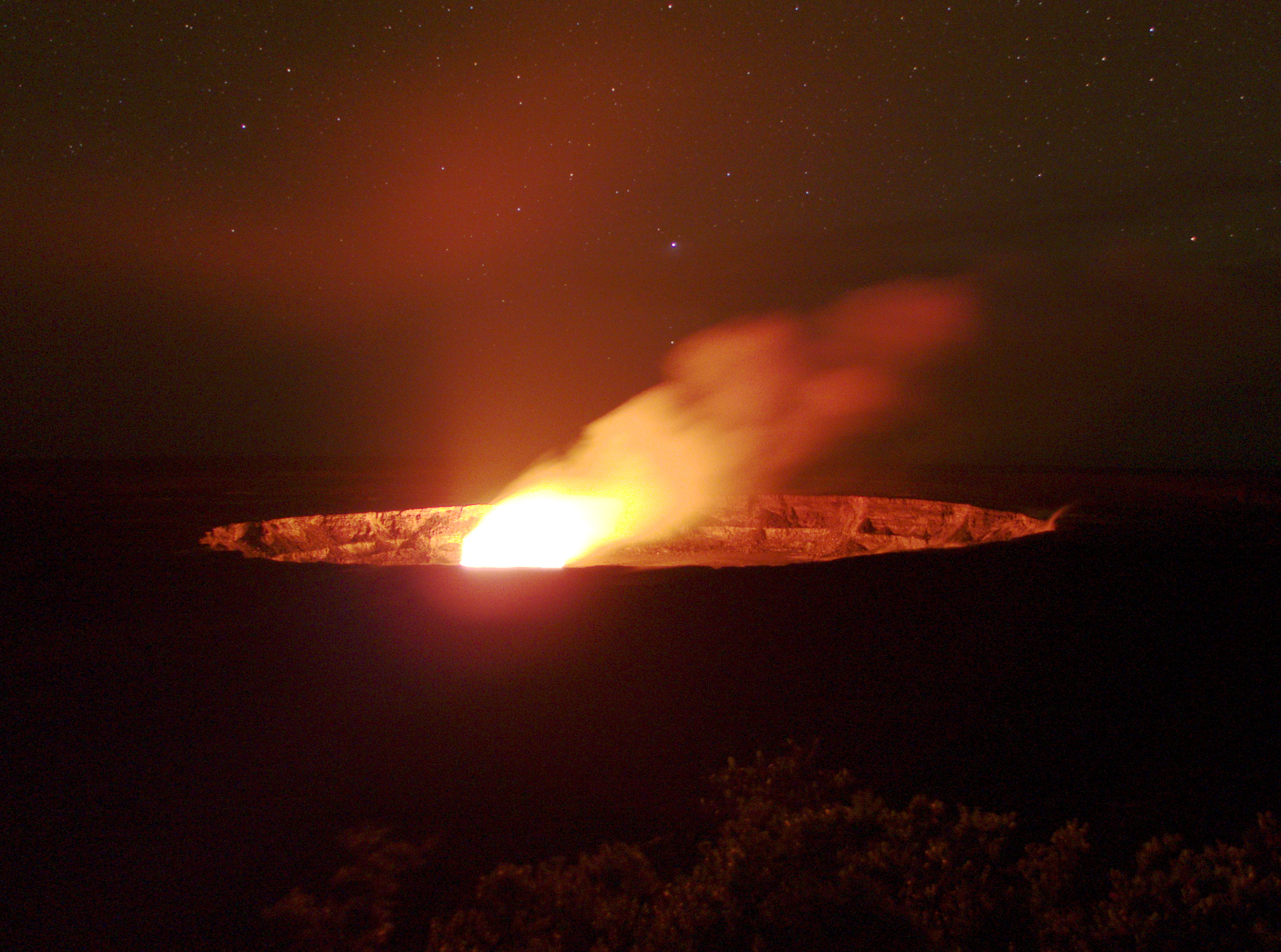
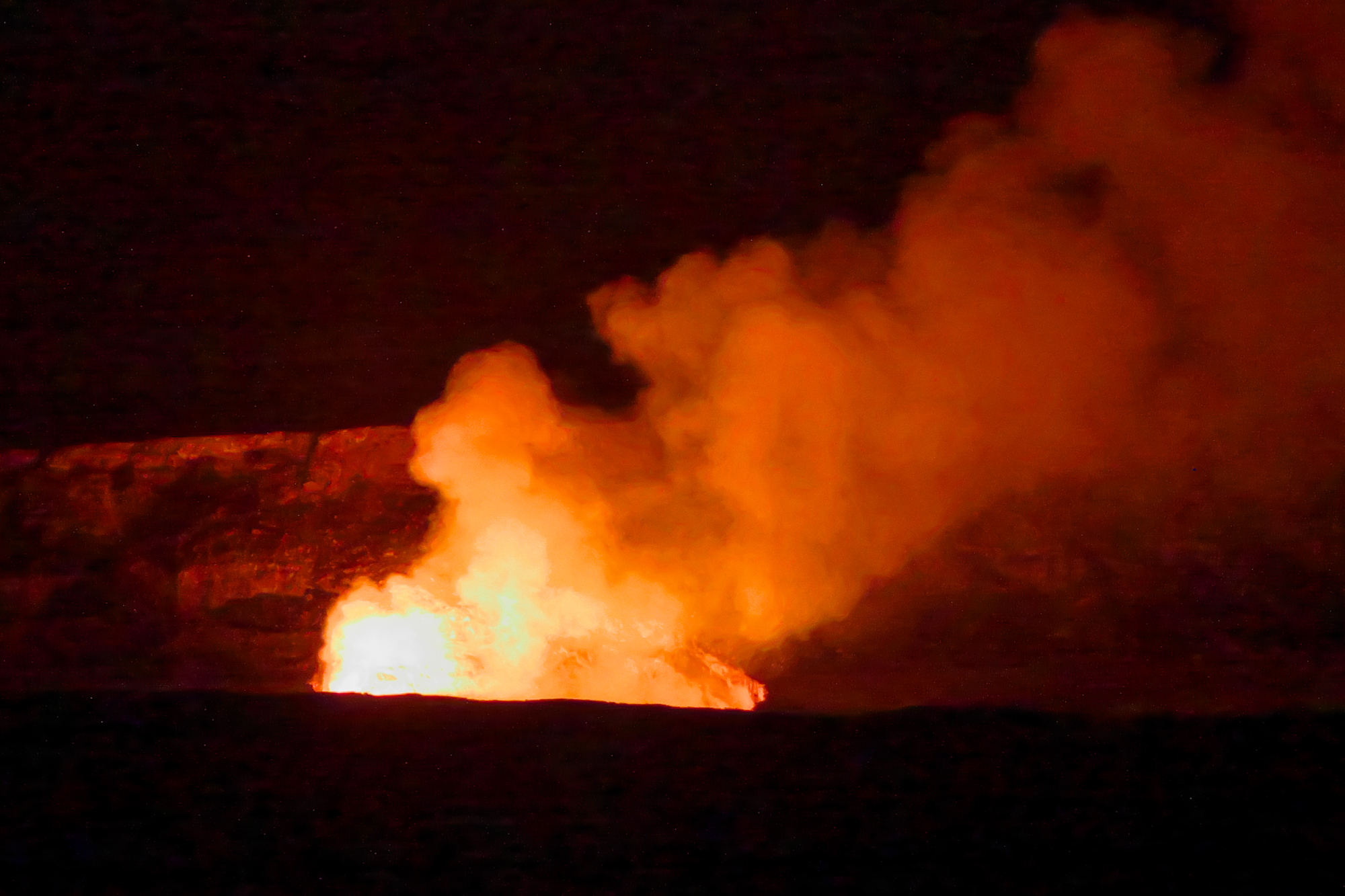
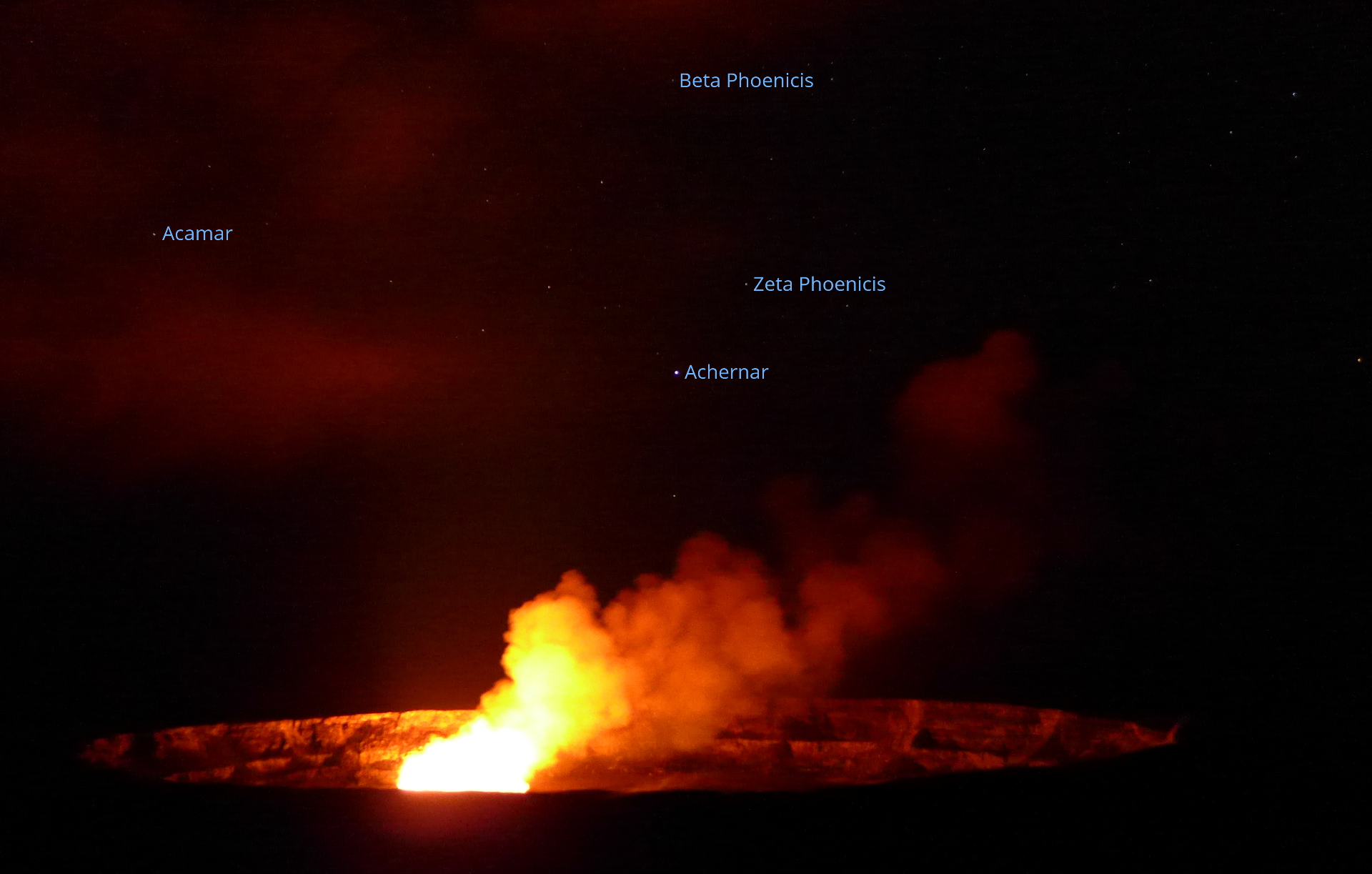
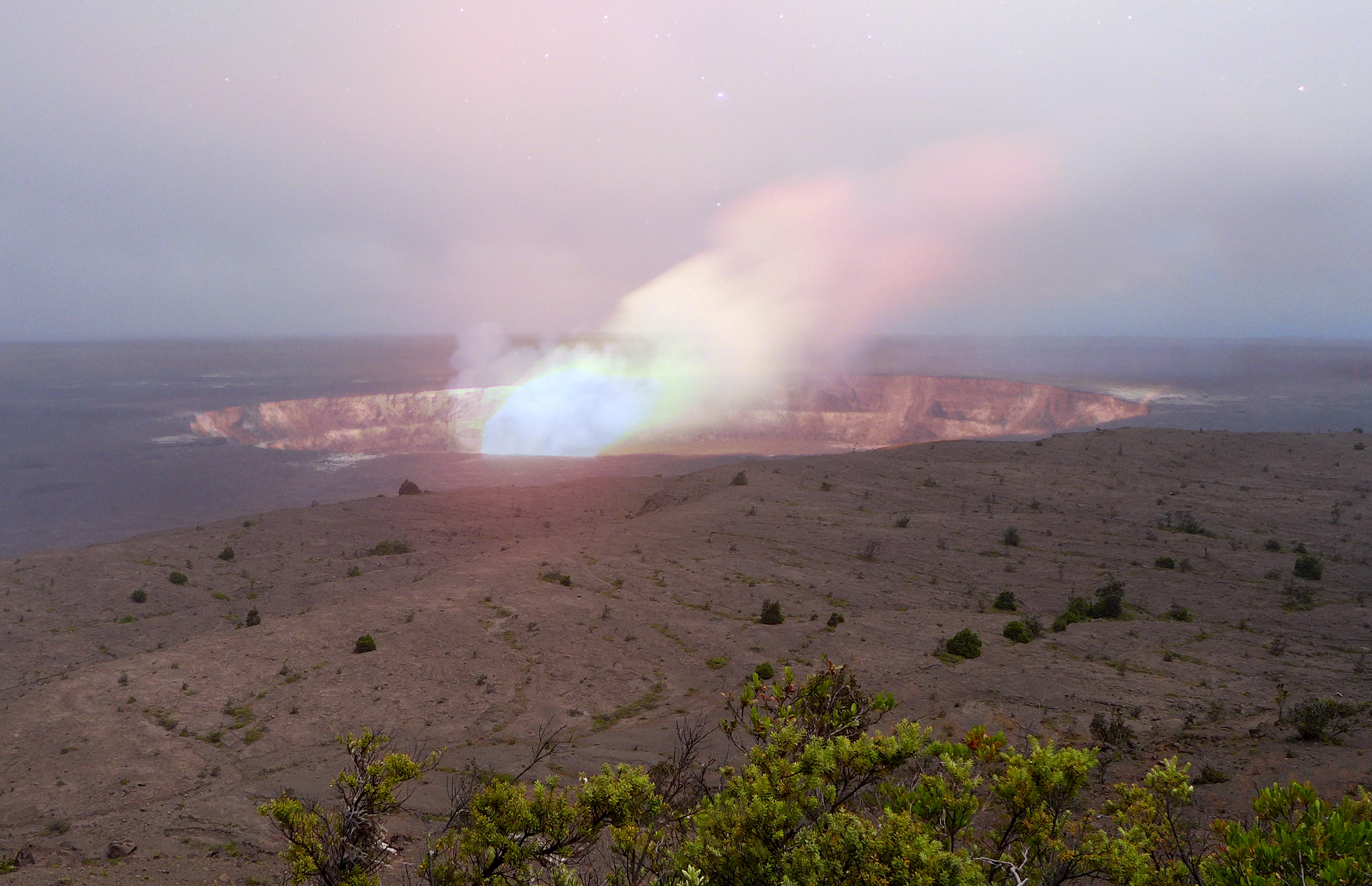
This is the lava lake in the Halemaumau Crater, at Hawaii Volcanoes National Park.

Halemaumau Lava Lake, ISO 80 and 25 second exposure.  [Flickr page]

Click on these images to enlarge them, and spend a moment imagining what it was like to be there. Seriously, you must do this. (You can also go visit the Flickr set.) There are stars in the background of glowing smoke from an active volcano. Clouds blowing in are being illuminated by the light of molten rock, the stuff on which our thin crust of earth floats. Bushes are dimly visible in the foreground.

Zoomed in, ISO 1600 and 1/8 second exposure.  [Flickr page]

I spent over an hour standing at this spot, until 3:30 AM. Gone were the annoying tourists who had been taking flash photographs of their friends before the dim glow. Gone was the chatter of people who stopped at this place as a roadside attraction on the way from Kona to Hilo, or vice-versa. Everyone was gone; for the entire time, it was just me with the silence broken by the wind, and an endless sky of stars that was eventually closed in by clouds.

Halemaumau Lava Lake  [Flickr page]

The lava glow illuminated the crater, and even my feet standing back at the safe distance of the visitor’s center. The photons from the stars have come untold millions of miles from their nuclear cauldrons. The photons from this cauldron in front of me are from heat that also has a nuclear source: not the fusion of stars, but a low-level fission process deep inside the earth’s core that contributes to the heat of gravitational compression.

But forget all that. Just click on the pictures, which I took using a rock wall as my tripod, and share a little of my endless awe at this incredible universe we occupy.

Night and daylight shots superimposed  [Flickr page]
All original images on this site, including this one, are Copyright © 2013 Edwin A. Suominen. You may freely use them for non-commercial purposes, with attribution, under the Creative Commons Attribution-NonCommercial 3.0 Unported License. I have a Flickr set with high-resolution versions of these images and others like them that you can view and download.

Friday, August 2, 2013

Hawaii

Adjoining one side of the Square was the great Morai, where there stood a kind of steeple ‘anu’u that ran up to the height of 60 or 70 feet, it was in square form, narrowing gradually towards the top where it was square and flat; it is built of very slight twigs & laths, placed horizontally and closely, and each lath hung with narrow pieces of white Cloth…. next to this was a House occupied by the Priests, where they performed their religious ceremonies and the whole was enclosed by a high railing on which in many parts were stuck Sculls [sic.] of those people, who had fallen victims to the Wrath of their Deity.
—George Vancouver, Ship’s Journal, c. 1793
Hikiau Heiau at Kealakekua Bay  [Flickr page]

There is a dark side to the past of almost every human culture, and that of Hawaii is no exception. Today I looked at the remains of a heiau, a temple where humans were sacrificed to appease the gods. The influence of the new haole religion finally put a stop to all that; one sacrifice some 1800 years earlier was enough to get the job done.

All’s quiet on the sacrificial temple now, centuries later.  [Flickr page]

A much more pleasant to contemplate, if modest, Hawaiian cultural encounter was one I had with a gentleman named Sam just a few miles north of the Hikiau Heiau site. He showed up with his ukulele at the Keahou Beach park south of Kailua-Kona, Hawaii.

Sam the Singer  [Flickr page]

Sam played and sang away under the pavilion at the park with no tip jar, hat, or open instrument case in sight. Sure, he probably accepts the donations that surely come his way from tourists, and that may even be a motivation for him to be there. But he really did seem to be doing this for the pure pleasure of it, too. When he saw that I was filming him, there was a noticeable extra bit of enthusiasm in his voice. He happily gave permission for this video to be posted, and told me the song is Wahine ’Ilikea by Dennis Kamehama.

When we left, Sam was sitting on one of the picnic tables under the pavilion so that the little Asian boy next to him could watch him play and get in the picture being taken by his parents.

Maybe it’s tourist kitsch, a diluted echo of Hawaiian culture infused with California surfer and pandering to the Hollywood view of the Islands. But I’d say it beats human sacrifice any day.

———
Click on individual images to enlarge, or check out their photo pages in my Flickr photostream. All are Copyright © 2013-14 Edwin A. Suominen. You may freely use them for non-commercial purposes, with attribution, under the Creative Commons Attribution-NonCommercial 3.0 Unported License.

Wednesday, July 31, 2013

Haleakala

[T]he chief pride of Maui is her dead volcano of Haleakala—which means, translated, “the house of the sun.” We climbed a thousand feet up the side of this isolated colossus one afternoon; then camped, and next day climbed the remaining nine thousand feet, and anchored on the summit, where we built a fire and froze and roasted by turns, all night. With the first pallor of dawn we got up and saw things that were new to us. Mounted on a commanding pinnacle, we watched Nature work her silent wonders. The sea was spread abroad on every hand, its tumbled surface seeming only wrinkled and dimpled in the distance. A broad valley below appeared like an ample checker-board, its velvety green sugar plantations alternating with dun squares of barrenness and groves of trees diminished to mossy tufts.
—Mark Twain, Roughing It
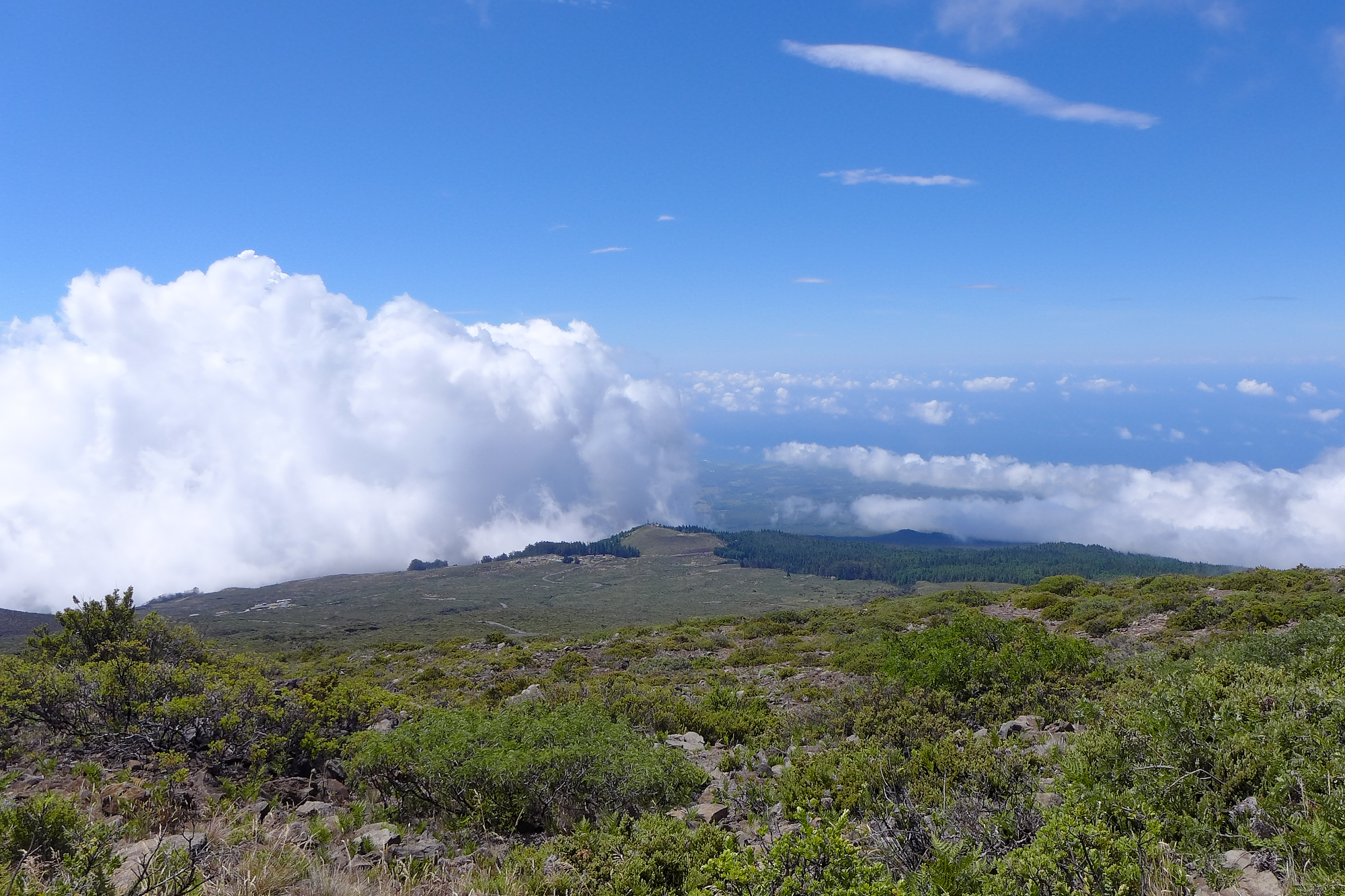
Clouds upwelling on the lower slopes of Maui’s central mountain  [Flickr page]

I am standing on the roof of the House of the Sun, just over 10,000 feet above the sea that is visible in the distance. This is a pinnacle of earth, rising impossibly high above the water and then the beaches and grazing lands, and it is flying eastward away from the sun.

Looking into the vast maw of Haleakala Crater  [Flickr page]

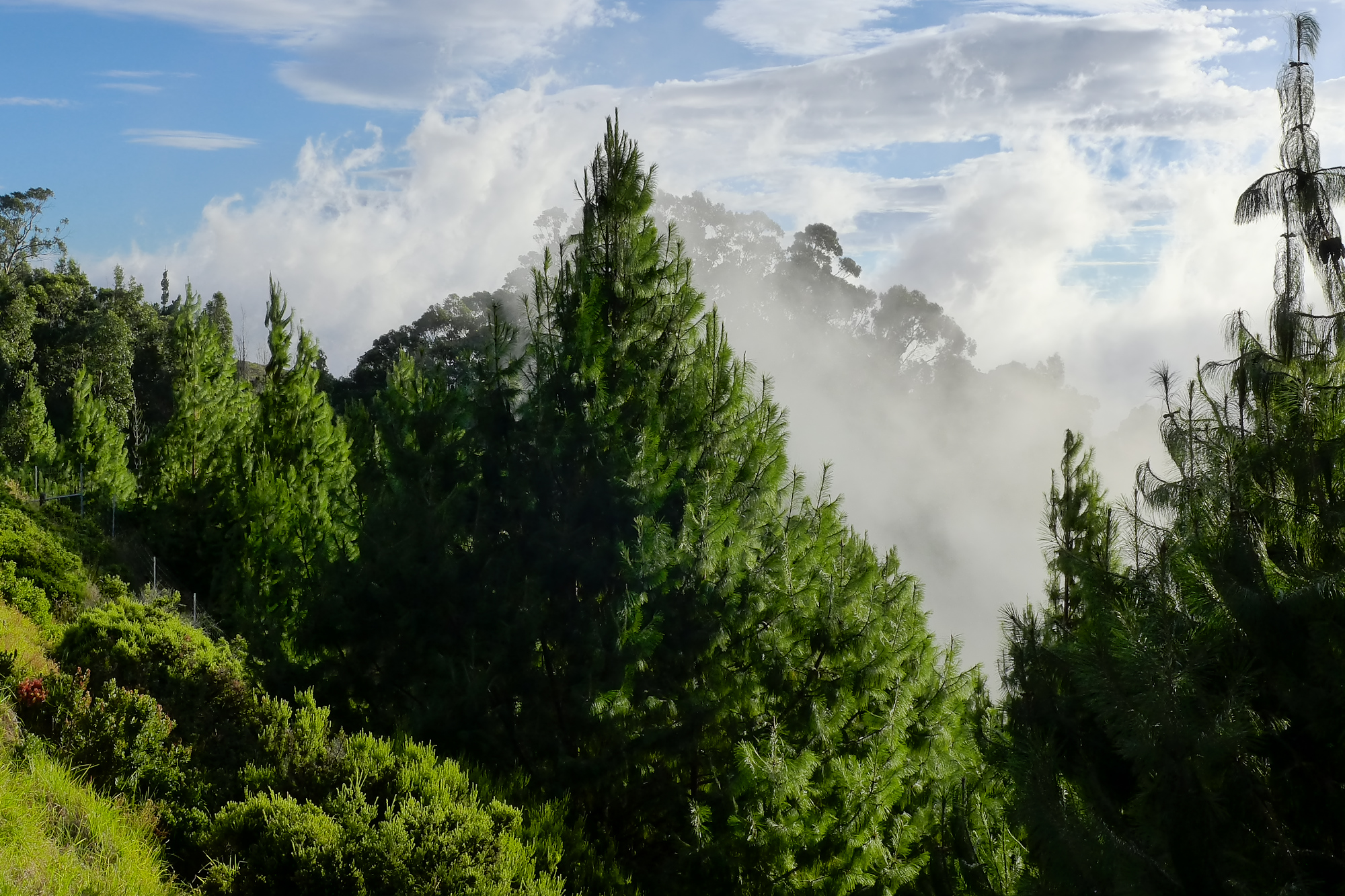
There is a monk’s tonsure of clouds around the mountain, and earlier we stopped to look at their upper reaches mingle with a narrow fringe of pine trees. There was sun, shadows, vivid green, and tendrils of white mist snaking magically in between.

Upcountry Conifers on Maui  [Flickr page]

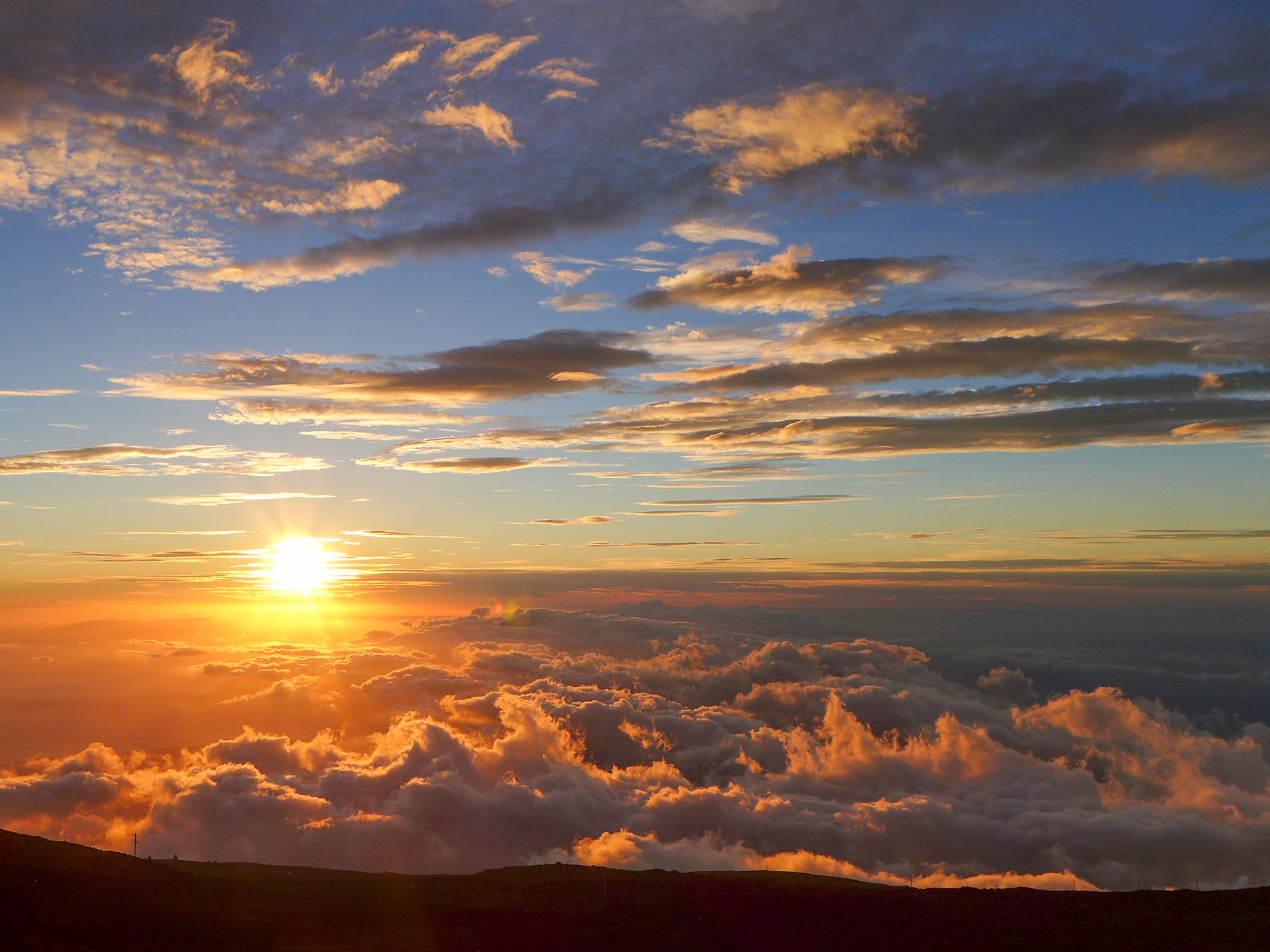
Now the sun is setting into a distant sea and a bed of brilliant clouds. Desperately I want to capture the stunning beauty of everything around me at this instant, this brief and glorious snapshot of my life. But the moment, I know, will soon blow past me as the wind.

Sunset at 10,000 feet  [Flickr page]

It is a thin and cold wind. The sparsity of this air’s gas molecules causes it to register just over 50 degrees Fahrenheit while the beachgoers far below sweat their way through 90 degrees. There is an odd sensation about breathing noticeably faster while just standing in place, which has an exhilarating slight edge of panic to it. The cool sharp air licks around the edges of my clothes, carrying faint, living scents of plants even up here.

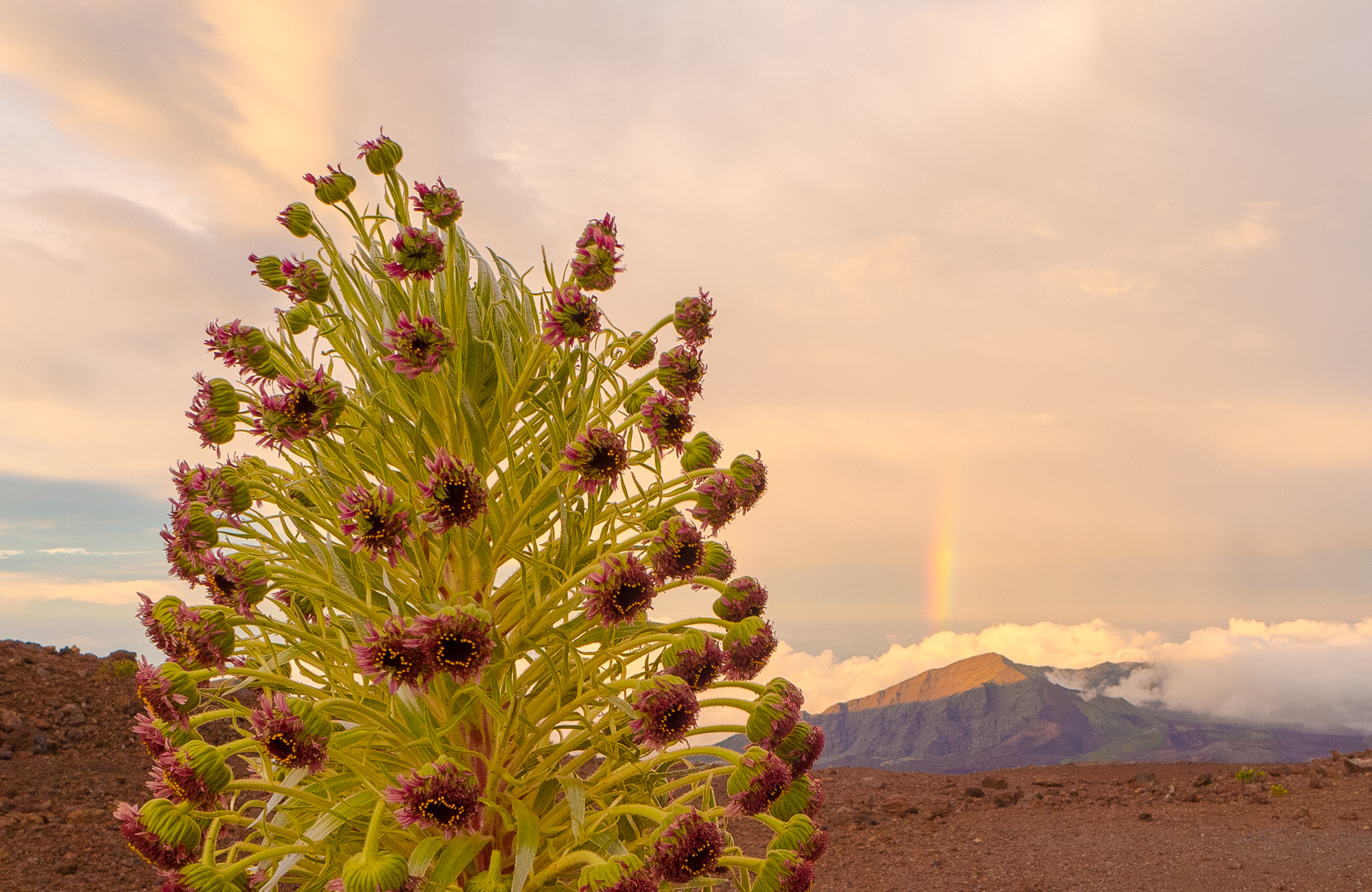
Silversword at sunset  [Flickr page]

Silverswords and jagged dark brown rock fade into the rapid dusk. When I turn around to look away from the sunset, I see a looming triangular shadow that this mountain casts on the clouds to the east. A rainbow plunges into barren lava rock, far below it distant ocean swelling unheard.

Who arrayed this glorious outrage of vision? I do not fault those who see behind it the face of God. I am in as much awe as they are, as deeply uncomprehending of any mundane explanation when standing mute before such majesty.

Sunset Rainbow in Haleakala Crater  [Flickr page]

Now, now, now! It is the moment: Standing atop this little bit of rock near the summit, I am falling backwards from the sun, the wispy clouds with me, turning purple and orange with the fading light from a sun that will not dally for anyone’s meditations. And yet, I have already seen such beauty today. Is there room in my mind for still more?

Quiet, chattering voice, writer of mental drafts! I must hush even the student of mindfulness. Quiet, quiet, all of you! Rush and rustle, wind, go on. I will listen, I will watch. Eyes open wide, drinking in the sight, holding back tears that are not just from the wind.

I gasp with a sudden determination to just be, here, now, as the saying goes. This is the time! I will seize its wispy tendrils, gather them in, store them. Even though I know that, like the manna in the wilderness, it will have lost its freshness by the morning. That day will require its own gatherings, of good or ill.

Too bad! Pause. Gape. Heartbeats, breaths, wide open vision. My camera is now in its pack; I will not share these seconds with its little screen. The best of the colors, the moment when the sun finally slips beneath that distant horizon, are for my eyes alone.

A deep breath, the edge of a sob: This is raw, this air has moved high across an ocean to reach me. Why must we move so relentlessly away from the last fringes of even the most beautiful of days, the same as all the rest?

Listen, feel, lean backward into the wind. Watch the colors redden, darken. Watch, hear, feel. Quiet.

No, it won’t last. It never does, neither moments of ecstasy nor days of beauty, nor a lifetime of all of those strung together along a thread of hopes and dreams and work. Nor even of generations, civilizations, the eons that this mountain required.

It all fades and flies with the wind. But for now, at least, I am—deliciously, joyously, incomparably—alive.

———
Click on individual images to enlarge, or check out my entire set of Maui photos (and others from Hawaii) on Flickr. All are Copyright © 2013 Edwin A. Suominen. You may freely use them for non-commercial purposes, with attribution, under the Creative Commons Attribution-NonCommercial 3.0 Unported License.