Extremes in thinking and a vacuum in the middle where fact and reason used to dwell lately characterize the national state of mind.
—James Howard Kunstler, Too Much Magic:
Wishful Thinking, Technology, and the Fate of the Nation
In January 1919, months after an armistice that ended the horrors of
the Great War in Europe, W.B. Yeats started work on a haunting little
poem of the Apocalypse. The Second Coming begins with these
memorable lines:
Turning and turning in the widening gyre
The falcon cannot hear the falconer;
Things fall apart; the centre cannot hold;
Mere anarchy is loosed upon the world,
The blood-dimmed tide is loosed, and everywhere
The ceremony of innocence is drowned;
The best lack all conviction, while the worst
Are full of passionate intensity.
This “first stanza captures more than just political unrest and
violence,” says Nick Tabor in a 2015 article about the poem. “Its
anxiety concerns the social ills of modernity: the rupture of
traditional family and societal structures; the loss of collective
religious faith, and with it, the collective sense of purpose; the
feeling that the old rules no longer apply and there’s nothing to
replace them.”
Yeats goes on to prophesy further horrors, suggesting, in Tabor’s
analysis, that “something like the Christian notion of a ‘second
coming’ is about to occur, but rather than earthly peace, it will
bring terror”:
Surely some revelation is at hand;
Surely the Second Coming is at hand.
The Second Coming! Hardly are those words out
When a vast image out of Spiritus Mundi
Troubles my sight: a waste of desert sand;
A shape with lion body and the head of a man,
A gaze blank and pitiless as the sun,
Is moving its slow thighs, while all about it
Wind shadows of the indignant desert birds.
And then there is the “slouching beast” of the final stanza, which
Tabor says is best understood not as “a particular political regime,
or even fascism itself, but a broader historical force, comprising the
technological, the ideological, and the political.”
The darkness drops again but now I know
That twenty centuries of stony sleep
Were vexed to nightmare by a rocking cradle,
And what rough beast, its hour come round at last,
Slouches towards Bethlehem to be born?
Despite Tabor’s complaints about the “widening gyre of heavy-handed
allusions” that popular culture is making to the poem, I will venture
to toss in my own: The words Yeats left us from nearly a century ago
offer a stark picture of what is happening to the ailing democracy of
the United States today.
There is a rough beast out there right now, slouching towards
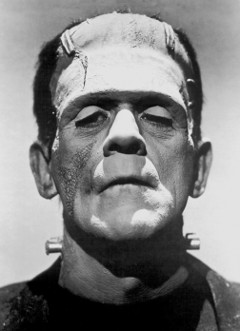
Washington. It is a Frankenstein monster formed from an angry
electorate’s troubled mix of ugly prejudice, religious zeal, and
legitimate grievance–partly about having served as useful idiots for
a moneyed class that pandered to their social conservatism while
bleeding them dry. What the billionaire political manipulators
originally tinkered into existence as a servant for carrying out their
specific and selfish goals has gone out of their control.
Now the “darkness drops again” and the monster is plodding into the
night, ignoring the commands of those who spent millions trying to be
its masters. This is a spectacle both terrifying and exhilarating to
watch.
The Koch Brothers and their ilk liked what they saw in Jeb Bush and
Marco Rubio, and invested heavily. But, alas for them, it really
does seem that money can’t buy everything. By January, Poor Charles
Koch was expressing disappointment “with the line-up of Republican
candidates in the 2016 cycle,” and surprise at “the lack of influence
he and his brother have wielded so far.”
Things started going south for the billionaire Brothers Grim in
September of 2015 with the departure of Scott Walker, a nasty
dead-eyed governor who seemed like their perfect messenger boy.
Abysmal polling numbers in the presidential race sent him back to work
swinging the Libertarian wrecking ball at Wisconsin’s state
government. And Jeb! finally dropped out in February 2016 after an
embarrassing return on investment for all the millions blown by his
campaign and (ahem, independent) SuperPAC–the total price per vote
obtained was about $2800 in Iowa and $1150 in New Hampshire.
Now the last best hope for a presidential pawn of the oligarchs, Marco
Rubio, is flailing about with just a single state to his name and 15%
of the viable delegates allocated thus far. He faces impossible odds,
at least if the votes of the lumpenproletariat are what it really
takes to win a nomination this year. Rubio would need to win 75%
of the 1435 delegates still up for grabs in order to get the 1237 he
needs for a non-brokered nomination. Good luck with that: A March 9 poll has him behind in his home state of Florida by double digits.
It isn’t going to happen, and even he has to realize that.
But there is still the tantalizing possibility of a
brokered convention,
and that might make it still worth his while for Rubio to keep
slugging away. The same goes for John Kasich, governor of Ohio and
unofficial Adult in the Room. He’s counting on a home-state win in the
winner-take-all primary on the weekend of March 12-13 to keep him in
the game. He has been quite candid about liking the idea of a
nomination fight at the convention.
———
Assuming primary voters actually get to decide this thing, there are
two realistic contenders now left standing for nominee of the Greedy
Oligarchy Party–Donald J. Trump and Raphael Edward (“Ted”) Cruz. The
oligarchs, however, don’t seem to much like either one of them.
Trump can’t be bought, for the simple reason that he doesn’t need
anybody else’s money to support his chest-thumping vanity presidency
project. “Not a single contribution to Trump’s campaign could be found
in the donation records of the 190 attendees of Koch donor
conferences.” Hilariously, one billionaire political-money hobbyist
complained that Trump’s self-funding “scares the hell out of”
him. “That’s like a dictator,” Stanley Hubbard whined. “I think that
any politician should have to answer to their constituents.”
Mr. Hubbard does not “think it’s healthy to have somebody who doesn’t
answer to anybody.” Apparently, having them answer to a few
fabulously wealthy recipients of inherited wealth like himself is more
like it–God bless America.

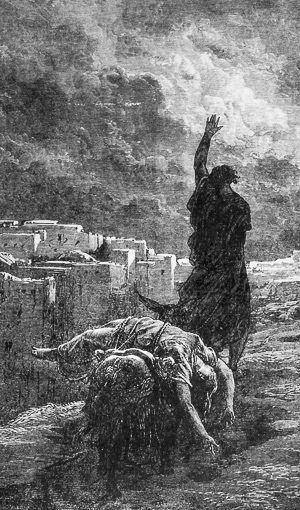
The Levite Bearing Away the Body of the Woman, Gustav Doré
Cruz, for his part, has at least tried to win favor of Those Who
Matter. He did some hobnobbing at a Koch Konference in 2013, shortly
after winning his Senate seat. At another gathering, during the
record-hot summer of 2015, he surely scored some points with the
Brothers Grim by bluntly denying that global warming was real and
implying that Obama was lying by warning of “hotter summers, rising
sea levels, and extreme weather events.” (These things are all
actually happening now, apparently invisible if your head is stuck
up some rich donor’s ass.)
But the fact is that very few people who actually know Ted
Cruz–besides some angry, religion-crazed voters–seem to like
him much at all, no matter what he says. This is apparently nothing
new; his college roommate describes him, then and now, as “pedantic,
smarmy, creepy, arrogant, nasty, inauthentic and unfunny as hell.”
Molly Ball wrote a few months ago in The Atlantic that, in “the
three years since he arrived in the U.S. Senate, Ted Cruz has become
easily the most hated man in Washington.” He pissed off Mike Lee (Tea
Party-UT), possibly his only friend in the Senate, by going all
lip-curling angel-of-death about Lee’s criminal justice reform
bill. “In my conversations with Republican policy types and Senate
aides about Cruz,” Ball writes, Cruz’s “lack of regard for his
colleagues, and for the niceties that have traditionally governed the
upper chamber, was a common theme. As Trent Lott, the former Senate
majority leader, told me last week, referring to the time Cruz called
McConnell a liar on the Senate floor: ‘You just don’t do that. Are we
not still gentlemen, and respectful of each other?’”
———
Currently holding onto the lead between those two is Trump, the man
described by Peter Wehner, longtime Republican voter, administration
staffer, and think-tanker, as an “erratic, inconsistent and
unprincipled” narcissist, whose “virulent combination of ignorance,
emotional instability, demagogy, solipsism and vindictiveness would do
more than result in a failed presidency; it could very well lead to
national catastrophe.”
Yes, well, so could allowing the oligarchs to have their way. With one
of those “mainstream” GOP candidates they’d like to have in place as
an investment vehicle, we could all look forward to the loss of public
lands throughout the American West, the gutting of environmental and
labor protections, and a rollback of social security safety net
programs, for starters. They would unleash the entire chamber of
horrors imagined by the current Republican-controlled Congress, which
until now has only been kept restrained by the veto threat of a
Democratic President.
Besides, Mr. Wehner, this is your monster you are watching lumber
into the lightning flashes of the night. Columnist Maureen Dowd shares
my delight in seeing “the encrusted political king-making class utter
a primal scream as Trump smashes their golden apple cart.” For years,
she says, the Republican establishment “has fanned, stoked and
exploited the worst angels among the nativists, racists, Pharisees and
angry white men, concurring in anti-immigrant measures, restricting
minority voting, whipping up anti-Planned Parenthood hysteria and
enabling gun nuts.”
Scary as it may be, there is a certain logic to the decision of so
many everyday people to cast their vote for a narcissistic, bullying
huckster and reality-show host whose vocabulary and grasp of the
issues make George W. Bush look like Winston Churchill. “These folks
have lost a lot with the hollowing out the middle and working class,”
said Jim Sidanius, Harvard professor of sociology, back in January
when Trump was just getting rolling. “If you combine that with
floating xenophobia, you get this kind of reaction.”
Perhaps Republican voters are finally realizing how much they have
been played by their political elites and have decided to do some
tweaking of their own, in the only way they can. Meanwhile, the rest
of us look on shaking our heads at the food-fight debates and insults
and ugly outbreaks at rallies, and wait for November to finally put a
pitchfork into the beast.
We will probably be left only with Hillary Clinton by then to stop its
slouch toward Washington. But even a bent and rusted tool will serve
to kill the beast and end the nightmare, at least for a few years
until the oligarchs start tinkering in their workshop again.
———
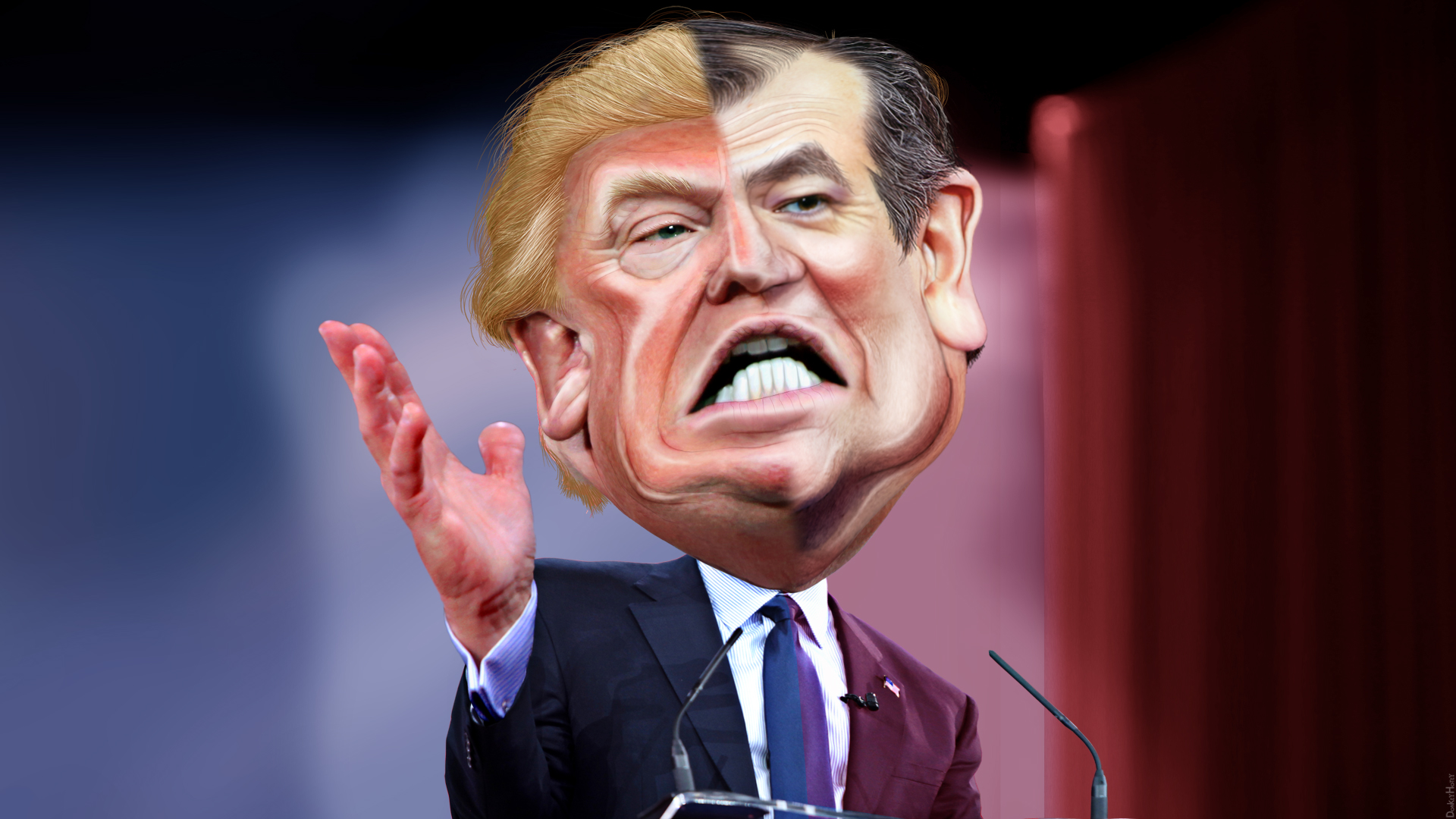
The Trumpenstein image is a Creative Commons licensed composition by the amazing
DonkeyHotey, which comprises caricatures of the following: Donald Trump, adapted from Creative Commons licensed images from
Gage Skidmore’s flickr photostream; and Ted Cruz, adapted from a Creative Commons licensed photo from
Michael Vadon’s Flickr photostream.
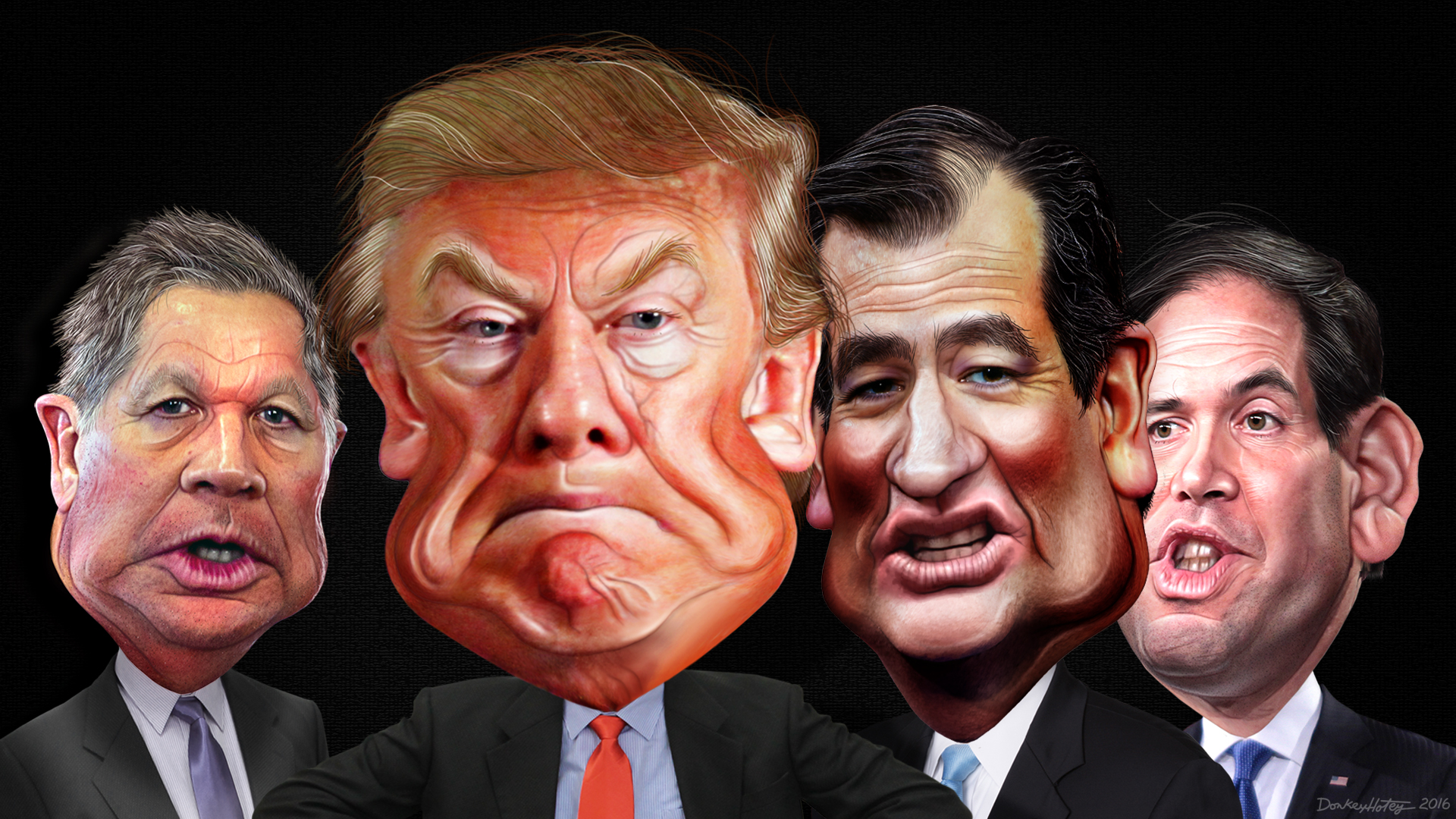
The image of all four candidates is a Creative Commons licensed composition by DonkeyHotey, comprising caricatures of the following: John Kasich of Ohio, adapted from a Creative Commons licensed photo from
Marc Nozell’s Flickr photostream; Donald Trump, adapted from Creative Commons licensed images from
Max Goldberg’s flickr photostream; Ted Cruz, adapted from a Creative Commons licensed photo from
Gage Skidmores’s Flickr photostream; and Marco Rubio, adapted from a Creative Commons licensed photo from
Gage Skidmore’s Flickr photostream.
Notes